Why there are Amazon links here: Brave Review is paid a commission for qualifying Amazon purchases made through the links below. Your price does not change, and using our links is entirely optional. How this works
Best Smoke Alarm for a Narrow Hallway: 5 Compact Picks That Fit
A narrow hallway is one of the hardest places to place a smoke alarm: the ceiling is close to the walls, a bulky unit looks wrong, and a badly chosen detector can turn every slice of toast into a false alarm. This guide covers five compact alarms that suit tight corridors, and it splits them by buyer — renters who want a no-wire install, homeowners who want a long-life battery, and budget buyers who just need a dependable unit. The overview table below shows each pick at a glance, and the full reviews explain who each one is and is not for.
Overview of the Picks
| Product | Key Spec | Best Use | Price Tier |
|---|---|---|---|
| Kidde 4-Inch Smoke Alarm (10SDR) | AA battery, 85 dB, LED status lights | Small spaces and tight ceilings | Budget |
| First Alert SMI100 | Battery-powered, 1-pack | Straightforward single-unit replacement | Budget |
| X-Sense SD2J0AX | 10-year battery, photoelectric, UL 217 | Long-life, low-maintenance installs | Mid-range |
| X-Sense SD2L0AX | 10-year battery, photoelectric, hush button | Fewer cooking nuisance alarms | Mid-range |
| Kidde 20SD10 | 10-year battery, 85 dB, LED status lights | Set-and-forget hallway coverage | Premium |
1. Kidde 4-Inch Smoke Alarm with LED Status Lights (10SDR)
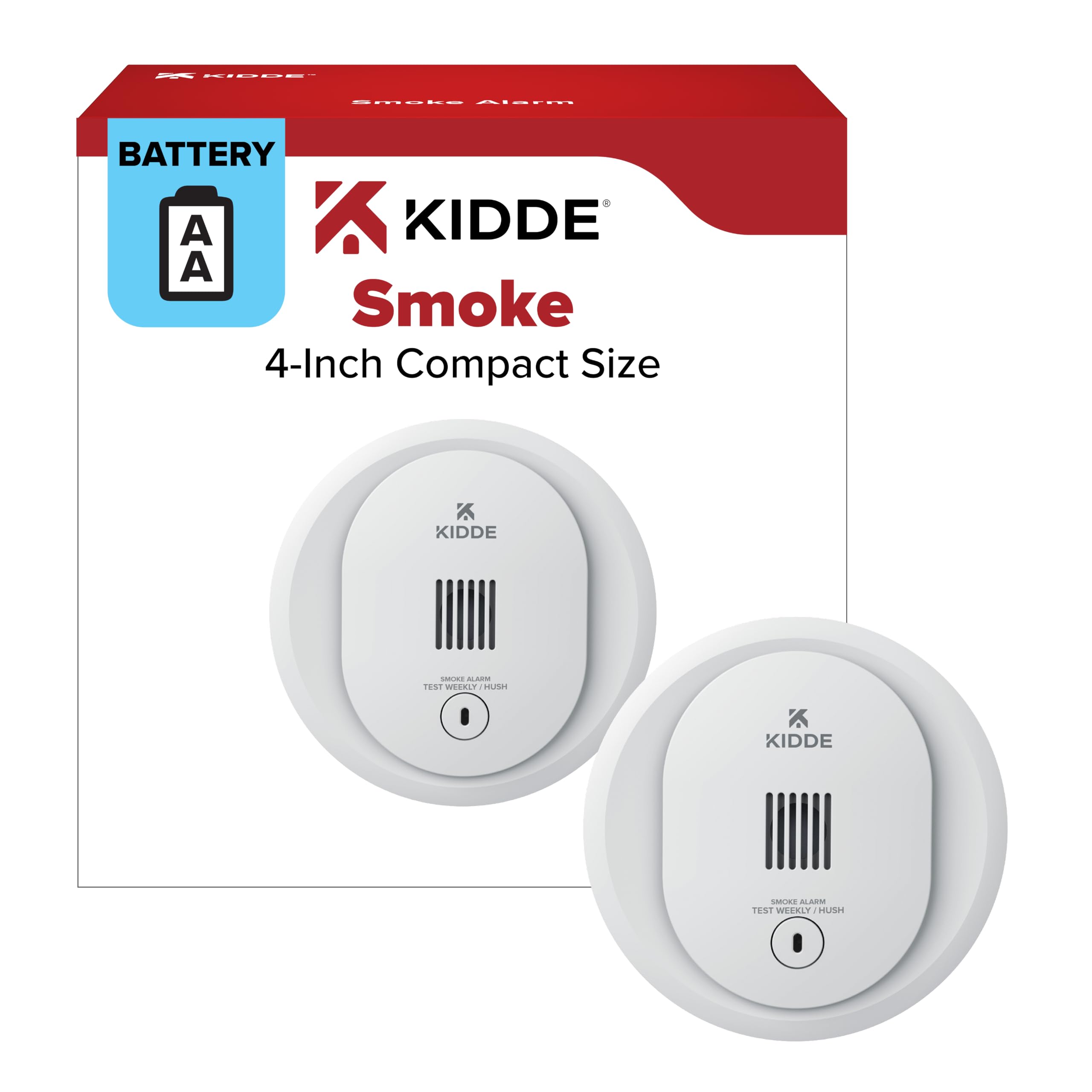
Type: Compact smoke alarm
Power Source: AA battery
Alarm: 85 dB
Status Indicators: LED lights
Intended Use: Homes and small spaces
Model: 10SDR
Check the current price on Amazon
The 4-inch footprint is the whole point here. A hallway ceiling that already feels low gets a detector that sits close to the surface and does not dominate the view, while the 85 dB horn is loud enough to carry through a corridor and into adjacent bedrooms. LED status lights give a quick visual check that the unit is powered, which matters in a spot that is easy to forget about. AA batteries are widely available, so a swap never means hunting for a specialist cell. This is the pick for a small home, a rental, or any narrow passage where a full-size alarm would look oversized.
It suits buyers who want a low-profile unit at a budget price and do not mind replacing AA batteries on a schedule. The trade-off is that AA power means periodic battery changes, and a compact housing generally holds a smaller sensing chamber, so it is best treated as hallway coverage rather than the only alarm on a floor. Buyers who want to install once and forget it should look further down this list.
2. First Alert SMI100 Battery Smoke Alarm
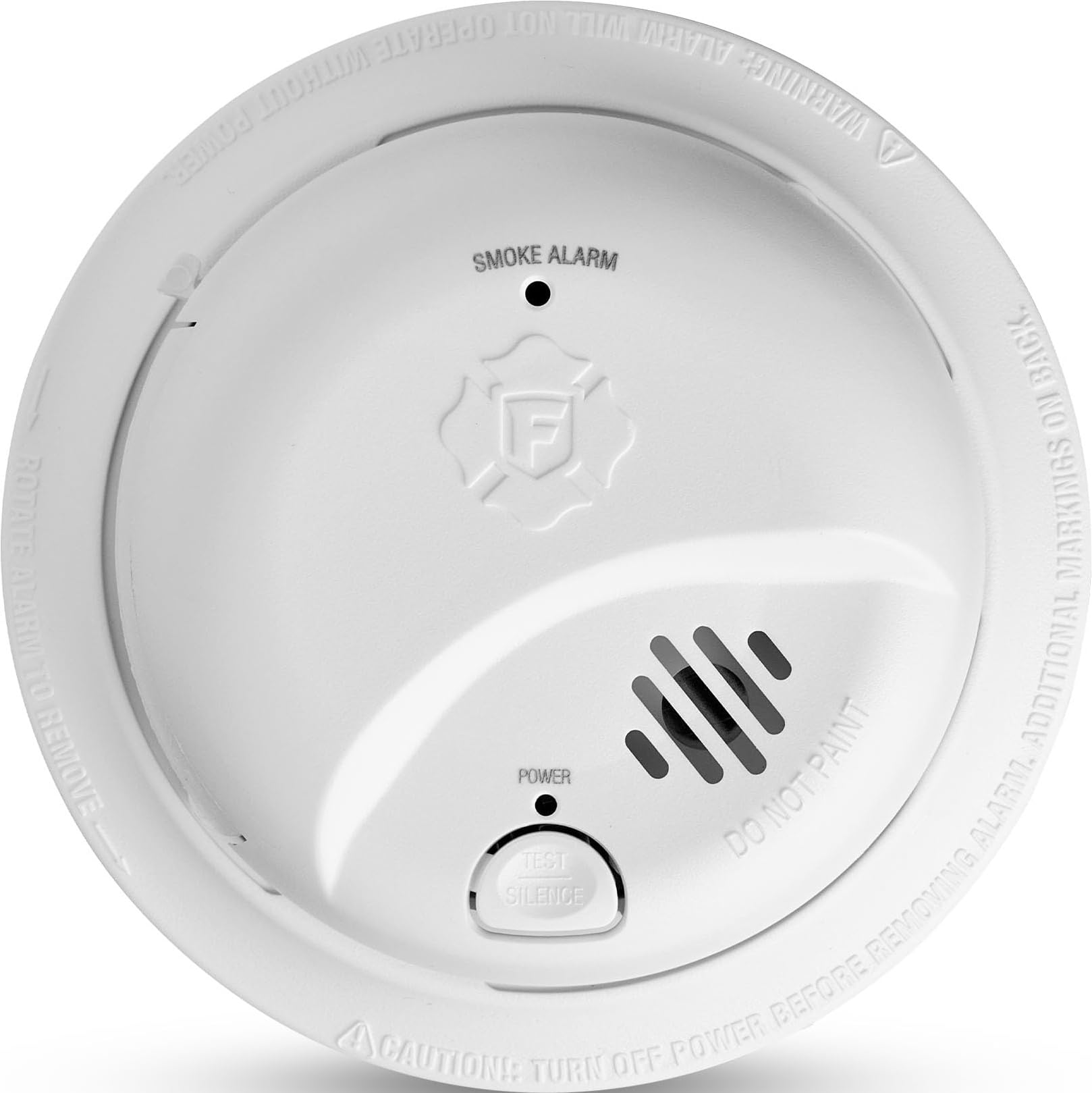
Type: Battery smoke alarm
Power Source: Battery
Pack Size: 1-pack
Model: SMI100
Intended Use: Single-room or hallway replacement
Check the current price on Amazon
First Alert is one of the most recognizable names in home safety, and the SMI100 is the straightforward version of that idea: a single battery-powered alarm built for a simple swap. There is no wiring to run, so a hallway unit can be mounted and working in minutes. The one-pack format keeps the cost down for a household replacing a single failed detector rather than outfitting a whole house. The design is plain and unobtrusive, which is exactly what a narrow corridor wants.
This is the pick for a buyer who needs one reliable alarm, fast, and does not want to compare feature lists. The trade-off is that a basic battery unit offers the least convenience of the group — no long-life sealed cell and fewer extras — so it is a poor fit for anyone hoping to avoid battery maintenance on a hard-to-reach ceiling.
3. X-Sense Photoelectric Smoke Alarm (SD2J0AX)

Sensing Type: Photoelectric
Power Source: 10-year battery
Certification: UL 217
Controls: One-button hush and self-test
Installation: No-wire
Model: SD2J0AX
Check the current price on Amazon
Photoelectric sensing is the right choice for a hallway near a kitchen, because it is generally less prone to the nuisance triggers that plague other sensing types around cooking. The sealed 10-year battery removes the annual battery ritual entirely, and the no-wire mount means a renter can install it without touching the building’s wiring. A single button handles both hush and self-test, so silencing a false alarm does not require a ladder and a manual. UL 217 certification is listed on the name, which is the baseline a buyer should expect from any alarm sold for home use.
This is the pick for a homeowner or long-term renter who wants to mount once and forget it for a decade. The trade-off is that a sealed 10-year battery cannot be swapped, so the entire unit is replaced at end of life — a higher upfront cost than a AA model, and the wrong choice for anyone who prefers replaceable cells.
4. X-Sense Photoelectric Smoke Alarm (SD2L0AX)
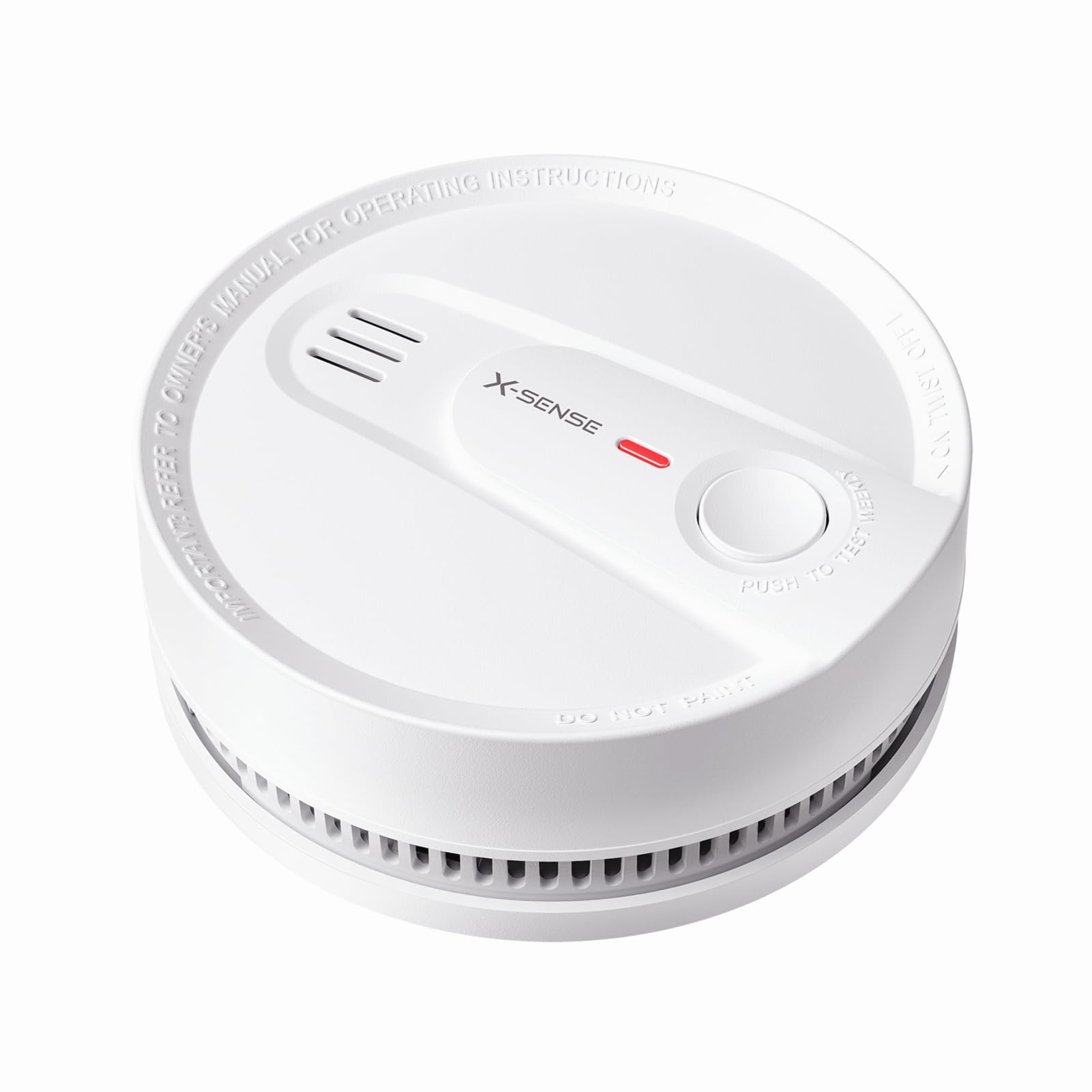
Sensing Type: Photoelectric
Power Source: 10-year battery
Certification: UL 217
Controls: One-button hush and self-test
Installation: No-wire
Model: SD2L0AX
Check the current price on Amazon
This is the sibling of the SD2J0AX and shares its core recipe: photoelectric sensing, a sealed 10-year battery, no-wire mounting and a one-button hush. The difference is in the tuning — the name places the emphasis squarely on fewer cooking nuisance alarms, which is the single most common complaint about hallway detectors sited near a kitchen door. For a corridor that runs past a cooking area, that focus is worth paying attention to. The unit stays visually simple, so it does not fight a narrow hallway for attention.
It suits buyers whose main frustration is a detector that shrieks every time a pan heats up, and who also want the decade-long battery convenience. The trade-off is that reduced nuisance sensitivity can, in principle, come at the cost of slightly slower response to certain smoke types — buyers who want the most aggressive detection possible should weigh that against the convenience.
5. Kidde Smoke Detector, 10-Year Battery (20SD10)
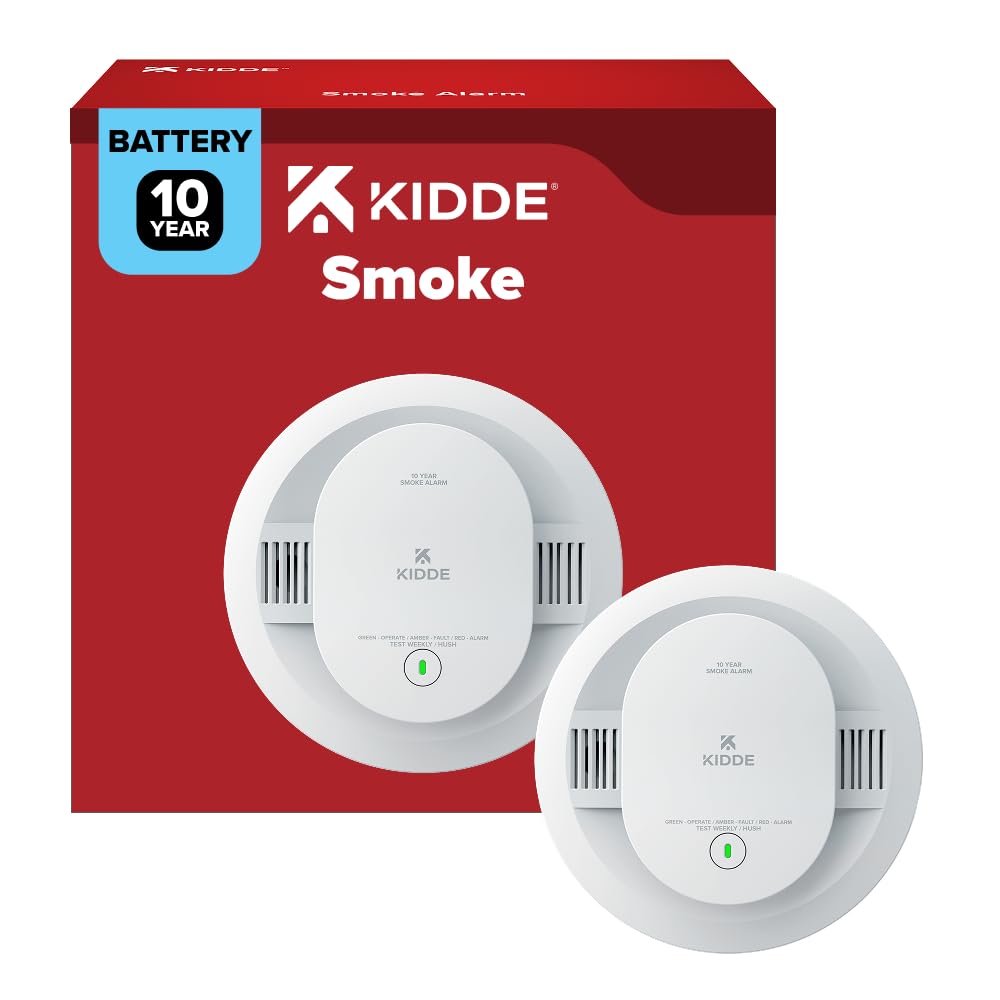
Type: Smoke detector
Power Source: 10-year battery
Alarm: 85 dB
Status Indicators: LED lights
Pack Size: 1 pack
Model: 20SD10
Check the current price on Amazon
This Kidde combines the two features that matter most in a hallway: a sealed 10-year battery and an 85 dB alarm that will carry down a corridor. LED status lights make it easy to confirm at a glance that the unit is live, which is useful on a ceiling that is not looked at often. The no-maintenance power source means no annual ladder work, and the single-pack listing suits a household replacing one unit at a time. It is the most polished all-round option here for a set-and-forget install.
It suits buyers who want a recognized brand, a decade of runtime and a loud horn without any extra complexity. The trade-off is price: this is the premium pick of the group, and the sealed cell means the whole detector is retired at end of life rather than refreshed with new batteries — a real cost consideration for a multi-alarm home.
Before You Buy
- Power source: AA batteries are cheap and replaceable but need routine swaps; a sealed 10-year cell means no maintenance but a full unit replacement at end of life.
- Sensing type: Photoelectric models are the better match for hallways near kitchens, where cooking smoke is a constant false-alarm risk.
- Size and profile: A compact 4-inch unit is the safest bet where the ceiling is low or the corridor is tight enough that a full-size alarm looks out of place.
- Installation: No-wire, battery-only models suit renters and avoid electrical work; check that the mount suits the ceiling surface before buying.
- Certification: Look for a UL 217 listing on the product name — it is the baseline for a smoke alarm sold for home use.
- Placement: Keep the alarm away from bathroom doors and cooking surfaces, and check local guidance on how many units a hallway needs.
- Pack size: Single packs suit a one-for-one replacement; multi-alarm homes should price the per-unit cost before committing to a brand.
Frequently Asked Questions
-
What is the best smoke alarm for a narrow hallway?
A compact photoelectric model with a sealed 10-year battery is the best all-round fit — it keeps a low profile, resists cooking nuisance alarms and needs no annual battery work. The Kidde 4-inch unit is the best budget alternative where space is tightest. -
Should a hallway smoke alarm be photoelectric or ionization?
Photoelectric sensing is generally the better match for a hallway, especially one near a kitchen, because it is less prone to nuisance triggers from cooking. That makes it the safer default for most homes. -
Can a renter install a smoke alarm without wiring?
Yes. Battery-powered, no-wire models mount without touching the building’s electrical system, which makes them the practical choice for renters. Check the lease before mounting anything to the ceiling. -
How long does a 10-year battery smoke alarm last?
The sealed cell is designed to cover the unit’s service life, after which the whole detector is replaced. That is why the upfront price is higher than a AA model. -
How many smoke alarms does a narrow hallway need?
Follow local code and the manufacturer’s guidance, but a common approach is one alarm per hallway section and one inside each sleeping area. A single unit is rarely enough for a whole floor. -
Why does a hallway alarm keep going off when cooking?
Proximity to the kitchen is the usual cause. A photoelectric model with a hush button, sited a little further from the kitchen door, is the standard fix.
Bottom Line
For most narrow hallways, the Kidde 4-Inch Smoke Alarm (10SDR) is the best smoke alarm for the job: it is compact enough to disappear on a low ceiling, loud at 85 dB, and priced as a budget pick. Buyers who want to install once and forget it for a decade should step up to the Kidde 20SD10, while anyone fighting cooking false alarms should look at the X-Sense SD2L0AX.
Check the current price of the Kidde 4-Inch Smoke Alarm on Amazon
