Why there are Amazon links here: Brave Review is paid a commission for qualifying Amazon purchases made through the links below. Your price does not change, and using our links is entirely optional. How this works
Best Smoke Alarm for a Studio Flat: 5 Compact Picks That Fit Small Spaces
A studio flat puts the kitchen, sleeping area and living space within a few steps of each other, so the right smoke alarm has to be compact, loud enough to wake a sleeper, and smart about cooking fumes. This roundup covers five alarms that suit renters who cannot rewire, owners who want combined smoke and carbon monoxide cover, and anyone who wants a small unit that does not dominate a wall. The overview table below lines up every pick by key spec, best use and price tier, so a decision is possible in under a minute.
The Picks at a Glance
| Product | Key Spec | Best Use | Price Tier |
|---|---|---|---|
| First Alert SMI100 | Battery-powered, 1-pack | Cheapest simple replacement | Budget |
| First Alert SMI100-AC | Hardwired with 9V backup | Flats with existing wiring | Budget |
| X-Sense SC07 | Smoke and CO combo, sealed 10-year battery | One unit for two hazards | Mid-range |
| Kidde 10SDR | 4-inch compact body, 85 dB alarm | Tight walls and small rooms | Budget |
| X-Sense SD2J0AX | Photoelectric, 10-year battery, hush button | Cooking-heavy studios | Budget |
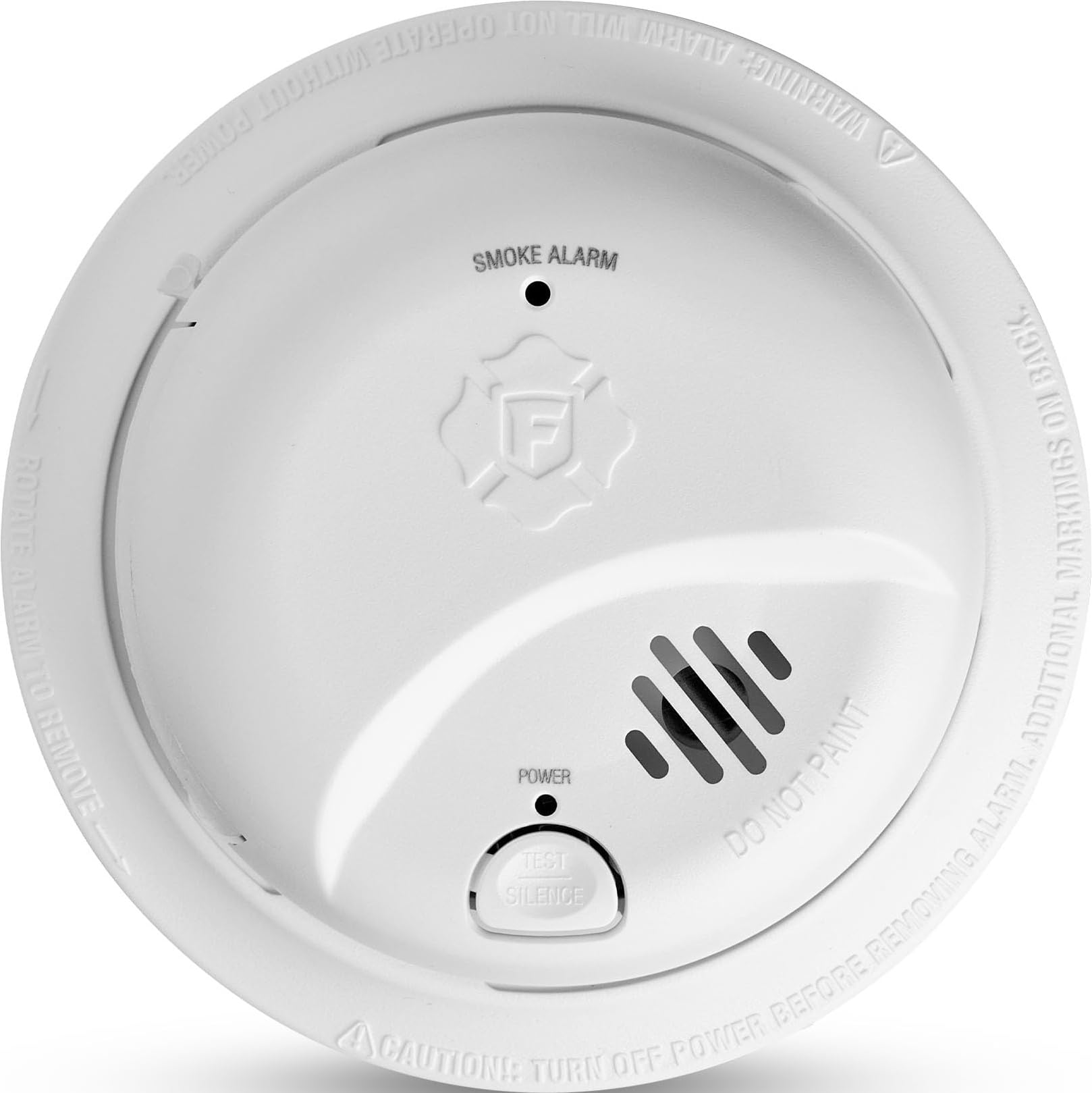
1. First Alert SMI100 Battery Smoke Alarm
Type: Battery smoke alarm
Pack Size: 1-pack
Power Source: Battery
Brand: First Alert
Best For: Simple no-wire installation
SMI100, 1-Pack First Alert Battery Smoke Alarm
This is the straightforward option: a battery-only alarm from a brand that has been making household safety gear for decades. The unit runs on its own battery, so installation is a matter of fixing it to a ceiling or wall and walking away. There is no wiring to arrange and no electrician to book, which matters in a rented studio where drilling into the mains is not an option. The plain housing suits a small flat where the alarm will be visible from the bed.
It earns its place as the budget pick because it covers the basic job at the lowest outlay. Buyers who want one alarm, one battery and nothing to think about will find it does exactly that. The trade-off is that battery-only units need the battery checked and swapped on a schedule, and a single-sensor alarm at this price will not separate cooking smoke from a real fire as cleverly as pricier models.
Trade-off: The battery must be monitored and replaced periodically, and there is no carbon monoxide cover.
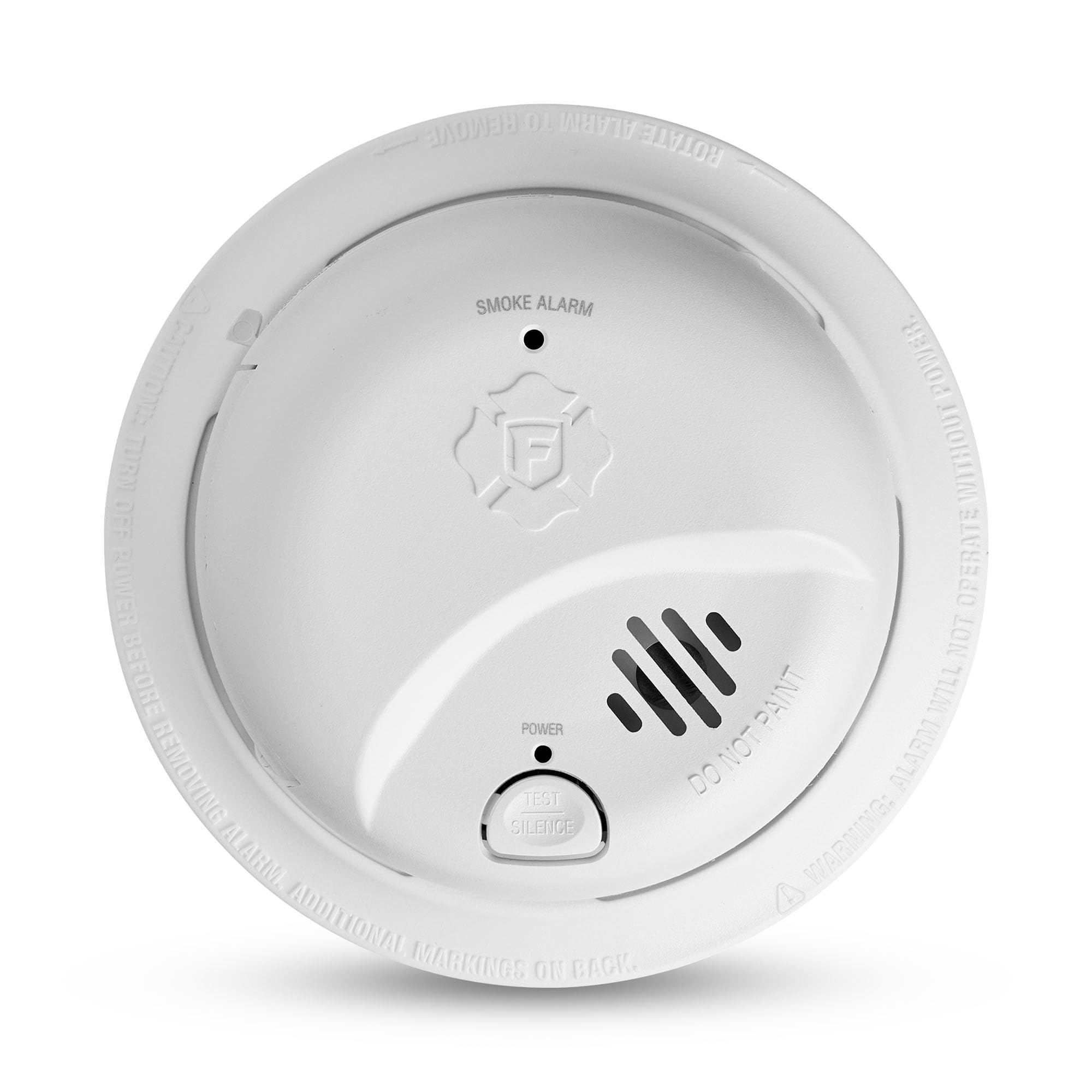
2. First Alert SMI100-AC Hardwire Smoke Alarm
Type: Hardwired smoke alarm
Pack Size: 1-pack
Power Source: Mains with 9V battery backup
Brand: First Alert
Best For: Flats with existing alarm wiring
SMI100-AC, 9V Battery Backup, 1-Pack First Alert Hardwire Smoke Alarm
This version takes its power from the mains and keeps a 9V battery in reserve, so it keeps working during a power cut. That backup design is the reason hardwired alarms are the default in many buildings. For a studio flat that already has a ceiling alarm point, swapping in this unit is quicker than starting from scratch and avoids a trailing battery-only unit that someone might knock down.
It suits owners and long-term tenants whose flat was built with alarm wiring in place. The mains feed removes the chore of routine battery swaps for everyday power, leaving only the backup cell to keep an eye on. The catch is that it is useless without an existing wired point, so renters in older conversions should check before buying.
Trade-off: It needs an existing hardwired alarm point, so it is not a fit for flats without one.
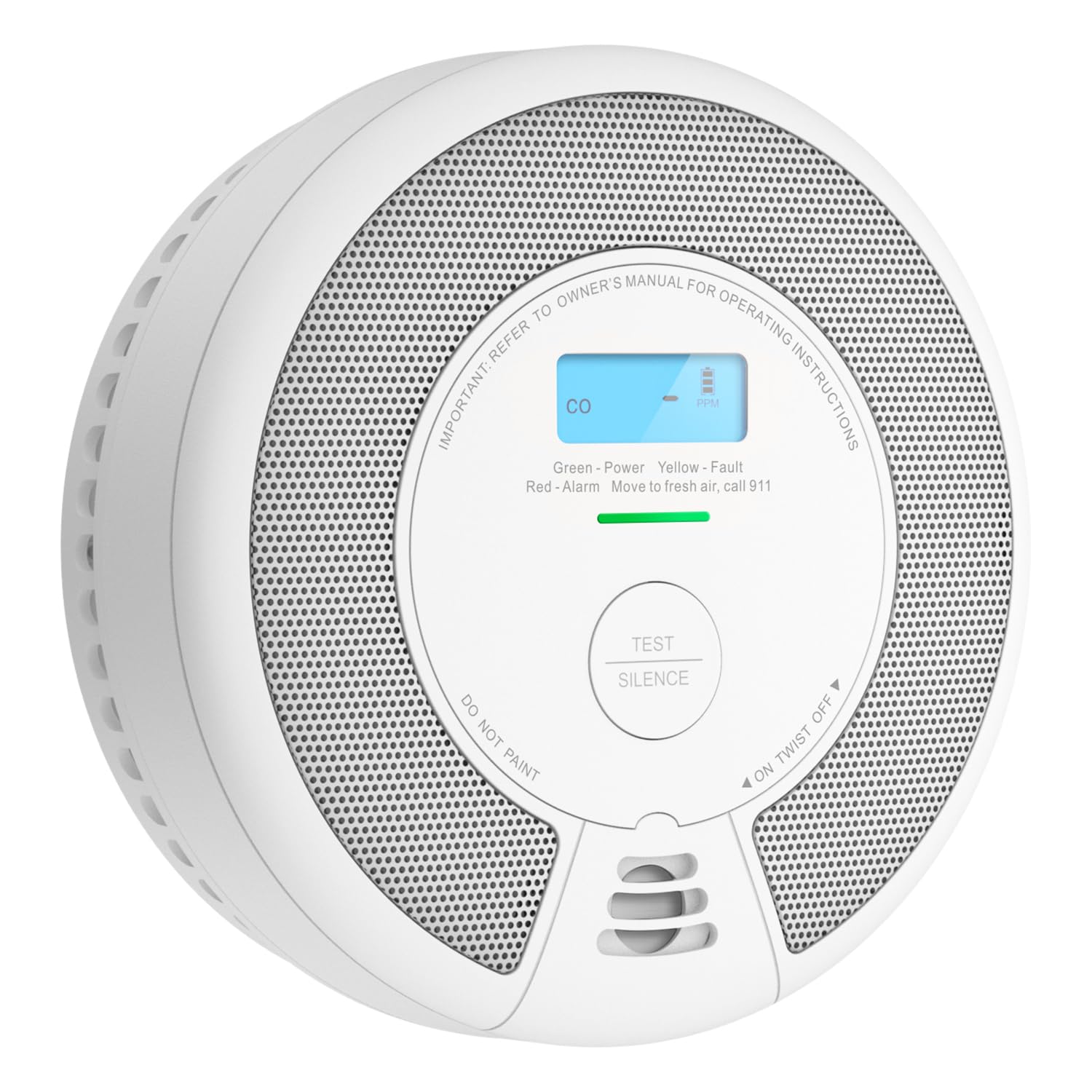
3. X-Sense SC07 Smoke and Carbon Monoxide Combo
Type: Smoke and carbon monoxide combo detector
Pack Size: 1-pack
Power Source: Sealed 10-year battery, not hardwired
Display: LCD
Certification: UL 217 and UL 2034
Best For: Covering two hazards with one unit
This is the most capable unit in the roundup: one device watches for smoke and for carbon monoxide, and an LCD screen shows what it is sensing. The sealed battery is rated to last ten years, which means no annual battery shopping and no chance of a dead cell going unnoticed. Certification to both the smoke and CO standards is stated on the name, so the dual function is not just marketing.
It suits a studio where a single ceiling point has to do the work of two alarms, and where a gas boiler or hob sits close to the sleeping area. The screen is genuinely useful in a small flat because it tells the occupant which hazard triggered the alarm. The trade-off is price and permanence: it costs more than a basic alarm, and the sealed battery means the whole unit is replaced at end of life rather than refilled.
Trade-off: The sealed battery cannot be swapped, so the entire unit is retired when the cell expires.
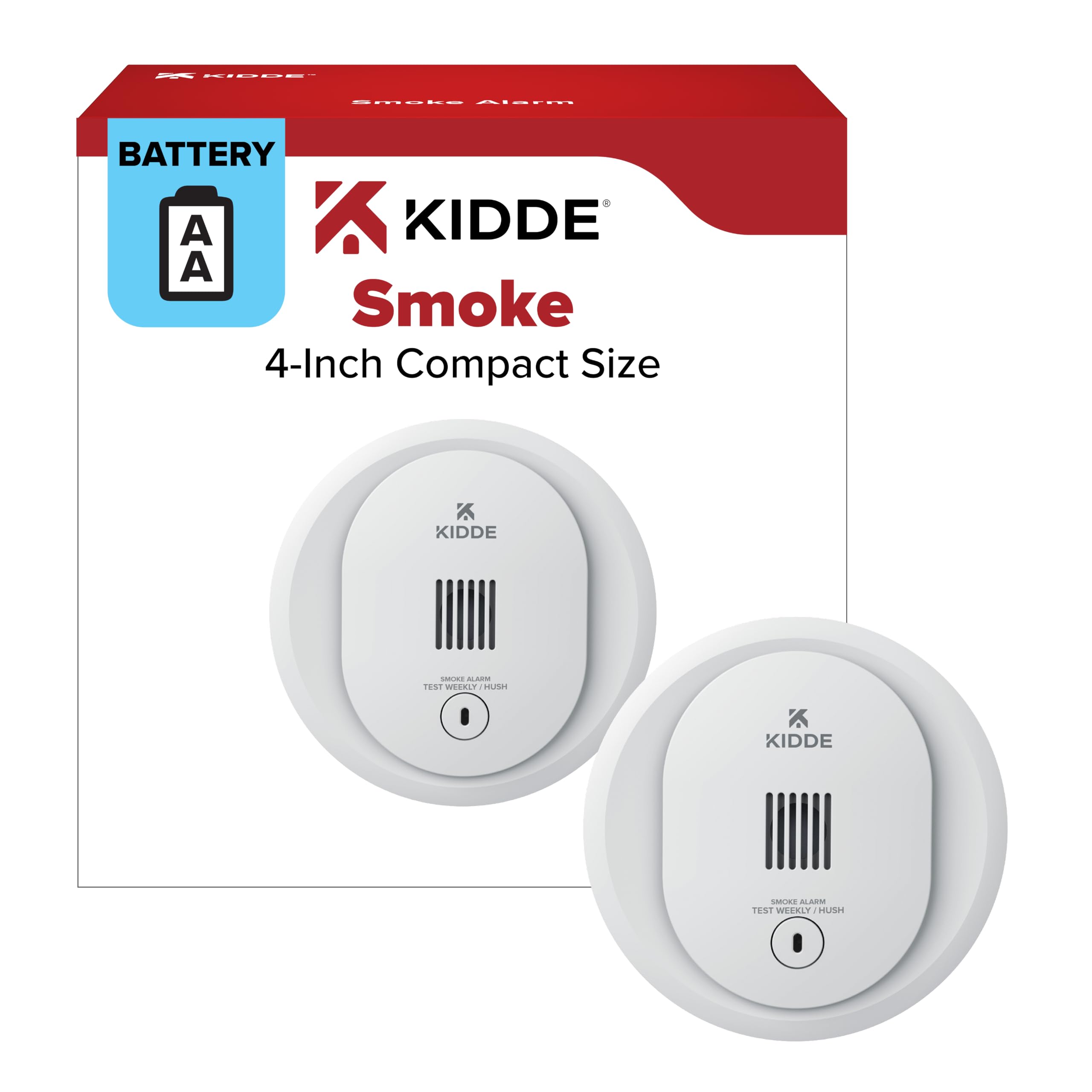
4. Kidde 10SDR Compact Smoke Detector
Type: Battery smoke alarm
Size: 4-inch compact body
Alarm Volume: 85 dB
Power Source: AA batteries
Brand: Kidde
Best For: Small rooms and tight wall space
The 4-inch body is the headline here, and in a studio flat that is a real advantage: it takes up less ceiling real estate and looks less intrusive above a bed or sofa. LED status lights give a quick visual check that the unit is powered and working. The 85 dB alarm is loud enough to be heard from the bathroom or hallway of a small flat, and AA batteries are cheap and easy to source.
It suits buyers who want an unobtrusive alarm for a compact room, or who are fitting several units and want them to disappear into the ceiling. The compact shell is the reason it made the list. The trade-off is that a smaller housing often means a smaller sensing chamber, so buyers who cook aggressively close to the alarm may see more nuisance triggers than a full-size photoelectric model would give.
Trade-off: The compact body may be more prone to cooking-related nuisance alarms in a tight kitchen area.
5. X-Sense SD2J0AX Photoelectric Smoke Alarm

Type: Photoelectric smoke alarm
Pack Size: 1-pack
Power Source: 10-year battery
Features: One-button hush and self-test
Certification: UL 217
Best For: Studios with frequent cooking
Photoelectric sensing is the reason this unit is aimed at kitchens and open-plan living: it is designed to react to smouldering fires while being less easily fooled by steam and cooking smoke. A one-button hush silences a nuisance alarm without removing the battery, and the same button runs a self-test. The 10-year battery and no-wire installation make it a fit for renters who want a fit-and-forget unit.
It suits studio dwellers who cook daily and are tired of fanning a tea towel at the ceiling. The hush button is the practical feature that earns it a place, because it lets the occupant silence a false trigger and get on with dinner. The trade-off is that a hush button invites overuse — silencing the alarm repeatedly instead of moving it away from the hob defeats the point.
Trade-off: The hush button can be pressed habitually, which risks silencing a real alarm along with the nuisance ones.
Before You Buy
- Power source: Battery-only units are the easiest to fit in a rented studio; hardwired units need an existing alarm point and are not a universal swap.
- Coverage: A single alarm may not reach every corner of an open-plan flat, so consider one unit near the kitchen and one near the sleeping area.
- Sensor type: Photoelectric models are generally calmer around cooking; combo units add carbon monoxide cover where a gas appliance is present.
- Size: A compact 4-inch body suits tight ceilings and small rooms, while full-size units may offer a larger sensing chamber.
- Maintenance: Sealed 10-year batteries remove annual swaps but mean the whole unit is replaced at end of life; AA and 9V models need periodic checks.
- Certification: Look for UL 217 on smoke alarms and UL 2034 on any unit claiming carbon monoxide detection.
- Placement: Keep alarms away from steamy bathrooms and directly above hobs to reduce nuisance triggers in a small space.
Frequently Asked Questions
-
How many smoke alarms does a studio flat need?
At least one, positioned between the cooking area and the sleeping area. A second unit near the entrance or boiler adds cover in an open-plan layout. -
Is a photoelectric or ionization alarm better for a small flat?
Photoelectric models are generally the better match for studios because they are less easily triggered by cooking and steam. -
Can a renter fit a smoke alarm without an electrician?
Yes. Battery-powered and sealed-battery units need no wiring, so they can be fitted without touching the mains. -
Does a combo smoke and CO alarm replace two separate units?
It covers both hazards from one ceiling point, which suits a studio where space is limited, though the unit costs more than a smoke-only alarm. -
How long do sealed-battery alarms last?
The battery in a sealed unit is rated for around ten years, after which the whole alarm is replaced rather than refilled. -
Where should an alarm go in a studio kitchen?
On the ceiling away from the hob and any steamy bathroom door, so cooking fumes have room to disperse before reaching the sensor.
Bottom Line
For most studio flats, the X-Sense SC07 is the strongest single buy: it covers smoke and carbon monoxide from one ceiling point, runs on a sealed ten-year battery, and shows the hazard on an LCD screen. Renters who cannot wire anything and want the lowest outlay should look at the First Alert SMI100, while daily cooks will appreciate the hush button on the X-Sense SD2J0AX. Check the current price on Amazon before deciding.
