Why there are Amazon links here: Brave Review is paid a commission for qualifying Amazon purchases made through the links below. Your price does not change, and using our links is entirely optional. How this works
Best Surge Protector for a Home with Solar Panels: Five Picks for Whole-Home and PV-Side Protection
A solar array adds a second electrical system to a house, and that system needs its own surge defense. This roundup covers five surge protection devices chosen for homes with rooftop or ground-mount PV, from a low-cost DC lightning arrester for a small setup to heavier Type 2 units for a full residential installation. Budget-minded DIYers, owners upgrading an existing array, and anyone protecting a service panel will each find a match below. The overview table sorts every pick by key spec and best use, so a reader can shortlist in under a minute.
The Picks at a Glance
| Product | Key Spec | Best Use | Price Tier |
|---|---|---|---|
| MNSPD600 | 600V-class device | Whole-home protection on larger PV systems | Mid |
| Surge Protection Device MNSPD-300-AC | 300V AC device | AC-side protection at the service panel | Mid |
| 2P 40KA Voltage Surge Protector DC 1000V | 40KA, 1000V DC, 2-pack | Budget DC-side protection, DIN-rail installs | Budget |
| Solar SPD MNSPD-600, Type 2 | Type 2 arrestor, indoor/outdoor | Outdoor PV runs and exposed combiner boxes | Mid |
| MNSPD-300-DC Surge Protection Device 300VDC | 300VDC device | DC-side protection on smaller arrays | Mid |
MNSPD600

Model: MNSPD600
Voltage Class: 600V series
Mounting: Panel-mount device
Intended Use: PV and service equipment protection
Construction: Sealed surge module
The MNSPD600 is a sealed surge module built for the higher voltage class that larger residential arrays run at. Its housing is designed to sit at the equipment it protects rather than at a wall outlet, so it belongs in a combiner box, disconnect enclosure, or service panel area. The 600V-class rating puts it in the range of full-size rooftop systems rather than small shed kits. Buyers who are already running conduit and mounting hardware for a PV install will find it fits the same workflow.
This pick earns its place for households with a substantial array and a single point where all the PV wiring converges. It is not for someone protecting a single appliance or a small plug-in setup, and it is not a substitute for a licensed electrician’s evaluation of the service. The trade-off is that a sealed higher-voltage module costs more than a bare DIN-rail arrester and offers no user-serviceable parts.
Trade-off: A sealed module at this voltage class costs noticeably more than basic DIN-rail arrestors, and a failed unit means replacement rather than a field-serviceable cartridge swap.
Surge Protection Device MNSPD-300-AC
Model: MNSPD-300-AC
Voltage Class: 300V AC
System Side: AC service side
Intended Use: Panel and equipment protection
Construction: Sealed device housing
The MNSPD-300-AC is aimed at the alternating-current side of a solar home — the service panel, subpanel, or inverter AC output. Protecting only the DC side of an array leaves the household wiring exposed to surges that arrive over the utility feed, and this unit closes that gap. It is a sealed device rather than an open DIN-rail block, so it mounts at the equipment enclosure with the wiring landed directly to its terminals. Homes with a hybrid inverter and a backup panel have two AC points worth considering.
This one suits owners who have already handled PV-side protection and now want the house circuits covered. It is not the right choice for a DC combiner box, and it will not protect a detached structure on its own circuit. The trade-off is that it covers one side of the system only, so a complete setup needs a DC counterpart.
Trade-off: It protects the AC side alone, so a full solar installation still needs a separate DC-side device to be genuinely covered.
2P 40KA Voltage Surge Protector DC 1000V Solar PV Lightning Arrester
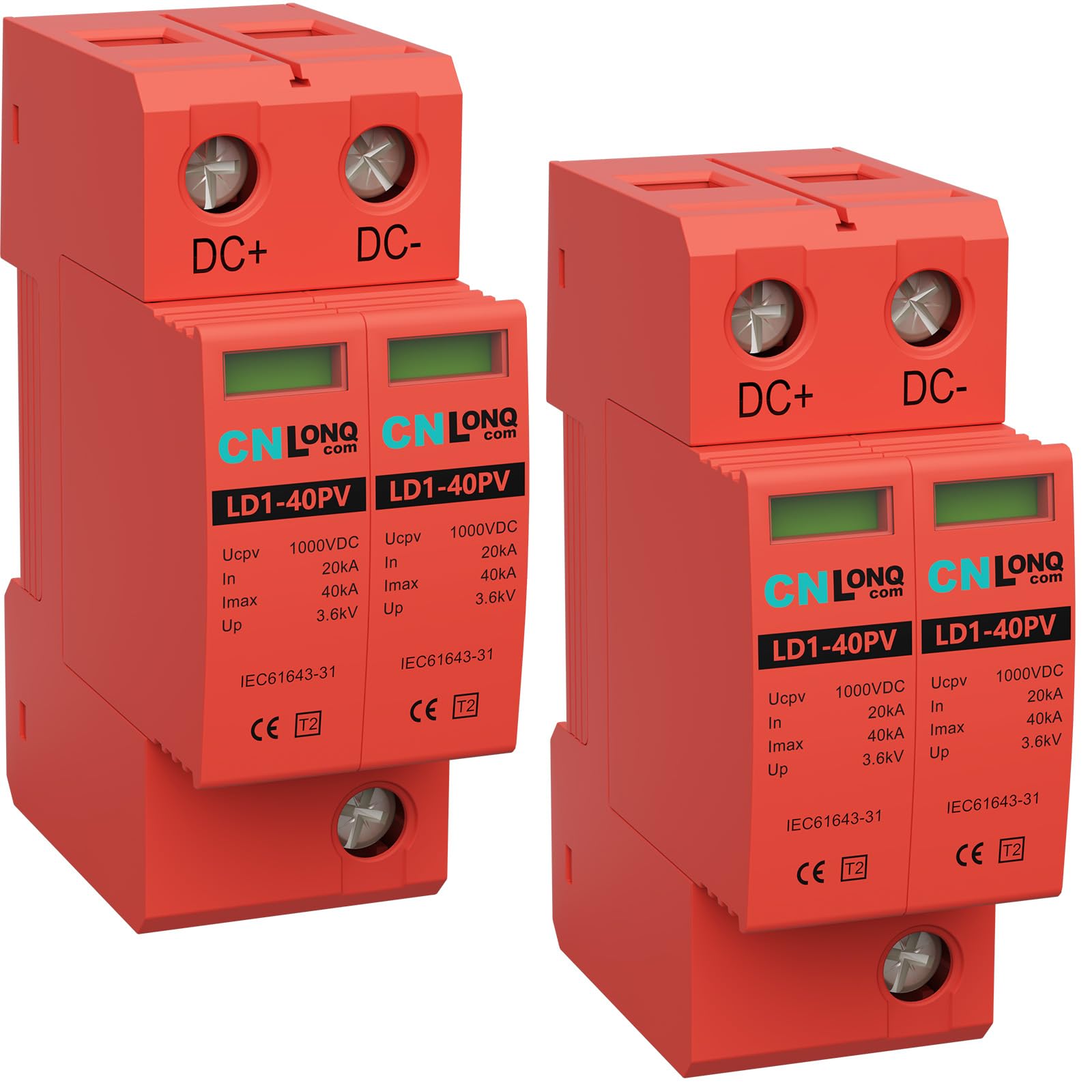
Surge Rating: 40KA
Voltage Class: 1000V DC
Configuration: 2-pole, two units included
Mounting: 35mm DIN rail
Intended Use: Solar PV lightning protection
Package: 2 pieces
This two-pack of 2-pole DC arrestors is the budget entry in the group and the easiest to fit into a standard electrical enclosure. The 35mm DIN rail mount is the common format for residential combiner and distribution boxes, so the pair drops into an existing layout without custom brackets. A 1000V DC class covers the open-circuit voltage of most residential string configurations, and the 40KA rating gives meaningful headroom for a lightning-prone location. Two units in the box means a spare for a second array or a replacement down the line.
It suits the cost-conscious installer or handy homeowner building out a small PV system who wants DIN-rail hardware at a low entry price. It is not for someone who needs a single sealed unit for an outdoor enclosure, and it is not a fit for AC service panels. The trade-off is that budget DIN-rail modules typically use lighter housings and offer less weather sealing than pricier sealed devices, so indoor mounting is the safer bet.
Trade-off: At this price the housing and sealing are basic, so the pair is better suited to a protected indoor enclosure than an exposed outdoor box.
Solar SPD MNSPD-600, Type 2 Surge Arrestor
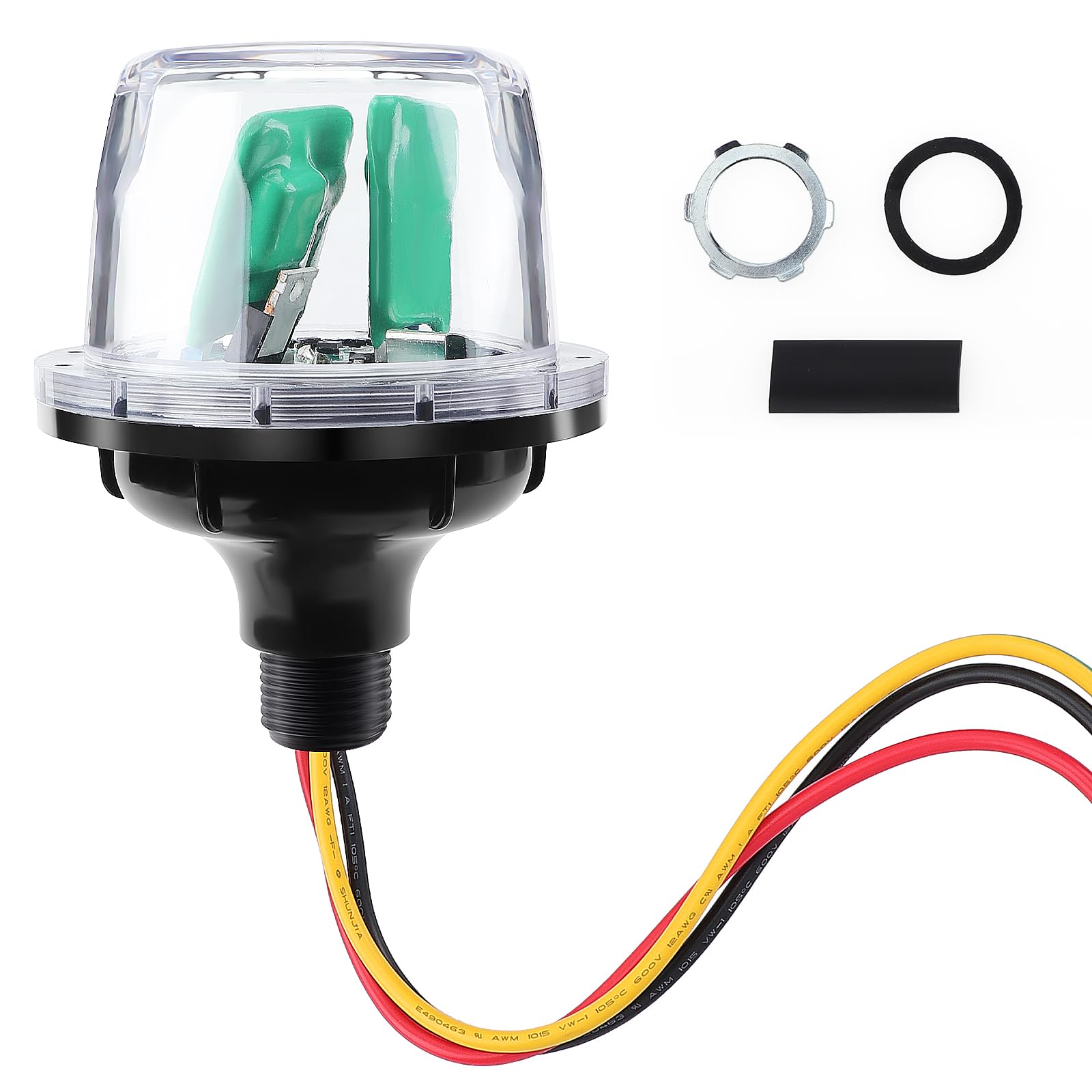
Model: MNSPD-600
Type: Type 2 surge arrestor
Voltage Class: 600V series
Installation: Indoor and outdoor
Feature: Status indicator
Intended Use: Solar PV surge protection
The Type 2 designation and the indoor/outdoor rating are what set this unit apart from the rest of the field. A Type 2 arrestor is built for installation at the distribution board or the equipment it defends, which is where a solar home’s combiner and inverter connections live. The outdoor rating matters for arrays whose DC runs terminate in an exterior box or on a wall-mounted combiner. A status indicator lets an owner glance at the unit and see whether it has taken a hit, without pulling out a meter.
This pick suits households with exposed exterior PV equipment and owners who want a visual health check between professional inspections. It is not for a buyer who only needs a cheap spare for an indoor panel, and it is not a whole-home solution by itself. The trade-off is that weather-rated hardware carries a premium, and the indicator is a convenience rather than a substitute for periodic testing.
Trade-off: The indoor/outdoor rating and indicator push the price above plain indoor modules, so a buyer with a protected interior enclosure pays for capability they may not use.
MNSPD-300-DC Surge Protection Device 300VDC
Model: MNSPD-300-DC
Voltage Class: 300VDC
System Side: DC side
Intended Use: PV circuit protection
Construction: Sealed device housing
The MNSPD-300-DC is the DC-side companion to the AC unit above, sized for smaller arrays whose string voltage stays in the 300VDC class. It protects the wiring between the panels and the inverter, which is the stretch most exposed to a nearby lightning strike. The sealed housing is built to be mounted at the equipment rather than handled often, and the terminals accept the heavier conductors used on PV runs. Homes with a modest rooftop array and a single string will find the rating matches their system.
This one suits owners of smaller PV installations who want DC protection without paying for a higher-voltage module. It is not for a large array running above its voltage class, and it is not an AC service panel device. The trade-off is that the voltage ceiling limits it to smaller systems, so anyone planning to expand the array should size up now rather than replace later.
Trade-off: The 300VDC ceiling rules out larger or expanding arrays, and the sealed housing means no replaceable cartridge after a surge event.
Before You Buy
- System side: A solar home has both a DC side (panels to inverter) and an AC side (inverter to service panel). Confirm which side needs coverage before ordering.
- Voltage class: Match the device to the array’s voltage class. A 300VDC unit will not suit a system running at a higher class, and oversizing wastes money.
- Mounting format: DIN rail, panel mount, and sealed enclosure devices are not interchangeable. Check what the combiner box or panel actually accepts.
- Indoor versus outdoor: An exterior combiner or wall-mounted box needs a weather-rated unit; an indoor panel does not.
- Type rating: A Type 2 arrestor is intended for distribution-board and equipment-level protection. Confirm the intended installation point matches the space available.
- Installation: Surge devices land on live conductors. Unless local rules allow otherwise, plan on a licensed electrician for the final connection and inspection.
- Spares: A device that has absorbed a surge may need replacement. Buying a two-pack or noting the model for a reorder avoids a gap in protection.
Frequently Asked Questions
-
Does a solar home need more than one surge protector?
Yes, in most cases. The DC side and the AC side are separate circuits, and a single device typically covers only one of them. -
Can a surge protector be installed without an electrician?
These devices connect to live PV and service wiring. Local rules vary, but a licensed electrician is the safe route for the final connection. -
What does Type 2 mean on a surge arrestor?
It indicates a device intended for installation at a distribution board or at the equipment being protected, rather than at the service entrance alone. -
Is a 1000V DC rating better than a 300V DC rating?
Not inherently. The right rating matches the array’s voltage class; a higher ceiling only helps if the system actually runs in that range. -
How does a status indicator help?
It gives a visible sign that the unit has absorbed a surge and may need replacement, which is useful between professional inspections. -
Can a budget DIN-rail unit go outdoors?
A basic indoor module is better kept in a protected enclosure. Exposed exterior boxes call for a unit rated for outdoor installation.
Bottom Line
For most homes with a full-size array, the Solar SPD MNSPD-600 Type 2 is the strongest single pick: its indoor/outdoor rating and status indicator suit real-world PV equipment locations, and it covers the higher voltage class that larger systems run at. Buyers on a tight budget building out a small array should look at the 2-pole 40KA two-pack instead, while anyone protecting the household circuits should pair a DC device with the MNSPD-300-AC. Check the current price on the Solar SPD MNSPD-600 before ordering.
