Why there are Amazon links here: Brave Review is paid a commission for qualifying Amazon purchases made through the links below. Your price does not change, and using our links is entirely optional. How this works
Best Thermal Camera for Finding Heat Loss: 5 Picks That Show Where the Money Leaks Out
The best thermal camera for finding heat loss turns an invisible problem into a colored picture: cold drafts around windows, warm spots over a door frame, a failing breaker that runs hot. This roundup covers five handheld and phone-based infrared cameras, from a budget entry model to a high-resolution unit built for serious inspection work. It suits three kinds of buyers: homeowners chasing high energy bills, DIYers who want one tool for HVAC and electrical checks, and tradespeople who need documented evidence on a job. The overview below ranks every pick by key spec and best use so a decision takes a minute, not an afternoon.
The Picks at a Glance
| Product | Key Spec | Best Use | Price Tier |
|---|---|---|---|
| TOPDON TC004 Mini | 128 x 128 IR resolution, 15H battery | Budget home heat-loss checks | Budget |
| FOXWELL HT280 | 320 x 240, PC analysis | HVAC and electrical inspection | Mid-range |
| Thermal Master Thor002 | 512 x 384 X³, 3.5" IPS screen | Detailed building diagnostics | Premium |
| FOXWELL RT280 | 320 x 240, laser + PC analysis | All-round inspection with photos | Mid-range |
| RISION Magic | 320 x 240 QuadIR, USB-C for phone or PC | Phone-based spot checks | Budget to mid-range |
1. TOPDON TC004 Mini Thermal Imaging Camera
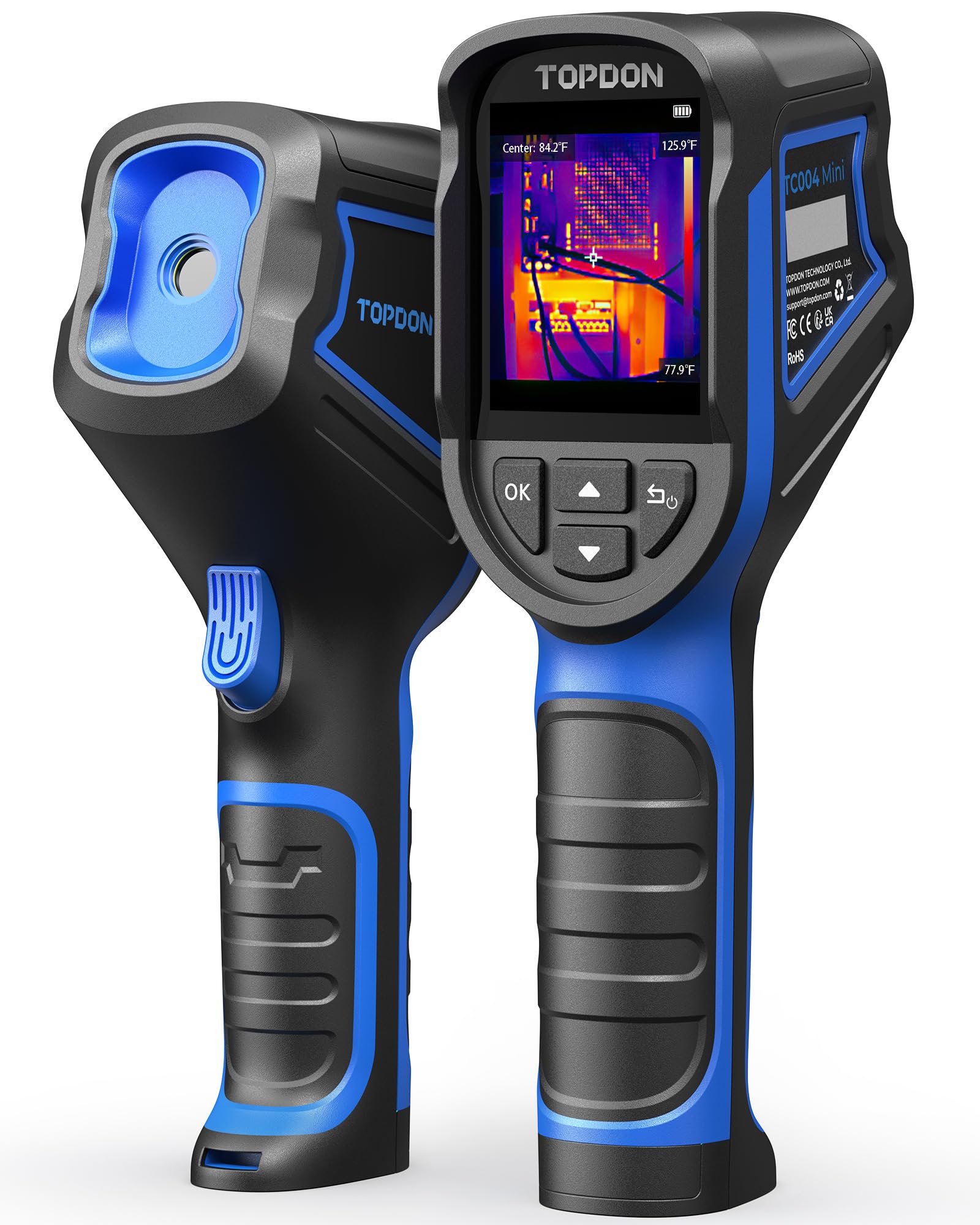
IR Resolution: 128 x 128
Display Resolution: 240 x 240 TISR
Frame Rate: 25Hz
Battery Life: 15H
Alerts: High/low temperature
Power Management: Auto shutdown
Form Factor: Handheld, blue housing
The TOPDON TC004 Mini Thermal Imaging Camera is the entry point into the list, and it is built like a tool that lives in a drawer until the heating bill arrives. Its 128 x 128 infrared sensor produces a blockier image than the higher-priced models here, but at 25Hz it refreshes fast enough to sweep a wall or a window frame without the picture lagging behind the hand. The high and low temperature alerts are the practical feature for heat-loss hunting: set a threshold and the camera flags a spot instead of relying on the eye to catch a subtle color shift. The 15-hour battery claim and auto shutdown make it a low-maintenance unit for occasional use.
This is the pick for a homeowner who wants a first camera and does not need inspection-grade detail. It earns its place on price and battery life rather than image quality, and the compact body suits quick passes around a house.
Trade-off: The low-resolution sensor limits how small a temperature difference it can show clearly, so a narrow leak around a window seal may read as a soft blob rather than a defined outline.
Check the current price on Amazon
2. FOXWELL HT280 Thermal Imaging Camera
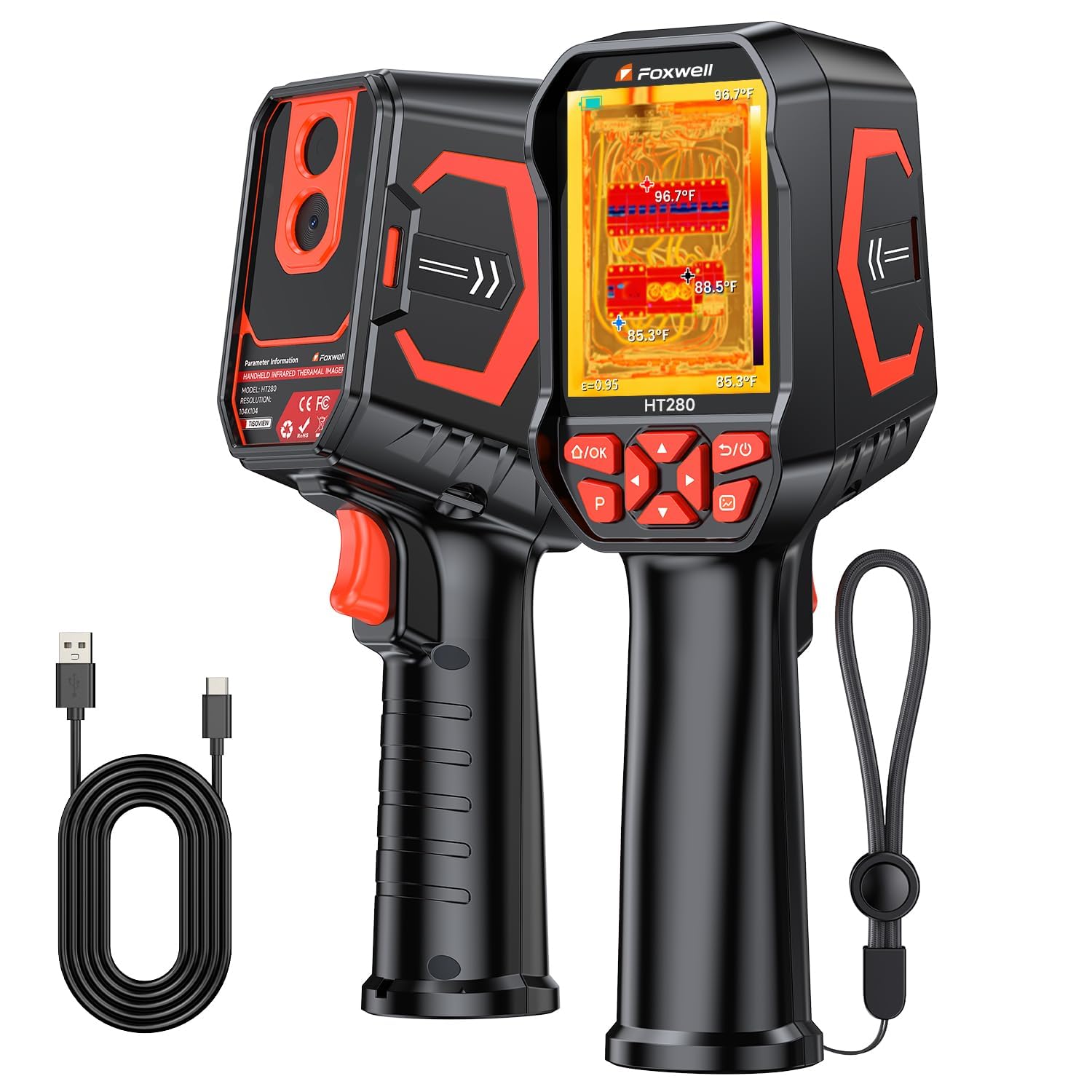
IR Resolution: 320 x 240
Display: 2.8" LCD, 260 x 260 TISR
Frame Rate: 25Hz
Temp Alarm: Yes
Software: PC analysis
Intended Use: Home, HVAC, electrical, industrial inspection
The FOXWELL HT280 Thermal Imaging Camera steps up to a 320 x 240 sensor, which is the resolution tier where a heat-loss survey starts to look like a real diagnostic image rather than a heat map sketch. The 2.8-inch LCD is the standard size for handheld inspection cameras and keeps the body small enough to hold up against a ceiling corner. The PC analysis function is the feature that separates it from the budget pick: images can move to a computer for a closer look and for keeping a record of what was found. The temperature alarm works alongside the higher resolution for scanning large surfaces such as exterior walls.
This model suits a tradesperson or a serious DIYer who inspects HVAC and electrical panels as well as building envelopes. It is a mid-range pick that trades the budget model’s simplicity for a sharper sensor and desktop review.
Trade-off: The PC analysis workflow assumes access to a computer and the patience to transfer files, which slows down a quick walkthrough compared with a camera that reports everything on-screen.
Check the current price on Amazon
3. Thermal Master Thor002 Handheld Thermal Camera
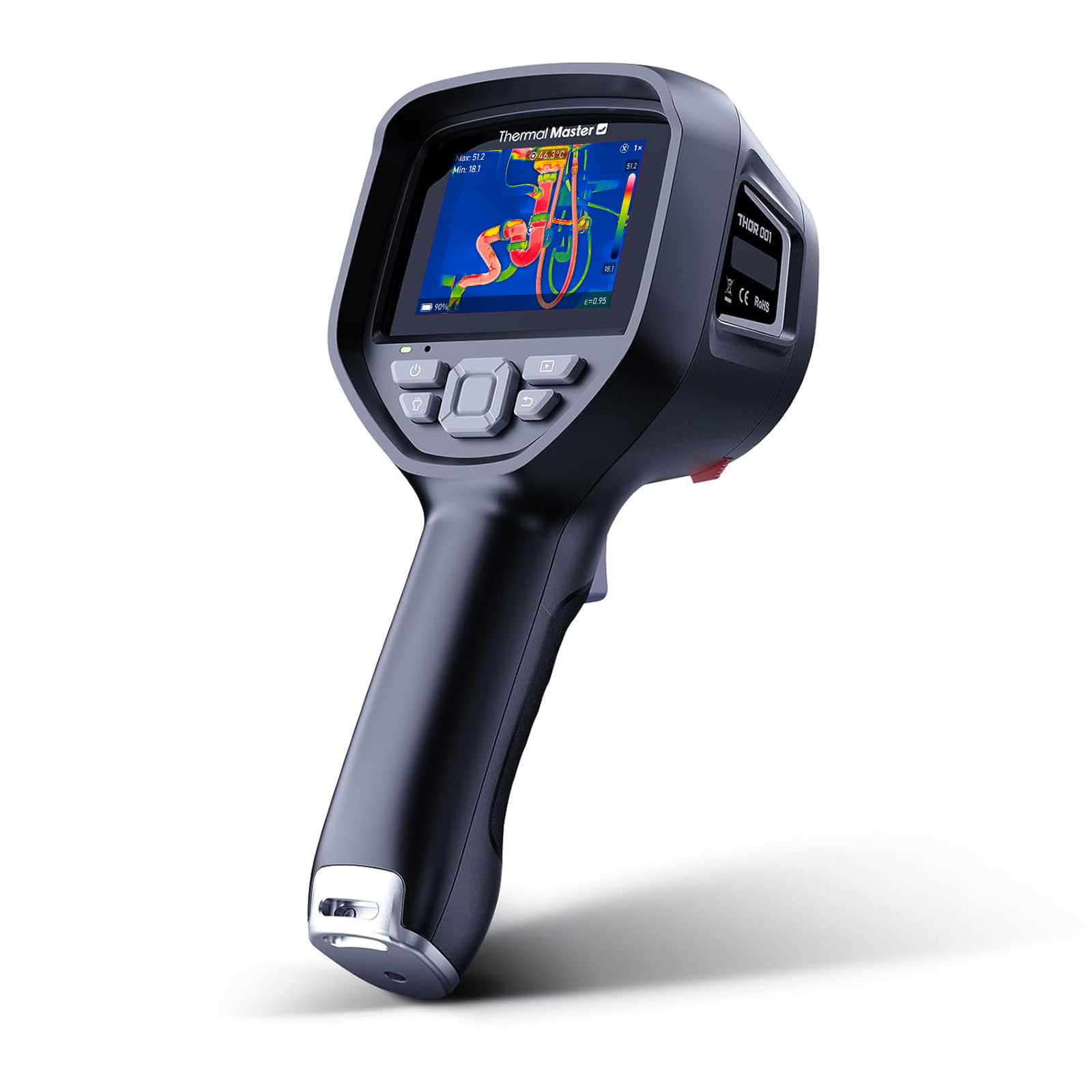
IR Resolution: 512 x 384 X³
Display: 3.5" IPS screen
Imaging Modes: 5
Temperature Range: -4°F to 1022°F
Accuracy: ±3.6°F
Intended Use: Home, HVAC, electrical inspection
The Thermal Master Thor002 Handheld Thermal Camera is the premium option, and its 512 x 384 sensor is the highest resolution on this list by a wide margin. That matters for heat loss because a denser sensor resolves the thin cold line around a poorly fitted window or the edge of an insulated panel, which lower-resolution cameras smear together. The 3.5-inch IPS screen is larger than the 2.8-inch panels on the FOXWELL models and holds up better at an angle or in daylight. Five imaging modes let the user switch how the temperature data is displayed, and the stated ±3.6°F accuracy plus the wide -4°F to 1022°F range covers everything from a cold exterior wall to a hot electrical component.
This pick is for the buyer who inspects buildings regularly and wants the clearest picture the category offers. It costs the most here, and the detail is the reason.
Trade-off: A high-resolution sensor and a large screen draw more power and add bulk, so this is the least pocketable camera in the roundup and the one most likely to need a charge mid-survey.
Check the current price on Amazon
4. FOXWELL RT280 Thermal Imaging Camera
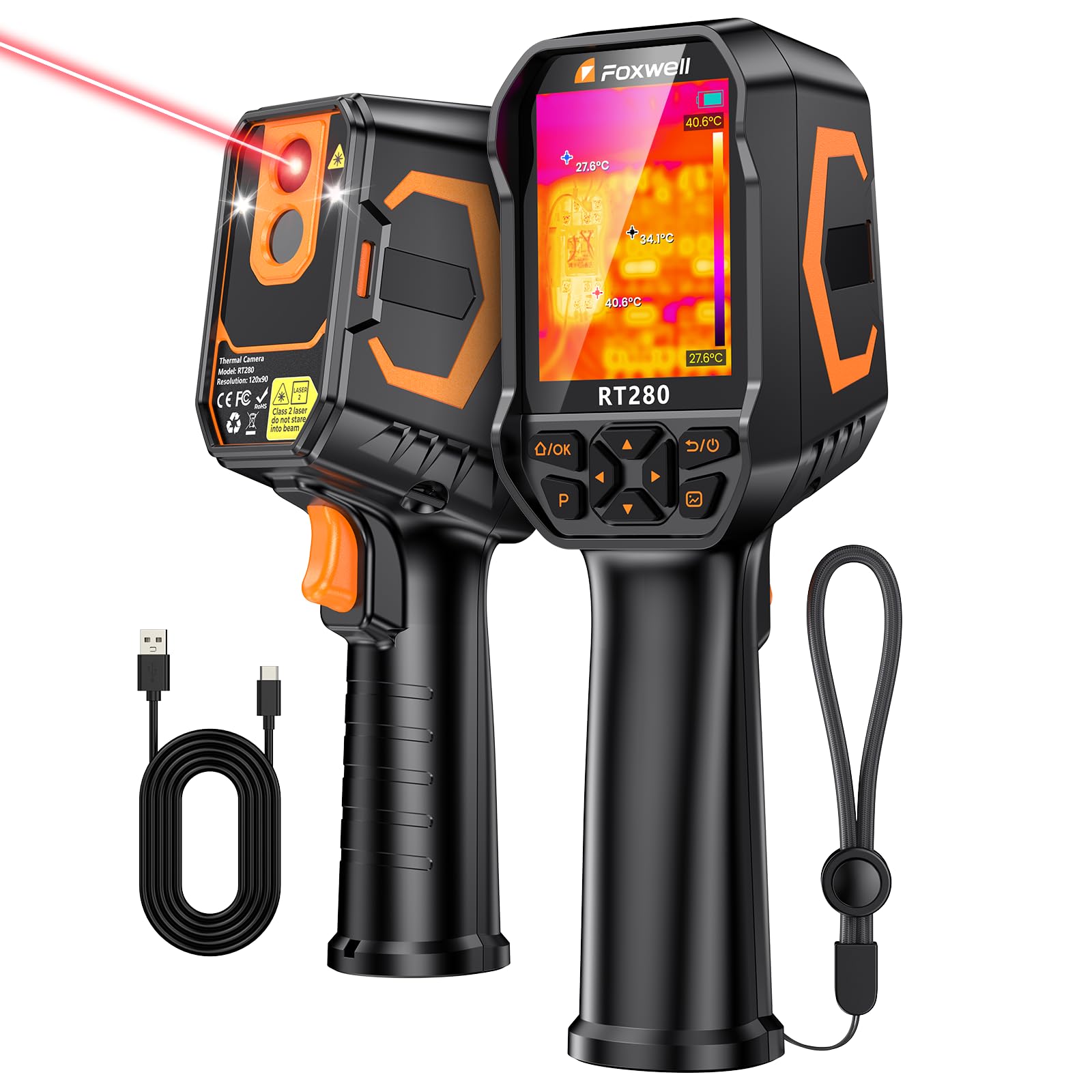
IR Resolution: 320 x 240
Display: 2.8" LCD, 240 x 180 TISR
Frame Rate: 25Hz
Temperature Range: -4°F to 1022°F
Features: Laser, temp alarm, PC analysis, photo and video
Storage: 8GB
Intended Use: HVAC, electrical, building inspection
The FOXWELL RT280 Thermal Imaging Camera shares the 320 x 240 sensor of the HT280 but adds the features that turn a camera into a reporting tool. The laser pointer gives a visible reference point on the surface being measured, which helps when comparing a reading against a specific spot on a wall or a panel. Photo and video capture with 8GB of built-in storage means findings can be recorded on the spot and reviewed later, and the PC analysis software handles the deeper look. The temperature range and 25Hz refresh rate are the same practical standard as the rest of the mid-range field.
This is the pick for a buyer who needs evidence, not just a glance: a contractor documenting a problem for a client, or a homeowner building a case for a repair. It overlaps with the HT280 but wins on capture and storage.
Trade-off: The extra features add menu depth, and the camera asks more of the user than the budget TOPDON before it produces a clean result.
Check the current price on Amazon
5. RISION Magic Thermal Camera
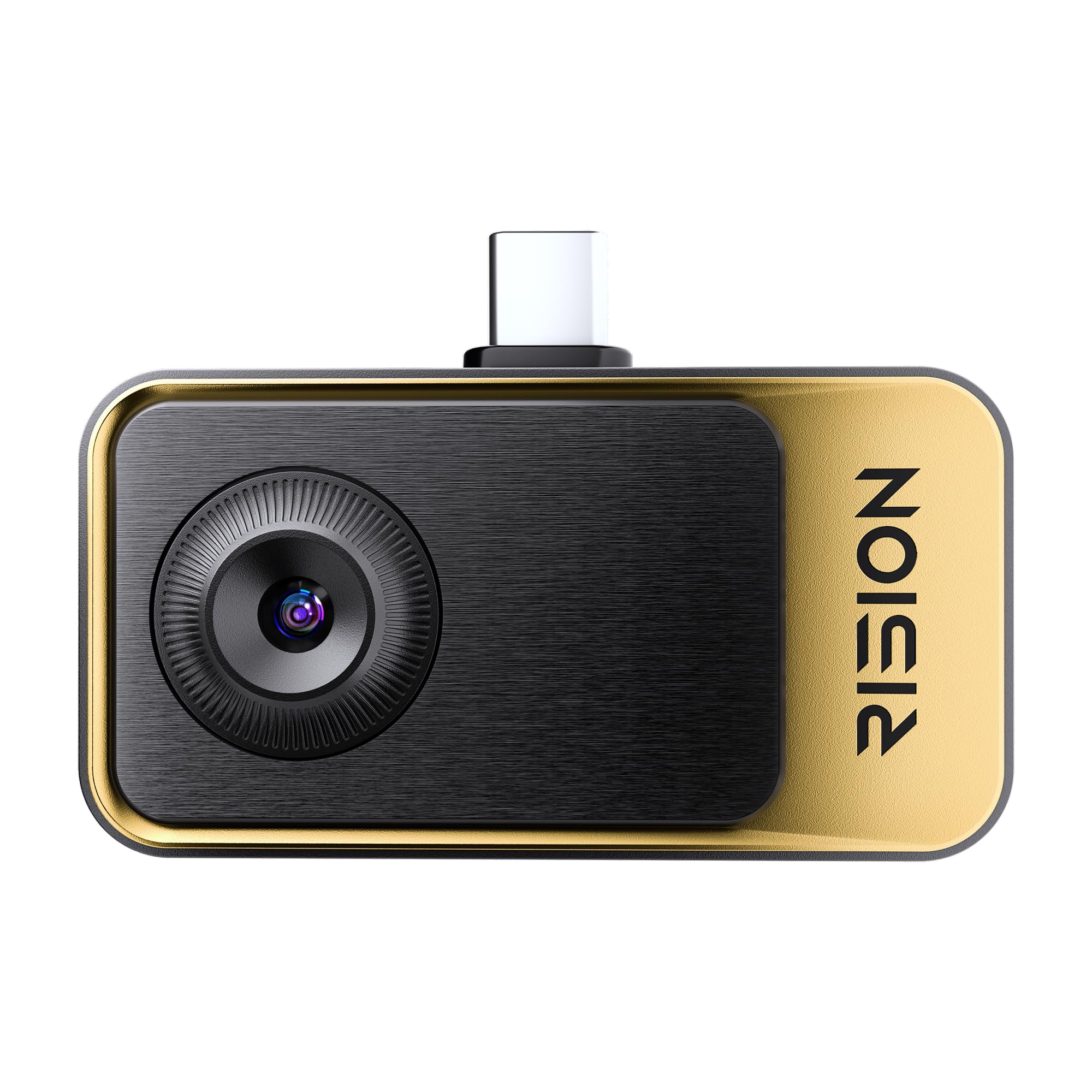
IR Resolution: 320 x 240 QuadIR
Compatibility: USB-C, iOS, Android, Windows
Temperature Range: -4°F to 1112°F
Accuracy: ±3.6°F
Frame Rate: 25Hz
Features: Hot/cold spot tracking, live temperature
Intended Use: HVAC and electrical inspection
The RISION Magic Thermal Camera takes a different approach: it is a plug-in module that uses a phone, tablet or computer as its screen rather than carrying its own display. The 320 x 240 QuadIR sensor matches the mid-range handhelds, and the hot and cold spot tracking plus live temperature readout put the key numbers on the connected device. The compatibility list is the widest here, covering USB-C, iOS, Android and Windows, so it works with whatever hardware a buyer already owns. The stated temperature range reaches 1112°F, the highest ceiling on the list.
This pick suits a buyer who already carries a phone everywhere and wants a thermal camera that lives in a pocket without paying for a second screen. It is the most portable route to a 320 x 240 sensor.
Trade-off: Relying on a connected device means battery life, screen brightness and app behavior all depend on the phone or laptop, and the camera is unusable if that device is not at hand.
Check the current price on Amazon
Before You Buy
- Resolution: A 128 x 128 sensor is enough for obvious leaks; 320 x 240 and above resolves thin gaps and edges, which matters for a thorough heat-loss survey.
- Frame Rate: 25Hz keeps the image smooth while panning across a wall; a slower refresh makes the picture lag and is harder to read.
- Temperature Alerts: High/low alarms flag a spot automatically, which is faster than scanning a color scale by eye.
- Recording: Photo, video and PC analysis features turn a camera into a reporting tool; a buyer who only wants a quick look does not need them.
- Compatibility: A plug-in model depends on a phone or computer, so check the connector and operating system before buying.
- Temperature Range and Accuracy: A range that reaches past 1000°F covers electrical work as well as building envelopes, and a stated accuracy figure tells the buyer how much to trust small differences.
- Power and Portability: Battery life and body size decide whether the camera lives in a pocket or a toolbox.
Frequently Asked Questions
-
What resolution is needed to find heat loss in a house?
A 320 x 240 sensor is the practical sweet spot for building surveys. A 128 x 128 model works for obvious drafts but blurs small gaps. -
Can a thermal camera find air leaks around windows and doors?
Yes. A temperature difference between indoor and outdoor air shows up as a cold or warm band around the frame, and a higher-resolution sensor outlines it more clearly. -
Is a phone-based thermal camera as good as a handheld?
The sensor can match a handheld at the same resolution, but the experience depends on the connected device’s screen and battery. -
What does 25Hz mean on a thermal camera?
It is the refresh rate of the image. At 25Hz the picture keeps up with a moving hand, which makes scanning a wall faster and less tiring. -
Do temperature alerts matter for finding heat loss?
They help on large surfaces. Setting a threshold lets the camera flag a spot instead of relying on the eye to catch a subtle color change. -
Can one thermal camera handle both HVAC and electrical checks?
Yes, provided the temperature range reaches high enough for hot components. The models here that reach past 1000°F cover both jobs.
Bottom Line
For most buyers, the FOXWELL RT280 Thermal Imaging Camera is the best thermal camera for finding heat loss: a 320 x 240 sensor, laser reference, temperature alarm and photo/video capture cover a full survey without the premium price of the Thermal Master. A homeowner on a tight budget is better served by the TOPDON TC004 Mini, and a buyer who inspects buildings for a living should go straight to the Thermal Master Thor002 for its higher resolution.
