Why there are Amazon links here: Brave Review is paid a commission for qualifying Amazon purchases made through the links below. Your price does not change, and using our links is entirely optional. How this works
Best Thermostat for a House with a Solid Fuel Stove and Radiators
A solid fuel stove with radiators needs a thermostat that can handle a heat source which does not switch off on command. The picks below split into two camps: simple non-programmable thermostats that reliably control a pump or zone valve, and smart models for households that want scheduling and remote control. Budget-conscious owners, DIY installers, and tech-minded families each have a clear option here. The overview table below narrows five products to one in under a minute.
Overview of the Picks
| Product | Key Spec | Best Use | Price Tier |
|---|---|---|---|
| White-Rodgers 70 Series Classic 1E78-140 | Non-programmable, single-stage | Cheap reliable zone control | Budget |
| Sensi Smart Thermostat ST55 | Wi-Fi, Alexa, Energy Star | Smart control on a budget | Mid-range |
| Honeywell Home RTH9585WF1004 | Wi-Fi, 7-day programmable, color touchscreen | Full scheduling and remote access | Premium |
| Honeywell TH1100DV1000/U Pro 1000 | Vertical non-programmable | Clean vertical wall mounting | Mid-range |
| NonProgrammable Digital Thermostat | 1 heat/1 cool, backlit, DIY install | Lowest-cost replacement | Budget |
1. White-Rodgers 70 Series Classic 1E78-140
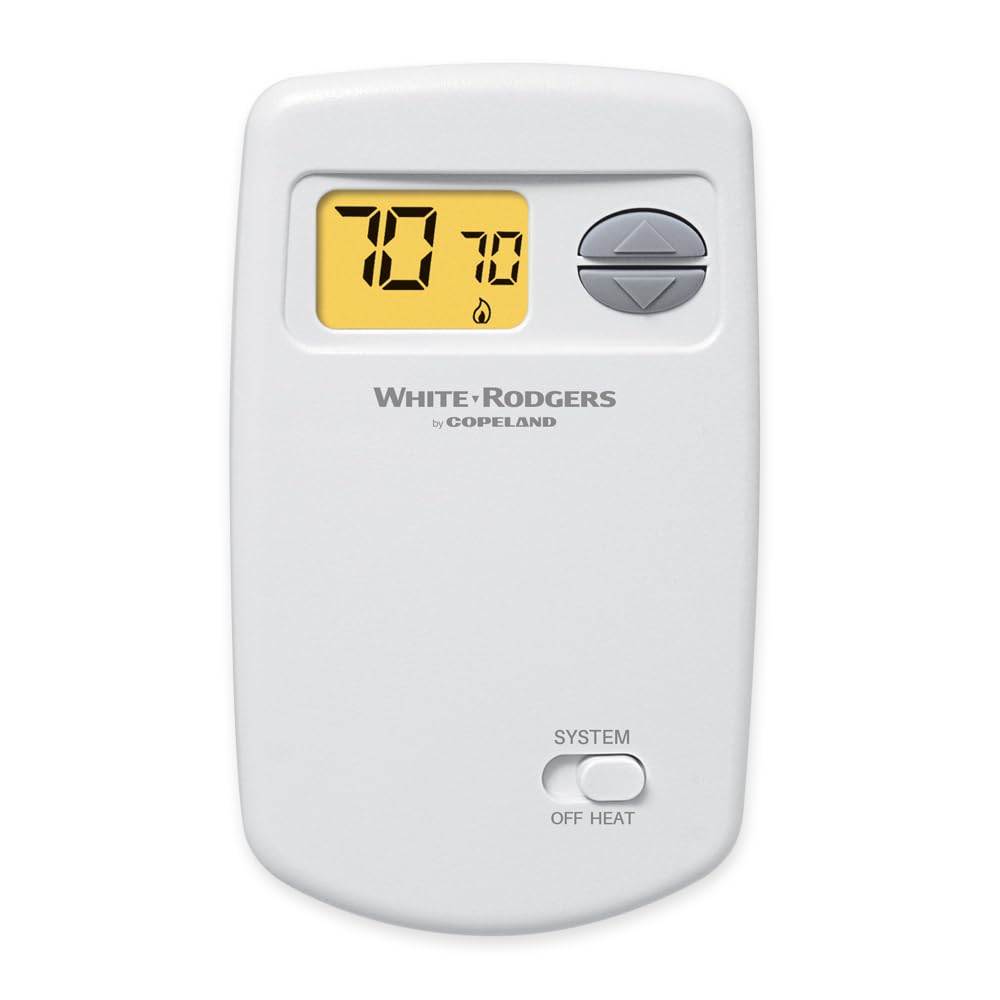
Type: Non-programmable, single-stage
Series: 70 Series Classic
Control: Manual dial-style setpoint
Mounting: Standard wall plate
Best use: Zone valve or pump control
The White-Rodgers 70 Series Classic is a straightforward mechanical-style thermostat built for single-stage heating and cooling. It uses a simple setpoint dial rather than a digital menu, which makes it easy to operate for anyone in the household. The unit is designed to switch a zone valve, pump, or boiler circuit rather than a stove directly, so it fits a radiator system where the stove heats a thermal store or back boiler.
This is the pick for owners who want the thermostat to do one job and never fail at it. There is no app, no schedule, and no firmware, which removes a whole class of problems in a house where the heat source runs on its own timetable. It suits older radiator systems and anyone replacing a worn-out dial unit.
Trade-off: The lack of programming means every temperature change is manual, and the simple display gives no energy feedback.
2. Sensi Smart Thermostat ST55
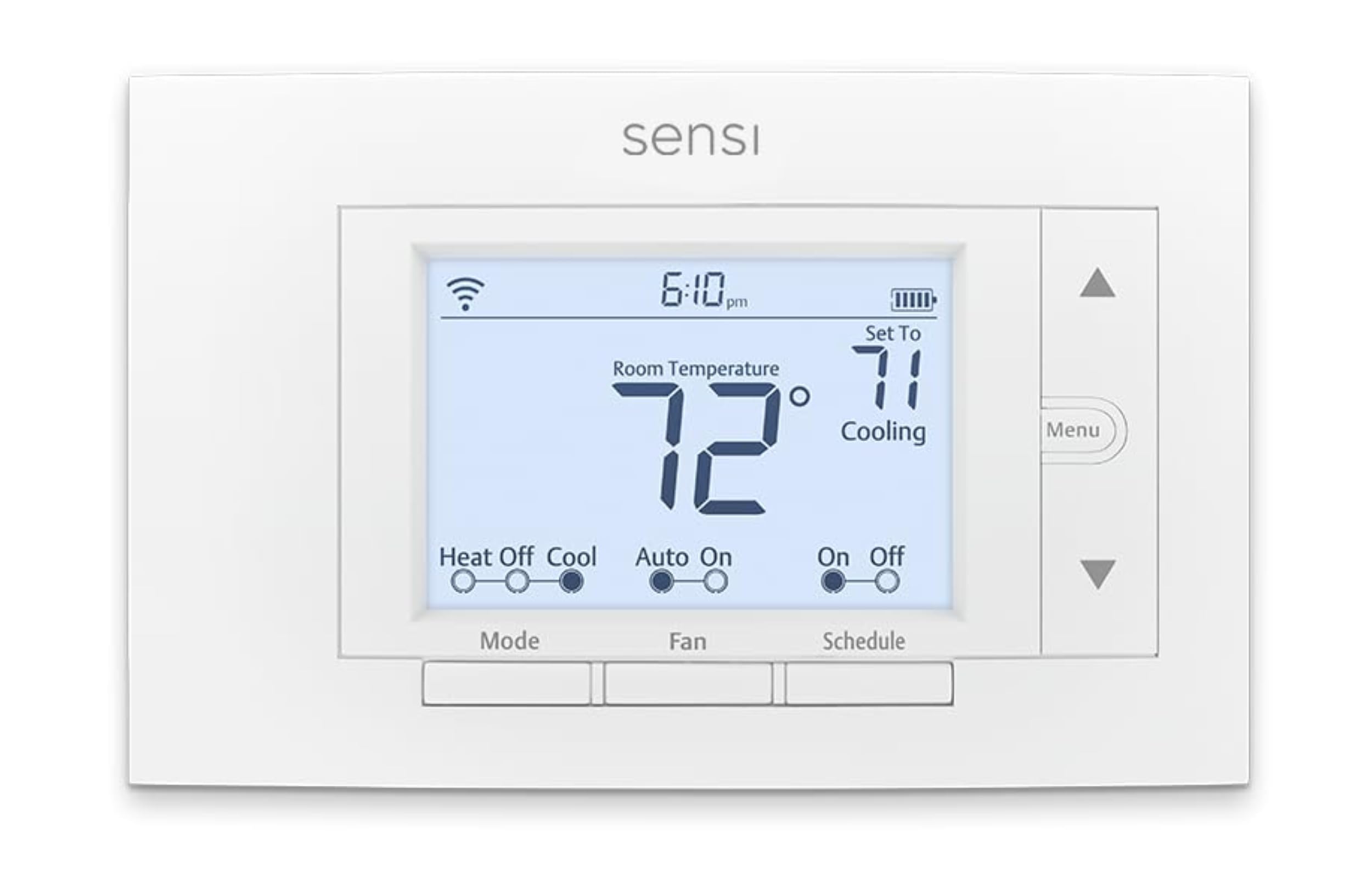
Type: Wi-Fi smart thermostat
Control: App and voice (Alexa)
Certification: Energy Star
Install: DIY
Best use: Scheduled comfort with remote access
The Sensi ST55 brings app control and Alexa voice commands to a radiator system at a mid-range price. It is marketed for DIY installation, which matters in a solid fuel setup where an installer may need to adapt wiring to a pump or zone valve. Energy Star certification points to scheduling features that trim run time when the house is empty.
This is the sweet spot for families who want to set a schedule and adjust heating from a phone. It works well where the stove feeds a store and the thermostat simply calls for circulation. Buyers who dislike apps or have weak Wi-Fi at the boiler should look elsewhere.
Trade-off: Smart features depend on a stable Wi-Fi signal and a compatible low-voltage system, so older wiring may need an adapter or a professional check.
3. Honeywell Home RTH9585WF1004 Wi-Fi Smart Color Thermostat

Type: Wi-Fi smart thermostat
Programming: 7-day programmable
Display: Color touchscreen
Certification: Energy Star
Voice: Alexa ready
Best use: Detailed scheduling and remote management
The Honeywell Home RTH9585WF1004 is the premium pick, with a color touchscreen and full seven-day programming. The interface allows different schedules for each day, which suits a household with an irregular routine around stove loading. Alexa readiness adds voice control on top of the app.
This model earns its place for owners who want granular control and a readable display on the wall. It is best for a house where the radiator circuit is separate from the stove and the thermostat only manages circulation and zone valves. Households that want a set-and-forget dial will find it overcomplicated.
Trade-off: The touchscreen and Wi-Fi stack add cost and complexity, and the unit needs a compatible low-voltage supply to run reliably.
4. Honeywell TH1100DV1000/U Pro 1000 Vertical Non-Programmable Thermostat

Type: Non-programmable
Orientation: Vertical
Series: Pro 1000
Control: Digital setpoint
Best use: Narrow wall spaces and simple radiator zones
The Honeywell Pro 1000 is a vertical-format non-programmable thermostat, which makes it useful where wall space is tight beside a stove or flue. It uses a digital setpoint and simple buttons rather than a dial, giving a cleaner read than the budget mechanical option. The Pro 1000 line is aimed at straightforward heating and cooling control.
This suits owners who want digital accuracy without programming, and the vertical layout solves a real mounting problem in many stove rooms. It is a good middle option between the cheapest dial units and full smart models. Buyers who want scheduling or app control should skip it.
Trade-off: No programming or remote access means the setpoint is changed by hand, and the vertical format limits where it can be mounted.
5. NonProgrammable Digital Thermostat, 1 Heat/1 Cool

Type: Non-programmable digital
System: Single-stage, 1 heat/1 cool
Install: Easy DIY
Display: White backlight
Best use: Lowest-cost replacement for a basic zone
This is the budget entry, a single-stage digital thermostat with a backlit display and a DIY-friendly install. It covers one heating and one cooling circuit, which is enough for a radiator zone fed by a stove and back boiler. The white backlight helps in dim rooms where a stove is the main light source.
It suits cost-focused owners replacing a failed thermostat on a simple zone. The straightforward wiring and single-stage design keep installation approachable. Anyone needing multi-zone control or scheduling should move up the list.
Trade-off: The low price points to basic internals and no scheduling, so it is a straight swap rather than an upgrade.
Before You Buy
- Compatibility: Confirm the thermostat matches the stove circuit — most control a pump or zone valve, not the stove itself, and low-voltage vs line-voltage matters.
- Wiring: Check how many wires the existing wall point has; smart models often need a common wire that older installations lack.
- Control type: Decide between a manual dial, digital setpoint, and full programming before comparing prices.
- Mounting: Measure the wall space, especially near a flue or stove, since vertical and compact formats differ.
- Heating stages: Match the unit to single-stage or multi-stage zones so the thermostat can actually switch the load.
- Wi-Fi: Only choose a smart model if the signal reaches the boiler room reliably.
Frequently Asked Questions
-
Can a thermostat control a solid fuel stove directly?
No. A thermostat switches a pump, zone valve, or circulation circuit; the stove itself is managed by dampers and the fire, so the thermostat regulates heat distribution. -
Is a smart thermostat worth it with a stove and radiators?
It is worth it when the stove feeds a thermal store and the household wants scheduling and remote control; a simple non-programmable unit is more reliable where routines are irregular. -
What does single-stage mean on these thermostats?
Single-stage means the thermostat controls one heating circuit and one cooling circuit, which matches a basic radiator zone. -
Do these thermostats need a common wire?
Many smart models do, while non-programmable units usually work with the existing wiring; check the wall point before buying. -
Which pick is best for an older radiator system?
The White-Rodgers 70 Series Classic suits older systems best because its simple dial control avoids app and wiring complications.
Bottom Line
For most houses with a solid fuel stove and radiators, the Sensi Smart Thermostat ST55 is the best balance of price, scheduling, and DIY install. Owners who want maximum simplicity should take the White-Rodgers 70 Series Classic, and those wanting full scheduling and a color display should step up to the Honeywell RTH9585WF1004.
