Why there are Amazon links here: Brave Review is paid a commission for qualifying Amazon purchases made through the links below. Your price does not change, and using our links is entirely optional. How this works
Best Thermostat for a Park Home with a Back Boiler for Simple, Reliable Heating Control
A park home with a back boiler is a specific heating setup, and it does not need a clever smart thermostat to run well. It needs a thermostat that matches the boiler’s low-voltage switching, fits a compact wall, and keeps the schedule simple enough to actually use. The five picks below cover budget millivolt models, straightforward non-programmable units, and one programmable option with a weekday and weekend schedule. The overview table points to the right pick in seconds; the reviews explain who each one suits and who should walk away.
Overview of the Picks
| Product | Key Spec | Best Use | Price Tier |
|---|---|---|---|
| RTH20B Programmable Thermostat | 5-2 day schedule, 1 heat/1 cool | Households that want a set-and-forget weekday routine | Budget |
| White-Rodgers 70 Series Classic | Non-programmable, single-stage | Straightforward replacement with no menus to learn | Budget |
| CT33A1009/E1 Economy Millivolt | Millivolt-compatible, non-programmable | Older back boilers with millivolt gas valves | Entry level |
| RLV3150A1004 Low-Voltage Thermostat | Low-voltage, central heating and boiler systems | Boiler and furnace setups needing low-voltage control | Mid range |
| Suuwer Non-Programmable Thermostat | 1 heat/1 cool conventional, blue backlight | Budget buyers who want a readable display | Budget |
1. RTH20B Single-Stage Programmable Thermostat — Best Programmable Option
Type: Programmable, single-stage
Compatibility: 1 heat / 1 cool
Schedule: 5-2 day
Color: White
Brand: Honeywell Home X2P
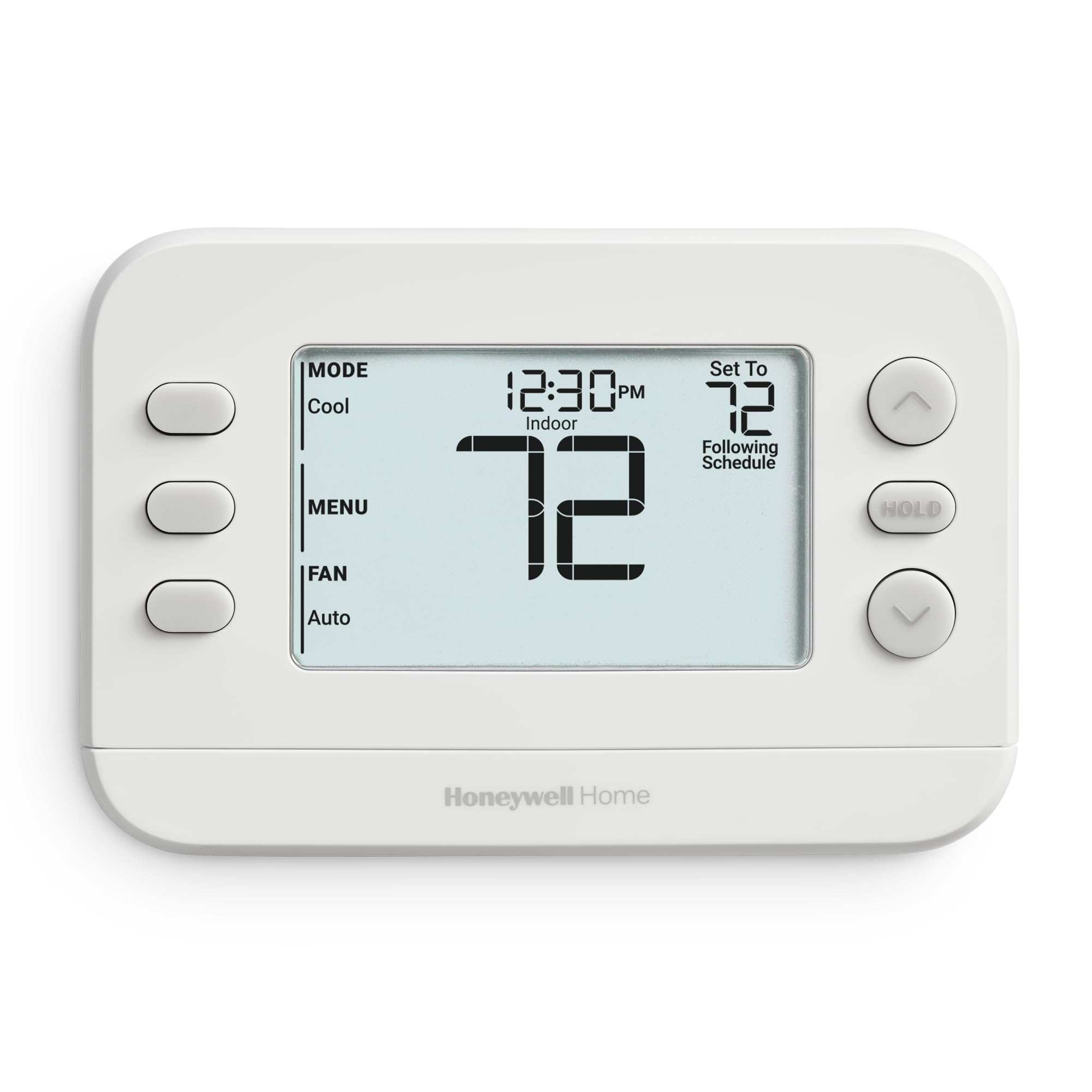
This is the pick for a park home where the heating follows a predictable weekly rhythm. The 5-2 day schedule sets one routine for weekdays and a separate one for the weekend, which suits a retired household or anyone home at the same hours most days. Single-stage 1 heat/1 cool compatibility is the plain switching that a back boiler’s circulation and control circuit expects, so the wiring conversation with an installer stays short. The white casing is compact enough for a hallway or living room wall without drawing attention.
It earns its place as the only programmable unit in this lineup, and that is the reason to choose it over the cheaper non-programmable models. A park home loses heat quickly and a timed schedule does more for running costs than manual tweaking ever will. The trade-off is that programming a 5-2 day unit takes a sitting with the manual, and anyone who wants a thermostat they never have to think about should look at the non-programmable picks instead.
2. White-Rodgers 70 Series Classic Thermostat — Best No-Fuss Replacement
Type: Non-programmable
Compatibility: Single-stage
Series: 70 Series Classic
Model: 1E78-140
Color: White
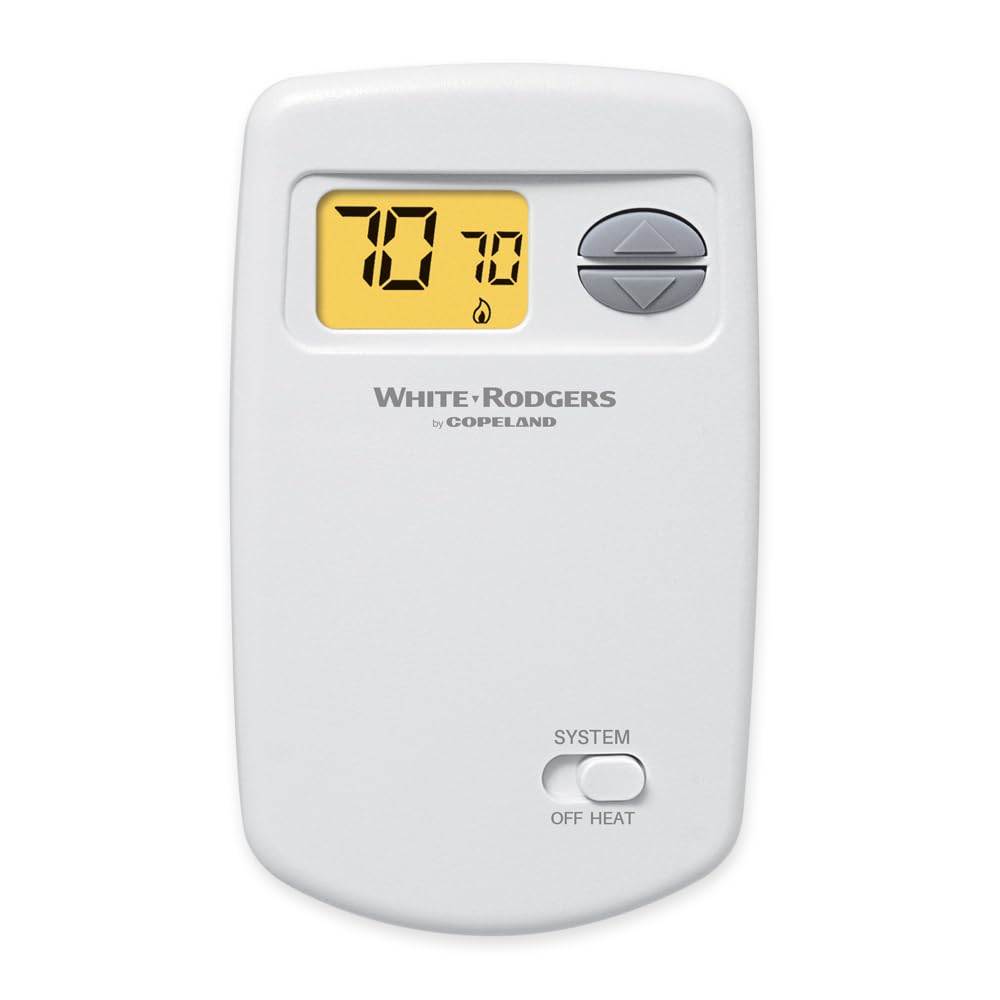
White-Rodgers 70 Series Classic, Non-Programmable, Thermostat, 1E78-140
The 70 Series Classic is the thermostat for a household that wants a dial-and-slider relationship with the heating, not a menu system. Non-programmable operation means a single setpoint and nothing else to configure, which is exactly right for a back boiler that runs on a separate timer or is switched on when needed. White-Rodgers builds this line for the replacement market, so the form factor and terminal layout are aimed at fitting where an older unit came out. Single-stage switching keeps it in the same family as the other conventional picks here.
This suits older residents, rental park homes, and anyone who has watched a family member fight a programmable display and give up. It is also the sensible choice when the back boiler already has its own timer on the wall. The trade-off is the obvious one: no schedule means someone has to turn the heating down by hand, and a forgetful household will pay for that over a winter.
3. CT33A1009/E1 Honeywell Home Economy Millivolt Thermostat — Best for Millivolt Back Boilers
Type: Non-programmable, millivolt
Compatibility: Millivolt systems
Series: Economy
Color: White
Brand: Honeywell Home

CT33A1009/E1 Honeywell Home Economy Millivolt Non-Programmable Thermostat, White
Millivolt is the word that matters here. Some older gas back boilers use a millivolt valve that runs on a tiny current generated by the pilot light rather than on mains voltage, and a standard 24-volt thermostat is the wrong part for that job. This Honeywell Home Economy unit is built for exactly that circuit, which makes it the specialist pick in an otherwise conventional lineup. The non-programmable design keeps it simple, and the white casing is small enough for a tight park home wall.
This is the pick for a household that has already been told the boiler needs a millivolt-compatible thermostat, or for anyone replacing an old round-dial unit on a gravity-fed system. It is not the right buy for a modern low-voltage boiler, and that is the caution: buyers should confirm the boiler’s control voltage before ordering, because a millivolt thermostat fitted to a 24-volt system simply will not work. At entry-level pricing it is the cheapest way into a correct match, but it offers no scheduling whatsoever.
4. RLV3150A1004 Low-Voltage Thermostat — Best for Boiler and Furnace Systems
Type: Non-programmable, low-voltage
Compatibility: Central heating, furnaces, boilers, air conditioning, heat pumps
Brand: Honeywell
Color: White

This is the most broadly compatible unit in the group on paper. The name lists central heating systems, furnaces, boilers, air conditioning and heat pumps, which tells a buyer it is a low-voltage control built to switch a range of conventional equipment rather than one narrow circuit. For a park home with a back boiler feeding radiators, that generality means fewer surprises at the wiring stage. It is non-programmable, so the setpoint is set and left alone, and the white body suits a standard wall box.
It suits the household that wants a name-brand low-voltage thermostat without paying for scheduling features it will never use, and it is a reasonable pick where the boiler is paired with a separate heating timer. It is not for millivolt systems, and that is the trade-off: broad compatibility across low-voltage equipment does not extend to pilot-generated millivolt valves, so the boiler’s control type needs checking first.
5. Suuwer Non-Programmable Thermostat — Best Budget Pick with a Readable Display
Type: Non-programmable
Compatibility: 1 heat / 1 cool conventional, single-stage
Display: Blue backlight
Brand: Suuwer

The blue backlight is the small feature that makes this one worth a look. Park home hallways and corners are often dim, and a lit display is easier to read at a glance than a plain LCD, especially for older eyes. Conventional 1 heat/1 cool single-stage compatibility puts it in the same conventional-switching family as the RTH20B, so it suits the standard low-voltage back boiler circuit. It is non-programmable, so operation is a setpoint and nothing more.
This is the pick for a budget-conscious buyer who still wants a modern-looking wall unit with a readable screen, and it works well as a like-for-like replacement in a rental or a second home. It is not for anyone who wants a schedule, and the trade-off is that budget non-programmable units generally carry a shorter feature list and lighter-duty feel than the name-brand equivalents, so a buyer should expect a basic part rather than a long-term flagship.
Before You Buy
- Compatibility: Confirm the back boiler’s control voltage first. Millivolt systems need a millivolt thermostat; standard low-voltage boilers need a 24-volt conventional unit.
- Wiring: Single-stage 1 heat/1 cool covers most back boiler setups, but the terminal labels on the old thermostat should be photographed before removal.
- Scheduling: A programmable 5-2 day model saves more over a winter than a non-programmable one, but only if the household will actually set it.
- Display: A backlit screen matters in dim hallways and for older users; plain LCDs are fine in well-lit rooms.
- Placement: Park home walls are thin, so a compact casing and a standard wall box matter more than they would in a brick house.
- Heating timer: If the boiler already has a separate timer, a non-programmable thermostat is the simpler and cheaper match.
- Brand support: Honeywell and White-Rodgers units are easier to find documentation for, which helps at replacement time.
Frequently Asked Questions
-
Can a smart thermostat be used with a back boiler?
Often not without extra work. Many back boilers use simple single-stage or millivolt switching, and a smart thermostat may need a common wire or a compatibility check with the boiler’s control circuit before it will run. -
What does millivolt mean on a thermostat?
It means the thermostat switches a very small current generated by the boiler’s pilot light rather than a standard 24-volt supply. A millivolt thermostat must be matched to a millivolt valve or the heating will not respond. -
Is a programmable thermostat worth it in a park home?
Yes, if the household keeps a regular weekly routine. A 5-2 day schedule cuts unnecessary run time on weekdays and weekends alike, and park homes lose heat quickly enough that the savings show up. -
Does a non-programmable thermostat save money?
Not directly. It saves on purchase price and removes the risk of a badly set schedule, but someone still has to turn the heating down manually. -
How long does a thermostat replacement take?
A like-for-like single-stage swap is a short job for a qualified heating engineer, typically well under an hour once the correct unit is on site. -
Which pick suits a tight budget?
The CT33A1009/E1 Economy Millivolt unit is the entry-level option, and the Suuwer and White-Rodgers models sit close behind on price while offering conventional switching.
Bottom Line
For most park homes with a back boiler, the RTH20B Single-Stage Programmable Thermostat is the pick that earns its keep: a 5-2 day schedule, conventional 1 heat/1 cool switching, and a price that stays in budget territory. Buyers with a millivolt boiler should go straight to the CT33A1009/E1, and anyone who wants zero menus should take the White-Rodgers 70 Series Classic. Confirm the boiler’s control voltage before ordering, and the rest is a straightforward swap.
