Why there are Amazon links here: Brave Review is paid a commission for qualifying Amazon purchases made through the links below. Your price does not change, and using our links is entirely optional. How this works
Best Thermostatic Radiator Valves for a House with a Back Boiler
A back boiler system rewards room-by-room control, and the best thermostatic radiator valves for a house with a back boiler are the ones that hold a steady setting without fuss. This short roundup covers five picks: a premium gas-filled head for existing Danfoss bodies, a budget-friendly automatic valve, a Honeywell actuator with an integral sensor, a mid-price copper angle valve with five settings, and a low-cost DN20 floor-heating valve. The overview table below lets a buyer compare all five in under a minute.
The Picks at a Glance
| Product | Key Spec | Best Use | Price Tier |
|---|---|---|---|
| Danfoss Aveo™ Radiator Valve Mounted Thermostatic Operator | Gas-filled sensor, built-in dial, fits Danfoss RA valves | Replacing a failed head on an existing Danfoss body | Premium |
| G1/2" & G3/4" Radiator Temperature Control Valve | Liquid sensor, manual control, frost protection | Tight-budget swaps on standard tappings | Budget |
| Honeywell T1002W0NA Thermostatic Radiator Actuator | Integral sensor, actuator format | Clean retrofit where the sensor sits at the valve | Mid-range |
| Copper Body 5 Temp Levels Thermostatic Radiator Valve | Copper body, five levels, liquid sensor, 1.6 bar | General home heating with flexible mounting | Mid-range |
| Thermostatic Radiator Valve 3/4 Inch DN20 | DN20 body, automatic temperature control | Floor heating and water-based circuits | Budget |
1. Danfoss Aveo™ Radiator Valve Mounted Thermostatic Operator
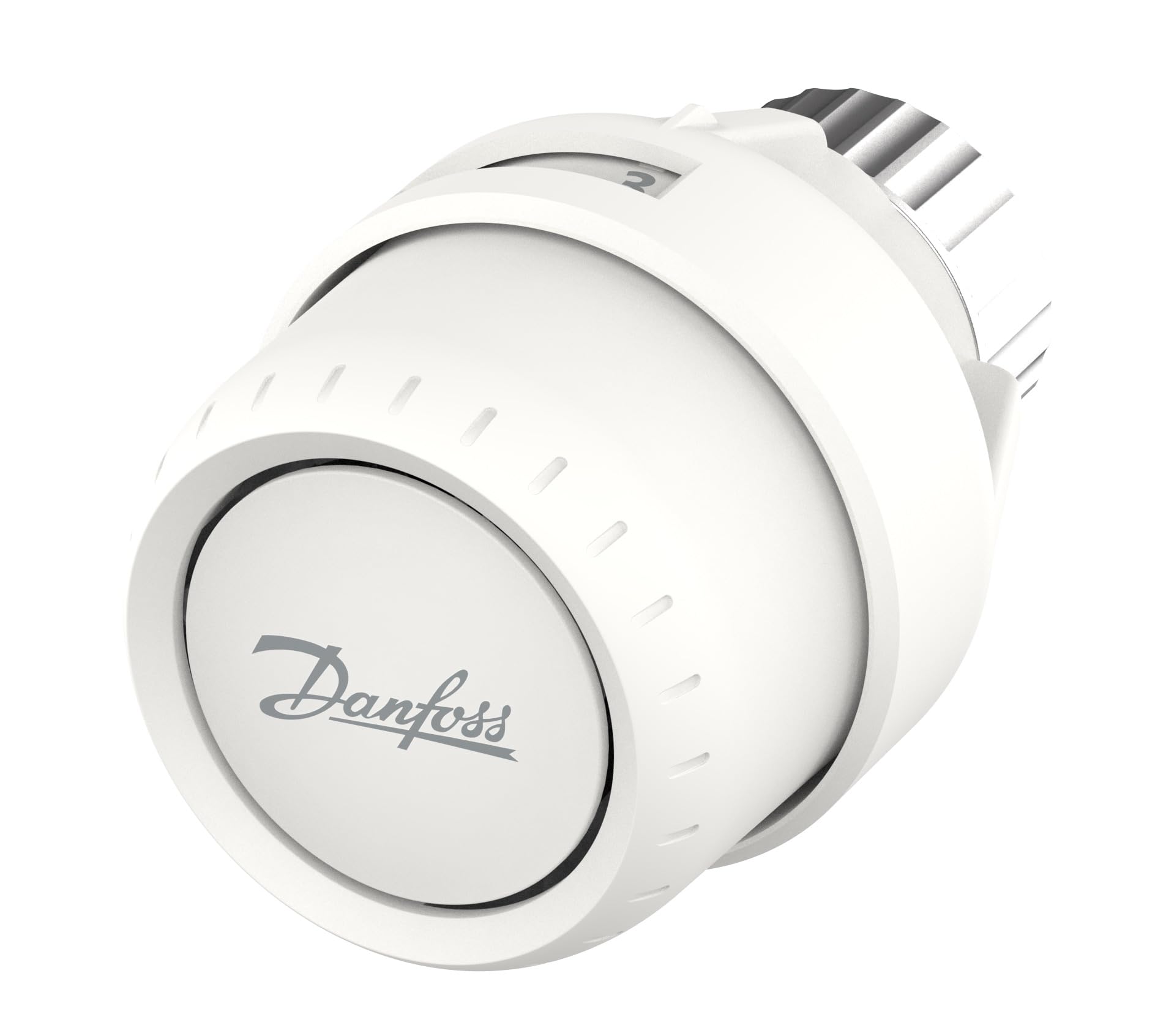
Type: Thermostatic operator (head only)
Sensor: Gas-filled
Fitting: Danfoss RA valves
Control: Built-in dial
Price Tier: Premium
This is a replacement operator, not a complete valve, and that distinction matters. It mounts directly onto an existing Danfoss RA valve body and uses a gas-filled sensor for precise temperature control, with the dial built into the head so no separate remote sensor is needed. The gas fill reacts faster than a liquid element in most domestic settings, which suits a back boiler that runs long, steady heat cycles. Buyers already on Danfoss RA bodies get a like-for-like swap without draining the system.
The pick suits homeowners with Danfoss RA valves who want a dependable head and are willing to pay for it. It is not for anyone starting from scratch on a different valve body, since the fitting is specific and the head alone will not fit other brands. The premium price is the main caution: this buys precision and brand support, not extra features.
Trade-off: The head-only format means the cost is high relative to a complete budget valve, and it is useless without a compatible Danfoss RA body already in place.
2. G1/2" & G3/4" Radiator Temperature Control Valve
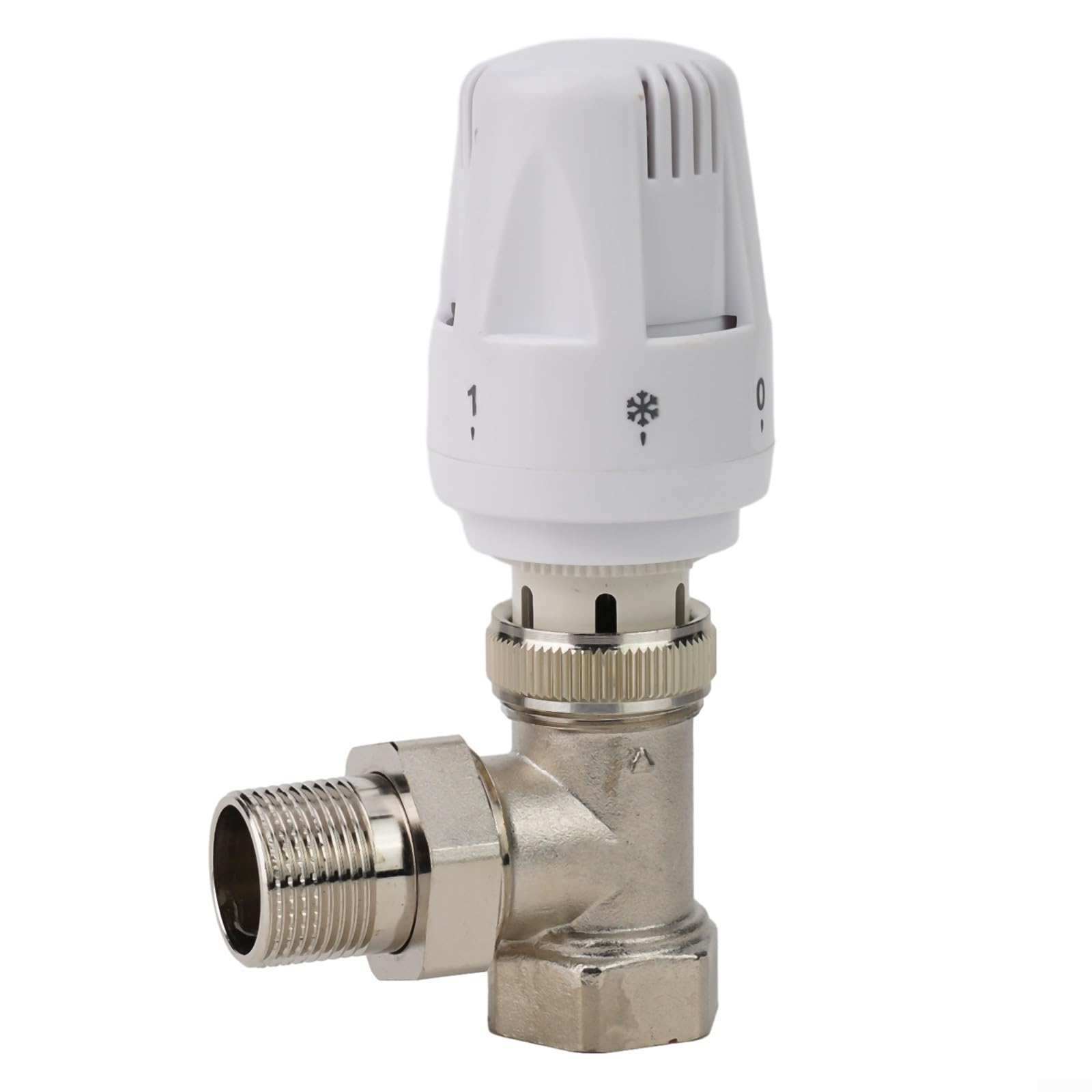
Type: Complete thermostatic radiator valve
Fittings: G1/2" and G3/4"
Body: Copper, angle pattern
Sensor: Liquid-filled
Extras: Manual control, frost protection
Price Tier: Budget
This valve covers two common tappings in one box, so a buyer with mixed radiators is less likely to order the wrong size. The copper angle body and liquid-filled sensor are the standard recipe for reliable room-by-room control, and the manual control option lets the head be locked open for system balancing. Frost protection is a sensible extra for a back boiler house where a radiator sits in a hallway or porch.
The pick suits budget-conscious owners replacing a worn valve on a standard radiator, and it is the sensible first stop for anyone unsure of the tapping size. It is not for a buyer who needs a gas-filled sensor or a specific brand match. The caution sits in the price tier: at budget money, the finish and dial feel are plainer than premium heads, and the manual override is basic.
Trade-off: Budget construction means a plainer dial and finish, and the dual-size fitment does not guarantee a match on every radiator.
3. Honeywell T1002W0NA Thermostatic Radiator Actuator
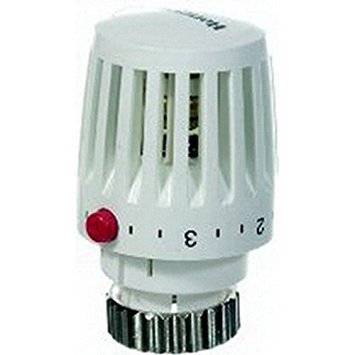
Type: Thermostatic radiator actuator
Sensor: Integral
Format: Actuator with built-in sensing
Price Tier: Mid-range
Honeywell T1002W0NA Thermostatic Radiator Actuator with integral sensor
The actuator format keeps the sensor at the valve rather than on a remote capillary, which simplifies installation and keeps the radiator looking tidy. Honeywell is a name most heating engineers recognise, and the integral sensor removes one more part that can be misrouted or damaged. For a back boiler system with radiators in open rooms, this is a clean, conventional choice.
The pick suits buyers who want a recognised brand and a straightforward actuator fit, and who value serviceability over the lowest price. It is not for anyone wanting a complete valve body included, since this is the actuator side of the assembly. The caution is compatibility: an actuator has to match the valve body it threads onto, and buyers should confirm the thread before ordering.
Trade-off: The actuator-only format demands a matching valve body, and the integral sensor reads valve-side air rather than true room temperature in awkward corners.
4. Copper Body, 5 Temp Levels Thermostatic Radiator Valve
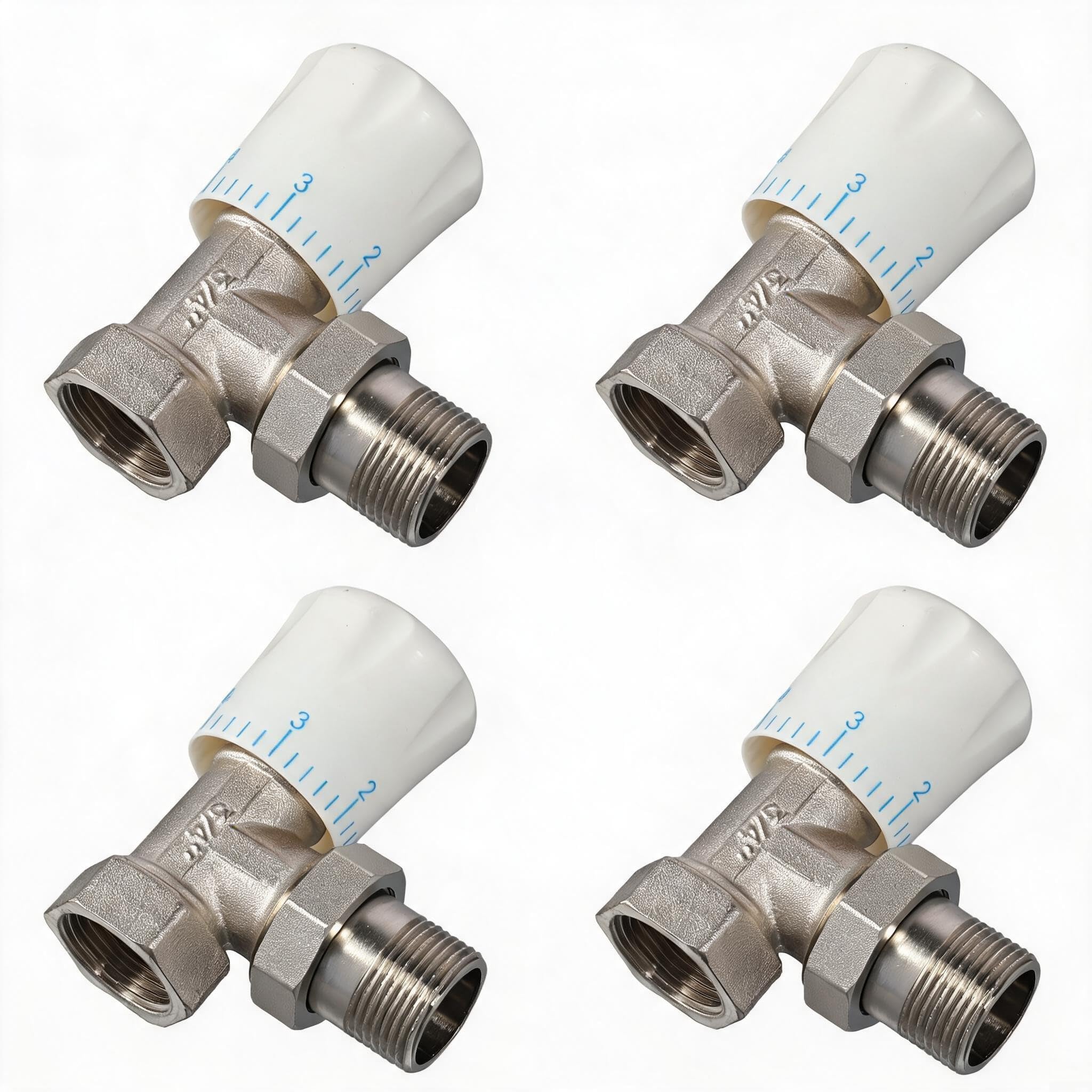
Type: Complete thermostatic radiator valve
Body: Copper
Settings: Five temperature levels
Sensor: Liquid-filled
Mounting: Horizontal or vertical
Working Pressure: 1.6 bar
Fitting: 15mm x 3/4 inch angle, 3-way
Price Tier: Mid-range
This is the most flexible pick in the group. The copper body resists corrosion on a sealed or semi-sealed system, the liquid-filled sensor gives steady response, and five temperature levels are enough to set distinct rooms without endless fiddling. Horizontal or vertical mounting means it fits awkward pipe runs, and the 1.6 bar working pressure is a normal domestic figure that covers most back boiler installations.
The pick suits a homeowner who wants one valve that will fit whichever way the pipework runs, and who prefers a copper body over plated brass. It is not for a buyer on the tightest budget, since the budget picks cover the basics for less. The caution is the five-level scale: fewer steps than a full dial means coarser adjustment between settings.
Trade-off: Five temperature levels give coarser control than a continuous dial, so fine-tuning a room to an exact comfort point is harder.
5. Thermostatic Radiator Valve 3/4 Inch DN20

Type: Automatic temperature control valve
Size: 3/4 inch, DN20
Use: Floor heating and water circuits
Control: Automatic thermostatic
Price Tier: Budget
This valve is built around the DN20 size, which makes it a natural fit for floor heating loops and larger water circuits rather than a standard panel radiator tapping. Automatic temperature control keeps the loop at a set level without manual intervention, and the simple format keeps the cost down. For a back boiler house with an underfloor zone, it fills a gap the radiator valves cannot.
The pick suits buyers running a floor heating circuit or a larger pipe size who want automatic control at low cost. It is not for a standard radiator with a smaller tapping, and it is not a substitute for a full-featured head. The caution is the narrow use case: DN20 is a specific size, and a buyer who orders it for a standard radiator will find it does not fit.
Trade-off: The DN20 size limits it to floor heating and larger circuits, and the budget build offers no manual override or frost setting.
Before You Buy
- Compatibility: A thermostatic head must match the valve body thread; Danfoss RA, Honeywell actuator bodies and generic G1/2" or G3/4" tappings are not interchangeable.
- Sensor type: Gas-filled sensors react fastest, liquid-filled sensors are steady and common, and integral sensors simplify fitting at the cost of reading valve-side air.
- Size: Confirm the tapping and pipe size before ordering; DN20 and 15mm fittings serve different circuits, and a dual-size valve covers more bases.
- System pressure: Check the valve’s working pressure against the back boiler system; 1.6 bar is a normal domestic rating.
- Mounting: Angle and 3-way bodies suit different pipe runs, and horizontal or vertical options help on awkward walls.
- Complete valve or head only: An operator or actuator replaces part of the assembly, while a complete valve replaces the lot; ordering the wrong one wastes money.
- Extras: Manual control helps with balancing, and frost protection matters for radiators in cold spots.
Frequently Asked Questions
- Will a thermostatic valve work with a back boiler? Yes. A back boiler feeds the same radiator circuit as any other heat source, so a thermostatic valve controls room temperature the same way. The valve regulates flow to the radiator, not the boiler itself.
- Does a thermostatic radiator valve need a bypass? A system with thermostatic valves on most radiators should keep a bypass path or one radiator without a valve, so pump flow is never fully blocked. A heating engineer can confirm the setup.
- What is the difference between a valve and an actuator? A complete valve includes the body that fits the pipe plus the thermostatic head. An actuator or operator is the head alone and mounts on an existing compatible body.
- Which sensor type is best? Gas-filled sensors respond quickest, liquid-filled sensors are steady and widely used, and integral sensors keep everything at the valve. The best choice depends on the radiator’s location and how precise the control needs to be.
- Can a thermostatic valve be fitted to floor heating? Yes, provided the valve is sized for the loop. A DN20 automatic valve is the usual pick for floor heating circuits, while standard radiator tappings take a smaller body.
- How often should thermostatic valves be replaced? A valve head usually lasts many years, but a sticking pin or a dial that no longer clicks is the signal to replace. Replacing the head alone is cheaper when the body is still sound.
Bottom Line
For a house with a back boiler, the Copper Body 5 Temp Levels valve is the best all-round pick: a copper body, liquid-filled sensor, five settings and flexible horizontal or vertical mounting cover most radiators without a premium price. Buyers already on Danfoss RA bodies should go straight to the Danfoss Aveo™ operator, while a floor heating loop calls for the DN20 valve. Check current prices on Amazon before ordering, and confirm the tapping size first.
