Why there are Amazon links here: Brave Review is paid a commission for qualifying Amazon purchases made through the links below. Your price does not change, and using our links is entirely optional. How this works
Best Water Alarm for a Sump Under a Basement Floor
A sump pit under a basement floor is the one spot where a slow leak turns into a flooded room, so a dedicated water alarm is cheap insurance. This short roundup covers five battery and app-connected sensors that suit three kinds of buyers: the budget-minded homeowner who wants a loud local siren, the landlord or property manager arming several pits at once, and the remote owner who wants an alert on a phone. The overview table below ranks every pick by key spec, best use and price tier, and each review follows with the trade-off worth knowing before checkout.
Overview of the Picks
| Product | Key Spec | Best Use | Price Tier |
|---|---|---|---|
| Battery Operated Water Alarm | Compact battery alarm | Simple single-pit coverage | Budget |
| Flood Alarm for Basement, Under Sink, Sump Pump, RV, Kitchen, Water Heater, Apartment Management, Moisture, Battery Operated Water Leak Sensor Detector, 120dB, 37.8 Inches Cable, 3 Packs | 120dB siren, 37.8 in cable, 3-pack | Multiple pits and utility rooms | Budget |
| Flood Leakage Detection Devices for Pipe/Drain/Sink/Faucet Drip Alert,Floor Flooding in Bathroom/Kitchen/Toilet/Laundry Room 5 Pack Water Leak Detectors for Home, 100dB Water Sensor Alarm for Basement | 100dB siren, 5-pack | Whole-basement coverage | Mid-range |
| Water Leak Detector Sensor Alarm: Home Water Flooding Monitor Smart Sink Overflow Monitoring Adjustable Wet Moisture Alert Pipe Leakage Drip Detection Warning for Basement Floor | Adjustable wet alert, single unit | Lowest-cost spot check | Budget |
| Leak Alerts via Mobile App, Email and SMS, Up to 5-Year Battery, Works with IFTTT, LoRa YoLink Protocol Up to 2034 Feet YoLink Water Leak Sensor 1 Kit: 4-Pack + Hub | App, email and SMS alerts, up to 5-year battery, 4-pack plus hub | Remote monitoring of a sump pit | Premium |
Battery Operated Water Alarm
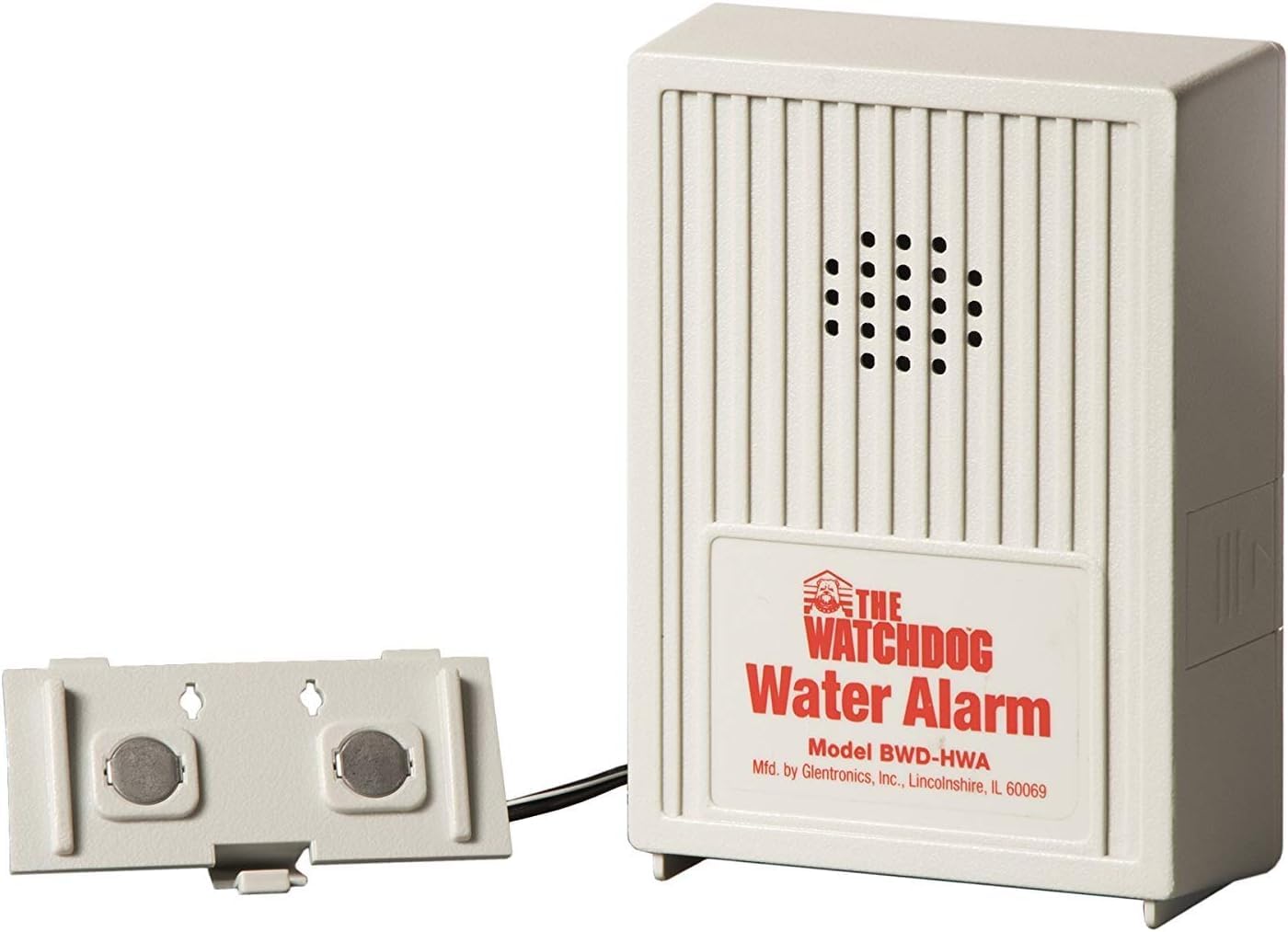
Type: Battery-operated water alarm
Power source: Battery
Intended use: Sump pit and floor leak detection
Alert type: Audible local alarm
Price tier: Budget
Battery Operated Water Alarm is the straightforward option: a self-contained puck that sits on the pit floor or the concrete beside it and sounds when water bridges its contacts. There is no hub, no app and no pairing step, so it goes to work the moment the battery is in. The sealed body is built to survive the damp, humid air that hangs over a sump pit year-round. This is the pick for a homeowner who wants one reliable siren at the lowest possible outlay.
It earns its place as the simplest entry point in the roundup, and it suits a single pit with no one around to watch a phone. The caution is coverage: a standalone unit protects only the spot it sits on, so a pit that overflows from a different corner may go unnoticed until water spreads across the slab.
Trade-off: One alarm covers one patch of floor, so a large or oddly shaped pit may need a second unit.
Flood Alarm for Basement, Under Sink, Sump Pump, RV, Kitchen, Water Heater, Apartment Management, Moisture, Battery Operated Water Leak Sensor Detector, 120dB, 37.8 Inches Cable, 3 Packs

Type: Battery-operated leak sensor with remote sensor cable
Power source: Battery
Alert type: 120dB audible alarm
Cable length: 37.8 inches
Pack size: 3 alarms
Intended use: Sump pump, basement, under-sink and utility monitoring
Price tier: Budget
The Flood Alarm for Basement, Under Sink, Sump Pump, RV, Kitchen, Water Heater, Apartment Management, Moisture, Battery Operated Water Leak Sensor Detector, 120dB, 37.8 Inches Cable, 3 Packs solves the placement problem that plagues simple pucks. The sensor head sits on a 37.8-inch cable, so the alarm body can hang clear of the water while the contact point drops into the pit or tucks behind a washer. The 120dB siren is loud enough to carry up a stairwell, and the three-pack means one order can cover a sump pit, a water heater and a laundry drain.
This is the best value for a property manager or a homeowner with more than one wet-risk spot, because the cable makes each unit far more adaptable than a fixed-body alarm. The trade-off is that the cable is the vulnerable part: a sensor lead pinched under a pump or kinked behind an appliance is the most likely failure point, so routing deserves a moment’s thought.
Trade-off: The thin sensor cable can be pinched or crimped during installation, so it needs a clear, protected route.
Flood Leakage Detection Devices for Pipe/Drain/Sink/Faucet Drip Alert,Floor Flooding in Bathroom/Kitchen/Toilet/Laundry Room 5 Pack Water Leak Detectors for Home, 100dB Water Sensor Alarm for Basement

Type: Standalone battery water leak detector
Power source: Battery
Alert type: 100dB audible alarm
Pack size: 5 detectors
Intended use: Pipe, drain, sink, faucet, bathroom, kitchen, toilet, laundry and basement floor
Price tier: Mid-range
The Flood Leakage Detection Devices for Pipe/Drain/Sink/Faucet Drip Alert,Floor Flooding in Bathroom/Kitchen/Toilet/Laundry Room 5 Pack Water Leak Detectors for Home, 100dB Water Sensor Alarm for Basement is the coverage play. Five independent detectors in one box let a buyer ring an entire basement — one at the pit, one at the water heater, one under the laundry sink, and two left over for the bathroom or a crawlspace. Each unit is a self-contained alarm with its own battery, so there is no hub to lose power and no network to configure.
It suits the homeowner who wants broad, low-maintenance protection without paying for smart features, and the 100dB siren is still loud enough to be heard through a closed door. The caution is volume: 100dB is meaningfully quieter than the 120dB units here, so in a large or well-insulated basement the alarm may be muffled from the far end of the house.
Trade-off: The lower siren output means a detector in a distant corner may be hard to hear from upstairs.
Water Leak Detector Sensor Alarm: Home Water Flooding Monitor Smart Sink Overflow Monitoring Adjustable Wet Moisture Alert Pipe Leakage Drip Detection Warning for Basement Floor

Type: Adjustable wet-moisture alert sensor
Power source: Battery
Alert type: Audible alarm
Sensitivity: Adjustable wet/moisture threshold
Intended use: Sink overflow, pipe leakage, drip detection and basement floor
Price tier: Budget
The Water Leak Detector Sensor Alarm: Home Water Flooding Monitor Smart Sink Overflow Monitoring Adjustable Wet Moisture Alert Pipe Leakage Drip Detection Warning for Basement Floor is the cheapest way into the category, and its adjustable sensitivity is the reason to consider it. Rather than waiting for standing water, the unit can be dialed to react to moisture, which means it can flag a slow drip or a weeping pipe joint before the pit ever fills. For a sump pit that seeps rather than floods, that early warning has real value.
It fits a renter or a budget-conscious owner who wants a first line of defense at the lowest cost. The trade-off is the flip side of that sensitivity: an adjustable threshold set too fine can trigger on ordinary basement humidity or a damp slab, and a single cheap unit offers no redundancy if it fails.
Trade-off: A moisture-sensitive setting can false-alarm in humid basements, and one budget unit gives no backup.
Leak Alerts via Mobile App, Email and SMS, Up to 5-Year Battery, Works with IFTTT, LoRa YoLink Protocol Up to 2034 Feet YoLink Water Leak Sensor 1 Kit: 4-Pack + Hub

Type: Smart water leak sensor kit with hub
Power source: Battery, up to 5-year rated life
Alert type: Mobile app, email and SMS notifications
Protocol: LoRa YoLink, up to 2034 feet range
Integration: Works with IFTTT
Pack size: 4 sensors plus hub
Price tier: Premium
The Leak Alerts via Mobile App, Email and SMS, Up to 5-Year Battery, Works with IFTTT, LoRa YoLink Protocol Up to 2034 Feet YoLink Water Leak Sensor 1 Kit: 4-Pack + Hub is the pick for anyone who is not home when the sump pump quits. The LoRa radio pushes a signal up to 2034 feet, which is far more than typical Wi-Fi gear manages through basement concrete, and alerts arrive by app, email and SMS. Four sensors plus a hub cover the pit, the water heater and two more spots, and the batteries are rated to last up to five years.
This is the choice for a remote owner, a snowbird or a landlord overseeing a property from another city, because a phone alert beats a siren nobody is there to hear. The trade-off is dependency: the system needs the hub powered and the home network up, so a power cut during a storm — exactly when a sump pump is most likely to fail — can take the whole kit offline.
Trade-off: App alerts depend on the hub and home network staying powered, which is a real risk during storm-related outages.
Before You Buy
- Power source: Every alarm here runs on batteries; confirm the battery type and keep a spare set on hand, since a dead alarm is silent.
- Alert type: Decide up front between a local siren and app or SMS notifications — the right answer depends on whether anyone is home when the pit fills.
- Siren volume: Higher decibel ratings carry further through doors and floors; a quiet unit in a distant corner may go unheard.
- Sensor placement: Cable-style sensors reach into a pit or behind an appliance, while fixed-body pucks must sit exactly where water will pool.
- Coverage count: One alarm protects one spot; multi-packs cost less per unit and suit a basement with several wet-risk locations.
- Sensitivity: Adjustable moisture settings catch slow drips early but can false-alarm in humid spaces, so plan to tune them.
- Network dependency: Smart kits need a powered hub and working home network, so pair them with a local siren if redundancy matters.
Frequently Asked Questions
-
Where should a water alarm sit in a sump pit?
Place the sensor on the pit floor or the concrete lip where water first appears, keeping the alarm body and battery above the high-water line. Cable-style sensors make this easier because the contact point can drop lower than the unit. -
Is a battery alarm or a smart alarm better for a sump pit?
A battery siren suits a home with someone present who will hear it, while a smart kit suits a remote owner who needs a phone alert. Many buyers run both for redundancy. -
How loud should a basement water alarm be?
Look for a high decibel rating if the alarm must be heard from upstairs. The units here range from 100dB to 120dB, and the louder models carry further through closed doors. -
Will a water alarm work if the power goes out?
Battery-powered alarms keep working during an outage, which is their main advantage over mains-powered gear. Smart kits still need their hub and network powered to send notifications. -
How many alarms does a typical basement need?
One at the sump pit is the minimum, with additional units at the water heater, laundry area and any floor drain. Multi-packs bring the per-unit cost down for that kind of coverage. -
Can a water alarm detect a slow drip rather than a flood?
Adjustable-sensitivity models can react to moisture before standing water forms, which helps with weeping joints. Standard float-style alarms typically wait for water to reach the sensor.
Bottom Line
For most basements, the best water alarm for a sump under a basement floor is the three-pack with the 37.8-inch sensor cable: it puts a loud 120dB siren at the pit and still covers the water heater and laundry for one modest outlay. A remote owner should step up to the app-connected kit, and a tight budget is well served by the compact single alarm. Whichever the pick, check the price and confirm the battery type before ordering.