Why there are Amazon links here: Brave Review is paid a commission for qualifying Amazon purchases made through the links below. Your price does not change, and using our links is entirely optional. How this works
Best Water Leak Sensor for a Basement Laundry Room: 5 Picks That Warn Before the Flood
A basement laundry room is the worst place to discover a leak late: the washer hose, the floor drain, and the water heater all sit out of sight, and the first sign of trouble is often a wet rug. The five picks below cover the three buyer types who shop this category — the homeowner who wants a loud standalone alarm, the remote owner who wants phone alerts, and the budget buyer who wants several sensors for the price of one. The overview table shows the differences at a glance, and each review explains who a sensor fits and who it does not.
Overview of the Picks
| Product | Key Spec | Best Use | Price Tier |
|---|---|---|---|
| Flood Leakage Detection Devices 5 Pack | 100 dB alarm, 5-pack | Covering several leak points at once | Budget |
| GoveeLife Upgraded Smart Water Leak Detector 3 Pack | Wi-Fi push, 5-year battery, IP67 | Remote alerts without a hub | Mid-range |
| YoLink Water Leak Sensor 1 Kit | LoRa hub kit, 4 sensors | Big basements and outbuildings | Mid-range |
| X-Sense Wi-Fi Water Leak Detector Kit | 120 dB, 3 sensors + base | Loud local alarm plus app alerts | Mid-range |
| Geevon 2 Pack Water Leak Detectors | 100 dB, batteries included | A cheap first sensor | Budget |
Flood Leakage Detection Devices 5 Pack

Type: Standalone water leak alarm
Alarm: 100 dB
Pack Size: 5 sensors
Intended Use: Pipe, drain, sink, faucet, bathroom, kitchen, toilet, laundry room, basement
Power Source: Battery
Flood Leakage Detection Devices 5 Pack is the volume play: five self-contained alarms that sit on the floor wherever water is likely to pool. Each unit is a simple battery-powered puck with two contact points on the bottom and a 100 dB buzzer inside, so there is no app, no hub, and no account to set up. A homeowner with a washer, a utility sink, a floor drain, and a water heater in one room can place one at every spot and still have a spare for the hallway. The 100 dB alarm is loud enough to carry up the stairs from a basement.
This pick suits buyers who want protection today, not after an afternoon of Wi-Fi pairing, and landlords who want a no-configuration alarm in a rental unit. The trade-off is that nothing reaches a phone: if nobody is home when the buzzer sounds, the alarm only helps the neighbors.
Check the current price on Amazon
GoveeLife Upgraded Smart Water Leak Detector 3 Pack
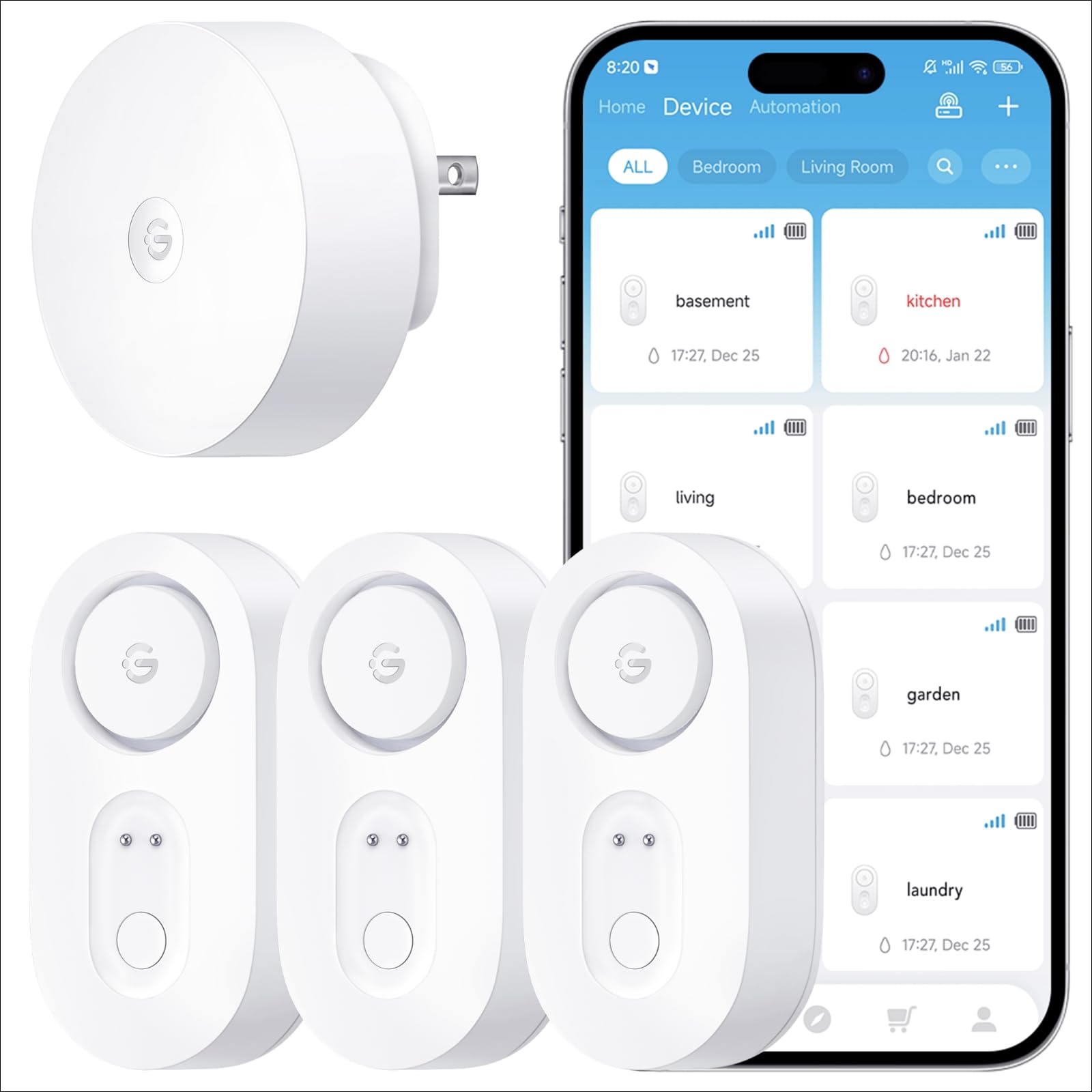
Type: Wi-Fi smart water sensor
Range: Up to 1804 ft
Alerts: SMS, email, and app push
Battery Life: Up to 5 years
Waterproof Rating: IP67
Pack Size: 3 sensors
GoveeLife Upgraded Smart Water Leak Detector 3 Pack connects straight to the home Wi-Fi network and pushes an alert to a phone within about a second of contact with water. The IP67 rating means a sensor can sit in a damp corner or take a splash without failing, and the five-year battery claim keeps maintenance off the to-do list. The long 1804 ft range figure matters in a basement because it describes how far the signal reaches, not how far the water spreads.
This is the pick for owners who travel, work long shifts, or keep a second home, since the alert arrives wherever the phone is. Buyers who want a system that also ties into other smart-home routines may find the app ecosystem narrower than a hub-based kit; the sensors alert well but are not the most expandable option here.
Check the current price on Amazon
YoLink Water Leak Sensor 1 Kit

Type: Hub-based LoRa water leak sensor kit
Range: Up to 2034 ft
Alerts: Mobile app, email, and SMS
Battery Life: Up to 5 years
Compatibility: Works with IFTTT
Kit Contents: 4 sensors plus hub
YoLink Water Leak Sensor 1 Kit uses the LoRa radio protocol, which trades a little setup work for range that reaches across a large property. The kit includes the hub that makes the system work, so four sensors can be spread between the laundry room, the water heater, the sump pit, and a distant crawlspace without dropping off the network. Alerts arrive by app, email, and SMS, and IFTTT support lets the system trigger other connected devices.
This kit earns its place for large or thick-walled basements where Wi-Fi struggles, and for buyers who plan to add more sensors later. The caution is the hub dependency: if the hub loses power or the internet, the remote alerts stop, so a standalone audible alarm is still worth keeping in the same room.
Check the current price on Amazon
X-Sense Wi-Fi Water Leak Detector Kit
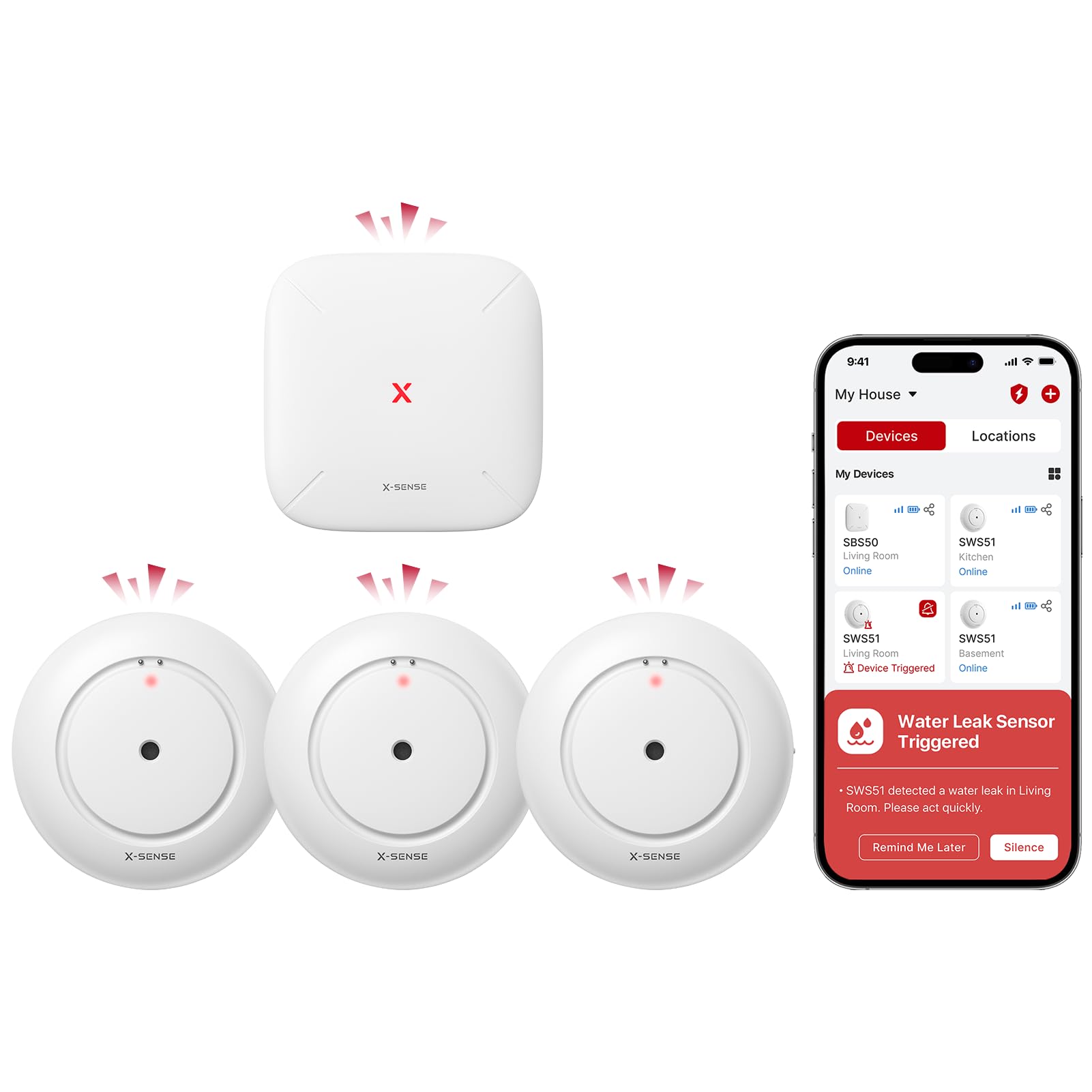
Type: Wi-Fi water leak detector kit with base
Alarm: 120 dB
Range: Up to 1804 ft
Waterproof Rating: IP66
Sensitivity: Detects water as low as 0.4 mm
Kit Contents: 3 sensors plus base
X-Sense Wi-Fi Water Leak Detector Kit pairs three sensors with a base station, and the combination covers both jobs at once: a 120 dB siren that fills the house and real-time phone alerts for when nobody is there to hear it. The 0.4 mm detection threshold means even a slow drip under the washer registers, which is exactly the kind of leak that ruins a basement floor over weeks. IP66 protection keeps the sensor bodies safe from spray and damp.
This is the best all-rounder for a laundry room that shares a wall with living space, because the siren is the loudest in the group. Buyers who want everything in one app should note the base station is a required part of the setup, so the kit is less flexible to place than hub-free sensors.
Check the current price on Amazon
Geevon 2 Pack Water Leak Detectors

Type: Standalone water leak alarm
Alarm: 100 dB
Pack Size: 2 sensors
Intended Use: Basement, bathroom, laundry room, sink, garage, wine cellar, RV, window
Power Source: Batteries included
Geevon 2 Pack Water Leak Detectors is the cheapest way to put a working alarm next to the washer and the water heater. The two units are battery-powered and come with the batteries in the box, so the setup is unbox, place, done. The 100 dB alarm is the same volume class as the five-pack above, and the listed use cases stretch from a wine cellar to an RV, which speaks to how portable the design is.
This pick suits renters, first-time buyers, and anyone testing whether a leak alarm is worth the trouble before investing in a connected system. The trade-off is coverage: two sensors only protect two spots, and the budget build means the housing feels lighter than the mid-range kits.
Check the current price on Amazon
Before You Buy
- Alert method: Decide first whether a local siren is enough or phone alerts are required; that single choice separates the standalone alarms from the Wi-Fi and hub kits.
- Power: Battery-powered sensors place anywhere but need periodic checks; hub and base-station kits add a device that must stay powered and online.
- Range and placement: A basement laundry room with thick walls or a long run to the router favors the long-range LoRa kit; a single small room is fine with any pick.
- Waterproof rating: An IP67 or IP66 sensor tolerates damp and splashes; a plain standalone alarm is best kept off wet floors and away from direct spray.
- Coverage count: Count the leak points first — washer, utility sink, floor drain, water heater — and buy a pack that covers them without leaving the most likely spot unprotected.
- Sensitivity: A slow drip under a washer is the most common basement laundry leak, so a sensor rated to catch shallow water is worth more than a loud siren alone.
- Expansion: Buyers who plan to add sensors later should favor a hub-based kit; buyers who want zero setup should stay with standalone alarms.
Frequently Asked Questions
- How many sensors does a basement laundry room need? Most rooms have three or four leak points — the washer, the utility sink, the floor drain, and the water heater — so a three- or five-pack covers the room without a second order.
- Do water leak sensors work without Wi-Fi? Yes. Standalone alarms like the Flood Leakage Detection Devices and Geevon packs sound a local siren with no network at all; only the smart kits need Wi-Fi or a hub for remote alerts.
- Where should a sensor be placed? On the floor beside the washer hose, under the utility sink, near the floor drain, and at the base of the water heater — low spots where water pools first.
- Will a leak sensor survive a damp basement? Sensors rated IP66 or IP67 are built for splashes and humid air; unrated standalone alarms should be kept out of standing water and direct spray.
- Is a loud alarm or a phone alert better? A loud alarm protects the house when someone is home, while a phone alert protects it when nobody is; the X-Sense kit is the pick that does both.
- How often do the batteries need changing? The smart sensors here claim up to five years of battery life, while standalone alarms typically need a yearly check — either way, test the alarm at the same time.
Bottom Line
For most basement laundry rooms, the X-Sense Wi-Fi Water Leak Detector Kit is the top pick: three sensors, a 120 dB siren, and real-time phone alerts cover both the home-alone and away-from-home cases. Buyers who want the cheapest working alarm should take the Geevon two-pack, and anyone with a large or thick-walled basement should step up to the YoLink kit for its hub-based range.
