Why there are Amazon links here: Brave Review is paid a commission for qualifying Amazon purchases made through the links below. Your price does not change, and using our links is entirely optional. How this works
Best WiFi Extender for a House with a Conservatory and Thick Walls
A conservatory is the hardest room in most homes to keep online: glass and brick on one side, a thick interior wall on the other, and often a router two rooms away. This guide covers five extenders that can push a usable signal through that wall and into the conservatory, ranging from a budget dual-band model to high-coverage units built for large floors. It suits buyers in a standard semi-detached home, owners of an older property with solid brickwork, and anyone who simply wants the conservatory to stop dropping video calls. The overview below puts all five side by side so a decision can be made in under a minute.
The Picks at a Glance
| Product | Key Spec | Best Use | Price Tier |
|---|---|---|---|
| 2026 Upgraded WiFi Extender for Home (B0HDP5W38L) | Up to 18,000 sq ft coverage, Ethernet port | Whole-house coverage on a mid-range budget | Mid |
| 2026 WiFi Extender Signal Booster for Home (B0GJRRBB6M) | 15,000 sq ft range, 1-tap setup | Fast setup for less technical buyers | Mid |
| WiFi Extender Signal Booster for Home (B0HJ1B5N3Z) | 18,000 sq ft, 65+ devices | Busy homes with many connected devices | Mid |
| 2026 WiFi Extender (B0HH84ZBHG) | 15,888 sq ft, Mesh Wi-Fi support | Mixed-device homes wanting mesh flexibility | Mid |
| TP-Link AC1200 WiFi Extender (B08RHD97QY) | 1.2Gbps dual band, 1,600 sq ft, EasyMesh | Tight budgets and small conservatories | Budget |
2026 Upgraded WiFi Extender for Home, Up to 18000Sq.ft Long Range Coverage

Type: Wireless range extender with Ethernet port
Stated coverage: Up to 18,000 sq ft
Speed claim: 15X faster signal amplification
Compatibility: Works with 99% of routers
Wired option: One Ethernet port
Price tier: Mid-range
This is the coverage-led pick of the group. The headline figure of 18,000 square feet is far beyond a typical conservatory, which is the point: the extra reach is what allows the signal to survive a thick brick wall before it fades. The Ethernet port is the genuinely useful feature here, because a conservatory often has a smart TV or a games console that benefits from a wired connection rather than a repeated wireless one. It is aimed at buyers who want one unit to cover the main house and the conservatory together.
The trade-off is that a single extender placed badly will waste all that coverage. Buyers in a house with two genuinely thick walls between router and conservatory should expect to position this unit in a hallway or landing as a midpoint, not in the conservatory itself. It also carries a mid-range price for what is still a plug-in repeater rather than a full mesh system.
Trade-off: Coverage claims this large depend heavily on placement, and a badly sited unit will underperform a cheaper model in a better spot.
Check the current price on Amazon
2026 WiFi Extender Signal Booster for Home, 15000sq.ft Wireless Internet Repeater
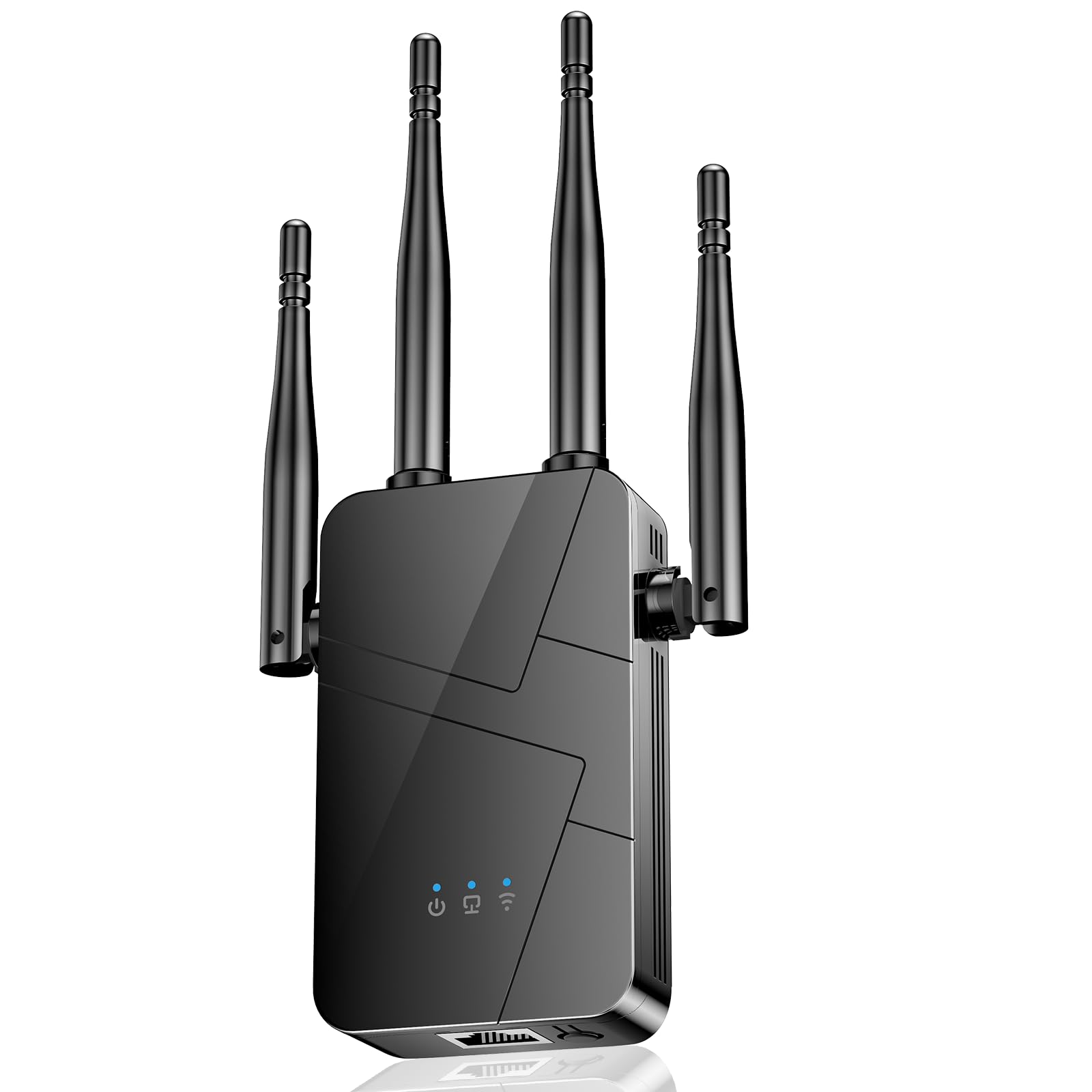
Type: Wireless repeater with Ethernet port
Stated coverage: Up to 15,000 sq ft
Setup: One-tap
Compatibility: Supports 99% of devices
Wired option: One Ethernet port
Price tier: Mid-range
This model sells itself on the one-tap setup, which matters more than it sounds in a house where the router sits in a cupboard under the stairs and the conservatory is at the back. The 15,000 square foot rating is slightly below the top pick but still comfortably enough for a conservatory extension, and the Ethernet port gives the same wired fallback for a TV or set-top box. It is the sensible choice for a buyer who wants the job done without reading a manual.
The caution is the same one that applies to every plug-in repeater: it halves the throughput of whatever it repeats, so a conservatory used for 4K streaming on a modest broadband line may still stutter. Buyers with a very fast connection and heavy use should look at a mesh-capable unit instead.
Trade-off: Repeated bandwidth drops compared with a mesh node, which shows up first on high-bitrate streaming in the conservatory.
Check the current price on Amazon
WiFi Extender Signal Booster for Home, Covers Up to 18,000 Sq Ft
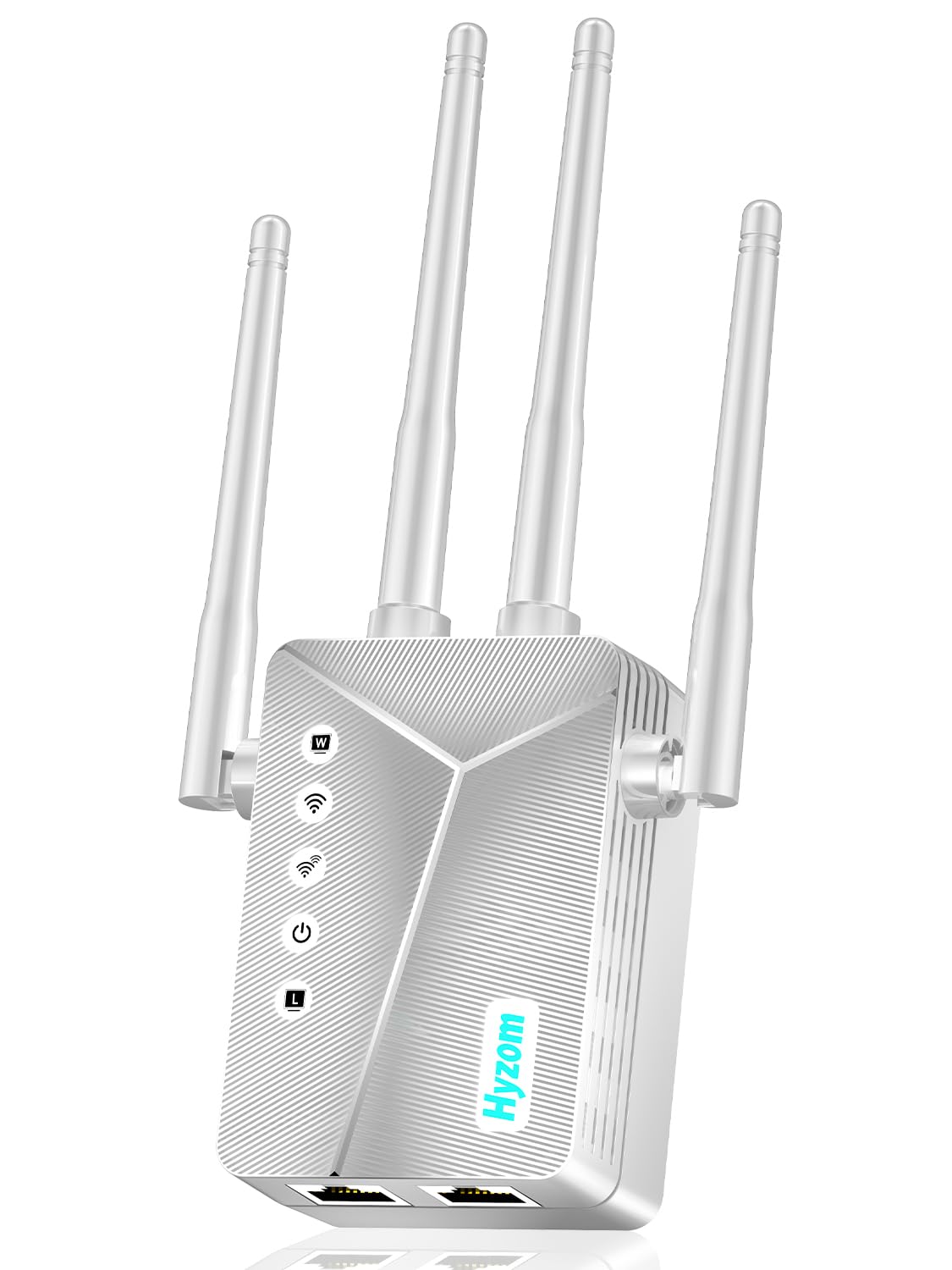
Type: Wireless repeater with Ethernet port
Stated coverage: Up to 18,000 sq ft
Device support: 65+ devices
Setup: One-tap
Wired option: One Ethernet port
Price tier: Mid-range
The distinguishing number here is the 65+ device support, which is the highest of the five. That makes it the pick for a household where the conservatory is not just a sofa and a TV but a home office, a games room or a second living space with phones, tablets, a printer and smart speakers all attached. Coverage matches the top pick at 18,000 square feet, and the Ethernet port is present again for anything that prefers a cable.
The honest limitation is that device count and real-world throughput are not the same thing. A repeater managing 65 connections will still feel slow if several of them are streaming at once, so this suits a spread-out, many-device home better than a bandwidth-hungry one.
Trade-off: High device capacity does not translate into high throughput per device, so simultaneous heavy streaming will expose the limits of a repeater.
Check the current price on Amazon
2026 WiFi Extender, 15888 sq.ft Internet Extender WiFi Booster
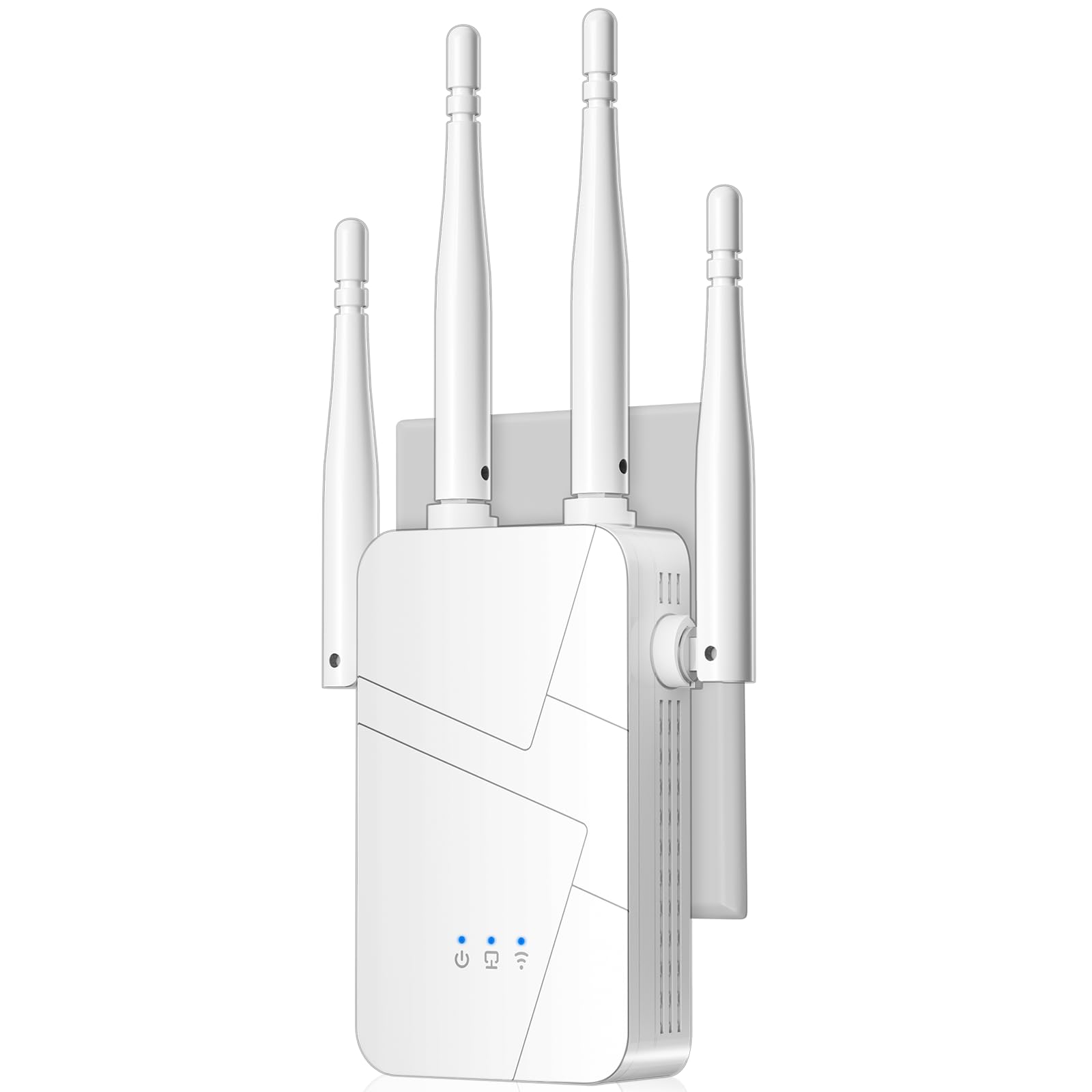
Type: Wireless repeater with mesh Wi-Fi support
Stated coverage: Up to 15,888 sq ft
Device support: 55+ devices
Setup: One-tap
Speed claim: 99% faster
Price tier: Mid-range
This is the pick for buyers who already own, or plan to own, a mesh router and want the conservatory added to that network rather than bolted on with a separate repeater name. Mesh support means the conservatory can appear as part of one network instead of a second SSID that devices have to be coaxed onto. Coverage sits just under 16,000 square feet, which is plenty for the room itself plus the wall between it and the rest of the house.
The drawback is that mesh compatibility is only useful if the main router supports it too. In a home with an older ISP-supplied router, that feature goes unused and the buyer is paying mid-range money for a standard repeater.
Trade-off: The mesh benefit only materialises with a compatible main router, so buyers on older ISP hardware pay for a feature they cannot use.
Check the current price on Amazon
TP-Link AC1200 WiFi Extender Dual Band 5GHz/2.4GHz (RE315)

Type: Dual-band WiFi extender
Speed: 1.2Gbps total
Bands: 5GHz and 2.4GHz
Stated coverage: Up to 1,600 sq ft
Device support: 32 devices
Mesh: EasyMesh compatible
Wired option: One Ethernet port
Price tier: Budget
This is the value pick and the only dual-band model in the group, with both 5GHz and 2.4GHz radios. The 5GHz band is the one that matters for a conservatory, because it is less congested and faster at short range, while 2.4GHz handles the thick-wall penetration. Coverage is rated at 1,600 square feet, which sounds small next to the others but is realistic for a single room and its approach corridor. EasyMesh compatibility means it can join a compatible mesh network later.
The clear limitation is scale. This unit is designed to cover one zone, not a whole house, so a buyer needing the conservatory plus two upstairs bedrooms should budget for a second unit or choose one of the larger models above. Buyers wanting maximum reach from a single plug should look elsewhere.
Trade-off: A single-room coverage rating means this model cannot stretch across a whole house, so larger properties need more than one.
Check the current price on Amazon
Before You Buy
- Wall thickness: A conservatory separated from the router by a solid brick or stone wall needs the extender placed in an intermediate room, not in the conservatory itself.
- Coverage rating: Treat the square-foot figure as a maximum in open space; halve it mentally for a house with internal walls.
- Compatibility: Check the main router’s band support before buying, especially if mesh features are the reason for the purchase.
- Wired needs: An Ethernet port is worth having if a TV, console or desktop in the conservatory can be cabled.
- Device count: Match the stated device support to the real number of phones, tablets, speakers and smart plugs in the household.
- Placement: The extender needs a power socket roughly halfway between router and conservatory, which is often a landing or hallway.
- Budget: A budget single-room extender plus careful placement frequently beats a large unit in the wrong spot.
Frequently Asked Questions
-
Will a WiFi extender work through a thick conservatory wall?
Yes, but placement decides it. The extender should sit between the router and the conservatory so it repeats a strong signal rather than a weak one. -
Is a mesh extender better than a standard repeater for a conservatory?
A mesh-compatible extender keeps one network name and hands devices over more smoothly, which helps if the conservatory is used daily. A standard repeater is cheaper and fine for occasional use. -
How many extenders does a house with a conservatory need?
Usually one for the conservatory and its approach, plus a second if upstairs rooms also drop out. A single unit rated for one room will not cover a whole house. -
Does an extender slow down the connection?
A wireless repeater typically halves the throughput it passes on. A wired connection from the extender’s Ethernet port avoids that penalty for a fixed device. -
Where should the extender be plugged in?
In a socket roughly midway between the router and the conservatory, with as few walls as possible in the path to the router. -
Can a budget extender handle a conservatory TV?
It can handle streaming at moderate quality. For 4K viewing, a model with an Ethernet port and a cabled TV gives a more stable result.
Bottom Line
For most houses with a conservatory and thick walls, the 2026 Upgraded WiFi Extender for Home is the safest single purchase: its 18,000 square foot rating leaves margin for the wall, and the Ethernet port future-proofs the conservatory for a cabled TV. Buyers on a tight budget should take the TP-Link AC1200 and place it carefully, while households with many devices should look at the 65+ device model instead.
