Why there are Amazon links here: Brave Review is paid a commission for qualifying Amazon purchases made through the links below. Your price does not change, and using our links is entirely optional. How this works
Best WiFi Extender for a House with a Loft Conversion Dead Spot
A loft conversion sits at the top of the house, often behind a floor and a layer of insulation that the router downstairs cannot push a signal through. This roundup covers five extenders that can fill that dead spot, from a budget AC1200 unit to high-coverage dual-band models. It suits the homeowner who wants the loft usable for work or streaming, the renter who cannot rewire the house, and the buyer who wants one-plug setup without an installer.
The overview below compares every pick at a glance, and the reviews that follow explain who each one fits.
The Picks at a Glance
| Product | Key Spec | Best Use | Price Tier |
|---|---|---|---|
| TP-Link AC1200 WiFi Extender (RE315) | Dual band 5GHz/2.4GHz, up to 1600 sq.ft | Small loft, budget pick | Budget |
| 2026 WiFi Extender Signal Booster for Home (15000 sq.ft) | Ethernet port, 1-tap setup | Mid-size loft, plug-and-play | Mid |
| 2026 Upgraded WiFi Extender for Home (18000 sq.ft) | Dual band, Ethernet port | Large loft, heavy coverage | Mid |
| WiFi Extender Signal Booster for Home (18,000 sq ft) | 65+ devices, Ethernet port | Busy household, many devices | Mid |
| 5.8GHz/2.4GHz WiFi Extender (18999 sq.ft) | 1200Mbps dual band, 115+ devices | Whole-floor coverage, value | Mid |
1. TP-Link AC1200 WiFi Extender Dual Band 5GHz/2.4GHz (RE315)

Type: Dual band range extender
Bands: 5GHz / 2.4GHz
Speed Class: AC1200, 1.2Gbps
Coverage: Up to 1600 sq.ft
Devices: Up to 32
Ports: One Ethernet port
Mesh: EasyMesh compatible
Price Tier: Budget
TP-Link AC1200 WiFi Extender Dual Band 5GHz/2.4GHz (RE315)
This is a compact wall-plug extender built around a dual-band AC1200 radio. The 5GHz band carries the faster traffic while the 2.4GHz band reaches through walls and floors, which is what a loft needs. EasyMesh compatibility means it can join a mesh network rather than sit as a lone repeater. The single Ethernet port lets a wired device in the loft connect directly.
It suits a small loft conversion used for a laptop, a TV, or a single desk. Buyers with a modest dead spot and a tight budget will find it the easiest entry point here. The 32-device limit and 1600 sq.ft coverage are the smallest in this roundup.
Trade-off: The low device count and short range mean a busy loft with multiple screens and phones will outgrow it quickly.
Check the current price on Amazon
2. 2026 WiFi Extender Signal Booster for Home, 15000sq.ft
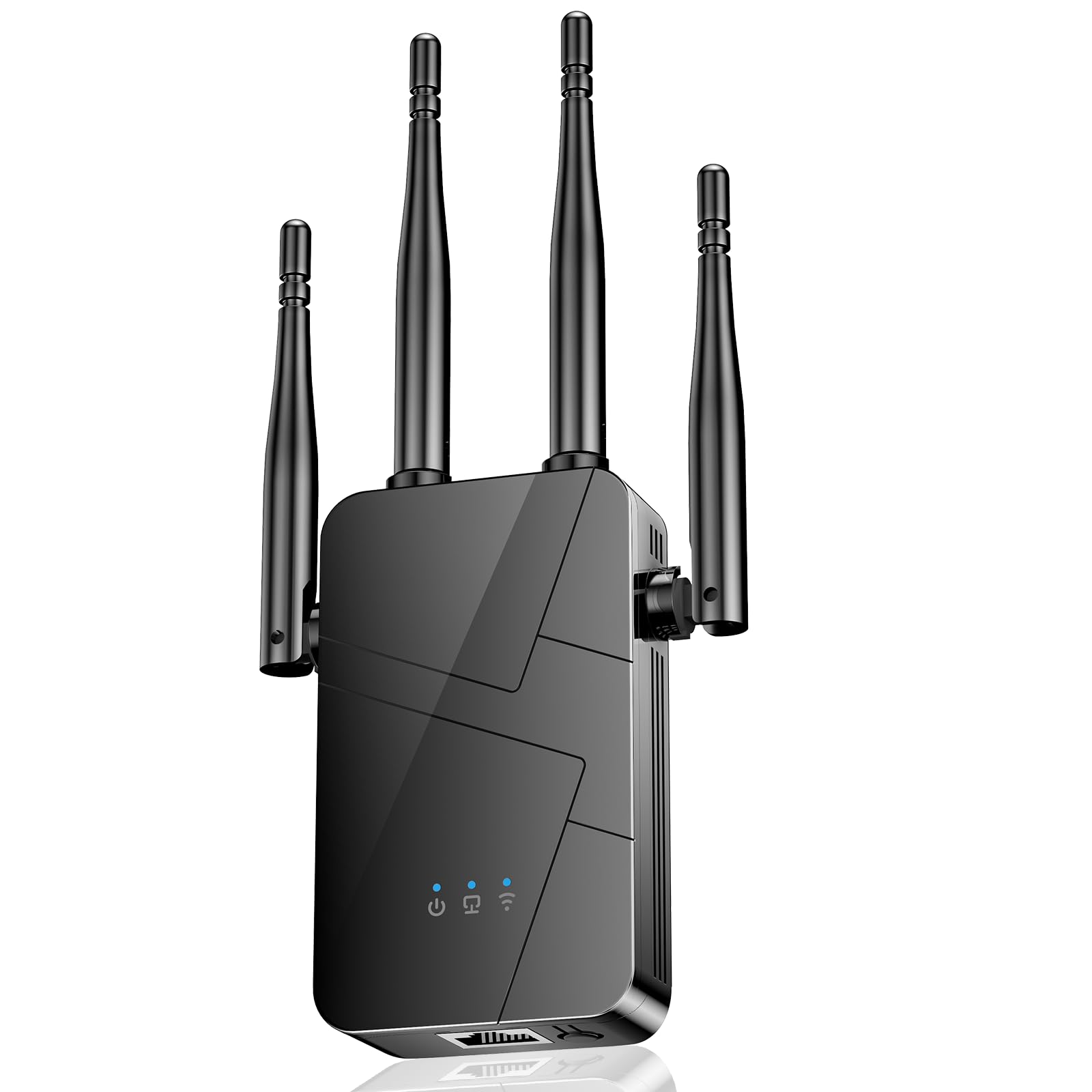
Type: Long range WiFi repeater
Coverage: Up to 15000 sq.ft
Ports: Ethernet port
Setup: 1-tap setup
Compatibility: 99% of devices
Price Tier: Mid
This repeater is pitched at whole-home coverage and uses a one-tap setup routine aimed at buyers who do not want to log into a router admin page. The Ethernet port gives a wired option for a loft desk or a media box. It is designed to work with the vast majority of routers rather than tying the buyer to one brand.
It fits a mid-size loft conversion where the dead spot is stubborn and the router is a floor or two below. The coverage claim is generous, which makes it a reasonable step up from a compact budget unit.
Trade-off: Very large coverage claims in this class usually assume an open layout, so a thick loft floor will deliver less than the headline figure.
Check the current price on Amazon
3. 2026 Upgraded WiFi Extender for Home, Up to 18000Sq.ft

Type: Long range WiFi booster
Coverage: Up to 18000 sq.ft
Speed Claim: 15X faster signal amplifier
Ports: Ethernet port
Compatibility: 99% of routers
Price Tier: Mid
This model leans on a high-speed amplifier design and a broad coverage figure, with an Ethernet port for a wired loft device. It is built to pair with most routers on the market. The physical design is a plug-in unit, so no cabling run is required.
It suits a large loft conversion that has been fitted out as a bedroom or office and needs strong throughput, not just a signal bar. Buyers who want a step above the entry-level units will find it a natural fit.
Trade-off: This is a new listing with little track record, so buyers are taking the coverage claim largely on the manufacturer’s word.
Check the current price on Amazon
4. WiFi Extender Signal Booster for Home, Covers Up to 18,000 Sq Ft
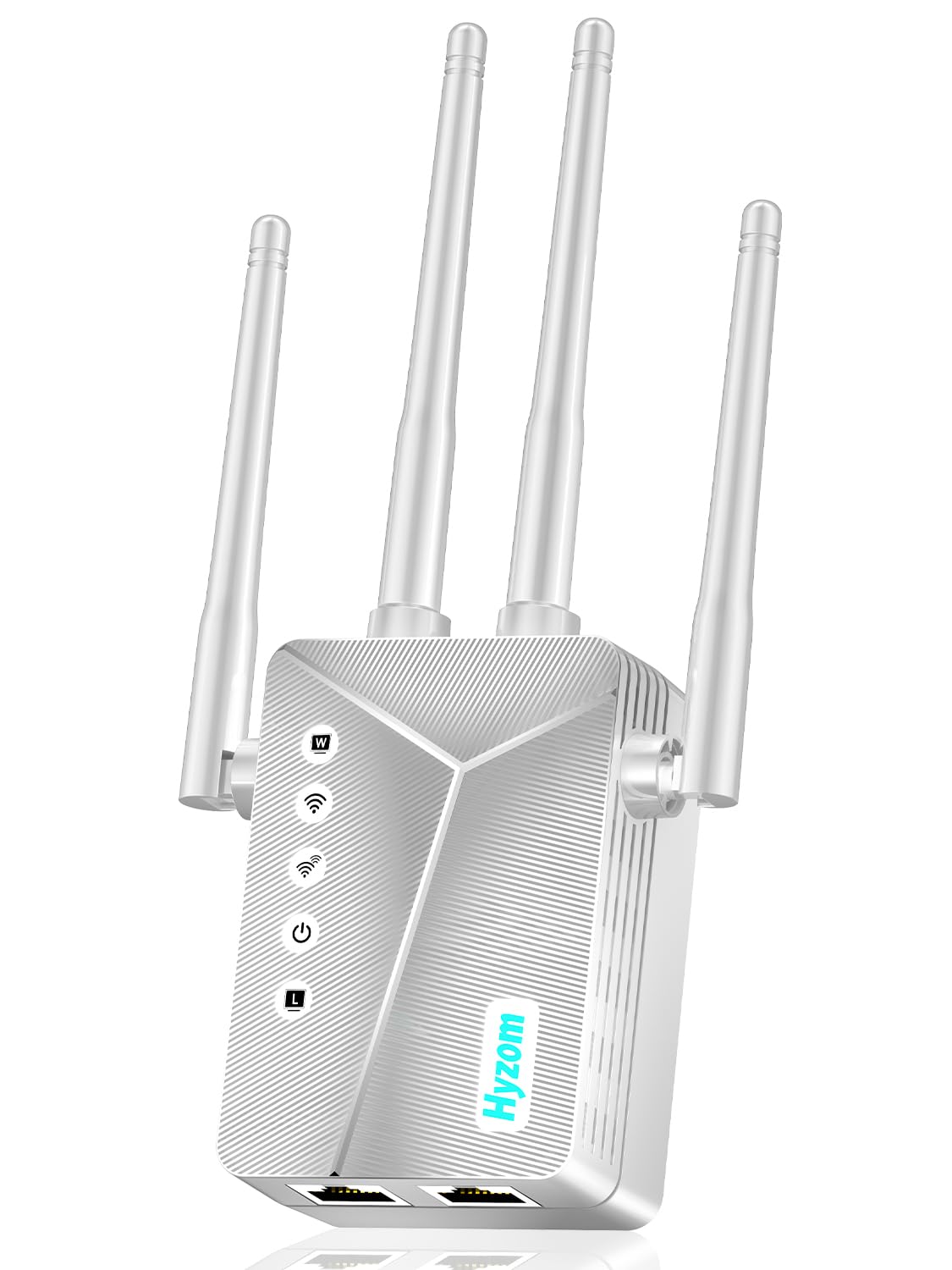
Type: Long range WiFi repeater
Coverage: Up to 18,000 sq.ft
Devices: 65+
Ports: Ethernet port
Setup: 1-tap setup
Features: Dead zone elimination, buffering reduction
Price Tier: Mid
This repeater is aimed squarely at dead zones and buffering, with a device ceiling of 65+ and a one-tap setup. The Ethernet port supports a wired connection in the loft. It is built for households where many phones, tablets, and streaming boxes are online at once.
It suits a loft conversion in a busy family home, where the dead spot is not the only problem and the network is crowded. The higher device count makes it the better pick for a house full of screens.
Trade-off: The 65+ device rating is a ceiling, not a guarantee of speed, and a crowded loft will still see slowdowns at peak times.
Check the current price on Amazon
5. 5.8GHz/2.4GHz WiFi Extender Signal Booster for Home (18999sq.ft)
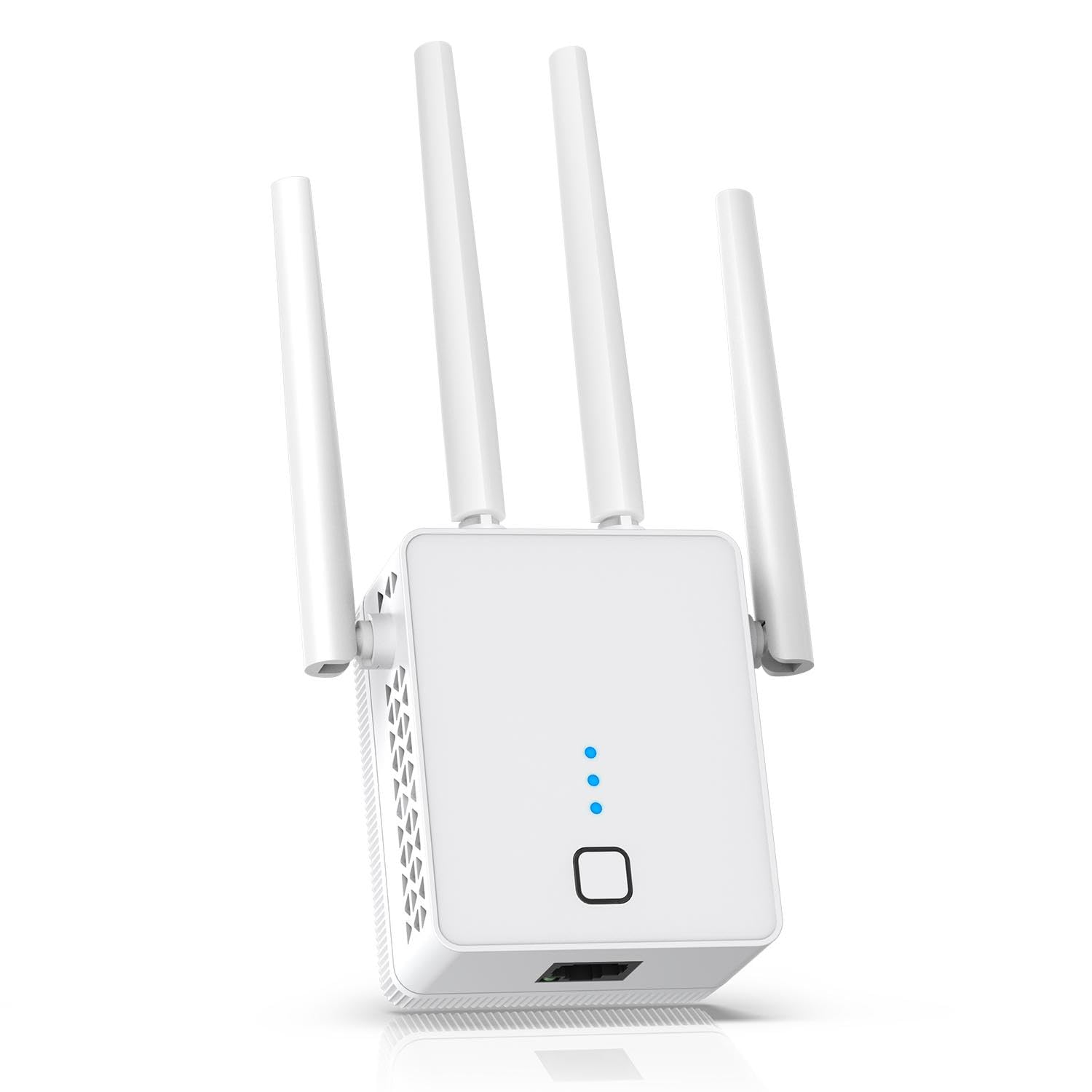
Type: Dual band WiFi booster
Bands: 5.8GHz / 2.4GHz
Speed Class: 1200Mbps
Coverage: Up to 18999 sq.ft
Devices: 115+
Ports: Ethernet port
Price Tier: Mid
5.8GHz/2.4GHz WiFi Extender Signal Booster for Home (18999sq.ft)
This white dual-band unit pairs a 5.8GHz band with 2.4GHz and a 1200Mbps speed class. The 115+ device rating is the highest in this roundup, and the Ethernet port gives a wired option for the loft. It is a plug-in design with no cabling required.
It suits a whole-floor loft setup where many devices connect and the buyer wants the widest coverage claim at a mid-tier price. The dual-band design helps split fast traffic from long-range traffic.
Trade-off: The high device and coverage figures are marketing ceilings, and a single plug-in unit cannot match a properly placed mesh system in a large house.
Check the current price on Amazon
Before You Buy
- Placement: An extender needs to sit roughly halfway between the router and the loft, not in the dead spot itself, or it repeats a weak signal.
- Compatibility: Check the extender works with the existing router, especially if it is a mesh system or an ISP-supplied unit.
- Bands: A dual-band model is the minimum for a loft, since 5GHz carries speed and 2.4GHz pushes through the floor.
- Ethernet: A port is worth having if the loft holds a desk, TV, or console that benefits from a wired link.
- Device count: Match the device ceiling to the household, since a busy loft with phones, laptops, and streaming will exceed a low limit.
- Layout: Thick loft floors and insulation reduce real coverage, so treat headline square-footage claims as best-case figures.
- Setup: One-tap and app-based setup suits buyers who do not want to configure network settings manually.
Frequently Asked Questions
- Will a WiFi extender fix a loft conversion dead spot? Yes, if it is placed between the router and the loft so it has a strong signal to repeat. Putting it inside the dead spot usually makes things worse.
- Is a dual-band extender better for a loft? Generally yes. The 5GHz band carries faster traffic and the 2.4GHz band reaches through floors and walls.
- How many devices can these extenders handle? The picks here range from 32 devices on the budget model to 115+ on the largest, so match the ceiling to the household.
- Does an Ethernet port matter in a loft? It does for a desk, TV, or console, since a wired link avoids repeating a wireless signal twice.
- Can an extender join a mesh network? The TP-Link RE315 is EasyMesh compatible, which lets it work alongside a mesh system rather than as a standalone repeater.
- Will coverage claims hold through a loft floor? Rarely at the headline figure. Thick floors and insulation reduce real-world range, so buy with headroom.
Bottom Line
For most loft conversions, the TP-Link AC1200 WiFi Extender (RE315) is the safest starting point: it is the budget pick, EasyMesh compatible, and simple to place halfway up the stairs. Buyers with a large or busy loft should step up to the higher-coverage dual-band models, which trade a little simplicity for more headroom.
