Why there are Amazon links here: Brave Review is paid a commission for qualifying Amazon purchases made through the links below. Your price does not change, and using our links is entirely optional. How this works
Best WiFi for a House with a Garden Office: 5 Mesh Systems That Reach the Shed
A garden office only works if the WiFi actually gets there. This roundup covers five mesh systems that can carry a strong signal from the main house out to a detached office, a converted garage or a shed at the end of the lawn. The picks split into three buyer profiles: budget-conscious households that just need reliable coverage, remote workers who need speed and low latency for calls and file transfers, and anyone with a large plot who needs an outdoor-rated unit. The overview table below puts all five side by side so a decision can be made in under a minute.
The Picks at a Glance
| Product | Key Spec | Best Use | Price Tier |
|---|---|---|---|
| TP-Link Deco X55 AX3000 (3-Pack) | WiFi 6, up to 6,500 sq ft, 3 Gigabit ports per unit | Best value whole-home plus garden coverage | Budget |
| NETGEAR Orbi 370 Series WiFi 7 (3-Pack) | WiFi 7, up to 6,000 sq ft, 2.5 Gig port | Best for heavy device loads and future-proofing | Premium |
| Amazon eero 6+ (3-Pack) | WiFi 6, up to 4,500 sq ft, supports Gigabit plans | Best simple setup for renters and smaller plots | Mid-range |
| Amazon eero Outdoor 7 (1-Pack) | WiFi 7, IP66 weatherproof, up to 15,000 sq ft outdoors | Best for reaching a distant garden office | Premium |
| TP-Link Deco XE75 AXE5400 (3-Pack) | WiFi 6E, up to 7,200 sq ft, 6GHz band | Best wide coverage with a clean 6GHz channel | Mid-range |
1. TP-Link Deco X55 AX3000 WiFi 6 Mesh System (3-Pack)

Coverage: Up to 6,500 sq ft
Standard: WiFi 6 (AX3000)
Ports: 3 Gigabit ports per unit
Backhaul: Supports Ethernet backhaul
Pack Size: 3 units
The Deco X55 is the value play here, and it is the one most households should start with. Three units cover a large house plus a garden office, and each node carries three Gigabit ports, which matters if the office has a wired desktop or a dock. The Ethernet backhaul support is the standout feature: running a single cable from the house to the office turns that third unit into a near-wired access point rather than a repeater, which is the difference between a usable connection and a frustrating one.
For buyers who work from the garden office all day, this is the setup that removes the guesswork. The mesh handles roaming between house and office without dropping a video call, and the app-based setup is straightforward for a non-technical household. It is not the fastest system in this roundup, and a WiFi 6 network will not match the newest WiFi 7 units on paper, but for most home broadband plans the difference is invisible.
Trade-off: The AX3000 spec is the entry point of this list, so households with very heavy simultaneous use across dozens of devices may notice the ceiling sooner than with the premium picks.
Check the current price on Amazon
2. NETGEAR Orbi 370 Series WiFi 7 Mesh System (3-Pack)

Coverage: Up to 6,000 sq ft
Standard: WiFi 7, dual-band
Speed: Up to 5 Gbps
Device Load: 70 devices
Ports: 2.5 Gig port
Pack Size: Router plus 2 satellite extenders
The Orbi 370 is the premium pick and the one to choose if the garden office is a serious workspace. WiFi 7 with a 2.5 Gig port means the wired connection into the house is not the bottleneck, and the 70-device rating covers a busy family plus a home office full of gear. Orbi’s satellite design is well established for backhaul stability, and the dedicated-style link between router and satellites keeps the office connection consistent rather than sharing airtime with phones and TVs.
This is also the pick for anyone who expects to keep the system for years. WiFi 7 is the current generation, so the Orbi 370 will not feel dated as new laptops and phones arrive. The security features bundled into the firmware add value for a home office handling client data. The catch is that this is the most expensive three-pack here, and a household on a modest broadband plan will not see the full benefit of the speed ceiling.
Trade-off: The premium price buys headroom many households will not use, and the dual-band design means buyers expecting a 6GHz band should look at the Deco XE75 instead.
Check the current price on Amazon
3. Amazon eero 6+ Mesh WiFi System (3-Pack)
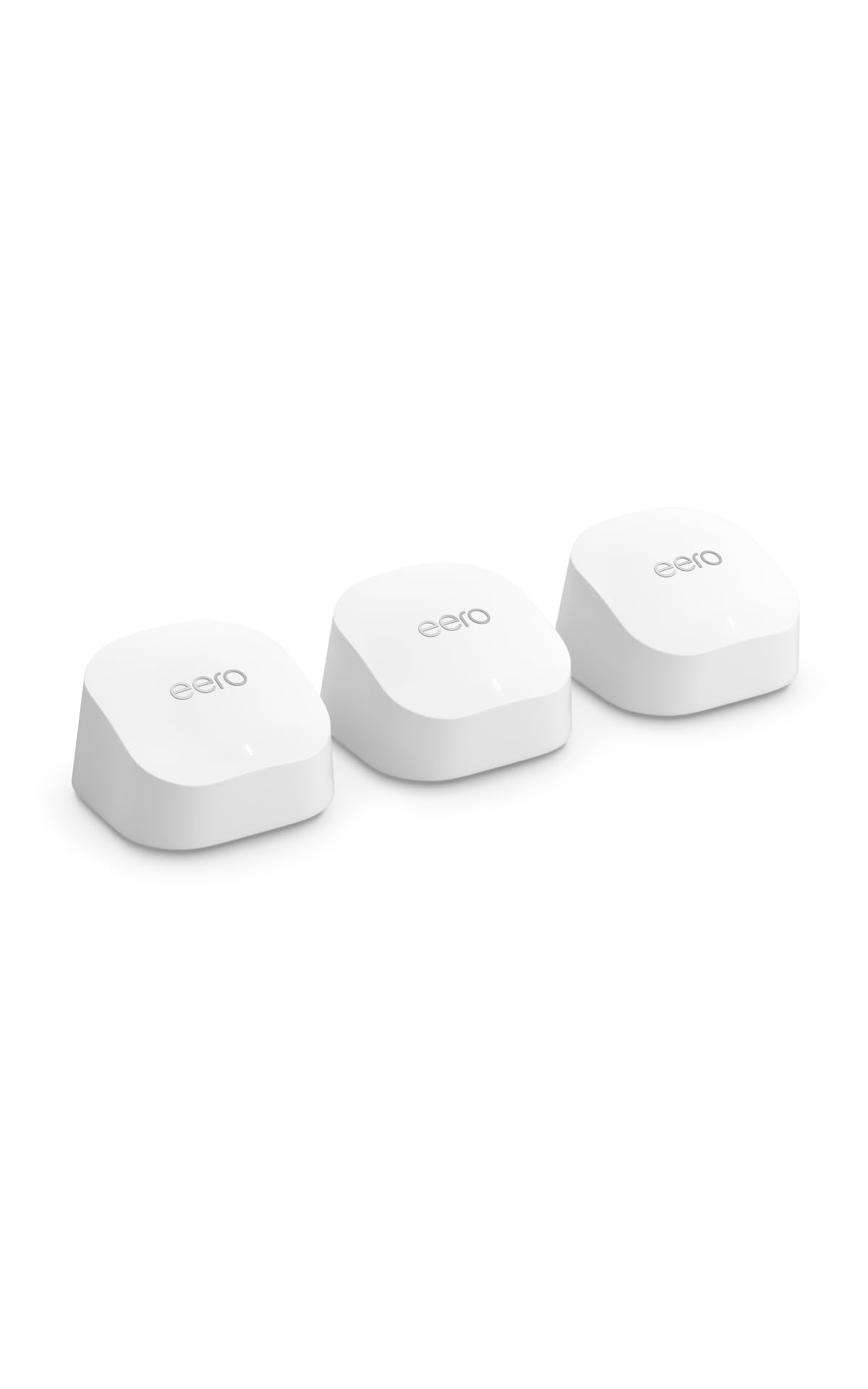
Coverage: Up to 4,500 sq ft
Standard: WiFi 6
Plan Support: Internet plans up to a Gigabit
Device Load: 75+ devices
Pack Size: 3 units
The eero 6+ is the easiest system here to live with, and that is its whole pitch. Setup is app-driven and takes minutes, the units are small enough to sit on a shelf in the office without drawing attention, and the network manages itself. For a garden office that is a short run from the house, three units are enough to blanket the main building and put a strong signal in the office.
The 75+ device rating is generous for the price tier, and Gigabit plan support means it will not throttle a fast fibre connection. This is the pick for renters, for households that do not want to think about networking, and for anyone who values a clean app over a settings menu. The trade-off is coverage: at 4,500 sq ft this is the smallest footprint of the three-packs here, so a long garden or a thick-walled outbuilding may need a fourth unit or a wired run.
Trade-off: The smaller coverage figure makes this a poor fit for large plots, and the system offers less manual control than buyers who like to tune their own network might want.
Check the current price on Amazon
4. Amazon eero Outdoor 7 Mesh WiFi Router (1-Pack)
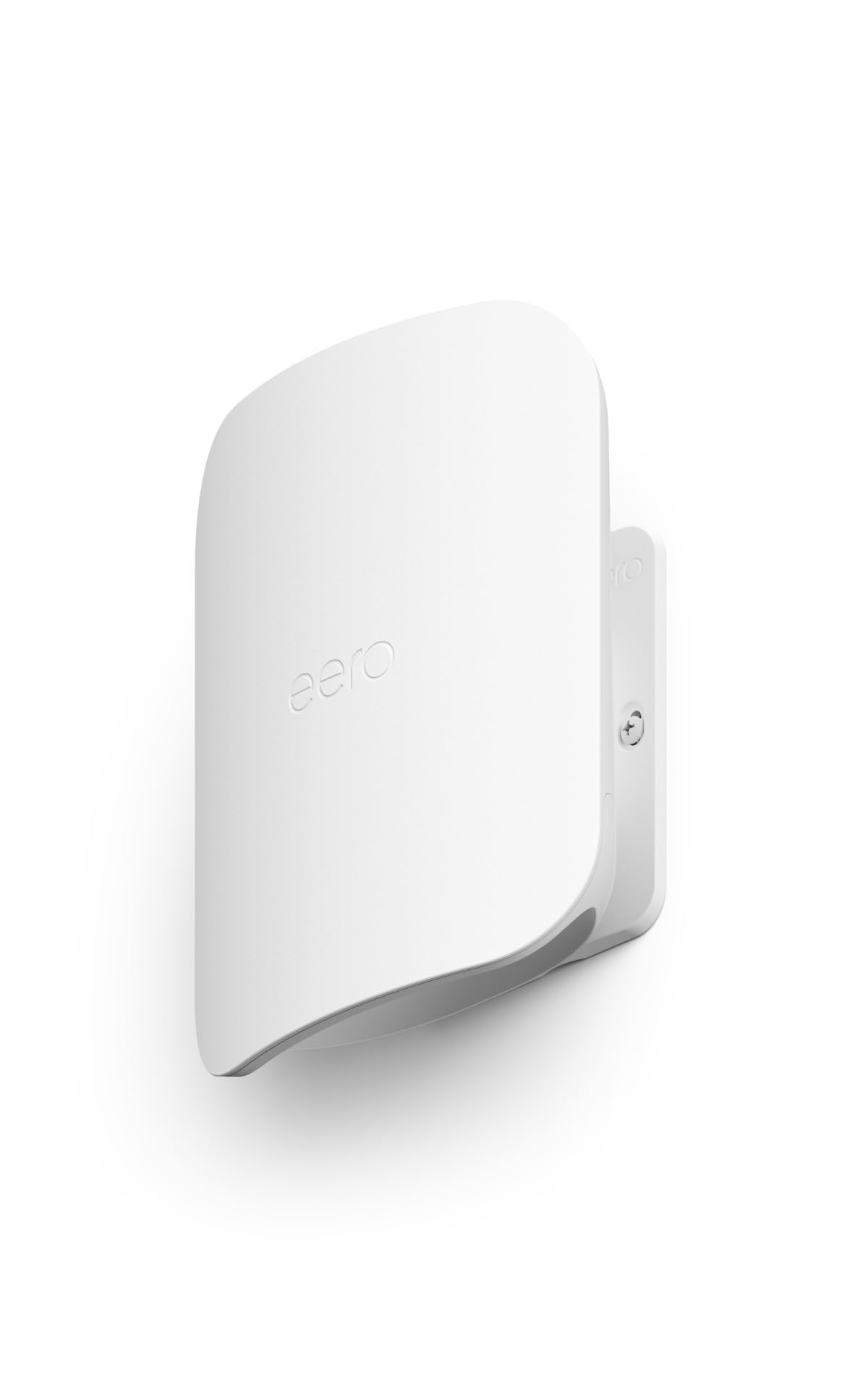
Coverage: Up to 15,000 sq ft outdoors
Standard: WiFi 7, dual-band
Weatherproofing: IP66 rating
Power: Includes 30W PoE+ adapter
Pack Size: 1 unit
The eero Outdoor 7 is the specialist pick, and it solves a problem the indoor systems cannot. A garden office at the bottom of a long plot often sits beyond the reach of an indoor mesh node, and a weatherproof unit mounted on the outside of the house or the office itself bridges that gap properly. The IP66 rating means it is built for rain and dust, and the included PoE+ adapter means a single cable carries both power and data.
This is the right answer for buyers whose office is detached, distant, or separated by walls that kill indoor signals. It is also the most sensible way to cover a patio or garden area around the office. The important caveat is that it is a single unit and an add-on in practice: it works best paired with an existing eero network, and buyers starting from scratch will need an indoor system as well.
Trade-off: One outdoor unit alone will not cover a house, so this is an addition to a mesh rather than a complete system, and it is the most expensive single unit here.
Check the current price on Amazon
5. TP-Link Deco XE75 AXE5400 Tri-Band WiFi 6E System (3-Pack)

Coverage: Up to 7,200 sq ft
Standard: WiFi 6E, tri-band
Bands: Includes 6GHz band
Security: WPA3
Pack Size: 3 units
The Deco XE75 is the coverage champion of the indoor picks and the best middle ground between price and performance. At up to 7,200 sq ft across three units, it has enough reach for a large house plus a garden office, and the 6GHz band gives the office a clean channel that neighbours and older devices cannot crowd. WPA3 security is the current standard, which matters for anyone handling work documents on the network.
The AI-driven network management is genuinely useful for a household that does not want to fiddle with settings, and the tri-band design keeps backhaul traffic separate from what laptops and phones are using. This is the pick for buyers who want wide coverage and a modern band without paying WiFi 7 prices. The limitation is that 6GHz range is shorter than 2.4GHz, so the office node still needs a reasonable path back to the house.
Trade-off: The 6GHz band trades range for speed, so a very distant or thick-walled office may still need a wired backhaul or the outdoor eero rather than relying on wireless alone.
Check the current price on Amazon
Before You Buy
- Distance: Measure the run from the router to the office. A mesh node in the office only works if it can hear the house; beyond that, a wired backhaul or an outdoor unit is the reliable answer.
- Walls: Brick, stone and metal cladding block WiFi far more than timber. A thick-walled outbuilding may need the outdoor eero or a cable run regardless of the system chosen.
- Backhaul: Ethernet backhaul turns a mesh node into a near-wired access point. If a cable can be run to the office, any of these systems performs dramatically better.
- Broadband plan: A WiFi 7 system only pays off with a fast plan and modern devices. Households on modest broadband get better value from the Deco X55 or eero 6+.
- Device count: Count laptops, phones, TVs, cameras and smart plugs. The Orbi 370 and eero 6+ have the highest device ratings here.
- Weatherproofing: Only the eero Outdoor 7 is rated for outdoor mounting. Indoor units should stay inside, even in a sheltered office.
- Ecosystem: The eero Outdoor 7 is designed to extend an eero network. Mixing brands across the house and office adds complexity.
Frequently Asked Questions
-
Will a mesh system reach a garden office?
Usually yes, if the office is within range of a node. Placing one unit in the office or on the wall nearest the house is the key step. Very distant or thick-walled offices need a wired backhaul or the outdoor eero. -
Is WiFi 7 worth it for a garden office?
It is worth it for heavy users with fast broadband and many devices. For basic browsing and video calls, WiFi 6 systems like the Deco X55 deliver the same real-world experience for less money. -
Can the eero Outdoor 7 be used on its own?
It is best as an extension of an existing eero network. Buyers starting from scratch need an indoor eero system as well, which adds to the total cost. -
Does Ethernet backhaul really make a difference?
Yes. A cable from the house to the office removes the wireless hop between buildings, which is where most garden-office dropouts come from. All three multi-unit systems here support it. -
How many units are needed for a house plus office?
A three-pack covers most houses plus a nearby office. Large plots or detached offices at a distance may need a fourth unit or an outdoor access point. -
Which pick is best for a renter?
The eero 6+ is the simplest to set up and remove, and its app-based management suits buyers who cannot run cables or modify the property.
Bottom Line
For most households, the TP-Link Deco X55 AX3000 three-pack is the best WiFi for a house with a garden office: it covers a large footprint, supports Ethernet backhaul for a rock-solid office link, and costs far less than the premium options. Buyers with a distant or detached office should pair it with a cable run, or step up to the eero Outdoor 7 if wiring is not possible.
