Why there are Amazon links here: Brave Review is paid a commission for qualifying Amazon purchases made through the links below. Your price does not change, and using our links is entirely optional. How this works
BLAVOR Portable Power Station: 1024Wh With a Built-In Solar Panel
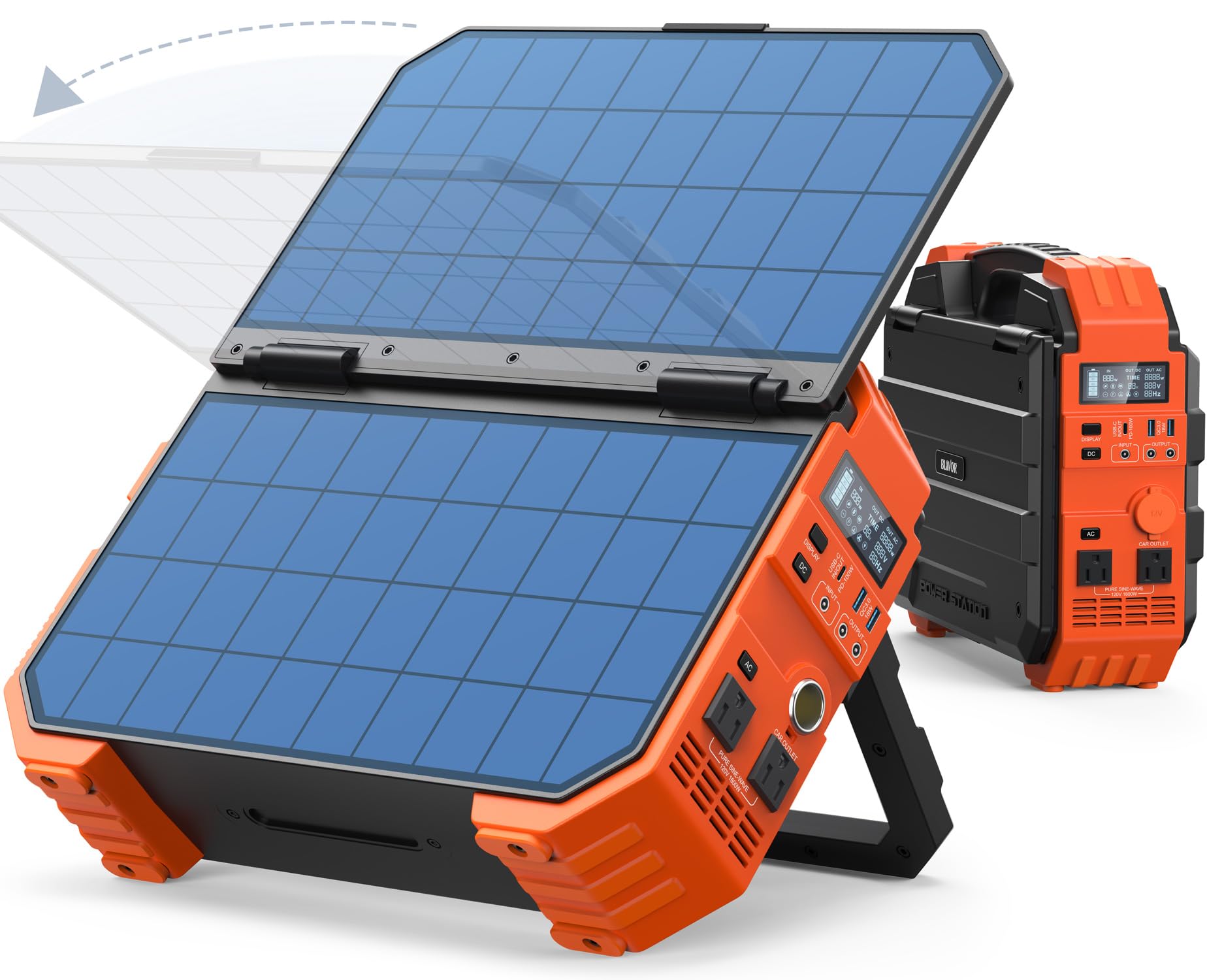
The BLAVOR portable power station is a 1024Wh LiFePO4 unit with a 1600W continuous inverter, a 3200W peak rating and a 40W solar panel built into the body. It is aimed at households that want a backup battery for short outages, campers who need silent power, and RV owners who want a reserve bank that does not need a generator. This review covers the specifications that matter, the jobs the unit does well, the ones it does not, and the questions buyers tend to ask before ordering.
Features and Specifications
Battery Chemistry: LiFePO4
Capacity: 1024Wh
Continuous Output: 1600W
Peak Output: 3200W
USB-C Output: 100W
Solar Input: Built-in 40W panel
Intended Use: Emergency home backup, camping, RVs, power outages
The headline number is the 1024Wh capacity. That figure describes how much energy the battery holds, not how long it lasts — runtime depends entirely on what gets plugged in. A phone or a laptop draws very little and runs for days of normal use, while a space heater or a kettle drains the pack quickly. Buyers should think in terms of the load, not the capacity alone.
The 1600W continuous rating with a 3200W peak is the other half of the story. The continuous figure is what the inverter sustains for appliances that run for long stretches. The peak figure is the short surge a motor draws at startup, which is why refrigerators and pumps need headroom above their running wattage.
Build and Design
The unit is built around a LiFePO4 battery, the chemistry that has become the default for this category. LiFePO4 tolerates deep discharges better than older lithium formulations and holds up over a longer cycle life, which matters for a device bought to sit idle for months and then work during an outage.
The built-in 40W panel is the design choice that separates this model from most of its competition. Folding panels are usually a separate purchase, so a panel integrated into the body removes one item from the packing list and one cable from the setup. The trade-off is that a panel this size is a maintenance charger rather than a fast refill — it contributes a modest trickle in good sun, not a full recharge in an afternoon.
Capacity and Power
At 1024Wh, the pack sits in the middle of the portable class: enough for a real backup role, small enough to move without help. The realistic use case is a short outage — keeping a fridge cold, running lights, charging phones and a laptop, and powering a router so the household stays connected.
The 1600W continuous inverter opens up more than small electronics. Buyers can run kitchen appliances, power tools and small heating devices within that limit, and the 3200W peak gives motor-driven appliances the surge they need to start. Anything with a heating element should be treated as a short-burst load rather than something to run for hours.
The 100W USB-C port is the detail that matters most for daily carry. It charges modern laptops at full speed and handles phones and tablets without a power brick, which makes the unit useful as a desk-side battery even when no outage is happening.
Solar and Maintenance
The built-in 40W panel makes the unit partly self-sustaining when it sits in sunlight. That suits storage between trips and slow top-ups at a campsite, and it means the battery does not arrive flat after weeks in a garage. The panel is not a substitute for wall charging when a fast refill is needed.
Maintenance is minimal by design. LiFePO4 does not need the careful partial-charge routine that older lithium packs demanded, and the sealed body has no fluids or filters to service. The practical care is storage: keep the unit in a moderate, dry place and top it up periodically so it is ready when needed.
Trade-off: The integrated 40W panel is convenient but slow, so buyers who plan to rely on solar as the main charging source will find it a supplement rather than a solution.
Check the current price on Amazon
Who It Suits and Who It Does Not
This unit fits three buyer types well. The first is the household that wants a plug-and-play backup for short outages without installing a transfer switch or a gas generator. The second is the camper or overlander who wants silent power for a fridge, lights and devices, with the built-in panel covering top-ups between drives. The third is the RV owner who wants a reserve bank for boondocking nights.
It is not the right pick for a household planning to run a whole home through a multi-day outage. A 1024Wh pack cannot carry central air, an electric water heater or a full kitchen for long, and no portable unit in this class can. Buyers with that requirement need a larger stationary battery or a generator.
It is also a poor fit for anyone who wants fast solar recharge from the panel alone. The integrated 40W panel is a convenience feature, and buyers who intend to live off solar need a separate folding array with a higher input rating.
FAQ
-
How long does the BLAVOR portable power station last on a charge?
Runtime depends on the load. Small electronics draw little and last a long time, while high-wattage appliances drain the 1024Wh pack quickly. Buyers should add up the wattage of what they plan to run and compare it to the capacity. -
Can the BLAVOR portable power station run a refrigerator?
Yes, within limits. The 1600W continuous output and 3200W peak cover most household fridges, and the startup surge is the reason the peak rating matters. Runtime is the constraint, not the ability to start the compressor. -
What can the 100W USB-C port charge?
It charges USB-C laptops at full speed along with phones, tablets and other USB-C devices. That makes the unit useful as a large everyday battery, not just an emergency device. -
How does the built-in 40W solar panel work?
The panel charges the battery directly when the unit sits in good sunlight. It is a maintenance and top-up source rather than a fast recharge, so it suits storage and campsite trickle charging. -
Is LiFePO4 better than other lithium batteries?
LiFePO4 is generally the preferred chemistry for this category because it handles deep discharges well and offers a long cycle life. That makes it a sensible choice for a device bought to sit ready for occasional use. -
Can the BLAVOR power station be used indoors?
Yes. It produces no exhaust and no fumes, which is the main advantage over a gas generator. It should still be kept in a dry, moderate location and away from standing water. -
How should the unit be stored between uses?
Store it in a dry, moderate place and top up the charge periodically. Leaving it fully drained for long periods is the main thing to avoid with any lithium pack. -
Does the 3200W peak rating mean it runs 3200W appliances?
No. The peak rating covers short startup surges, while the 1600W continuous figure is the sustained limit. Motor-driven appliances need the peak headroom, but sustained loads must stay within the continuous rating. -
Who should not buy this unit?
Buyers who need whole-home backup for multi-day outages, or who plan to rely on solar as the primary charging method, should look at a larger system or a separate high-output solar array. -
Is this a good first power station?
It is a reasonable first unit for a household that wants a simple backup and occasional camping power. The capacity is enough for real use without being so large that the unit becomes hard to move.
Bottom Line
The BLAVOR portable power station is a sensible middle-of-the-road pick for buyers who want one box that covers short outages, camping trips and RV reserve power. The 1024Wh LiFePO4 battery, 1600W continuous output and 100W USB-C port cover the practical jobs, and the built-in 40W panel removes a separate purchase. Buyers who need whole-home backup or fast solar charging should look elsewhere, but for everyone else this is a straightforward, low-maintenance choice.
