Why there are Amazon links here: Brave Review is paid a commission for qualifying Amazon purchases made through the links below. Your price does not change, and using our links is entirely optional. How this works
Cinnado S1 Security Cameras: Four Solar Cameras, One Simple Kit
The Cinnado S1 security cameras are a four-pack of cordless outdoor cameras aimed at homeowners who want whole-property coverage without running wires or paying a professional installer. This review covers what the kit includes, how the solar-powered design holds up against typical yard and garage conditions, and where the bundle falls short. Buyers who need a single camera or who demand local storage should look elsewhere; everyone else can check the current price at the link below.
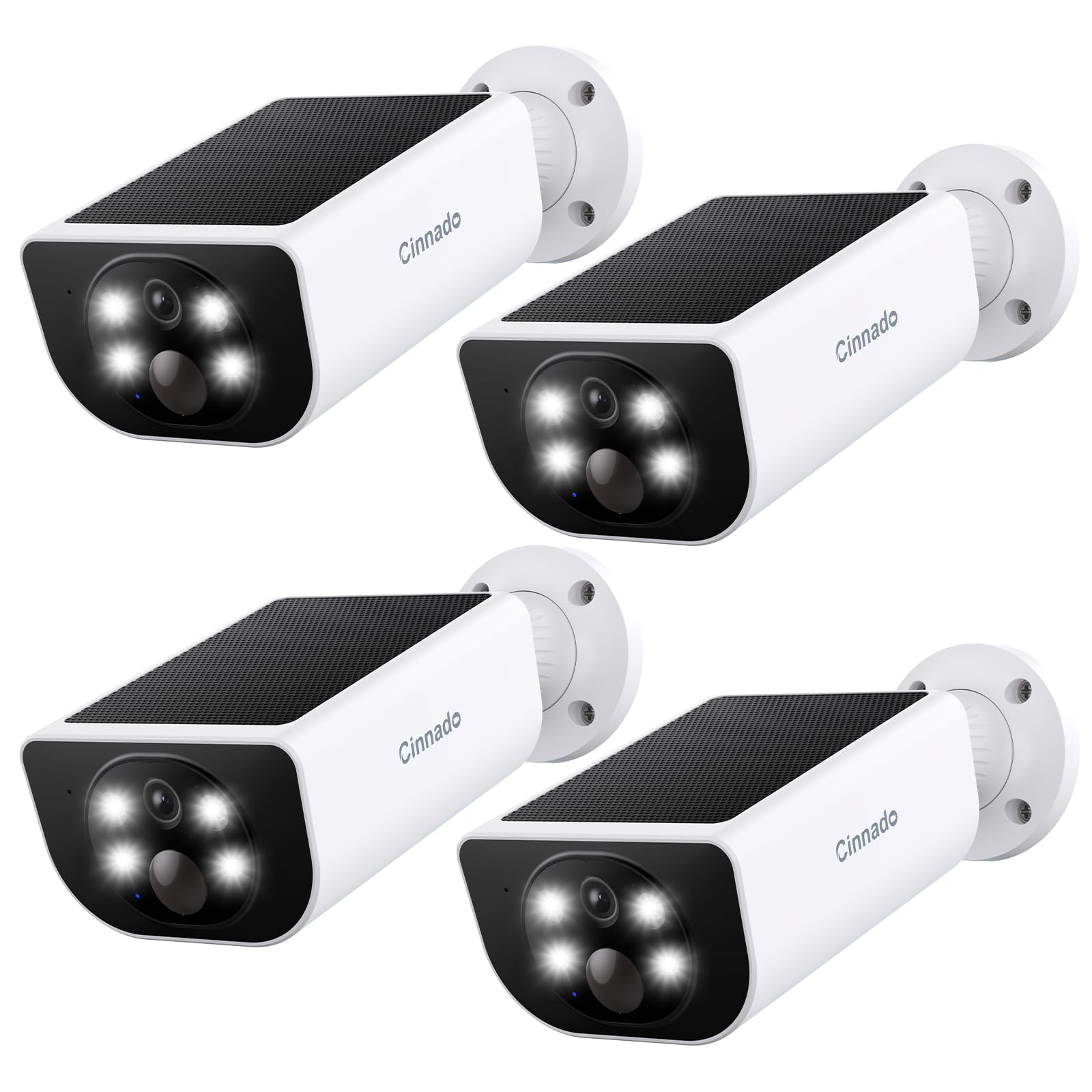
Check the current price on Amazon
Features and Specifications
Product: Cinnado2.4G Wi-Fi Cameras, S1 4-Pack
Video: 2K resolution
Connectivity: 2.4G Wi-Fi only
Power: Integrated solar panel with continuous power
Audio: Two-way talk
Alarm: Built-in siren
Installation: Cordless, easily mounted
Intended use: Yard and garage surveillance
What the Cinnado S1 Kit Actually Delivers
The Cinnado S1 is a bundle purchase first and a camera purchase second. Four cameras in one box means a buyer can cover a driveway, a back gate, a side yard and a garage door without buying four separate units or matching different apps. That convenience is the main reason this kit exists at its price tier.
The 2K resolution is the headline spec. In practice, 2K is enough to identify a face at close range and read a license plate under good light, but it is not the sharpest footage on the market. For a suburban yard or a garage apron where the camera sits within reasonable distance of its subject, the detail is adequate.
The integrated solar panel changes the ownership experience more than any other feature. Cameras that need recharging every few weeks get neglected; cameras that top themselves up from daylight keep working. The trade-off is placement: a solar camera has to sit somewhere the panel catches sun, which limits where the mount can go.
Build, Mounting and Placement
The cordless design is the practical selling point. No electrician, no trenching, no ladder work beyond the initial mount. The cameras attach to a wall, fence post or eave with the included hardware, and the wire-free body means the mounting spot is limited only by Wi-Fi range and sun exposure.
That combination of constraints is worth thinking through before purchase. A shady north-facing wall is a poor home for a solar camera even if it is the ideal vantage point. The same applies to a metal garage that blocks the 2.4G signal. Buyers should walk the property first and identify spots that are both sunny and within Wi-Fi reach.
The four-camera count also shapes placement strategy. Spreading all four around the perimeter gives broad coverage but leaves each zone with a single angle. Concentrating two on the main entry and two on the garage trades breadth for redundancy, which is usually the better call for security.
Trade-off: The solar panels need direct sun to keep the cameras running, so heavily shaded properties will end up recharging batteries by hand or relocating mounts.
Power and Connectivity
Continuous power via the integrated solar panel is the feature that separates this kit from cheaper battery cameras. A camera that charges itself is a camera that stays online, and staying online is the whole point of a security system. The panel is built into the camera body rather than sold as a separate accessory, which keeps the install simple and the parts count low.
The 2.4G Wi-Fi limitation is the constraint to understand. The 2.4G band travels farther through walls and around obstacles than 5G, which suits outdoor cameras at the edge of the network. The downside is bandwidth: 2.4G is slower and more crowded, so four cameras streaming 2K simultaneously can strain a weak router. A mesh system or a router with strong 2.4G throughput makes a real difference here.
Buyers with a large property should also check signal at the farthest camera location before committing. A camera that drops offline intermittently is worse than no camera, because it creates false confidence.
Two-Way Talk and the Siren
The two-way talk feature turns the camera into an intercom. A homeowner can speak to a delivery driver, warn off a stranger at the gate, or tell a family member the garage is open. It is a small feature on paper and a genuinely useful one in daily life, particularly for packages and for anyone who works away from home.
The siren adds an active deterrent on top of passive recording. Most cameras only watch; a camera that can sound an alarm gives the owner a response option short of calling the police. The siren is best treated as a scare tactic and a attention-getter rather than a substitute for a monitored alarm system.
Both features depend on a live connection. If the Wi-Fi drops, the talk and siren functions go with it, which is another argument for confirming signal strength before mounting.
Maintenance and Day-to-Day Ownership
Solar cameras need less routine maintenance than battery-only models, but they are not maintenance-free. The panels collect dust, pollen and bird droppings, and a dirty panel charges slowly. A quick wipe every few weeks keeps the power budget healthy, especially in spring.
The lenses need the same treatment. Outdoor cameras accumulate grime that softens the image, and a smudged lens can make 2K footage look like a much cheaper camera. A microfiber cloth and thirty seconds per camera covers it.
App management is the other recurring task. Four cameras generate a lot of notifications, and the first week is usually spent tuning motion sensitivity so the system alerts on people rather than passing cars. Buyers should expect to spend some time dialing this in rather than accepting the defaults.
Strengths and Weaknesses
The core strength is the package: four 2K cameras, solar charging, two-way audio and a siren in one purchase at a budget-tier price. For a homeowner who wants broad coverage quickly and without wiring, the value is hard to match.
The weaknesses follow from the price and the design. The 2.4G-only radio limits placement on large properties and demands a decent router. The solar panels constrain mounting to sunny spots. The kit format means buyers cannot scale up or down at purchase — it is four cameras or nothing.
Trade-off: The all-in bundle price buys convenience and coverage, but the 2.4G-only connection and sun-dependent power mean the kit suits smaller, sunlit properties far better than large or heavily shaded ones.
Who the Cinnado S1 Is For — and Who It Is Not
The Cinnado S1 security cameras suit first-time security buyers, renters who cannot run permanent wiring, and homeowners covering a yard, garage or driveway on a budget. The four-camera count fits a typical suburban lot well.
The kit is not for buyers who need 5G Wi-Fi, local storage without a subscription, or coverage of a large rural property with outbuildings beyond Wi-Fi range. Anyone who needs a single camera should buy one rather than a four-pack.
FAQ
-
Are the Cinnado S1 security cameras wireless?
Yes. The cameras are cordless, run on battery with an integrated solar panel for continuous charging, and connect over 2.4G Wi-Fi. No power cable runs to each camera. -
Do the Cinnado S1 cameras need direct sunlight?
The solar panel needs meaningful sun exposure to keep the battery topped up. Shaded mounting spots will require manual recharging or relocation. -
What resolution do the Cinnado S1 cameras record in?
The cameras record in 2K, which is sharp enough for facial identification at close range and general yard surveillance. -
Can the Cinnado S1 cameras work without Wi-Fi?
No. The cameras rely on 2.4G Wi-Fi for live viewing, recording, two-way talk and the siren, so a stable network connection is required. -
Do the cameras have a siren and two-way audio?
Yes. Each camera includes a built-in siren and two-way talk, allowing the owner to speak through the camera and trigger an audible alarm. -
How many cameras come in the Cinnado S1 kit?
The S1 4Pack includes four cameras, each with its own integrated solar panel. -
Are the Cinnado S1 cameras good for a garage?
They are designed for yard and garage use. A metal garage can weaken the 2.4G signal, so buyers should confirm connectivity before finalizing the mount. -
Does the solar panel replace the battery entirely?
The panel provides continuous charging from sunlight, but the camera still relies on its internal battery to run overnight and in low-light conditions. -
Can the Cinnado S1 cameras be mounted on a fence or wall?
Yes. The cordless design allows mounting on walls, fences, posts and eaves with the included hardware, subject to Wi-Fi range and sun exposure. -
Is the Cinnado S1 kit a good value?
For a buyer who needs four outdoor cameras with solar charging and a siren, the bundle price is competitive at the budget tier. Buyers needing fewer cameras or 5G connectivity will find better fits elsewhere.
Bottom Line
The Cinnado S1 security cameras are a practical four-camera starter kit for a sunlit suburban property, pairing 2K video, solar charging, two-way talk and a siren in one affordable bundle. The 2.4G-only radio and sun-dependent panels are real limits, but for the buyer they suit, the kit covers a yard and garage quickly and without wiring.
