Why there are Amazon links here: Brave Review is paid a commission for qualifying Amazon purchases made through the links below. Your price does not change, and using our links is entirely optional. How this works
Best Cloud Dependent Devices and Outages Books for Staying Online When the Cloud Goes Down
Cloud-dependent devices fail the moment a provider stumbles, and the fix is rarely a new gadget — it is knowledge. This short roundup covers five books that address cloud dependency from different angles: business continuity, resilient architecture, day-to-day operations, and security. It suits small business owners who lost revenue to an outage, IT staff responsible for uptime, and technically curious readers who want to understand how cloud reliance actually fails. The overview table below puts all five side by side so a decision can be made in under a minute.
Overview of the Picks
| Product | Key Spec | Best Use | Price Tier |
|---|---|---|---|
| Business Continuity After Azure Outage | Kindle edition, continuity playbook | Owners recovering from a provider outage | Free |
| Engineering Resilient Systems on AWS | Paperback, design and testing focus | Architects building fault-tolerant systems | Premium |
| The Practice of Cloud System Administration | Paperback, DevOps and SRE practices | Operations teams running web services | Mid-range |
| Practical Cloud Security | Paperback, secure design guide | Security-minded engineers and leads | Premium |
| Cloud Security For Dummies | Paperback, beginner-friendly overview | Non-specialists needing the basics | Budget |
Business Continuity After Azure Outage
Format: Kindle ebook
Topic: Business continuity and data protection
Focus: Safeguarding revenue during provider outages
Audience: Business owners and managers
Approach: Practical strategies
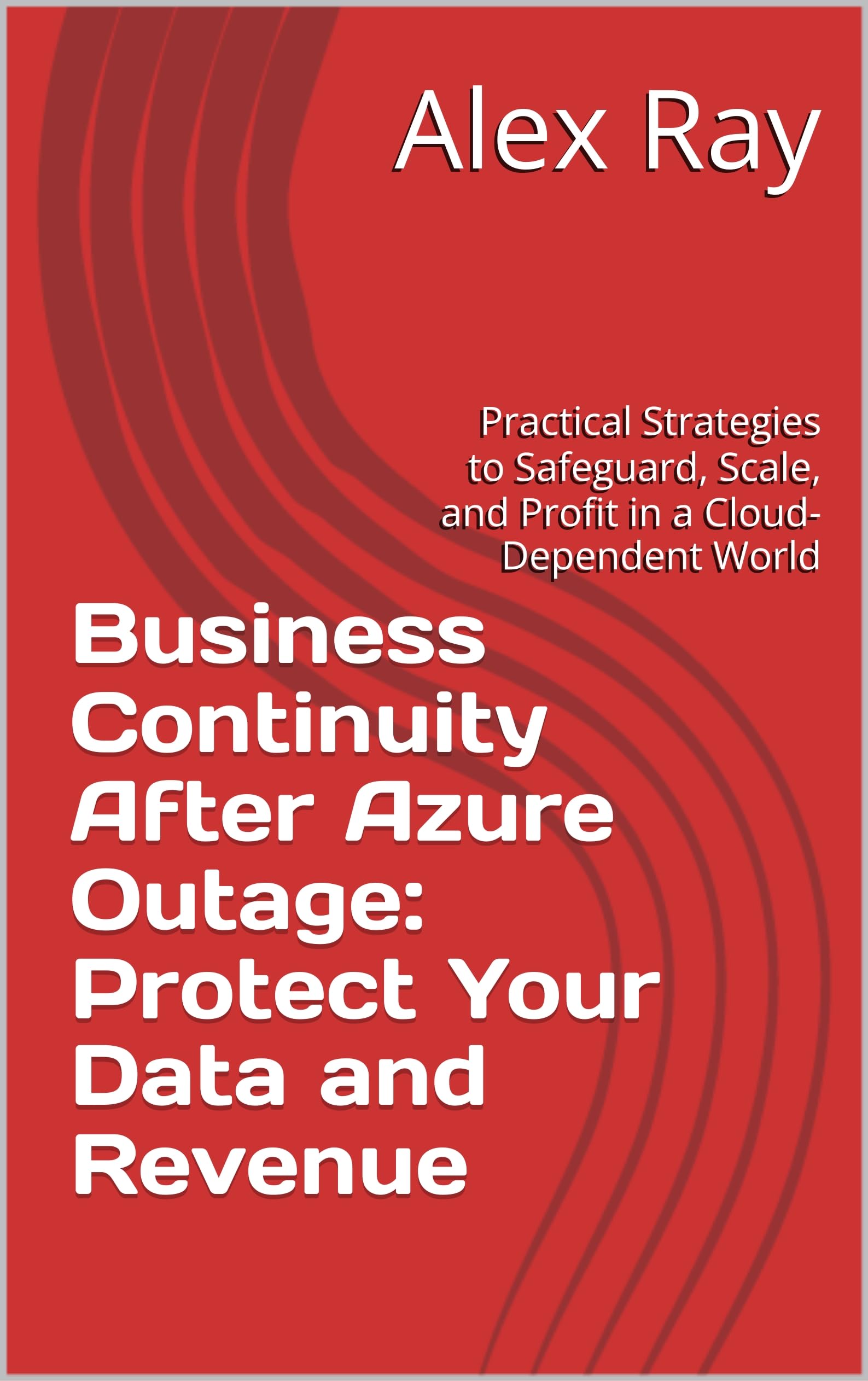
Business Continuity After Azure Outage
Check the current price on Amazon
This is the only pick in the roundup written for the person who signs the checks rather than the person who configures the servers. It treats an outage as a business event, covering how to protect data, keep revenue moving, and scale without betting everything on one provider. The framing is practical rather than technical, which makes it usable by a manager with no engineering background. It is also the shortest commitment here, since a digital edition can be opened the same evening an outage hits.
Who it suits: Owners and operations managers at small firms that depend on a single cloud vendor and have no written continuity plan. It earns its place as the entry point for the whole topic.
Trade-off: The business-level treatment means readers looking for configuration steps, architecture diagrams, or recovery scripts will find it too high-level and will need one of the engineering titles below.
Engineering Resilient Systems on AWS
Format: Paperback
Topic: Designing and testing resilient systems
Platform focus: AWS
Level: Engineering and architecture
Approach: Design, build, test

Engineering Resilient Systems on AWS
Check the current price on Amazon
This is the deepest technical title in the set and the most expensive. It walks through resilience as a design discipline rather than a checklist: how systems are built so that a failing dependency degrades instead of collapsing, and how that resilience is tested before an outage proves it. The AWS framing means the examples are tied to one provider’s services, but the underlying thinking about failure modes transfers to other platforms. It suits engineers who are past the beginner stage and want architecture-level guidance.
Who it suits: Cloud architects, senior engineers, and technical leads responsible for uptime on AWS-hosted products. It earns its place as the design reference for teams building rather than just operating.
Trade-off: The premium price and provider-specific examples make it a poor first book for someone who simply wants to understand cloud dependency, and readers on Azure or Google Cloud will need to translate the patterns.
The Practice of Cloud System Administration
Format: Paperback
Topic: DevOps and site reliability practices
Focus: Running web services reliably
Level: Intermediate to advanced
Approach: Operational practice

The Practice of Cloud System Administration
Check the current price on Amazon
Where the AWS title focuses on design, this one focuses on the daily work of keeping a cloud-hosted service alive. It covers the operational side of running web services: change management, monitoring, incident handling, and the site reliability mindset that turns outages into learning events. It is the second volume in a well-known administration series, and it assumes some familiarity with running systems. The mid-range price makes it the most accessible of the three engineering books.
Who it suits: System administrators, SREs, and DevOps practitioners who own uptime for a live service and want process rather than theory. It earns its place as the operations companion to the architecture pick.
Trade-off: It is an operations book, not an incident-response manual — readers hoping for a step-by-step outage playbook will need to assemble that themselves from the practices described.
Practical Cloud Security
Format: Paperback
Topic: Secure design and deployment
Focus: Cloud security fundamentals through practice
Level: Intermediate
Approach: Design and deployment guidance

Check the current price on Amazon
Outages and security failures share a root cause: too much trust placed in a dependency that can fail. This book approaches cloud reliance from the security side, covering how systems are designed and deployed so that exposure is limited when something breaks or is compromised. It is aimed at practitioners who already understand cloud basics and want the security layer on top. The premium price reflects its status as a specialist reference rather than an introduction.
Who it suits: Security engineers, cloud engineers with security responsibilities, and technical leads who need to justify design decisions. It earns its place as the security counterweight to the resilience titles.
Trade-off: It is not a beginner’s book — readers without a working grasp of cloud deployment will struggle, and it does not address business continuity planning at all.
Cloud Security For Dummies
Format: Paperback
Topic: Cloud security basics
Focus: Accessible overview for non-specialists
Level: Beginner
Approach: Plain-language introduction

Check the current price on Amazon
The recognizable For Dummies format does what it promises here: it takes cloud security from zero and explains it without assuming an engineering background. It covers the concepts a manager or small business owner needs in order to ask sensible questions and spot obvious risks. At the budget end of the range, it is the lowest-risk purchase in the roundup and a reasonable first step before committing to a specialist title. It is not deep, but it is deliberately not meant to be.
Who it suits: Non-technical owners, office managers, and anyone new to cloud who needs vocabulary and orientation before a serious conversation with an IT provider. It earns its place as the accessible starting point.
Trade-off: The beginner framing means it will feel thin to anyone with real cloud experience, and it offers little on resilience engineering or outage recovery specifically.
Before You Buy
- Level: Match the book to the reader — the Dummies title for orientation, the Azure continuity book for business planning, the engineering titles for hands-on work.
- Platform: The AWS book is tied to one provider; the administration and security titles are more platform-neutral.
- Format: The continuity pick is a digital edition, which suits immediate reading during or after an incident; the others are paperbacks.
- Depth: Two picks are premium specialist references; buying one of those before the basics is usually wasted money.
- Scope: Continuity, resilience, operations, and security are four different problems — decide which one is actually causing the pain.
- Budget: A free digital title and a budget paperback make it cheap to start before committing to a premium reference.
Frequently Asked Questions
-
What counts as a cloud dependent device? Any device that stops working fully or partly when it loses its connection to a cloud service — smart cameras, cloud-stored doorbells, hosted point-of-sale terminals, and similar hardware that relies on a provider for storage or processing.
-
Why do cloud outages affect local devices? Many devices keep little or no local processing or storage, so an outage at the provider removes the function the device depends on, even though the hardware itself is fine.
-
Which book is best for a small business owner? The continuity title is the most direct fit, because it addresses revenue and data protection rather than server configuration.
-
Are these books useful for non-AWS users? Yes, with a caveat — the administration and security titles are largely platform-neutral, while the resilient systems book uses AWS examples that readers on other platforms must adapt.
-
Is a free book worth reading? A free digital title is a low-risk way to test whether the topic matters before spending on a premium reference, provided expectations about depth are set accordingly.
-
Do these books cover home devices or only business systems? The focus is business and web-service infrastructure, though the security and continuity principles apply to any cloud-dependent setup.
Bottom Line
For most readers facing cloud dependent devices and outages for the first time, the free continuity title is the right starting point — it addresses the business damage directly and costs nothing to try. Teams that already run cloud infrastructure should move straight to Engineering Resilient Systems on AWS for the design work, with the administration and security titles filling in operations and exposure.