Why there are Amazon links here: Brave Review is paid a commission for qualifying Amazon purchases made through the links below. Your price does not change, and using our links is entirely optional. How this works
DaranEner Portable Power Station: 192Wh Backup for Campers and Blackouts
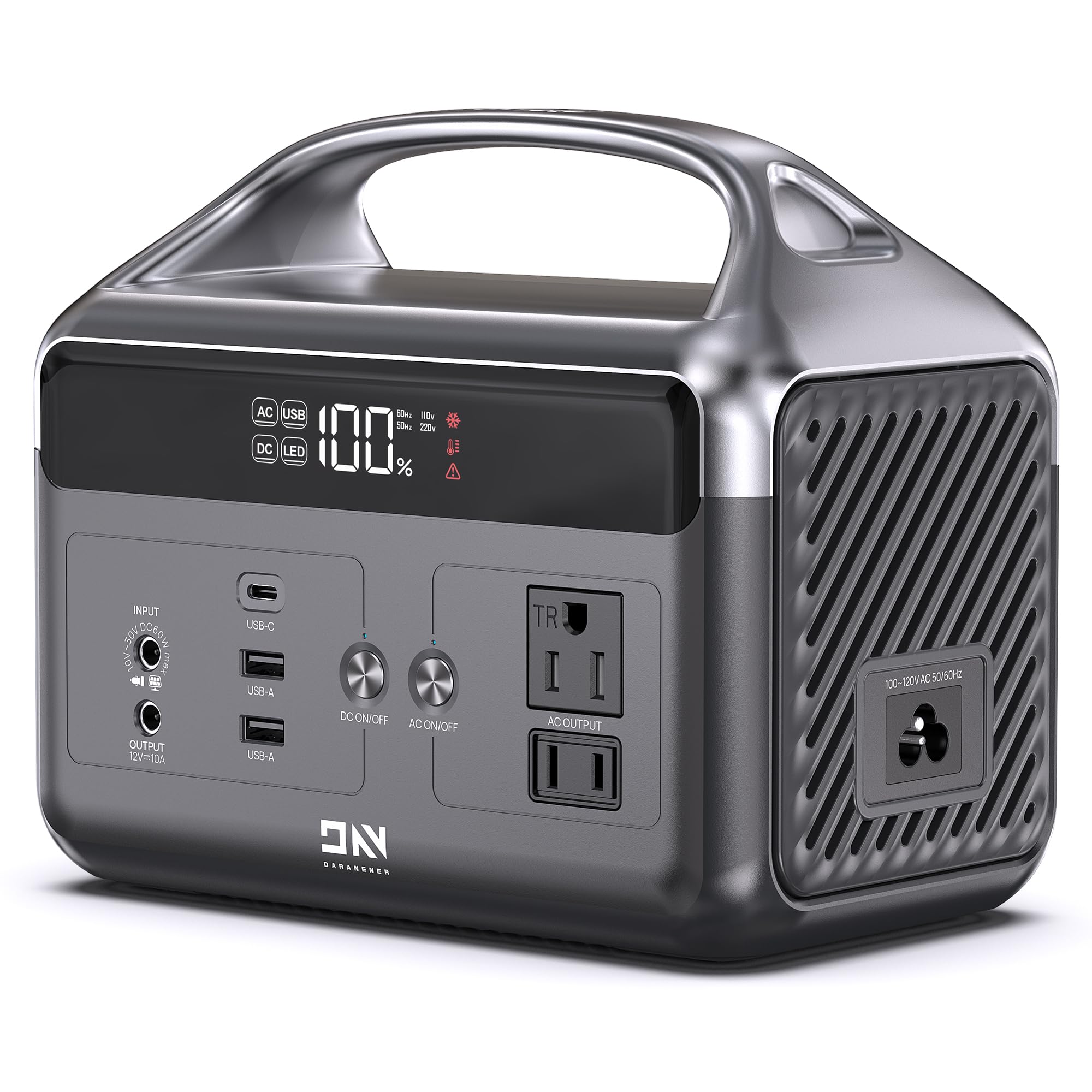
The DaranEner Portable Power Station is a compact 192Wh LiFePO4 battery box built for camping trips, tailgates and short home outages. It pairs two 300W AC outlets with USB-C PD 60W fast charging, so phones, laptops, lights and small appliances can run without a wall socket. This review covers what the unit is built to do, where a battery this size runs out of room, and which buyers should look elsewhere.
Features and Specifications
| Attribute | Detail |
|---|---|
| Type | Portable power station / solar generator |
| Battery chemistry | LiFePO4 |
| Capacity | 192Wh |
| AC outlets | 2 × 300W, 600W peak |
| USB-C output | PD 60W fast charge |
| Charging input | Solar panel compatible |
| Intended use | Camping, outdoor, home, emergency |
| Price tier | Budget |
The headline figure here is the 192Wh capacity. A battery that size holds roughly a day of phone and laptop charging, several nights of LED lighting, or a short run of a small fan — enough for a weekend campsite or an evening without mains power, but not enough to carry a household through a multi-day outage.
The LiFePO4 chemistry is the second important detail. Lithium iron phosphate cells are the more durable branch of the lithium family, known for holding up over many charge cycles and for staying chemically stable, which is why the format has become standard in budget-to-mid power stations.
The power side is deliberately modest. Two AC outlets rated at 300W continuous with a 600W peak cover laptops, lights, a small fan, a mini fridge cycling on and off, and most phone or camera chargers. Anything with a heating element — a kettle, a hair dryer, a space heater — will trip the inverter or drain the pack in minutes.
Build and Portability
The unit is a carry-handle box in the familiar power-station shape, sized to be lifted with one hand and set down on a picnic table or a kitchen counter. That footprint is the entire point of the category: it stores in a car trunk or a closet shelf and comes out when needed.
A pack this size is light enough that moving it between rooms during an outage is realistic, which is not true of the larger 500Wh-and-up stations. Buyers who picture hauling a battery up stairs or out to a tent should weigh that against the smaller capacity.
The trade-off is durability of the shell rather than the cells. Budget-tier enclosures are functional plastic, not armored cases, so a unit that lives in a truck bed or gets rained on at a campsite needs a dry bag or a hard box around it.
Trade-off: The plastic housing and modest inverter suit light indoor and car-camping duty, not rough outdoor abuse or wet conditions.
Capacity and Real-World Runtime
Capacity is where expectations need calibrating. 192Wh is a phone-and-laptop budget, not an appliance budget. A reader planning to run a CPAP machine all night, keep a full-size fridge cold, or power power tools should be shopping at two to four times this capacity.
Where the number works well is the small stuff. Phones, tablets, laptops, LED lanterns, a Bluetooth speaker, a camera battery charger and a small fan are all comfortably inside the pack’s range for a day or two of casual use.
The 600W peak rating deserves a note. Peak figures cover brief motor start-up surges, such as a small fan or a mini fridge compressor kicking on. They are not a license to run a 600W appliance continuously — continuous output is the 300W figure, and that is the one to plan around.
Power Output and Charging
Two AC outlets mean a laptop and a lamp can run at once without an adapter dance. That is a meaningful convenience at this price tier, where single-outlet competitors exist.
USB-C PD 60W is the most useful port on the box for modern buyers. It fast-charges most current phones and tablets and can power a USB-C laptop directly, which often makes the AC outlets unnecessary for a work-from-anywhere setup.
Solar input compatibility extends the runtime for campers. A folding panel paired with the station turns a sunny day into a partial refill, though buyers should expect a slow top-up rather than a fast charge — panel wattage, angle and cloud cover all matter more than the station itself.
Maintenance and Long-Term Ownership
LiFePO4 cells are the low-maintenance choice in this category. They tolerate being stored at partial charge better than older lithium chemistries and are less fussy about how they are topped up, which suits a device that sits unused for months between camping trips and blackouts.
The practical maintenance routine is simple: keep the unit charged, store it somewhere dry and temperate, and avoid leaving it fully depleted for long stretches. A battery that lives in a hot garage or a freezing shed ages faster than one kept indoors.
Buyers should also think about what the unit does not include. A solar panel is a separate purchase, and the station’s own recharge time from a wall outlet is a function of its input rating rather than something the product name promises. Anyone planning to rely on it for repeated outages should confirm the charging setup before committing.
Trade-off: A solar panel is not part of the package, so off-grid buyers must budget for one separately.
Who It Suits and Who It Does Not
This station fits three buyer types well. Campers and tailgaters who need lights, phones and a laptop for a night or two. Apartment and house dwellers who want a small backup for phones, routers and a lamp during short outages. And travelers or remote workers who want a portable USB-C and AC source for devices.
It does not suit households preparing for multi-day grid failures, anyone hoping to run kitchen appliances, or buyers who need to power medical equipment overnight. Those use cases need substantially more capacity and a pure sine wave inverter rated well above this unit’s class.
FAQ
-
How long does the DaranEner portable power station last on a charge?
Runtime depends entirely on the load. Phones and lights draw very little and can run for a day or more; a laptop or small fan shortens that considerably. Buyers should add up the wattage of what they plan to run and compare it with the 192Wh capacity. -
Can it run a mini fridge?
A small mini fridge that cycles its compressor on and off is within reach of the 600W peak, but continuous draw and duty cycle matter. Larger fridges and anything with a sustained high draw are outside this unit’s class. -
Is LiFePO4 better than a regular lithium-ion power station?
LiFePO4 is generally the more durable and stable chemistry, which is why it appears in most current portable power stations. It is a point in this unit’s favor at a budget price. -
Can it be charged with a solar panel?
Yes, the station accepts solar input, but the panel is sold separately. Buyers should match panel wattage to the station’s input rating and expect charging speed to vary with sunlight. -
How many devices can be plugged in at once?
The unit offers two AC outlets plus USB-C and USB ports, so several small devices can charge together. Total draw across all ports still has to stay within the inverter’s continuous rating. -
Is 192Wh enough for a camping weekend?
For phones, lights, a speaker and a camera, yes. For an electric cooler, a coffee maker or a hair dryer, no. The pack suits light device charging rather than appliance use. -
Can it power a CPAP machine overnight?
Buyers with medical needs should check the machine’s wattage and run time carefully and generally look at larger capacity stations with confirmed pure sine wave output before relying on a pack this size. -
How should the battery be stored between trips?
Indoors, dry, and at a partial charge rather than fully drained. LiFePO4 tolerates storage well, but heat and deep depletion both shorten battery life. -
Does it make noise while running?
Power stations of this type rely on passive cooling or a small fan that kicks in under load. Buyers planning to sleep next to it should expect some fan noise during heavy draw. -
Is this a good first power station?
For a first-time buyer whose needs are phones, laptops, lights and camping gear, the capacity and price tier make it a sensible entry point. Buyers with appliance-level power needs should start larger.
Bottom Line
The DaranEner Portable Power Station is the right pick for light-duty backup and car camping: 192Wh of LiFePO4 capacity, two AC outlets, and USB-C PD 60W in a package that stores on a shelf and lifts with one hand. Buyers who need to run appliances, medical devices or a household through a long outage should size up; everyone else gets a practical, budget-tier starter station.
