Why there are Amazon links here: Brave Review is paid a commission for qualifying Amazon purchases made through the links below. Your price does not change, and using our links is entirely optional. How this works
Best Detector Placement for Natural Gas for Fast, Confident Leak Checks
Detector placement for natural gas matters as much as the device itself: a sniffer held at the wrong height or a plug-in alarm stuck behind the curtains can miss a slow leak. This roundup covers five detectors that suit three kinds of buyers — homeowners who want a permanent alarm, RV and kitchen users who need a handheld sniffer, and anyone doing quick spot checks around fittings and appliances. The overview below lines up the picks side by side; each review explains where the unit earns its place and where it falls short.
Overview of the Picks
| Product | Key Spec | Best Use | Price Tier |
|---|---|---|---|
| PT520A Natural Gas Detector with 17-Inch Gooseneck | 17-inch gooseneck probe, 3 batteries included | Pinpointing leaks at fittings and behind appliances | Budget |
| PT199 Natural Gas Leak Detector | Audible and visual alarm, 2 batteries included | Straightforward handheld sniffing for home | Budget |
| TopTes PT760 Rechargeable Natural Gas Detector | 12-inch extendable probe, rechargeable, built-in flashlight | RV and dim-cabinet checks | Mid-range |
| Plug in Natural-Gas-Detector for Home | Plug-in power, LED display | Continuous kitchen or apartment monitoring | Budget |
| Kidde Carbon Monoxide + Explosive Gas Alarm | Plug-in with 9V battery backup, 85 dB alarm, digital display | Whole-home permanent protection | Premium |
1. PT520A Natural Gas Detector with 17-Inch Gooseneck

Type: Handheld combustible gas detector
Probe: 17-inch gooseneck
Gases: Propane, methane, butane
Power source: Batteries (3 included)
Best for: Home and RV
The long gooseneck is the whole point of this unit: it reaches behind a stove, under a boiler or into a tight cabinet without the user kneeling on the floor. The orange housing is easy to spot on a shelf, and the three included batteries mean it works out of the box. It is built for methane, propane and butane, which covers the common household fuels.
This pick suits homeowners and RV owners who want to trace a suspected leak to a specific joint rather than just confirm gas is present. It is not the right choice for someone who wants a set-and-forget alarm that watches a room around the clock.
Trade-off: A flexible probe is a wear point, so the gooseneck needs to be stored straight rather than coiled tight in a drawer.
2. PT199 Natural Gas Leak Detector

Type: Handheld gas sniffer
Alert: Audible and visual alarm
Gases: Methane, propane
Power source: Batteries (2 included)
Best for: Home
PT199 Natural Gas Leak Detector
This is the simple version of the handheld idea: a compact body, a short sensing tip, and an alarm that combines sound with a light so a leak is obvious in a noisy kitchen or a dim basement. The two included batteries keep it ready, and the orange shell is a practical touch for a tool that gets shoved in a utility drawer.
It suits renters and homeowners who want one inexpensive device for occasional checks around a stove, water heater or gas grill connection. It is not intended for permanent mounting or for round-the-clock monitoring of a room.
Trade-off: With a short sensing tip and no probe extension, reaching a valve tucked deep behind an appliance is awkward, and the unit has to be moved slowly along the pipe to catch a small leak.
3. TopTes PT760 Rechargeable Natural Gas Detector

Type: Rechargeable handheld detector
Probe: 12-inch extendable
Sensitivity readout: %LEL
Extras: Built-in flashlight
Power source: Rechargeable
Best for: Home and RV
TopTes PT760 Rechargeable Natural Gas Detector
The PT760 adds two things the budget sniffers lack: a rechargeable battery and a flashlight, which matters when the suspect fitting sits in an unlit compartment or under a sink. The extendable probe reaches into those spaces, and the %LEL readout gives a sense of how strong the gas concentration is rather than just a yes-or-no alarm.
This one suits RV owners and homeowners who check gas fittings in low light and would rather not keep buying batteries. It is not for someone who wants a wall-mounted alarm that runs unattended.
Trade-off: A rechargeable tool is only as useful as its last charge, so it needs a habit of topping up before a trip or an inspection.
4. Plug in Natural-Gas-Detector for Home
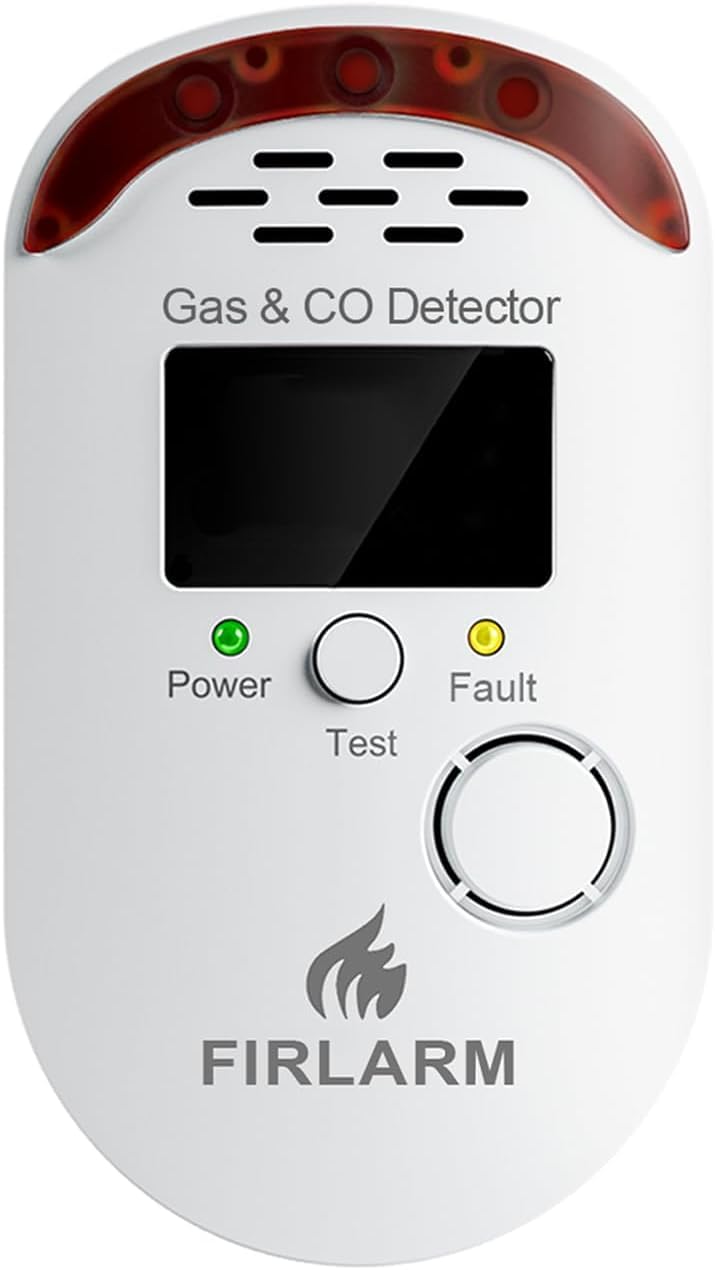
Type: Plug-in gas alarm
Display: LED
Gases: Natural gas, propane
Power source: Wall outlet
Best for: Kitchen, apartment, RV
Plug in Natural-Gas-Detector for Home
This unit takes the opposite approach to the sniffers: it stays plugged in and watches the space continuously, with an LED display to show status at a glance. Placement is the whole game here — an outlet near the stove or the gas water heater does far more good than one across the room behind a sofa.
It suits apartment dwellers and kitchen users who want constant coverage without handling a device. It is not a substitute for a handheld sniffer when the goal is finding the exact source of a leak.
Trade-off: Coverage depends entirely on outlet location, and a plug-in alarm loses its job in a power cut unless the home has backup power.
5. Kidde Carbon Monoxide + Explosive Gas Alarm

Type: Combination alarm (carbon monoxide + explosive gas)
Power source: Plug-in with 9V battery backup
Alarm: 85 dB
Display: Digital
Indicators: LED status lights
Best for: Whole-home protection
Kidde Carbon Monoxide + Explosive Gas Alarm
This is the premium pick and the only one here that covers two hazards at once: carbon monoxide and explosive gas, both natural gas and propane. The 85 dB alarm is loud enough to carry through a hallway, the digital display shows readings, and the 9V backup keeps it alive during an outage — the exact moment a furnace or water heater can misbehave.
It suits families who want a permanent, code-minded alarm in a hallway or near sleeping areas and do not want to think about batteries every month. It is not the tool for tracing a leak to a single fitting.
Trade-off: A combination alarm costs more than a basic sniffer and still needs a handheld detector to locate the source once it sounds.
Before You Buy
- Placement height: Natural gas and propane behave differently, so follow the manufacturer’s guidance on mounting height rather than guessing.
- Probe length: A gooseneck or extendable probe is worth paying for if appliances sit in tight cabinets or behind panels.
- Power source: Plug-in alarms give continuous coverage; battery and rechargeable units travel. Match the power type to the job.
- Gas types: Confirm the unit lists methane or natural gas — a propane-only detector will not cover a gas stove line.
- Alarm type: Audible plus visual is safer in noisy kitchens and for anyone with hearing loss.
- Maintenance: Sensors age, so check the replacement guidance and test schedule before relying on any alarm.
Frequently Asked Questions
-
Where should a natural gas detector be placed?
Follow the manufacturer’s instructions for the specific unit, since mounting height depends on the gas and the sensor design. In general, keep it near the appliance or gas line it protects, not in a distant room. -
Is one detector enough for a whole house?
One unit near the kitchen or utility room covers that area. Larger homes with a furnace, water heater and stove in separate spots usually need more than one, or a combination of a permanent alarm and a handheld sniffer. -
Can a handheld sniffer replace a plug-in alarm?
No. A sniffer finds a leak during an inspection; a plug-in alarm watches continuously while everyone sleeps. The two work best together. -
Do these detectors work on propane as well as natural gas?
The models listed here cover methane, propane or both, but each product name states its own gas list. Check that list against the fuel in the home before buying. -
How often should a gas detector be tested?
Test on the schedule in the manufacturer’s instructions and replace the unit when the sensor reaches the end of its service life. A detector that never gets tested is only decoration.
Bottom Line
For most households, the Kidde Carbon Monoxide + Explosive Gas Alarm is the top pick: it watches continuously, covers two hazards, and keeps running on battery backup during an outage. Pair it with the PT520A for tracing a suspected leak to its source, and detector placement for natural gas stops being a guess.
