Why there are Amazon links here: Brave Review is paid a commission for qualifying Amazon purchases made through the links below. Your price does not change, and using our links is entirely optional. How this works
Best Device Inventory Spreadsheet for Small Business Stock Control
A device inventory spreadsheet is the fastest way to track stock, sales and profit without paying for software, and this guide covers five paper-based and guided options that do the same job on a desk. The picks suit three types of buyer: small shop owners counting stock weekly, online resellers juggling listings across marketplaces, and households tracking tools, supplies or collectibles. The overview table below shows each pick at a glance, and every product block links straight to Amazon for current pricing.
Overview of the Picks
| Product | Key Spec | Best Use | Price Tier |
|---|---|---|---|
| Inventory Spreadsheet: Efficiently Manage Your Stock | Guided spreadsheet-style print format | First-time stock tracking | Budget |
| Inventory Log Book: Simple Inventory Book | 8.5" x 11", 130 pages | Small business or personal use | Budget |
| Large Inventory Log Book and Tracker | 8.5 x 11 in logbook with spreadsheet pages | High-volume counting | Mid-range |
| Inventory Spreadsheet: Large Supervision Tracker | Large-format tracker notebook | Resellers listing products online | Mid-range |
| Reseller Inventory Log Book | Professional reselling ledger | eBay, Poshmark and Etsy sellers | Mid-range |
Inventory Spreadsheet: Efficiently Manage Your Stock With the Ultimate Assets Companion

Format: Guided spreadsheet-style print layout
Intended use: Stock and supply tracking
Approach: Organize and simplify operations
Best for: First-time trackers
Inventory Spreadsheet: Efficiently Manage Your Stock With the Ultimate Assets Companion
This pick is built around the idea of a spreadsheet on paper — the same column logic, but printed and bound so it sits on a shelf rather than inside a laptop. The guided layout walks a new tracker through assets, supplies and stock counts in a set order, which removes the blank-page problem that stops most people from starting. It suits a shop owner or side-business seller who wants structure without building formulas from scratch.
The trade-off is flexibility: a printed guided format cannot be re-sorted or re-columned, so a business with unusual inventory categories will run out of room for its own fields. Trade-off: The fixed layout rewards standard stock types and frustrates anyone who needs custom columns.
Inventory Log Book: Simple Inventory Book For Small Business Or Personal

Format: Inventory log sheets
Size: 8.5" x 11"
Page count: 130 pages
Intended use: Small business or personal
Best for: Straightforward count-and-record work
Inventory Log Book: Simple Inventory Book For Small Business Or Personal
The name says it plainly: this is a simple log, and simple is the point. The 8.5" x 11" page size gives full letter-width writing room, and 130 pages of log sheets means a small operation can record a full cycle of counts before the book fills. It fits personal use — a home workshop, a craft stash, a collection — as comfortably as a small retail shelf.
The drawback is the same simplicity that makes it easy to start: there is no guided structure beyond the sheet itself, so the tracker has to decide what each column means. Trade-off: Minimal guidance keeps the price low but puts all the setup thinking on the buyer.
Large Inventory Log Book and Tracker

Format: Large inventory log and tracker notebook
Size: 8.5 x 11 in
Page style: Inventory spreadsheet pages
Intended use: Business stock tracking
Best for: High-volume counting sessions
Large Inventory Log Book and Tracker
This notebook leans into the spreadsheet-page idea with a large-format layout, which means more rows and columns per sheet than a pocket log can offer. The bigger page is the real feature here: a shop counting dozens of SKUs in one sitting can spread a full count across fewer pages and see more of it at once. It suits a business that already knows what it wants to track and needs the room to do it.
The catch is portability — an 8.5 x 11 in notebook stays on a desk or shelf, and carrying it around a stockroom is awkward. Trade-off: The generous page size buys capacity at the cost of a book that is not built to travel.
Inventory Spreadsheet: Large Supervision Tracker Notebook For Business Or Personal
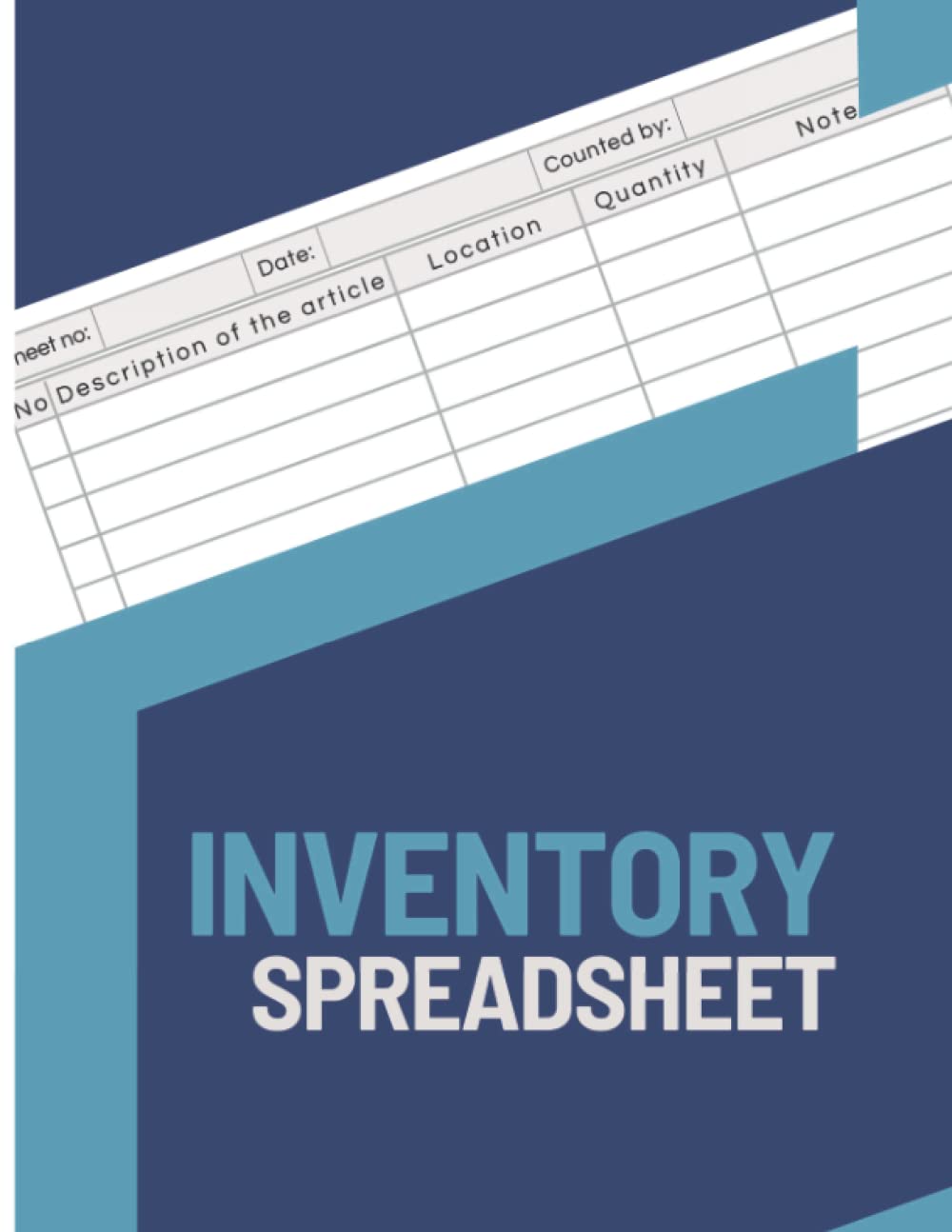
Format: Large supervision tracker notebook
Intended use: Stock control, business or personal
Coverage: Income and product listing
Best for: Online resellers
Inventory Spreadsheet: Large Supervision Tracker Notebook For Business Or Personal
This tracker combines stock control with income and product listing pages, which makes it a closer match for a reseller than a pure count sheet. The supervision angle suggests a layout built for overseeing movement — what came in, what sold, what it earned — rather than a single annual stocktake. A part-time reseller or a small shop that also sells online gets the count and the money side in one book.
The limitation is the overlap: combining stock, income and listing pages means each section gets less space than a dedicated book would give it. Trade-off: The all-in-one layout saves buying two books but thins out the room for any single task.
Reseller Inventory Log Book
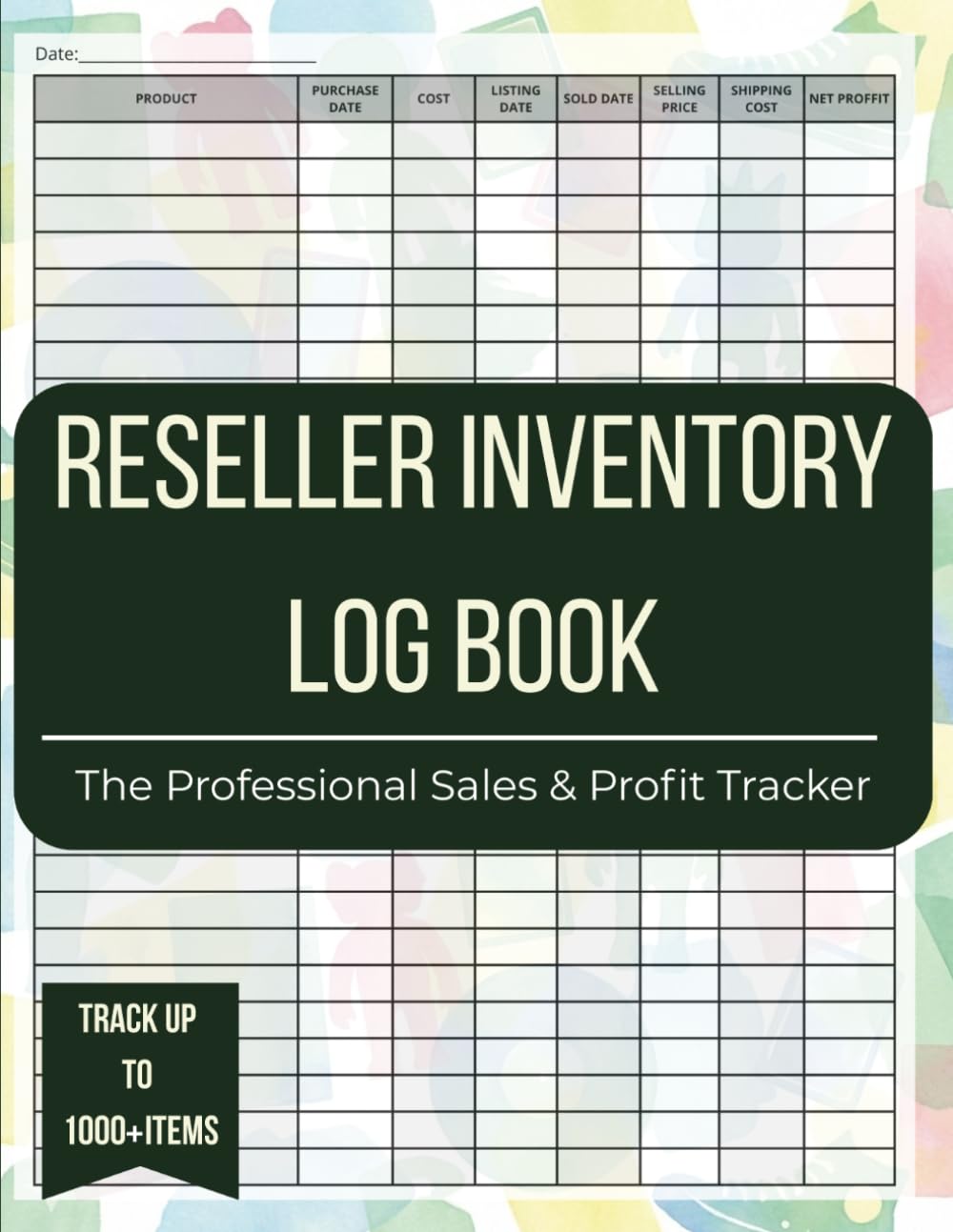
Format: Professional reselling business ledger
Intended use: Track sales and profits
Marketplaces: eBay, Poshmark and Etsy
Best for: Online sellers running multiple platforms
Reseller Inventory Log Book: Professional Reselling Business Ledger for Online Sellers
This is the most specialized pick of the five, aimed squarely at people selling across eBay, Poshmark and Etsy. The ledger format tracks sales and profit alongside inventory, which matters for a reseller who needs to know which platform and which item actually made money. The professional framing suggests a layout organized for repeatable bookkeeping rather than occasional counts.
The caution is relevance: a brick-and-mortar shop or a household tracking supplies gets little from marketplace-specific pages. Trade-off: The marketplace focus is a strength for online sellers and dead weight for everyone else.
Before You Buy
- Format: Decide between a guided layout and a blank log — guided suits first-timers, blank sheets suit buyers with their own system.
- Size: An 8.5 x 11 in book holds more per page but stays on a desk; smaller formats travel better.
- Page count: 130 pages covers a small operation for a while; high-volume counting burns through pages faster.
- Intended use: Personal tracking, small business stock control and marketplace reselling each want different columns.
- Scope: Books that combine stock with income or listings save a purchase but split the space.
- Marketplace fit: eBay, Poshmark and Etsy sellers should check that the layout covers sales and profit, not just counts.
Frequently Asked Questions
-
What is a device inventory spreadsheet used for?
It records stock levels, item details and often sales or income, so a business or household knows what is on hand and what it is worth. -
Is a paper log book better than a digital spreadsheet?
A paper log suits buyers who want no software setup and a book that sits on a shelf; a digital sheet wins when sorting and formulas matter. -
Which pick suits a first-time tracker?
The guided Inventory Spreadsheet: Efficiently Manage Your Stock is the easiest starting point because the layout does the setup thinking. -
Which one works for eBay, Poshmark and Etsy sellers?
The Reseller Inventory Log Book is built around marketplace selling and tracks sales and profit alongside stock. -
How much room does a small business need?
A 130-page 8.5" x 11" book handles a small operation well; higher-volume counting favors the large-format tracker. -
Can these books be used for personal inventory?
Yes — the simple log book and the supervision tracker both name personal use, which suits tools, supplies and collections.
Bottom Line
For most buyers, the Inventory Spreadsheet: Efficiently Manage Your Stock With the Ultimate Assets Companion is the safest first pick: the guided layout gets a new tracker counting in minutes, and the price tier keeps the experiment cheap. Online resellers should skip straight to the Reseller Inventory Log Book, while high-volume counters get the most from the large-format tracker.
