Why there are Amazon links here: Brave Review is paid a commission for qualifying Amazon purchases made through the links below. Your price does not change, and using our links is entirely optional. How this works
DJI Power 1000 V2 Portable Power Station: Fast-Charging 1kWh Backup Power
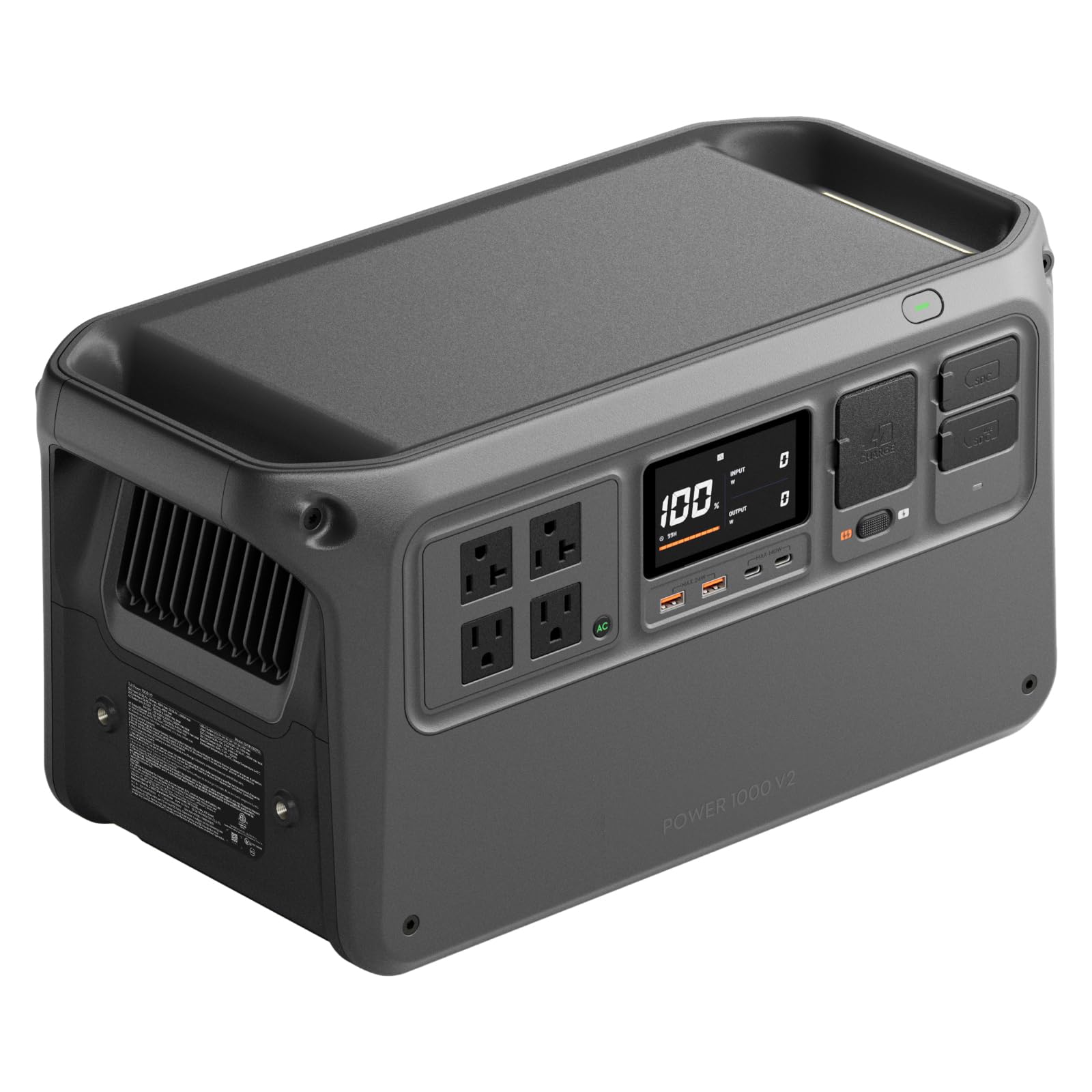
The DJI Power 1000 V2 is a compact portable power station built around a 1024Wh LFP battery, and its headline trick is speed: a 0-80% recharge in 37 minutes. This review covers what the unit is for, how its capacity and output shape real-world use, and where it falls short, so a buyer can decide quickly whether it fits a home backup plan, a camping kit or an RV setup.
Features and Specifications
- Battery Type: LFP (lithium iron phosphate)
- Capacity: 1024Wh
- Recharge Time: 0-80% in 37 minutes
- Output: 2600W stable output
- Design: Compact size
- Intended Use: Home use, camping, RVs, outdoors
The first thing that stands out is the pairing of an LFP battery with a 1024Wh capacity in a body DJI describes as compact. LFP chemistry is the current default for serious power stations because it handles deep discharge and repeated cycling more gracefully than older lithium-ion blends, and it holds up better in hot vehicles and garages. At roughly one kilowatt-hour, this unit sits in the middle of the portable power market: enough to run a fridge through an outage or keep a camp kitchen going, but not a whole-home generator.
The 2600W stable output figure is the number that decides what the unit can actually run. A steady 2600W covers most household appliances one at a time, including a microwave, a coffee maker or a space heater, and it gives headroom for the surge that motors and compressors draw at startup. The word "stable" matters here, because a power station that sags under load can trip its own protection or damage sensitive electronics. Buyers should still treat 2600W as a ceiling to respect rather than a target to hit constantly.
Build and Portability
The compact size is the design decision that shapes everything else. A 1024Wh LFP pack is heavy by nature, and DJI has clearly prioritized a footprint that fits in a car trunk, a tent annex or a closet shelf rather than a wheeled cart form factor. That makes the unit realistic to move between a garage, a campsite and an RV without help, which is exactly the use case the product name points to.
The trade-off is that compact power stations rarely offer the same port selection or expansion options as larger, bulkier units. Buyers who plan to run several devices at once should check the outlet layout carefully before committing, because a small chassis limits how many receptacles and ports can be fitted.
Capacity and Runtime
A 1024Wh battery translates into practical runtime depending on the load. A phone or laptop charges many times over, a portable fridge can run for a full day or more, and a CPAP machine or small medical device is comfortably within range for a night. Higher-draw appliances like a space heater or an electric kettle will drain the pack quickly, so the unit suits short bursts of heavy load rather than continuous high-wattage operation.
The LFP chemistry also means the capacity holds up over years of use rather than fading fast after a few hundred cycles. For a buyer who wants a battery that sits idle for months and then works when needed, that is a meaningful advantage over cheaper chemistries.
Power and Recharge Speed
The 0-80% recharge in 37 minutes is the feature that separates this unit from most of its competitors. Fast recharge changes how a power station gets used: instead of planning a full overnight charge, a buyer can top up during a lunch stop on a road trip or between outages. For RV owners and campers who move frequently, that speed removes a real logistical headache.
Buyers should understand that the 37-minute figure refers to 0-80%, not a full charge, and that hitting it depends on the power source and conditions. A standard wall outlet will be slower than the fastest supported input, and very hot or very cold ambient temperatures can slow charging as the battery management system protects the cells.
Maintenance and Long-Term Ownership
LFP power stations are low-maintenance by design. The main habits that extend life are storing the unit in a moderate temperature, keeping it partially charged rather than fully drained for long periods, and using it occasionally rather than leaving it untouched for a year. None of that is demanding, and it is the same routine any LFP owner follows.
The caution for this category is repairability. Portable power stations are sealed units, and when a battery or an internal component fails, service usually means a manufacturer return rather than a local fix. Buyers investing in a unit at this price tier should factor in warranty terms and support access, not just the spec sheet.
Trade-off: The compact chassis and fast-charge focus leave less room for expansion and port variety than larger units, so buyers who need to run many devices simultaneously should confirm the outlet count fits their setup.
Check the current price on Amazon
Who the DJI Power 1000 V2 Suits
This unit fits buyers who want one battery that covers both home emergencies and outdoor trips. A household that loses power a few times a year can run a fridge, lights and a router from it, then take the same unit camping on the weekend. The fast recharge means it does not sit dead for a day after every outage.
It also suits RV owners and van lifers who want a mid-sized pack that moves easily and tops up quickly between stops. The 2600W output covers most single-appliance loads, and the LFP battery tolerates the temperature swings of vehicle storage better than older chemistries.
It does not suit buyers who need to run high-draw appliances continuously or power a whole home during a multi-day outage. That job calls for a larger capacity unit or a fuel generator, and buyers with those needs should look at bigger, heavier power stations rather than this one.
FAQ
-
What can the DJI Power 1000 V2 run?
With a 2600W stable output, it runs most household appliances one at a time, including a microwave, coffee maker, fridge or space heater. It also handles phones, laptops, CPAP machines and camping gear easily. High-draw appliances should be run in short bursts rather than continuously. -
How long does the battery last on a charge?
Runtime depends on the load. A 1024Wh capacity keeps a portable fridge running for a day or more and charges small electronics many times over. A high-wattage appliance like a space heater will drain it in a much shorter window. -
How fast does it recharge?
DJI rates the unit at 0-80% in 37 minutes using its fastest supported input. A standard wall outlet will be slower, and extreme temperatures can reduce charging speed as the battery management system protects the cells. -
Is an LFP battery better than a standard lithium-ion battery?
For a power station, LFP is generally the better choice. It handles deep discharge and repeated cycling well, holds up in hot storage, and tends to last through more charge cycles before capacity fades. -
Can it be used indoors?
Yes. A battery power station produces no exhaust fumes, so it can run indoors during an outage. It should still be kept in a ventilated area and away from moisture and extreme heat. -
Can it be charged from a car or solar panel?
The product name highlights fast recharge, and units in this class typically support multiple charging inputs. Buyers should confirm the specific solar and car charging options and compatible accessories before purchase, since those are sold separately. -
Is 1024Wh enough for a home backup?
It is enough for short outages and essential devices like a fridge, lights and a router. It is not enough to power a whole home or run high-draw appliances for days. Buyers planning for long outages need a larger capacity unit. -
How should the unit be stored?
Store it in a moderate temperature, keep it partially charged rather than fully drained, and use it occasionally. Avoid leaving it fully discharged for long periods, which can shorten battery life. -
Is it loud?
Battery power stations have no engine and no exhaust, so they run quietly. Any noise comes from cooling fans under heavy load, which is minimal compared with a fuel generator. -
Who should skip this unit?
Buyers who need continuous high-wattage power, whole-home backup for multi-day outages, or a large number of simultaneous outlets should look at bigger, heavier power stations or a fuel generator instead.
Bottom Line
The DJI Power 1000 V2 is the pick for buyers who want a compact, LFP-based 1024Wh power station that recharges fast enough to be genuinely useful between outages and trips. Its 2600W stable output covers most single-appliance loads, and the 0-80% recharge in 37 minutes removes the long wait that makes many power stations impractical for frequent use. Buyers who need whole-home backup or continuous high-draw power should size up, but for home emergencies, camping and RV use, this unit covers the job well.
