Why there are Amazon links here: Brave Review is paid a commission for qualifying Amazon purchases made through the links below. Your price does not change, and using our links is entirely optional. How this works
EcoFlow Delta 3 Classic: 1024Wh of Backup Power With a 10ms Handoff
The EcoFlow Delta 3 Classic is a 1024Wh portable power station built around a LiFePO4 battery, 1800W of AC output and a 3600W surge rating. It is aimed at homeowners who want a single box that can sit by the router and fridge during an outage, then roll out to a campsite or RV on the weekend. This review covers what the specifications mean in practice, where the unit fits and where it falls short, and for whom it is the wrong buy.
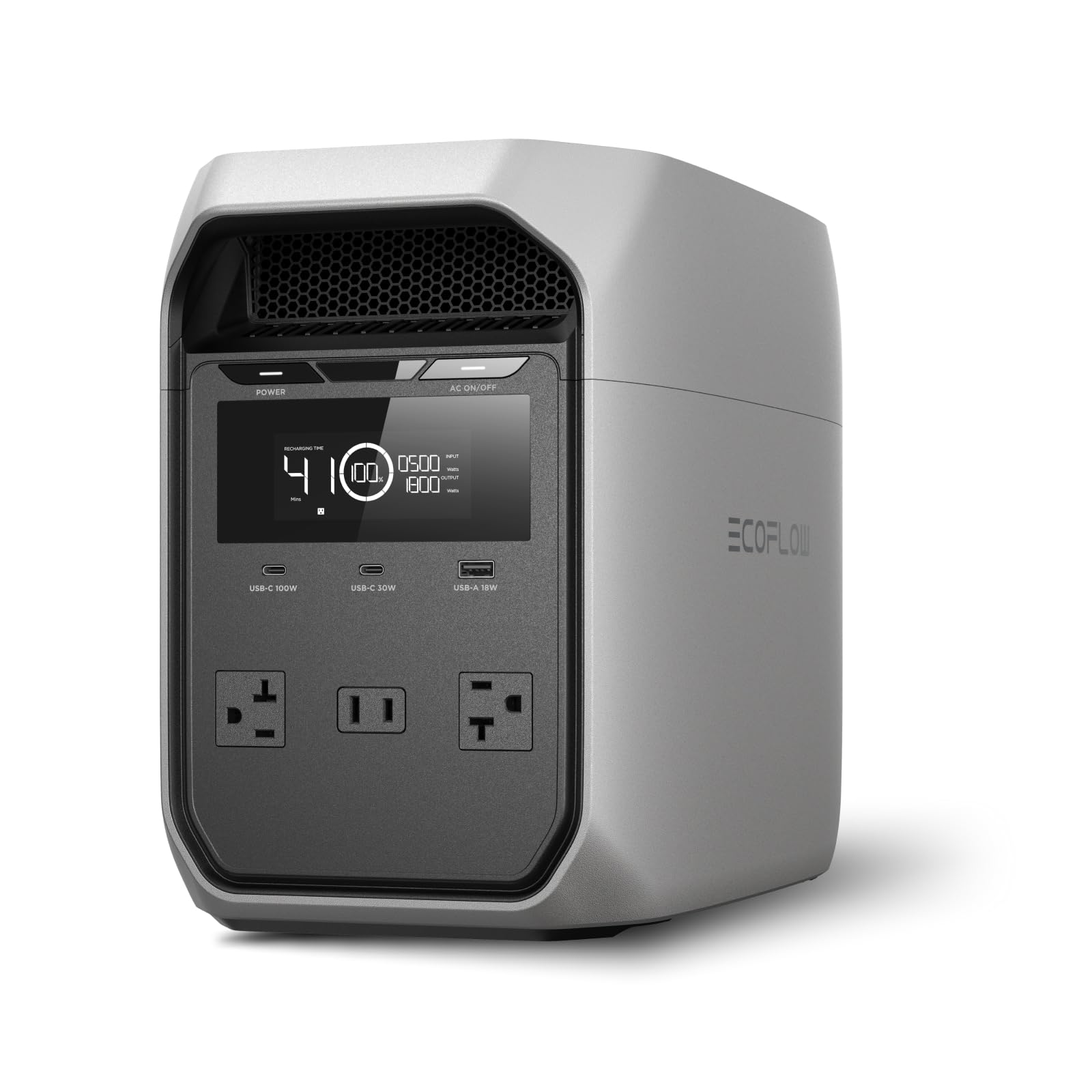
Features and Specifications
Battery Chemistry: LiFePO4
Capacity: 1024Wh
AC Output: 1800W continuous
Surge Rating: 3600W
Recharge Time: 1 hour fast charge
USB-C Output: 100W
UPS Switchover: 10ms
Intended Use: Home backup, camping, RVs
The headline figure is the 1024Wh capacity. In plain terms, that is roughly enough to keep a modem, router and a couple of LED lamps running for the better part of a day, or to push a full-size fridge through a multi-hour outage without the compressor stalling out. It is not a whole-home solution, and it is not meant to be.
The 1800W continuous AC rating with a 3600W surge is the part that matters for appliances with motors. A fridge, a sump pump or a space heater will pull a spike on startup that would trip a lesser inverter; the surge headroom here is designed to absorb that.
Build and Battery Chemistry
LiFePO4 is the practical choice for a unit that spends most of its life plugged in and idle. The chemistry holds up to repeated partial charging better than older lithium blends and is generally rated for more charge cycles before capacity fades, which is exactly what a standby backup unit needs. The trade-off is weight: LiFePO4 packs are heavier per watt-hour than the alternatives, so this is a roll-it-around-the-garage unit, not a carry-it-up-a-trail unit.
Capacity and Runtime
1024Wh is the middle of the portable power market, and buyers should read it as a working number rather than a promise. Real runtime depends on what gets plugged in: a laptop and a router will run for many hours, a full-size fridge for a stretch measured in hours rather than days, and a resistive heater for a short window. The honest framing is that this covers a short outage comfortably and a long one only if the load is kept small.
Power Output and Charging
The 1800W AC output covers most household appliances one or two at a time, and the 100W USB-C port will fast-charge a modern laptop or tablet without needing the AC inverter at all — a useful efficiency win on longer backup stretches. The one-hour fast charge is the standout feature for anyone who wants the unit back to full between outages or during a brief RV hookup window. The caveat is that a one-hour charge draws a heavy load from the wall circuit, so older wiring or a shared breaker may not cooperate.
UPS and Home Backup Role
The 10ms switchover is what separates this from a plain camping battery. Ten milliseconds is fast enough that a desktop computer, a router or a NAS generally rides through a brief outage without rebooting, which makes the Delta 3 Classic a plausible replacement for a traditional small UPS. The limitation is that 1024Wh will not carry a whole home panel; this is a plug-in device for specific circuits, not a transfer-switch installation.
Trade-off: At this capacity and chemistry the unit is heavy and best left in one place, so buyers who pictured carrying it on hikes or between floors should look at a smaller, lighter station instead.
Check the current price on Amazon
Who the Delta 3 Classic Suits
The clearest fit is the household that wants one device for two jobs: sitting by the router and fridge as outage insurance, then coming along on RV trips or car camping weekends. The 10ms UPS behavior and the one-hour recharge are the two features that make that dual role work.
A second good fit is the remote or home-office worker who cannot afford a dropped connection or a lost document during a brief power cut. Plugging the router and desktop into the unit turns a nuisance outage into a non-event.
It is a poor fit for three groups. Buyers who need to run a whole house, an air conditioner or a well pump should be looking at a standby generator or a much larger installed system. Buyers who want something to carry in a backpack should look at far smaller stations. And buyers on a tight budget who only need to charge phones and a laptop during an outage are overpaying for capacity and surge headroom they will never use.
FAQ
-
What can the EcoFlow Delta 3 Classic actually run?
It runs most household appliances one or two at a time: a fridge, a modem and router, lamps, fans, a laptop, a TV. The 1800W continuous and 3600W surge ratings are aimed at motor-driven appliances that spike on startup. Whole-home loads, air conditioners and well pumps are outside its range. -
How long does 1024Wh last during an outage?
Runtime depends entirely on the load. A router, modem and a few lights will run for many hours; a full-size fridge will run for a shorter stretch measured in hours. Buyers should add up the wattage of what they plan to keep running and size expectations from there. -
What does the 10ms UPS switchover mean?
When wall power drops, the unit switches to battery in about 10 milliseconds. That is fast enough for most desktop computers, routers and network storage to keep running without rebooting, which is why it can stand in for a small traditional UPS. -
Why does LiFePO4 matter in a power station?
LiFePO4 is a lithium chemistry that tolerates repeated partial charging well and is generally rated for more charge cycles before capacity degrades. For a unit that lives plugged in and idle most of the year, that durability is the main reason to prefer it. -
How fast does it recharge from a wall outlet?
The unit is built for a one-hour fast charge. That is convenient between outages, but it pulls a heavy load from the circuit, so older wiring or a shared breaker may not keep up. -
Can it be charged with solar panels?
Yes — it is sold as a solar generator, meaning it accepts panel input in addition to wall charging. Buyers should check panel compatibility and connector type before buying panels separately. -
Is it light enough to carry camping?
No. LiFePO4 packs are dense, and a 1024Wh unit is heavy. It rolls and lifts into a vehicle, but it is not a backpacking battery. -
Can it power a fridge during a multi-day outage?
It can carry a fridge for hours, not days. A multi-day outage needs either a much larger battery bank, a generator, or a plan to recharge the unit from solar or a vehicle between loads. -
Does it replace a whole-home generator?
No. It is a plug-in device for selected circuits and appliances. Whole-home backup requires a transfer switch and a far larger system. -
Who should skip it?
Buyers who only need to top up phones and a laptop, buyers who need whole-home coverage, and buyers who want a battery light enough to hike with should all look elsewhere.
Bottom Line
The EcoFlow Delta 3 Classic is the right buy for a household that wants one box to cover short outages at the router and fridge and to double as an RV or camping power source. The 1024Wh LiFePO4 battery, 1800W AC output with 3600W surge and 10ms UPS handoff cover the realistic outage scenario, and the one-hour recharge keeps it ready. Buyers who need whole-home power, backpack-portable weight or nothing more than phone charging should spend their money elsewhere.
