Why there are Amazon links here: Brave Review is paid a commission for qualifying Amazon purchases made through the links below. Your price does not change, and using our links is entirely optional. How this works
eufy Security Smart Lock C220: Keyless Entry Without the Monthly Fee
The eufy Security Smart Lock C220 is a fingerprint-first deadbolt for homeowners who want keyless entry without a subscription, a hub, or a locksmith. It packs built-in Wi-Fi, app remote control, and an eight-month battery rating into a mid-range lock at a budget-tier price. This review covers how it is built, how it handles day-to-day entry, what the battery and weather ratings actually mean, and who should look elsewhere before buying.
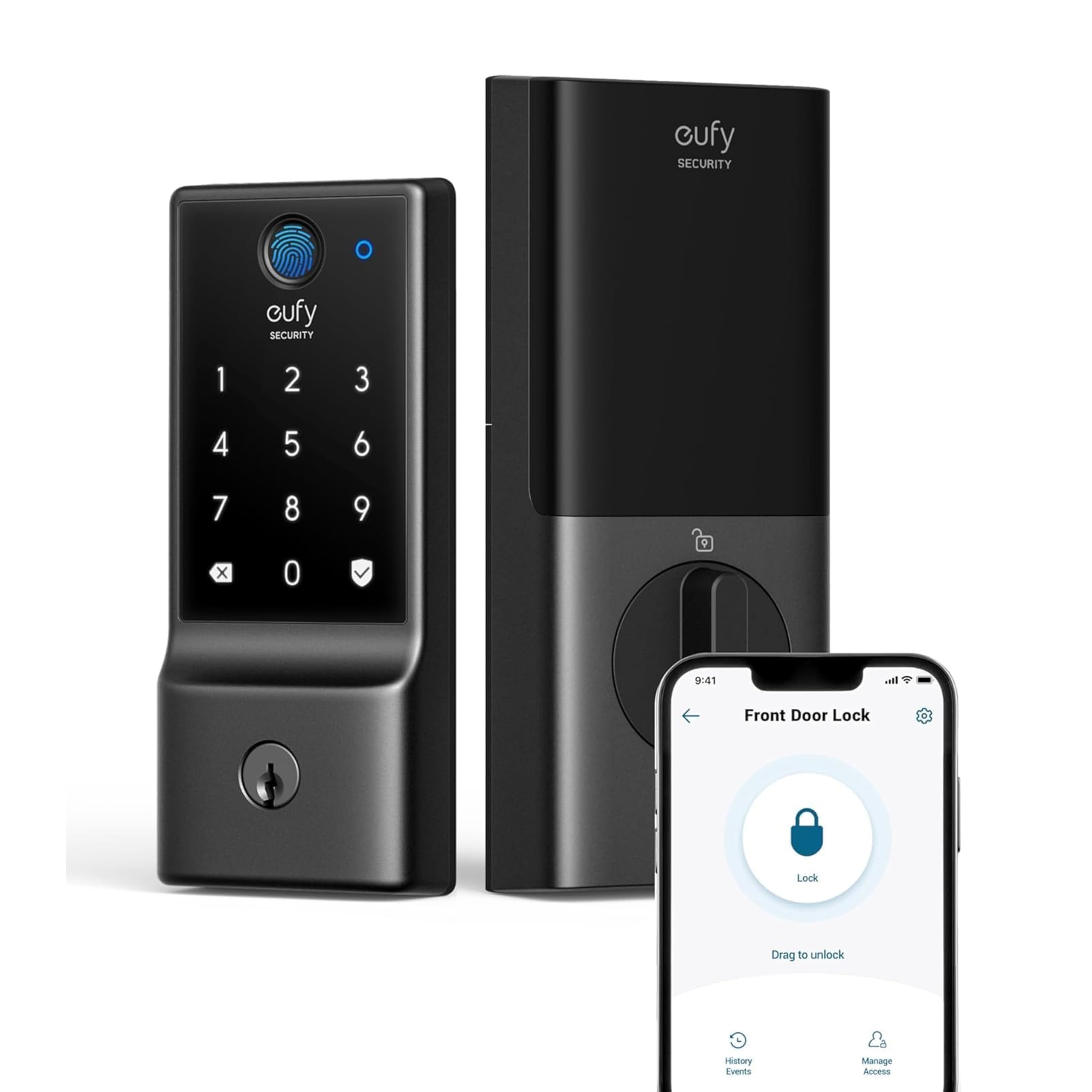
Features and Specifications
Type: Smart Lock Deadbolt
Connectivity: Built-in Wi-Fi (no hub required)
Control: App remote control
Entry Method: Fingerprint keyless entry
Battery Life: Up to 8 months
Weather Rating: IP53 waterproof
Certification: BHMA Grade 3
Intended Use: Front door
The C220’s headline is that it needs no bridge. Many smart locks at this price lean on a separate hub or a Bluetooth-only connection, which means remote access and app alerts only work when the homeowner is within range. Built-in Wi-Fi removes that step entirely — the lock talks to the router on its own, so remote control and app-based management work from anywhere, not just the driveway.
The fingerprint reader sits at the front of the entry story. Keyless entry by fingerprint is the fastest way through a door for the people who live there, and it sidesteps the usual smart-lock annoyance of pulling out a phone, opening an app, and waiting for a handshake. The lock still supports app control and, as a deadbolt, replaces the existing front-door hardware rather than bolting onto it.
The build is rated BHMA Grade 3, which is the entry rung of the residential hardware ladder — the grade most home deadbolts are sold at. IP53 means the lock is protected against dust ingress and against water spray, which is the realistic bar for a covered front porch rather than a door taking direct, driving rain. Those two ratings together tell the buyer what kind of installation this is built for: a sheltered residential front door, not an exposed coastal gate.
Trade-off: At this price and build grade, the C220 is a solid residential lock rather than a heavy-duty one — buyers wanting a fortified, high-security deadbolt for a vulnerable entry should budget for a higher grade.
Check the current price on Amazon
How the C220 Is Built
The deadbolt form factor matters more than it sounds. A deadbolt replaces the existing lock body in the door, so the C220 has to fit standard residential door prep — the same cutouts a conventional deadbolt uses. That keeps installation in the range of a competent DIY job with a screwdriver, rather than a carpentry project. Buyers replacing an old deadbolt should measure their door and check the backset before ordering, since the lock has to line up with the existing strike plate.
Grade 3 hardware is the honest framing here. It is the grade the majority of home deadbolts carry, and it is appropriate for a front door in a normal residential setting. What it is not is a security upgrade over a decent existing deadbolt in terms of physical resistance — the value the C220 adds is convenience and access control, not brute-force protection. Buyers in a high-risk location or with a flimsy door frame should treat the lock as one part of a bigger security picture.
The IP53 rating deserves a plain reading. The "5" covers dust, and the "3" covers water spray at an angle — rain blowing onto a sheltered porch, for instance. It does not promise immersion or protection against a pressure washer, and it is not a marine rating. A front door under an overhang is the target installation; a gate or a door fully exposed to weather is not.
Fingerprint Entry and App Control
The fingerprint reader is the feature that changes daily behavior. For a household with several people coming and going — kids after school, a dog walker, a cleaner — fingerprint entry means no keys to copy, lose, or hand out. Each person enrolls a finger and walks up and touches the reader. That is the whole interaction, and it is the reason buyers gravitate to this lock over a keypad-only model.
App remote control is the second layer. With built-in Wi-Fi, the lock can be managed from the app without the homeowner being nearby — useful for letting someone in remotely, checking lock status, or reviewing activity. The catch with any Wi-Fi lock is that remote features depend on a stable home network and on the lock staying connected; a weak signal at the front door is the most common reason a smart lock underperforms its spec sheet. Buyers should check their Wi-Fi reaches the door before committing.
The pairing of fingerprint and app also means the C220 works for two different kinds of buyer. The fingerprint-first user who wants fast, phone-free entry gets it. The remote manager who wants to grant access and check status from work gets that too. Both live in the same lock without a hub.
Trade-off: Remote features and app control are only as reliable as the home’s Wi-Fi at the door, and a weak signal there will make the lock feel less smart than its spec sheet suggests.
Battery Life and Maintenance
The eight-month battery rating is the number that decides ownership cost. Smart locks burn battery fastest when they are chatty — Wi-Fi radios and frequent app communication drain cells quicker than a Bluetooth-only lock. An eight-month ceiling is a realistic, honest figure for a Wi-Fi lock, and it means most buyers will swap batteries roughly once or twice a year depending on traffic through the door.
That cadence has a practical consequence: battery changes are a routine, not a rare event. Buyers should expect to keep the right cells on hand and to change them on schedule rather than waiting for a low-battery warning at an inconvenient moment. A lock that dies with no key backup is a lockout, so the maintenance habit matters as much as the hardware.
Maintenance beyond batteries is minimal. The fingerprint reader needs an occasional wipe to keep reads reliable, and the exterior should be kept clear of debris. There is no hub to power, no bridge to reboot, and no subscription to manage — which is the quiet advantage of a hub-free design. The lock is the whole system.
Who the C220 Suits
The C220 fits the homeowner who wants keyless entry at the front door, values fingerprint speed over phone-first control, and does not want to buy a hub or pay a monthly fee. It is a strong fit for a family front door with moderate traffic, a covered porch, and Wi-Fi that reaches the entry. It is also a sensible first smart lock for someone upgrading from a plain deadbolt, because the installation is familiar and the feature set is not overwhelming.
It is not for the buyer who needs a heavy-duty, high-security deadbolt for a vulnerable entry — Grade 3 is residential-grade hardware, and that buyer should look up-market. It is not for a door fully exposed to weather, given the IP53 spray rating. And it is not for someone whose Wi-Fi does not reach the front door, because the remote and app features are the point of paying for built-in Wi-Fi.
FAQ
-
Does the eufy Security Smart Lock C220 need a hub?
No. The lock has built-in Wi-Fi, so it connects to the home network directly. There is no separate bridge or hub to buy, power, or maintain. -
Can the C220 be opened without a key?
Yes. Fingerprint keyless entry is the primary way in, and app remote control provides a second path. The lock is designed around phone-free, key-free entry for the people who live there. -
How often do the batteries need changing?
The lock is rated for up to eight months of battery life. Actual life depends on traffic through the door and how often the app and Wi-Fi radio are used, so most households should plan on a battery change once or twice a year. -
Is the C220 waterproof?
It carries an IP53 rating, which covers dust and water spray. That suits a covered or sheltered front door. It is not rated for immersion or direct, driving exposure, so a fully exposed door is not the right installation. -
What does BHMA Grade 3 mean?
Grade 3 is the entry level of the BHMA residential hardware grading scale — the grade most home deadbolts are sold at. It is appropriate for a normal residential front door but is not a heavy-duty security grade. -
Will the C220 fit an existing deadbolt hole?
It is a deadbolt replacement, so it is designed to fit standard residential door prep. Buyers should confirm their door’s backset and cutouts match before ordering, since the lock has to align with the existing strike plate. -
Can more than one person use the lock?
Yes. Multiple household members can enroll fingerprints, which is the main reason families choose a fingerprint lock — no keys to copy or hand out to kids, cleaners, or dog walkers. -
Does the app work when away from home?
Yes, provided the lock is connected to the home Wi-Fi. Remote control and app features depend on a stable network signal reaching the front door, which is the main installation check before buying. -
Is the C220 good for a rental property?
It can suit a rental where the owner wants keyless access and remote management without installing a hub. The owner should confirm the door prep and Wi-Fi coverage at the unit before committing. -
What is the main reason to choose the C220 over a cheaper keypad lock?
Built-in Wi-Fi and fingerprint entry. A cheaper keypad lock typically needs a hub for remote access or offers no remote access at all. The C220 bundles both conveniences into one deadbolt.
Bottom Line
The eufy Security Smart Lock C220 is the pick for a homeowner who wants fingerprint-fast, keyless entry at a covered front door without a hub, a subscription, or a locksmith. Built-in Wi-Fi and app control add remote management, the eight-month battery rating keeps maintenance predictable, and the Grade 3 deadbolt build is honest for a normal residential door. Buyers who need heavy-duty security hardware or a door fully exposed to weather should look elsewhere — everyone else gets a lot of convenience for a budget-tier price.