Why there are Amazon links here: Brave Review is paid a commission for qualifying Amazon purchases made through the links below. Your price does not change, and using our links is entirely optional. How this works
eufy Security Water and Freeze Sensor vs Ring Flood & Freeze Sensor: Which Leak Alarm Fits a Home
The eufy Security Water and Freeze Sensor and the Ring Flood & Freeze Sensor both watch for leaks and freezing temperatures, but they plug into very different smart-home setups. The eufy sensor is the pick for homes already running a eufy HomeBase, while the Ring sensor is the simpler add-on for anyone in the Ring ecosystem. The comparison below lays out the differences, and the quick table up top lets a reader decide in under a minute.
The Picks at a Glance
| Product | Key Spec | Best Use | Price Tier |
|---|---|---|---|
| eufy Security Water and Freeze Sensor | IP65 waterproof, 2-year battery, HomeBase required | Homes already using a eufy HomeBase 2 or 3 | Mid-range |
| Ring Flood & Freeze Sensor | No base station needed, leak and freeze alerts | Simple standalone leak monitoring in the Ring app | Budget-friendly |
Both devices are small, battery-powered sensors that sit where water damage tends to start: under a sink, beside a water heater, behind a washing machine, or along a basement pipe. Both send remote alerts through a phone app. The split comes down to the hub.
eufy Security Water and Freeze Sensor with Remote Alerts

Type: Water and freeze sensor
Waterproofing: IP65
Battery Life: 2 years
Hub Requirement: HomeBase required
Compatibility: HomeBase 2 and HomeBase 3
Protection Service: Optional 24/7 protection service
Control: App control
The eufy sensor is built for the homeowner who already has a eufy security system and wants leak detection folded into the same app. The IP65 rating means the housing tolerates splashes and damp floors, which matters in a basement or under a sink where a sensor is most likely to get wet. The two-year battery life keeps maintenance low, and the optional 24/7 protection service adds a monitoring layer for buyers who want more than a phone notification.
Its real strength is integration. A HomeBase 2 or HomeBase 3 acts as the hub, so the sensor joins an existing eufy setup rather than standing alone. That is convenient for an existing eufy household and a real barrier for everyone else: without a HomeBase, the sensor has nothing to talk to. The price also sits higher than the Ring unit, so the value depends on already owning the hub.
Trade-off: The sensor is only useful to households that already own a compatible HomeBase, so a buyer starting from scratch has to budget for the hub as well.
Check the current price of the eufy Security Water and Freeze Sensor on Amazon
Ring Flood & Freeze Sensor
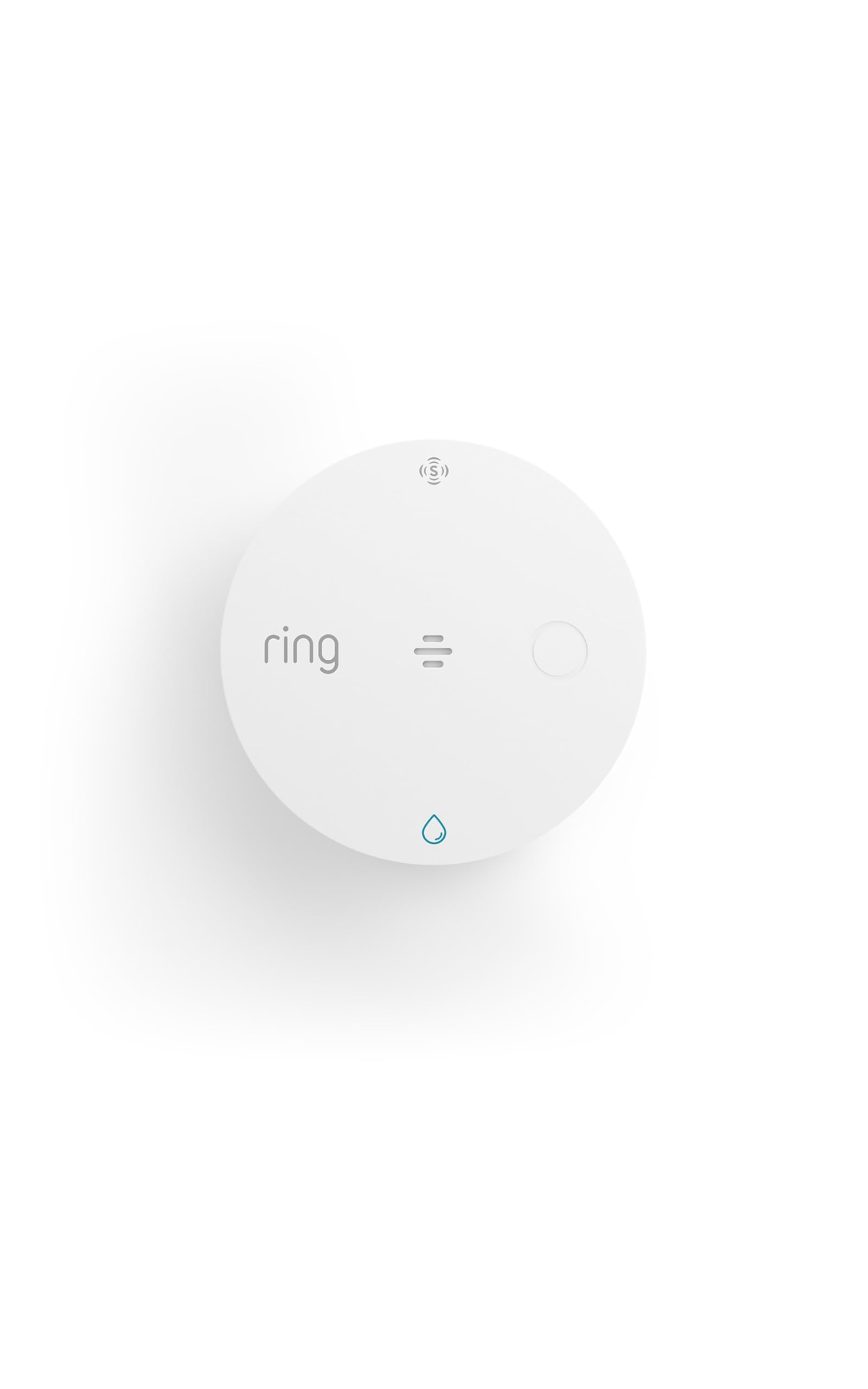
Type: Flood and freeze sensor
Alerts: Leak and freezing-temperature alerts
Hub Requirement: No base station needed
Protection Focus: Water damage and frozen pipes
Placement: Under sinks, near pipes, in basements and utility areas
The Ring sensor is the lower-friction option. It needs no base station, so a buyer can place it and start receiving alerts without adding hardware to the house. The device watches for both standing water and temperatures cold enough to threaten pipes, which covers the two failure modes that cause the most expensive household damage. Placement is flexible: under a sink, beside a water heater, in a crawlspace, or along a basement wall.
The trade-off is ecosystem depth. Because there is no base station, the sensor leans on the Ring app and a home Wi-Fi network, and its feature set stays focused on alerts rather than deep automation. Buyers who want the sensor tied into a broader security system with recording and monitoring will find it thinner than the eufy route. For straightforward leak and freeze warnings, though, it is the simpler and more affordable path.
Trade-off: The sensor depends on home Wi-Fi and the Ring app, so it offers fewer integration options than a hub-based system.
Check the current price of the Ring Flood & Freeze Sensor on Amazon
Side-by-Side Comparison
| Feature | eufy Security Water and Freeze Sensor | Ring Flood & Freeze Sensor |
|---|---|---|
| Primary Function | Water and freeze detection | Leak and freezing-temperature alerts |
| Hub Required | Yes — HomeBase 2 or 3 | No base station needed |
| Waterproof Rating | IP65 | Not a stated rating in the product name |
| Battery Life | 2 years | Battery-powered, life not stated |
| App Control | Yes | Yes, through the Ring app |
| Monitoring Service | Optional 24/7 protection service | Not part of the product listing |
| Best For | Existing eufy households | Standalone, simple leak monitoring |
| Price Tier | Mid-range | Budget-friendly |
The hub requirement is the dimension that settles most of the decision. The eufy sensor is a component of a larger system, and its IP65 housing and two-year battery are genuine advantages once that system exists. A buyer who already owns a HomeBase 2 or 3 gets a durable, low-maintenance sensor that reports into the same app as the rest of the security setup, with an optional monitoring service for extra coverage.
The Ring sensor wins on accessibility. No base station means no additional purchase and no compatibility check, and the unit covers both leak and freeze alerts, the two events most likely to cause serious damage. Buyers in a rental, a small home, or a house with no existing security hardware can deploy it in minutes.
The trade-off lines land in opposite places. The eufy sensor costs more and demands a hub, which narrows its audience. The Ring sensor is cheaper and easier but leans entirely on Wi-Fi and the Ring app, so it offers less depth for anyone building a full smart-home system. Neither is better in the abstract; the right pick depends on what is already installed.
Which Should You Buy?
Choose the eufy Security Water and Freeze Sensor if the house already runs a eufy HomeBase 2 or HomeBase 3 and the goal is to fold leak and freeze detection into the existing app. The IP65 build and two-year battery suit damp, hard-to-reach spots, and the optional 24/7 protection service adds monitoring for buyers who want it.
Choose the Ring Flood & Freeze Sensor if the goal is fast, simple leak and freeze alerts without buying a hub. It suits renters, small homes, and anyone already using the Ring app, and it covers the two failure modes that cause the most water damage.
Buyers who want a full security system should lean eufy; buyers who want a single-purpose alarm should lean Ring.
FAQ
-
Does the eufy sensor work without a HomeBase?
No. The product name states that a HomeBase is required and lists compatibility with HomeBase 2 and HomeBase 3. Without one of those hubs, the sensor has nothing to connect to. -
Does the Ring sensor need a base station?
No. The listing states that no base station is needed, so the sensor can be placed and connected through the Ring app without extra hardware. -
Which sensor is better for a basement or crawlspace?
The eufy sensor carries an IP65 waterproof rating, which suits damp environments. The Ring sensor also monitors for leaks and freezing temperatures, but its listing does not state a waterproof rating, so placement in very wet spots calls for more care. -
Can both sensors detect freezing temperatures?
Yes. Both are designed to alert on low temperatures that threaten pipes, alongside water leaks. -
Which one is cheaper?
The Ring sensor sits in the budget-friendly tier, while the eufy sensor is mid-range and also requires a HomeBase. The eufy route costs more overall unless a hub is already in place. -
Do both work with a phone app?
Yes. The eufy sensor offers app control through the eufy system, and the Ring sensor sends alerts through the Ring app. -
Is a monitoring service available?
The eufy sensor lists an optional 24/7 protection service. The Ring listing does not include a monitoring service for this sensor.
Bottom Line
The Ring Flood & Freeze Sensor is the better first purchase for most households: it needs no hub, covers leaks and freezing temperatures, and sits in the budget tier. The eufy Security Water and Freeze Sensor is the stronger choice only for homes already running a HomeBase 2 or 3, where its IP65 build and two-year battery slot neatly into an existing system. Buyers without that hub should start with Ring; buyers inside the eufy ecosystem should stick with eufy.
Check the current price of the Ring Flood & Freeze Sensor on Amazon
