Why there are Amazon links here: Brave Review is paid a commission for qualifying Amazon purchases made through the links below. Your price does not change, and using our links is entirely optional. How this works
Best Expansion Battery for a Power Station to Double Runtime Fast
An expansion battery for a power station lets an existing setup run longer without buying a whole new system. This roundup covers five options: two add-on batteries for Anker SOLIX stations, one EF ECOFLOW module, and two full power stations that double as expandable capacity. Buyers who already own a compatible station, buyers starting from zero, and emergency-prep households all get a clear pick below. The overview table sorts them by key spec, best use, and price tier in under a minute.
Overview of the Picks
| Product | Key Spec | Best Use | Price Tier |
|---|---|---|---|
| Anker SOLIX C1000 + BP1000 Bundle | 2,112Wh, 1,800W | All-in-one starter system | Mid |
| Anker SOLIX BP1000 Expansion Battery | 1,056Wh LiFePO4 | Cheapest way to add runtime | Budget |
| EF ECOFLOW DELTA 3 MAX Plus Battery | 2,048Wh LiFePO4 | High-capacity ECOFLOW add-on | Premium |
| Anker SOLIX C2000 Gen 2 | 2,048Wh, 2,400W | Fast-charging home backup | Premium |
| DJI Power 2000 | 2,048Wh LFP, 3,000W | High-output off-grid power | Mid |
1. Anker SOLIX C1000 Power Station and BP1000 Expansion Battery
Type: Power station plus expansion battery
Capacity: 2,112Wh combined
Output: 1,800W, 2,400W peak
Battery chemistry: LiFePO4
Intended use: Home, outdoor, emergency

This bundle pairs the SOLIX C1000 station with its BP1000 expansion battery, so the buyer gets a complete system rather than a bare add-on. The LiFePO4 cells are the durable, heat-tolerant chemistry that suits long-term storage and frequent cycling. With the expansion unit attached, total capacity reaches 2,112Wh, which is enough to ride out a multi-hour outage or run a campsite for a weekend. The 1,800W continuous output with a 2,400W peak handles most household appliances and power tools one at a time. It is the sensible entry point for a household that has no station yet and wants expansion headroom built in.
This pick earns its place because it removes the compatibility question entirely: the station and the battery are sold as a matched set. Buyers who already own a C1000 should skip it and buy the standalone battery instead. The trade-off is that the bundle locks the buyer into one brand’s ecosystem, and the peak output will still trip on high-draw appliances like large heaters.
2. Anker SOLIX BP1000 Expansion Battery
Type: Expansion battery only
Capacity: 1,056Wh
Battery chemistry: LiFePO4
Lifespan: 10-year rated
Compatibility: SOLIX C1000
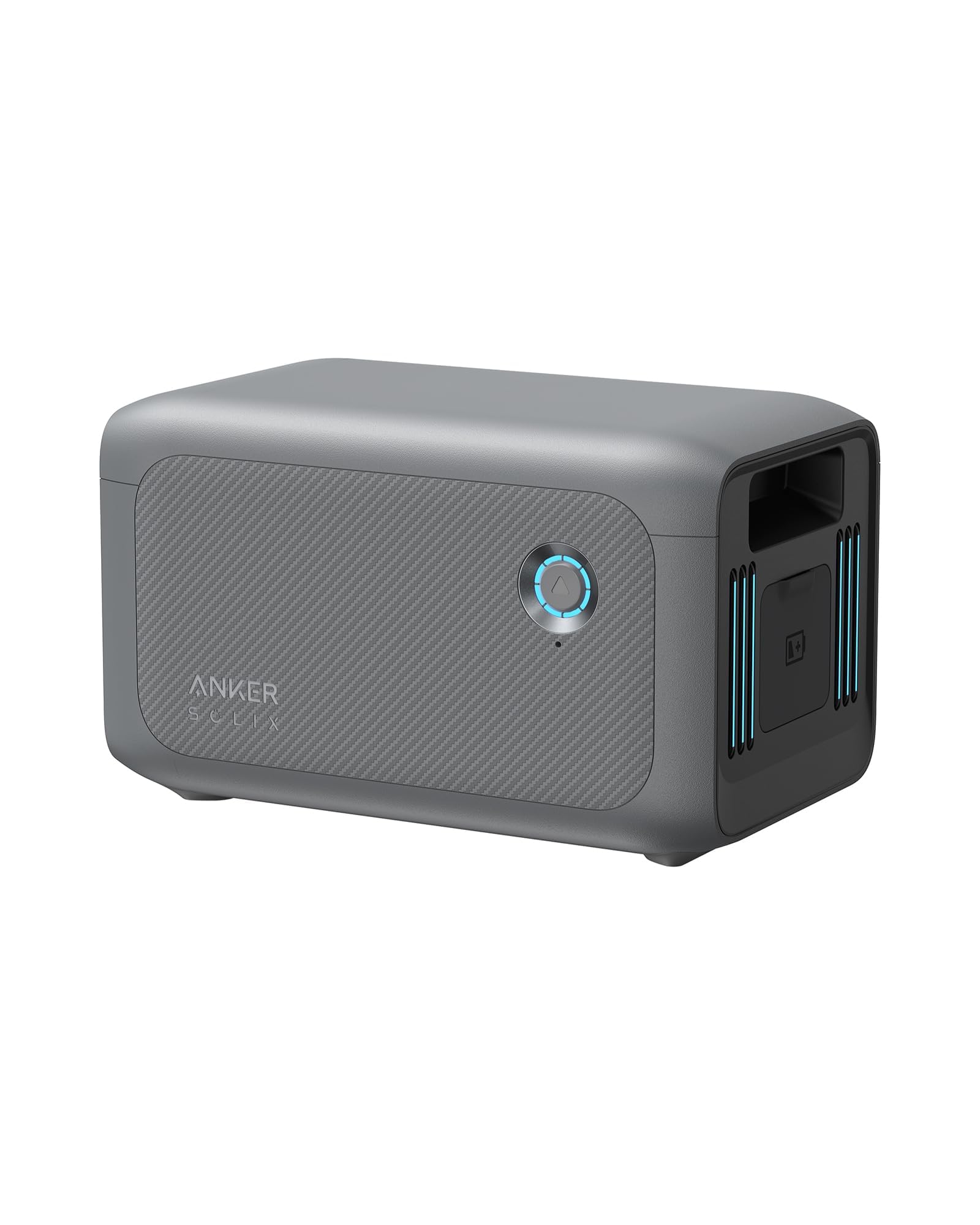
This is the cheapest route in the roundup for a buyer who already owns a SOLIX C1000. The 1,056Wh LiFePO4 pack doubles the station’s runtime, and the 10-year lifespan claim speaks to the chemistry’s tolerance for repeated charge cycles. It is a pure capacity add-on: no inverter, no outlets, just stored energy that the host station draws from. Installation is a matter of connecting the pack to the C1000, which keeps the setup compact and portable. It suits campers, tailgaters, and homeowners who want longer outage coverage without a second station.
The pick suits existing C1000 owners and nobody else — it will not work with other brands or other SOLIX models. The trade-off is the narrow compatibility: this battery is only useful to a household already inside the Anker SOLIX line, so it is a poor first purchase.
3. EF ECOFLOW DELTA 3 MAX Plus Extra Battery
Type: Expansion battery only
Capacity: 2,048Wh
Battery chemistry: LiFePO4
Compatibility: DELTA 3 Max Plus, DELTA 3 Ultra Plus
Intended use: Portable power station expansion

This ECOFLOW module is the largest pure expansion battery here, adding 2,048Wh to a compatible DELTA 3 station. The LiFePO4 cells give it the cycle life and safety profile expected at this price tier, and the capacity is enough to carry a household through a full evening of outage load. It is built to stack with the DELTA 3 Max Plus or Ultra Plus, so the buyer keeps one station and one app view rather than juggling two systems. The size suits home backup and RV use where the pack stays put. It is a serious capacity investment for someone already committed to the ECOFLOW platform.
The pick suits DELTA 3 owners who want maximum runtime from their existing station. The trade-off is the premium price for a battery alone — buyers without a compatible DELTA 3 station get nothing from it, and the capacity is heavy to move around.
4. Anker SOLIX C2000 Gen 2 Portable Power Station
Type: Power station
Capacity: 2,048Wh
Output: 2,400W, 4,000W peak
Battery chemistry: LiFePO4
Charge time: Full charge in 58 minutes
Intended use: UPS, outdoor, emergency
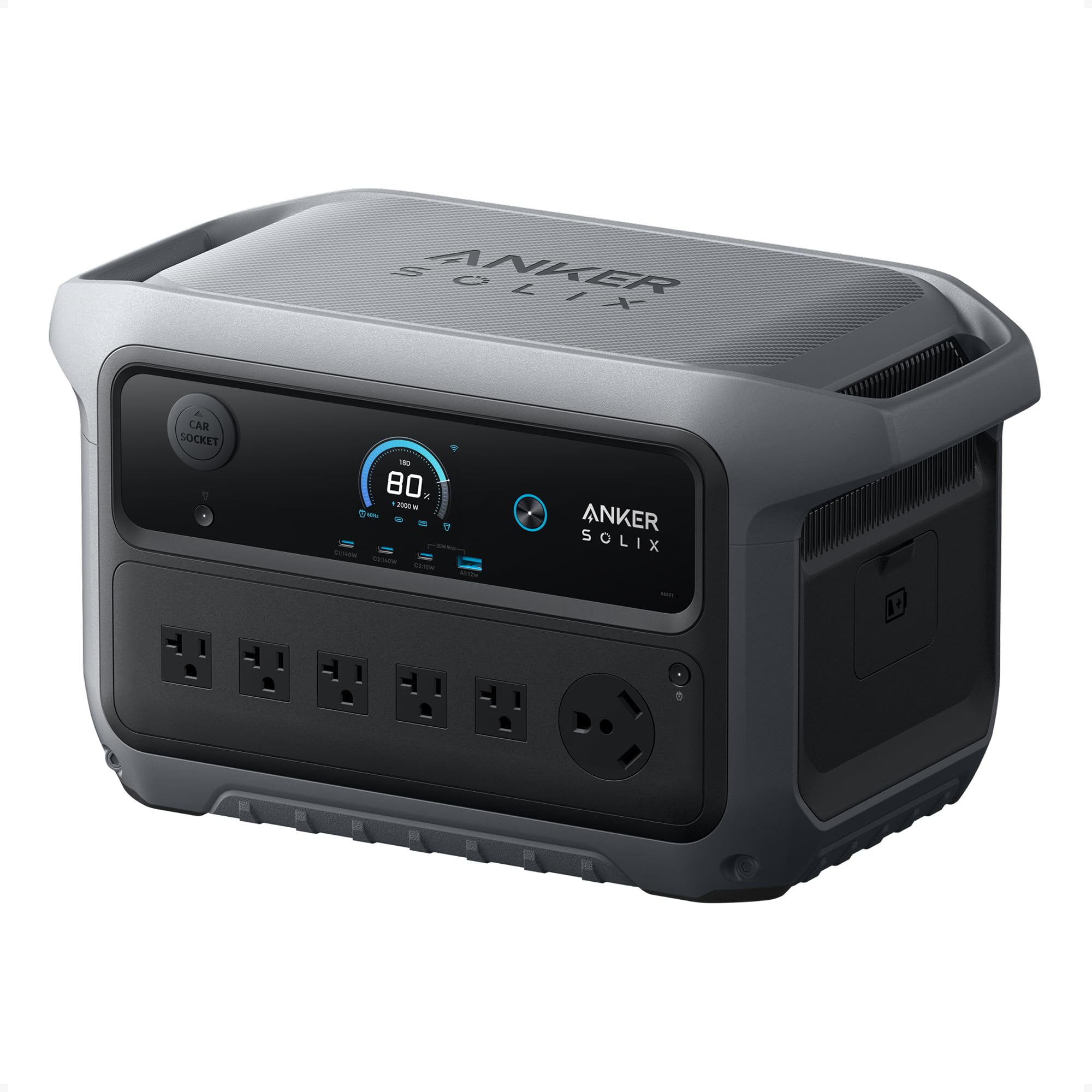
The C2000 Gen 2 is a full station that stands in for an expansion battery when the buyer has no existing system. Its standout figure is the 58-minute full charge, which makes it practical to top up between outages or during a short grid window. The 2,400W continuous and 4,000W peak output is the highest in this roundup, so it can start motor-driven appliances that would stall a smaller unit. The 2,048Wh LiFePO4 capacity covers UPS-style backup for essential circuits and still travels for camping. It is the pick for a household that wants one box to do everything.
This suits buyers starting fresh who want fast recharge and strong surge output in one unit. The trade-off is the price: it costs more than the standalone ECOFLOW battery while offering the same capacity, so buyers paying only for runtime are overbuying.
5. DJI Power 2000 Portable Power Station
Type: Power station
Capacity: 2,048Wh
Output: 3,000W stable
Battery chemistry: LFP
Intended use: Home, camping, RVs, off-grid
Build: Compact size
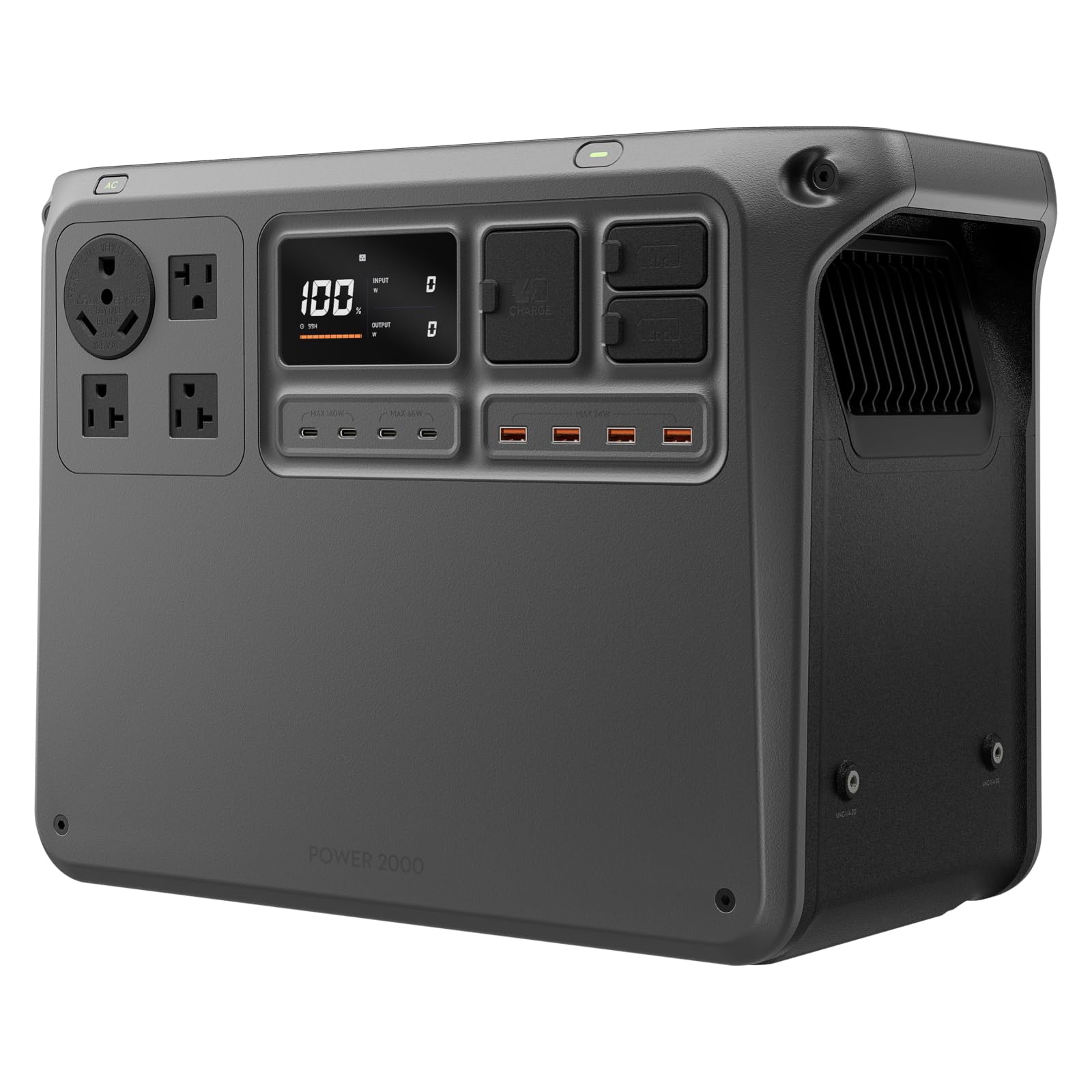
The DJI Power 2000 leads the roundup on continuous output at 3,000W stable, which puts it in range of heavier appliances and RV loads. The 2,048Wh LFP battery matches the capacity of the two Anker and ECOFLOW options, and the compact build makes it easier to store and move than its capacity suggests. Fast recharge keeps downtime short between uses. It is aimed at off-grid users, RV owners, and households that want generator-class output without fuel. For a buyer who needs to run a well pump or a large fridge, the higher stable output is the deciding feature.
The pick suits off-grid and RV buyers who need sustained high wattage rather than just capacity. The trade-off is that DJI’s expansion ecosystem is narrower than Anker’s or ECOFLOW’s, so buyers planning to add batteries later should confirm compatibility before committing.
Before You Buy
- Compatibility: An expansion battery only works with the station it was built for — confirm the exact model before ordering.
- Capacity math: Add the battery’s watt-hours to the station’s to estimate total runtime; double capacity roughly doubles runtime at the same load.
- Chemistry: LiFePO4 and LFP packs last longer and handle heat better than older lithium chemistries, which matters for stored backup units.
- Output vs. capacity: A big battery does not raise the station’s wattage; if high-draw appliances are the goal, buy a station with higher output.
- Weight and size: Large expansion packs are heavy and meant to stay in place; check that the setup can be moved by the people who will use it.
- Recharge speed: A fast-charging station recovers between outages faster, which matters more than raw capacity in short grid windows.
- Storage: Keep LiFePO4 packs in a dry, moderate space and cycle them occasionally to keep them healthy.
Frequently Asked Questions
- Can any expansion battery work with any power station? No. Each expansion battery is keyed to specific station models, so the buyer must match brand and model exactly.
- Does an expansion battery increase output wattage? No. It adds capacity and runtime; the station’s inverter still sets the maximum output.
- Is LiFePO4 better than other lithium batteries for backup? LiFePO4 offers long cycle life and good heat tolerance, which suits stored emergency power.
- How much runtime does 1,000Wh add? Roughly, it runs a 100W load for about ten hours, so the actual gain depends on what is plugged in.
- Can a power station be used as a UPS? Some models, including the C2000 Gen 2, are marketed for UPS use; confirm the feature on the specific model.
- Is a bundle or a standalone battery the better first buy? A buyer with no station should start with a bundle or full station; a buyer who already owns a compatible station should buy the standalone battery.
Bottom Line
For most buyers, the Anker SOLIX C1000 and BP1000 bundle is the safest first purchase because it delivers a matched station and expansion battery with no compatibility guesswork. Buyers who already own a compatible station should go straight to the standalone battery for their platform and skip the rest. Either way, confirm the model match before ordering, then use the links above to check current pricing on Amazon.