Why there are Amazon links here: Brave Review is paid a commission for qualifying Amazon purchases made through the links below. Your price does not change, and using our links is entirely optional. How this works
First Alert SMCO600NV SC5 Battery Smart Smoke & Carbon Monoxide Alarm: One Alarm, Two Threats
The First Alert SMCO600NV is a battery-powered alarm that watches for both smoke and carbon monoxide in a single unit, and it reports to a phone through smart-home connectivity. It suits homeowners who want one device covering two hazards without hardwiring anything into the ceiling. This review covers what the alarm is built to do, how the battery power and smart features shape daily ownership, and where a buyer should temper expectations before ordering.
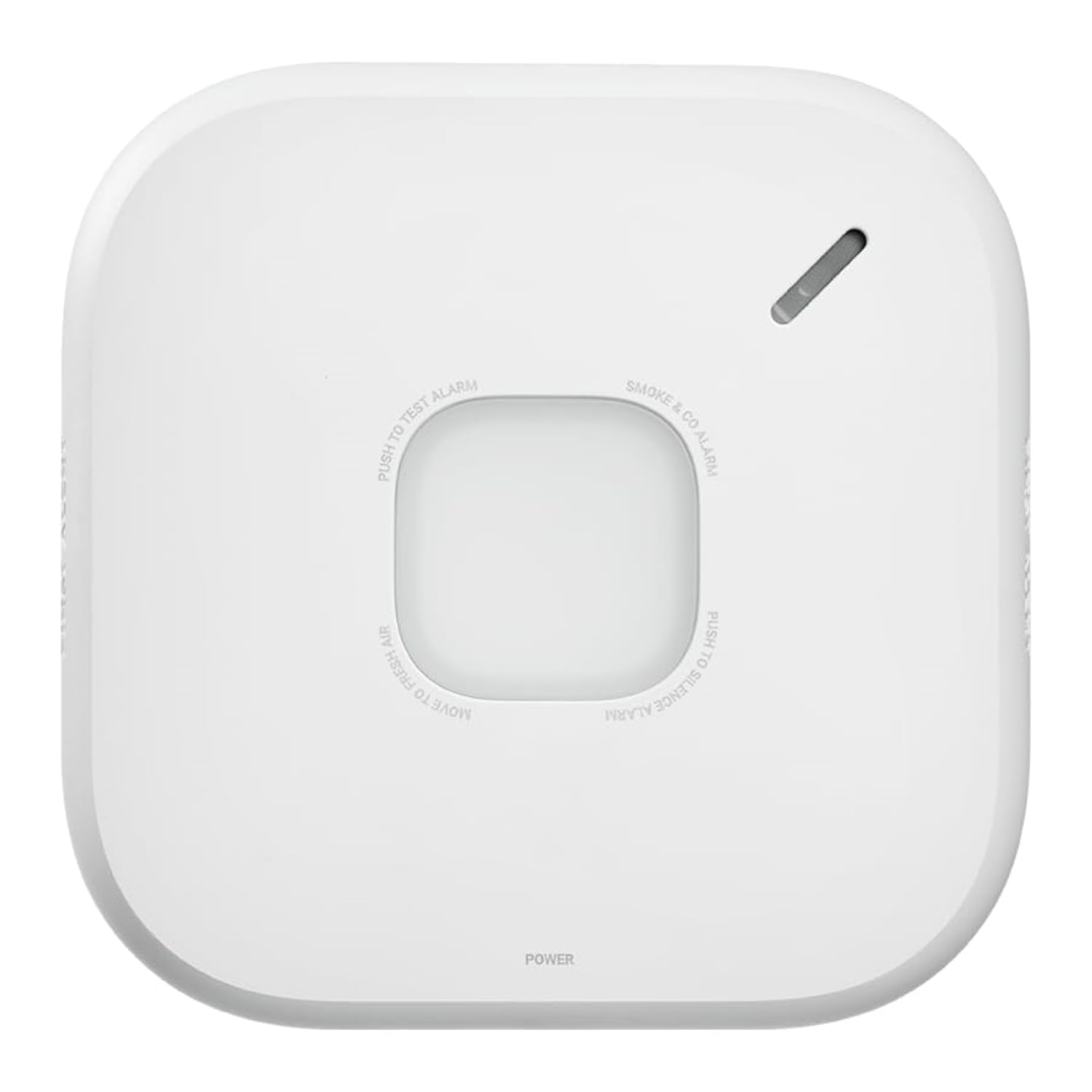
Features and Specifications
Type: Combination smoke and carbon monoxide alarm
Series: SC5
Power Source: Battery
Connectivity: Smart-capable
Brand: First Alert
Model: SMCO600NV
The name tells most of the story here. This is a dual-sensor alarm, meaning one ceiling-mounted unit handles two separate jobs: detecting smoke from a fire and detecting carbon monoxide from a faulty furnace, water heater, stove, or attached garage. Buyers who have priced out separate smoke and CO alarms know that two devices mean two mounting spots, two battery schedules, and two sets of chirps to chase down. Combining them into one housing simplifies all of that.
The SC5 designation and the battery power source are the two facts that matter most for installation. A battery unit needs no electrician, no junction box, and no ceiling wiring — it can go up in a hallway, a bedroom, or a basement in the time it takes to drive a screw. That makes it a realistic option for renters, for older homes with sparse wiring, and for anyone adding coverage to a finished space where running new cable is a hassle.
The smart angle is what separates this model from a plain hardware-store alarm. Rather than relying solely on an alarm horn to get attention, the unit is built to push alerts outward through a connected ecosystem, so a homeowner can learn about an event away from the house. That is the headline feature, and it is also the part that deserves the most scrutiny before buying.
Build and Design
First Alert builds this class of alarm around a plastic housing with a front grille for the sensor chamber and a mounting bracket that twists and locks into place. The form factor is the familiar round ceiling puck — nothing exotic, which is a virtue in a safety device. Buyers are not learning a new interface; they are hanging a disc and pressing a test button.
The dual-sensor layout is the meaningful design decision. Smoke and carbon monoxide behave very differently — smoke rises and drifts, CO mixes evenly through a room — so a combination unit has to place both sensing elements where they can do their jobs without one blocking the other. That engineering is why combination alarms cost more than single-purpose ones, and it is the main reason to buy a name-brand unit rather than the cheapest listing on the page.
Where the design asks for patience is the battery door and the test routine. Battery-powered alarms put the cells in an accessible compartment, usually on the back or the side, and the unit has to come off its bracket to reach them. That is normal for the category, but it means the alarm is not a hang-it-and-forget-it device — it wants a periodic check, and the smart features add another layer of setup on top.
Trade-off: Battery power means no wiring and no electrician, but it also means the alarm lives or dies by its cells and needs a recurring replacement habit the buyer has to own.
Power and Battery Life
Battery operation is the defining constraint of this alarm, and buyers should think about it as a maintenance schedule rather than a spec. A combination smoke and CO unit draws more current than a smoke-only alarm because it runs two sensing paths, so the cells will not last as long as they would in a simpler device. The exact interval depends on the battery type and the environment, but the practical takeaway is unchanged: this alarm will ask for fresh batteries on a schedule, and it will chirp to remind the household when that time comes.
The upside is placement freedom. A hardwired alarm is stuck wherever the wiring runs; a battery unit can go in the spot that actually makes sense — outside a bedroom door, at the top of a stairwell, near the furnace room. For coverage planning, that flexibility is worth more than the battery cost. A homeowner can put protection where the risk is instead of where the electrician left a box.
The caution is that battery alarms are only as reliable as the person who maintains them. A unit that has been chirping for a week and ignored is not protecting anyone. Buyers who know they will not stay on top of battery swaps should weigh a sealed-battery or hardwired model instead, and buyers who travel or own a rental property should treat the smart alerting as a backup to the maintenance routine, not a replacement for it.
Smart Connectivity and Alerts
The smart capability is the reason this model carries a premium over a standard combination alarm. Connected alarms are built to send notifications when they trigger, so a phone buzzes even when nobody is home to hear the horn. For a second home, a rental unit, or a house where everyone works away from the property during the day, that is a genuinely useful layer of protection — smoke and CO events are exactly the kind of emergency where minutes matter and nobody is around to notice.
Setup is where buyers should set expectations. Smart alarms pair through an app and, depending on the ecosystem, may need a compatible hub or a stable home network to deliver remote alerts. That means the alarm’s smart side is only as good as the Wi-Fi it sits on and the phone settings that allow notifications through. A buyer who silences app alerts or runs a flaky router will not get the benefit they paid for, and the setup step is more involved than hanging a dumb alarm.
There is also a philosophical point worth raising. Smart alerting adds convenience and remote awareness, but it does not replace the local alarm horn, and it should never be the only reason someone buys a life-safety device. The horn is what wakes a sleeping household; the phone alert is what reaches someone who is not there. Buyers should want both, and they should test both after installation rather than assuming the app side works.
Trade-off: Remote alerts are the standout feature, but they depend on a home network and an app the buyer has to configure and keep live — the smart layer is only as reliable as the setup behind it.
Maintenance and Everyday Ownership
Owning this alarm is mostly about rhythm. The household needs a test cadence — pressing the test button on a schedule to confirm both sensing paths respond — plus a battery replacement habit and a periodic dusting of the grille, since dust and cooking residue can dull a smoke sensor over time. None of that is difficult, but it is real, and it is the difference between an alarm that works when needed and one that has quietly degraded.
The combination format actually reduces maintenance load compared with two separate devices. One unit means one test button, one battery compartment, one mounting spot, and one chirp to identify when something needs attention. Households that have chased a mystery beep through a hallway will appreciate the consolidation. The counterweight is that a failure in a combination unit takes out both functions at once, so the test routine matters more, not less.
The smart features add a small ongoing chore of their own: confirming the app connection is alive, checking that notifications are enabled, and reconnecting after router changes or power outages. Buyers who treat that as part of the monthly test will get the full value. Buyers who set it up once and never look again may find the remote alerts have gone quiet without anyone noticing.
Strengths and Weaknesses
The strengths are straightforward. One device covers two hazards, battery power removes the wiring barrier, and the smart alerting extends protection beyond the walls of the house. For a homeowner who wants meaningful coverage without an electrician or a rack of separate gadgets, the package is coherent and the brand is a known quantity in the category.
The weaknesses follow from the same design. Battery power means a maintenance obligation and a finite runtime, the smart layer needs a network and an app that the buyer must keep healthy, and combination sensing costs more than a single-purpose alarm. Buyers who want a zero-maintenance, set-and-forget device will find this model asks more of them than they expected.
Trade-off: The convenience of one alarm for two hazards comes with a combined maintenance burden — one unit to test, but also one unit whose failure affects both protections at once.
Who Should Buy the First Alert SMCO600NV
This alarm fits homeowners and renters who want smoke and CO coverage in one ceiling unit, who can live with battery swaps, and who value remote alerts enough to set up and maintain the app. It is a strong match for rental properties, second homes, and households where people are away during the day and want a phone to tell them if something is wrong.
It is a weaker match for buyers who want a hardwired, maintenance-free installation, for anyone unwilling to manage a connected app, and for households that will not stay on top of battery replacement. Those buyers are better served by a sealed-battery or wired model, or by a simpler alarm they will actually maintain.
Check the current price and availability on Amazon
FAQ
-
What does the First Alert SMCO600NV detect?
It is a combination alarm built to detect both smoke and carbon monoxide, so one unit covers fire and CO risk in a single location. -
Does the SMCO600NV need to be hardwired?
No. It is a battery-powered unit, so it installs without an electrician or ceiling wiring and can be placed wherever coverage is needed. -
Is this alarm smart-home compatible?
Yes — the smart capability is a core feature, built to send alerts beyond the local horn so a homeowner can be notified remotely. -
Do remote alerts work without Wi-Fi?
The smart side depends on a home network and an app connection, so remote notifications require a working setup rather than the alarm alone. -
How often do the batteries need replacing?
The exact interval depends on battery type and conditions, but a combination unit draws more current than a smoke-only alarm, so buyers should plan a regular replacement routine. -
Where should a combination alarm be installed?
Common placements are outside bedroom doors, at the top of stairwells, and near fuel-burning appliances such as a furnace or water heater. -
Can one alarm replace separate smoke and CO detectors?
In a given location, yes — it covers both hazards, though larger homes still need coverage on each level and near sleeping areas. -
What maintenance does this alarm require?
Regular test-button checks, battery replacement, occasional dusting of the sensor grille, and confirming the app connection stays live. -
Is this a good choice for a rental property?
It can be, since battery power avoids wiring work and remote alerts reach a landlord who is not on site — provided someone maintains the batteries. -
Who is this alarm not right for?
Buyers who want a hardwired, maintenance-free device or who will not manage an app and a battery schedule should look at simpler or sealed-battery models.
Bottom Line
The First Alert SMCO600NV SC5 is a sensible pick for a buyer who wants smoke and CO protection in one battery-powered unit and values remote alerts enough to maintain the app behind them. It trades wiring freedom and smart convenience for a real maintenance obligation, and that is the honest trade. Shoppers ready to take on that routine should check the current price on Amazon and confirm the smart setup fits their home network before ordering.