Why there are Amazon links here: Brave Review is paid a commission for qualifying Amazon purchases made through the links below. Your price does not change, and using our links is entirely optional. How this works
Geevorks Remote Control Electronic Door Lock: Keyless Access Without the Keypad
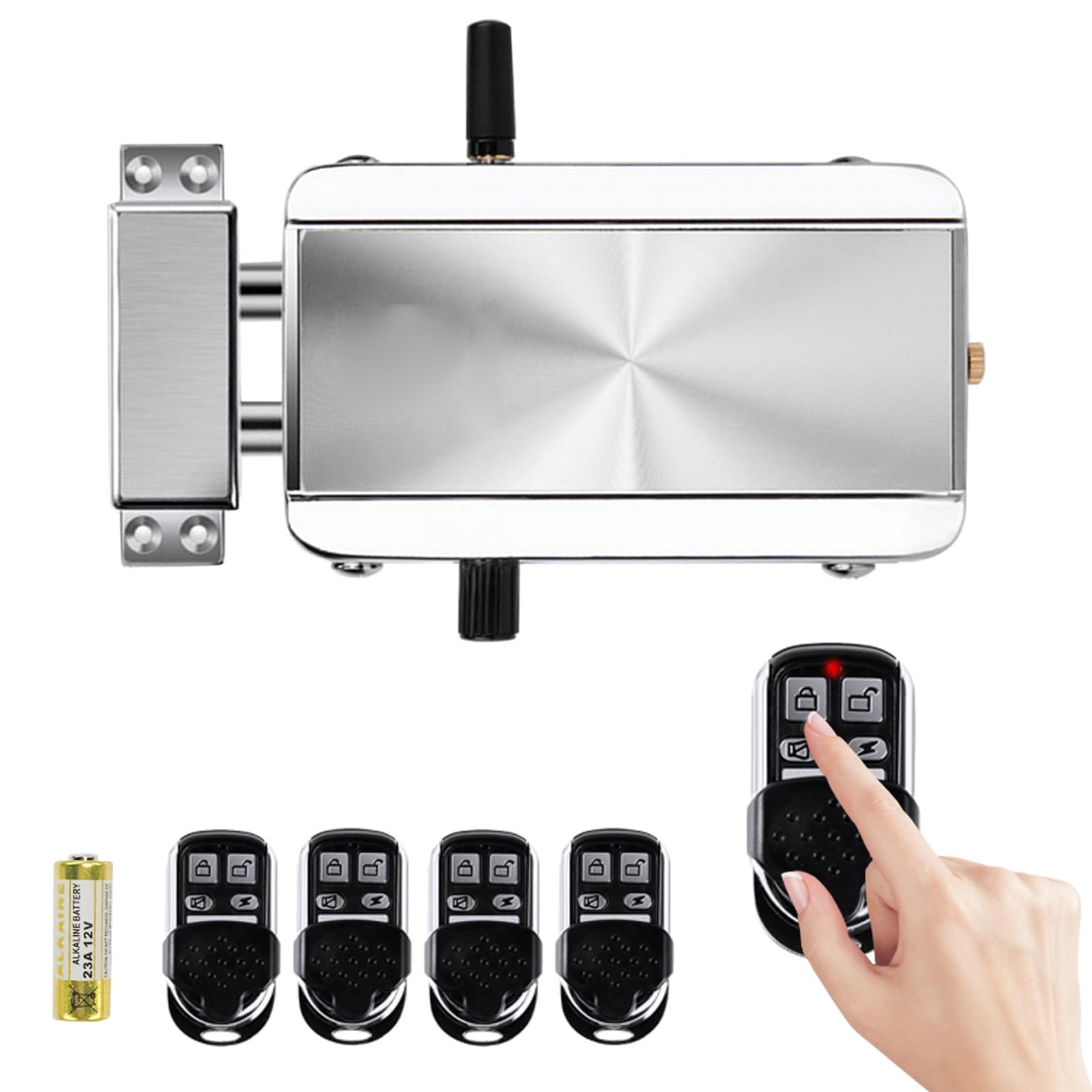
The Geevorks Remote Control Electronic Intelligent Door Lock is a remote-operated deadbolt for buyers who want keyless entry without a keypad, a phone app, or a Wi-Fi hub. It ships with four handheld remotes, so a household can hand one to each driver and keep one spare. This review covers how the lock is built, what the remote-only control scheme means in daily use, and which households it fits. The short version: it suits a secondary entrance or a garage-to-house door far better than a front door.
Check the current price on Amazon
Features and Specifications
The product name carries most of what a buyer needs to know before digging deeper. The table below stays with what the listing actually states.
| Attribute | Detail |
|---|---|
| Product type | Electronic deadbolt door lock |
| Control method | Wireless remote control |
| Remotes included | 4 |
| Access style | Keyless |
| Mounting style | Hidden, in-door |
| Intended use | Home access control |
| Security framing | Anti-theft |
Control method: wireless remote, no keypad and no app.
Remotes included: four, which covers a family’s worth of keychains out of the box.
Mounting style: hidden inside the door rather than surface-mounted on the face.
Access style: keyless — there is no cylinder to pick and no key to lose.
Those four lines describe a specific kind of product. This is not a smart lock in the connected sense. There is no Bluetooth pairing to a phone, no scheduling, no guest codes, and no log of who came and went. It is a motorized deadbolt that answers to a pocket remote, and the design choices follow from that.
How the Lock Is Built
A hidden-mount electronic deadbolt puts the actuator inside the door body, behind the interior face, with only the bolt itself showing at the edge. That arrangement matters for two reasons.
First, there is nothing on the outside of the door to attack. No keyway, no keypad, no exposed housing. A buyer looking at the door from the street sees a plain slab. For a back entrance, a side door, or a garage-to-kitchen door, that visual quiet is the main selling point.
Second, a hidden mount means the lock is only as good as the door it goes into. The actuator needs enough internal depth and a clean edge bore to sit properly. Solid-core and hollow-core doors behave differently here, and a thin or hollow door may not have the room the mechanism needs. Buyers should measure the door’s thickness and check the edge before ordering, because this is not a swap-in for an existing surface-mounted deadbolt.
The build itself reads as a commodity-grade electronic lock rather than a premium architectural fitting. At this price tier, that is expected: the housing will be a mix of plated metal and engineering plastic, and the finish will not match a solid brass deadbolt. The trade is straightforward — buyers get remote access and a hidden profile for a fraction of what a connected smart lock costs, and they give up the material density and finish quality that money usually buys.
The Remote-Only Control Scheme
Four remotes is the headline feature, and it is also the lock’s biggest limitation. A remote is fast and simple: one button press from the driveway and the door is open. For an elderly parent, a child, or anyone who struggles with a key in the dark, that is a genuine improvement over fumbling with a cylinder.
The catch is that a remote is a physical object. Lose it and the household has a problem, because there is no keypad fallback and no phone to open the door instead. A remote left in a coat pocket or dropped in a parking lot is a security question, not just an inconvenience. Buyers should treat the four remotes as a managed set — one per regular user, one kept somewhere secure at home, and a plan for what happens when one goes missing.
Range is the other variable. Wireless remotes of this type work over a short distance, typically from a car parked close by to the door itself. That is fine for the intended use, but it is not a remote-open-from-anywhere system, and buyers who expect to unlock from down the street will be disappointed.
There is also no audit trail. Nobody can check whether the door was locked at 9 a.m. or who opened it at 3 p.m. For a household that wants that information, a connected lock is the right category and this is not it.
Trade-off: The remote-only design means a lost remote is a real security problem with no keypad or app to fall back on, so the lock rewards disciplined key management rather than casual use.
Power and Maintenance
An electronic deadbolt needs power, and the name does not specify the source. What can be said generally is that locks in this class run on batteries housed inside the interior assembly, and battery life depends on how often the bolt cycles. A door used a few times a day will last far longer than one cycling constantly.
The practical maintenance routine is short. Batteries need replacing on a schedule rather than when the lock dies, because a dead lock on a hidden-mount deadbolt leaves the household with no obvious manual override at the exterior. Buyers should pick a date — the start of a season works — and swap cells whether or not the lock seems tired.
The remotes themselves need occasional attention too. Remote fobs in this price range usually pair to the lock, and pairing means the household should keep the instructions. A remote that stops working may just need re-pairing rather than replacement.
Finally, the moving parts want a clean door. A door that swells in humid weather or sags on its hinges puts lateral load on the bolt, and a motorized bolt fighting a misaligned strike will wear faster and drain batteries. Checking hinge screws and strike alignment once a year is cheap insurance.
Who This Lock Suits
The clearest fit is a secondary door: a back entrance, a side gate door, a garage-to-house door, or a workshop. These are doors where a hidden lock profile is an asset, where the user is often carrying something, and where a remote in the car is genuinely convenient.
It also suits households with members who find keys difficult — an older relative, someone with limited hand strength, or a child who needs to get in after school. Handing over a remote is easier than cutting a key and easier to take back.
It does not suit a main front door in a household that wants remote access from a phone, guest codes for a dog walker, or a record of entry. It does not suit a thin or hollow door without the internal depth for a hidden mechanism. And it does not suit a buyer who wants one lock to cover every entrance — the remotes pair to the lock, so a multi-door setup means managing separate sets.
FAQ
-
Is the Geevorks door lock a smart lock?
No. It is a remote-controlled electronic deadbolt. There is no phone app, no Wi-Fi, no Bluetooth pairing, and no smart-home integration. Control happens through the included handheld remotes. -
How many remotes come with the lock?
Four. That covers several family members or vehicles out of the box, with room to keep one stored safely as a spare. -
Does the lock have a keypad or a key backup?
The product is described as keyless access with remote control, so the remote is the access method. Buyers who need a keypad fallback or a physical key should look at a different lock category. -
Can the lock be opened if a remote is lost?
A lost remote is the main risk of a remote-only design. There is no keypad or app to fall back on, so the household should keep one remote secured at home and treat the set as something to manage deliberately. -
What kind of door does a hidden electronic deadbolt fit?
It needs a door with enough internal depth for the mechanism and a clean edge bore. Solid doors are the safer bet; thin or hollow-core doors may not have the room. Measuring the door before ordering is essential. -
Does the lock work from far away?
Wireless remotes of this type work over a short range, roughly from a nearby parked car to the door. It is not a remote-open-from-anywhere system. -
How is the lock powered?
Locks in this class run on batteries inside the interior assembly. Battery life depends on how often the bolt cycles, so a lightly used secondary door will go much longer between changes than a busy main entrance. -
Can one remote control more than one Geevorks lock?
Pairing behavior varies, and the listing does not promise multi-lock control from a single remote. A buyer planning several doors should assume separate remotes per lock until confirmed. -
Is a hidden lock more secure than a visible deadbolt?
It removes the exterior keyway and housing, which takes away an obvious point of attack. It does not make the door itself stronger, and the lock is still only as good as the door and frame around it. -
Who should not buy this lock?
Buyers who want app control, guest access codes, entry logs, or a keyed backup. Also anyone with a thin or hollow door, or a household that cannot keep track of small remotes.
Bottom Line
The Geevorks Remote Control Electronic Intelligent Door Lock is a focused product for a narrow job: keyless, remote-operated access on a door where a hidden mechanism makes sense. The four included remotes cover a household, the hidden mount keeps the exterior clean, and the price sits well below connected smart locks. The trade is real — no app, no keypad, no backup when a remote goes missing — so it belongs on a secondary entrance or a door used by people who find keys hard, not on a front door that needs guest access and a record of entry.
