Why there are Amazon links here: Brave Review is paid a commission for qualifying Amazon purchases made through the links below. Your price does not change, and using our links is entirely optional. How this works
GNCC Solar Security Cameras: A $35 Wireless Outdoor Cam That Runs on Sunlight
The GNCC solar security camera is a budget-friendly wireless outdoor camera that charges itself from the sun and covers a full 360° view. It suits renters, homeowners and small-property owners who want a camera on a shed, driveway or back gate without running power or paying for a professional install. This review covers the specifications, how the solar-and-battery setup actually works day to day, and the honest limits of a camera at this price point. Readers who want a fast answer can check the current price on Amazon and move on, or read on for the full breakdown.
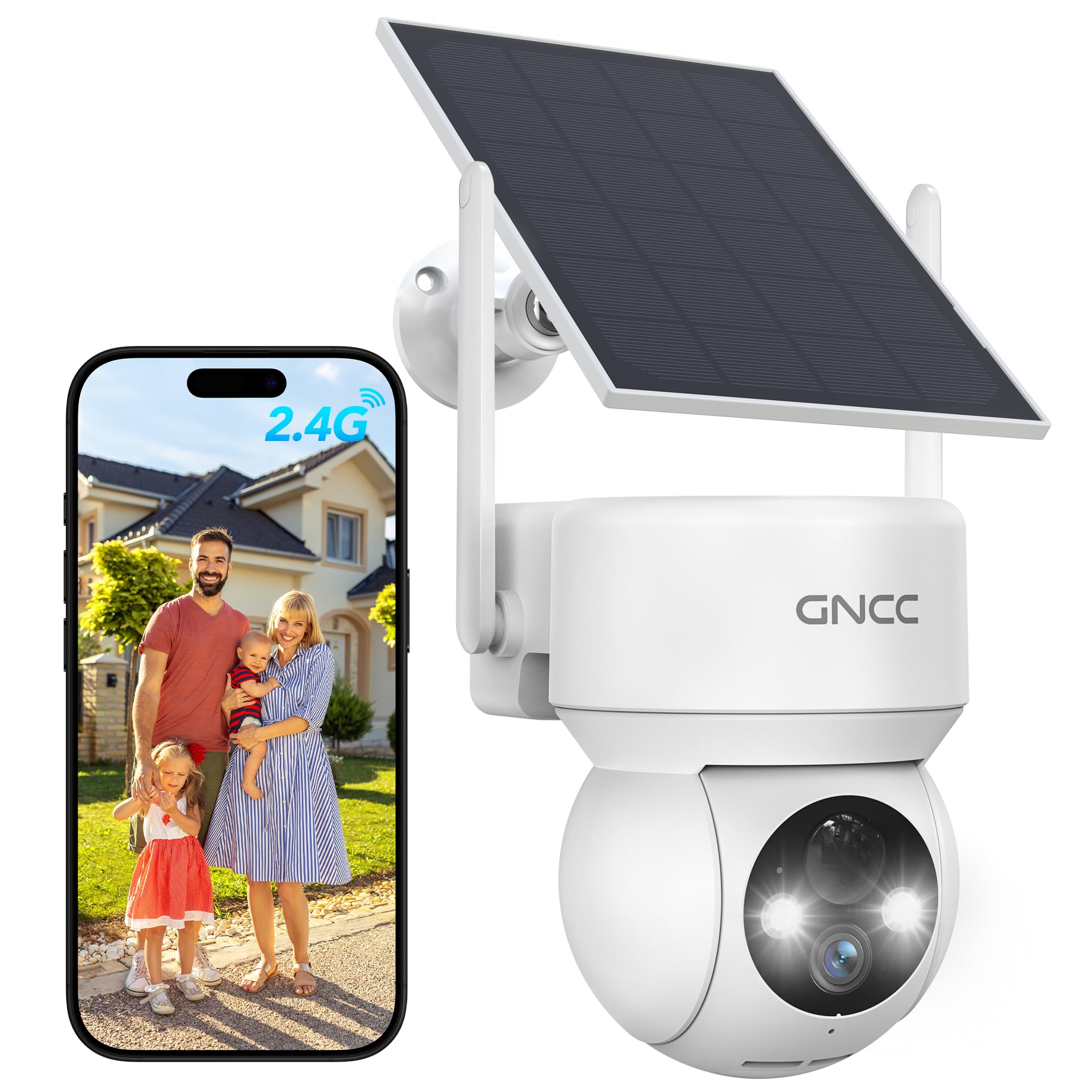
Features and Specifications
Type: Wireless outdoor security camera with integrated solar panel and battery
Power Source: Solar charging with built-in battery backup
Field of View: 360°
Night Vision: Color night vision with spotlight
Motion Detection: PIR (passive infrared) sensor
Alerts: Spotlight and siren alarm
Weather Rating: IP65 waterproof
Connectivity: 2.4G WiFi
Storage: SD card and cloud options
The GNCC packs a lot of capability into a low-cost package. The headline feature is the combination of a solar panel and an internal battery, which means the camera can be mounted almost anywhere the sun reaches without an electrician, a ladder run of cable or a nearby outlet. That single design choice is what makes this camera interesting to people who have a spot they want watched but no easy way to power a device there.
The 360° coverage claim is worth understanding before buying. A single fixed lens does not see in every direction at once, so buyers should expect either a wide panoramic-style view or a panning mechanism that repositions the lens. Either way, the camera is designed to cover more ground than a standard fixed camera, which is useful on a corner mount or a spot where the angle of approach is unpredictable.
The 2.4G WiFi requirement is common in this class and worth noting. The camera connects to the slower but longer-range 2.4GHz band rather than 5GHz, which is the right call for an outdoor device that may sit far from the router. It also means the camera will not appear on a 5GHz-only network, so buyers should confirm their router broadcasts a 2.4GHz signal before ordering.
Build and Weatherproofing
The IP65 rating is the key durability spec here. IP65 means the housing is protected against dust ingress and against water jets from any direction, which covers rain, sprinklers and hose spray. It is not a submersion rating, so the camera should be mounted where water drains away rather than in a spot that pools, but for normal outdoor exposure on a wall, fence post or eave, IP65 is an appropriate and honest rating for a camera at this price.
The solar panel and battery are integrated into the unit, which keeps the install simple but does mean the whole assembly hangs on the mounting point. Buyers should plan a solid surface — brick, timber, metal post — rather than a loose fence panel that moves in the wind. A camera that shifts will throw off the view and can trigger false motion alerts as the scene changes.
Material quality is the area where the budget price shows most. At this tier, the housing is likely to be a hard polycarbonate or similar plastic rather than metal, and the mounting bracket will be functional rather than heavy-duty. That is a reasonable trade for a camera that costs less than a mid-range dinner out, but buyers who live in extreme heat, heavy snow load or coastal salt air should expect a shorter service life than a premium metal-bodied camera would deliver.
Trade-off: The IP65 housing and plastic build are fine for typical residential weather, but the camera is not built for extreme climates or long-term heavy exposure, and the low price reflects that.
Power and Solar Performance
The solar-and-battery design is the reason this camera exists at this price. A wired camera needs an electrician or a long cable run; a battery-only camera needs regular trips up a ladder to recharge. Solar sits in the middle — the panel tops up the battery during daylight, and the battery carries the camera through the night and through cloudy stretches.
How well this works depends heavily on placement. The panel needs direct sun for a meaningful part of the day, so a north-facing wall or a spot under a deep eave will underperform. Buyers should treat solar placement as the most important decision in the whole install, more important than camera angle, because a camera that runs out of power is a camera that stops recording.
The spotlight and siren features draw extra power when they trigger. A camera that fires its spotlight and siren several times a night will drain the battery faster than one that only records passively, so buyers in high-traffic areas should expect the solar panel to work harder to keep up. In practice, most residential installs with a few motion events per night and decent sun exposure should stay charged, but a busy driveway or a spot with constant foot traffic is a harder ask for a panel this size.
Night Vision, Alerts and Storage
Color night vision is a meaningful step up from the black-and-white infrared footage most budget cameras produce. The camera uses its spotlight to illuminate the scene so footage stays in color after dark, which makes it far easier to identify a person, a vehicle color or a clothing detail in a clip. The trade-off is that the spotlight is visible, so the camera announces itself when it activates — a deterrent for some buyers, a giveaway for others.
PIR motion detection is the right technology for an outdoor camera. Unlike pixel-change detection, which fires on moving leaves, shadows and headlights, a passive infrared sensor responds to body heat, so alerts are more likely to mean an actual person or animal. That cuts down on notification fatigue, which is the main reason people stop checking their camera app.
The spotlight and siren alarm give the camera an active deterrent role, not just a recording role. When motion triggers, the camera can light up the scene and sound an alarm, which is often enough to send an intruder moving on. Buyers should understand this is a deterrent, not a guarantee, and that a siren on a budget camera is loud enough to startle rather than to summon help.
Storage runs to both SD card and cloud. Local SD storage keeps clips on the camera with no subscription, which is the budget-friendly path and keeps footage private. Cloud storage adds off-site backup and remote access convenience but typically carries a recurring fee. Buyers who want zero ongoing cost should plan on an SD card, and buyers who want footage safe from a thief who takes the camera should weigh the cloud option.
Who It Suits and Who It Does Not
This camera suits renters who cannot drill and wire, homeowners who want to cover a shed, garage, side gate or driveway without an electrician, and anyone building a low-cost multi-camera setup around a property. It also suits buyers who want a visible deterrent with a spotlight and siren without paying for a full alarm system.
It does not suit buyers who need guaranteed 24/7 recording, because a solar battery camera is designed around motion-triggered clips rather than continuous footage. It does not suit a spot with no meaningful sunlight, and it does not suit buyers in extreme climates who need a heavy-duty metal housing. Buyers who want professional monitoring, cellular backup or a camera that works through a total power and internet outage should look at a wired or cellular system instead.
FAQ
-
Do GNCC solar security cameras need wiring?
No. The camera runs on an integrated solar panel and battery, so it needs no power cable. It does need a 2.4GHz WiFi signal strong enough at the mounting point to stay connected. -
How much sunlight does the solar panel need?
The panel needs direct sun for a meaningful part of the day. A spot in full shade or under a deep overhang will not keep the battery topped up, so solar placement matters more than camera angle. -
Does the GNCC camera work at night?
Yes. It has color night vision supported by a spotlight, so footage stays in color after dark rather than switching to black-and-white infrared. -
What is PIR motion detection?
PIR stands for passive infrared. The sensor detects body heat rather than pixel changes, so it is less likely to fire on moving leaves, shadows or passing headlights than basic motion detection. -
Is the GNCC camera waterproof?
It carries an IP65 rating, which means it is protected against dust and water jets. That covers rain and sprinklers but not submersion, so it should be mounted where water drains away. -
Does it need a subscription?
No subscription is required for local recording to an SD card. Cloud storage is optional and typically carries a recurring fee. -
Will it work on 5GHz WiFi?
No. The camera connects on the 2.4GHz band. Buyers should confirm their router broadcasts a 2.4GHz network before ordering. -
Can the spotlight and siren be turned off?
Most cameras in this class let the owner configure when the spotlight and siren trigger. Buyers who want passive recording only should check the app settings after install. -
Where should the camera be mounted?
A solid surface with direct sun and a clear view of the area to be watched. Brick, timber or a metal post works better than a loose fence panel that moves in the wind. -
Is this camera good for a rental property?
Yes, because it needs no wiring and no permanent electrical work. It can be removed and taken to the next address, which makes it a practical choice for renters.
Bottom Line
The GNCC solar security camera is the right pick for buyers who want a wireless outdoor camera with 360° coverage, color night vision and a spotlight-and-siren deterrent without paying for wiring or an electrician. Its solar-and-battery design is the whole point, and it delivers that at a budget price. Buyers should go in expecting plastic housing, motion-triggered clips rather than 24/7 recording, and a real dependence on good sun exposure — but for a shed, gate, driveway or rental property, it covers the job at a price that makes adding a second camera easy.
