Why there are Amazon links here: Brave Review is paid a commission for qualifying Amazon purchases made through the links below. Your price does not change, and using our links is entirely optional. How this works
Google Nest x Yale Lock: Keyless Entry Without the Keys
The Google Nest x Yale Lock is a keypad deadbolt for the front door, built for households that want to stop carrying keys and start managing entry from a phone. It pairs Yale’s lock hardware with Google’s Nest ecosystem, so entry codes, remote locking and activity history live in one app. This review covers what the lock is, how it is built, where it fits in a smart home, and the trade-offs that decide whether it is the right deadbolt for a given door.
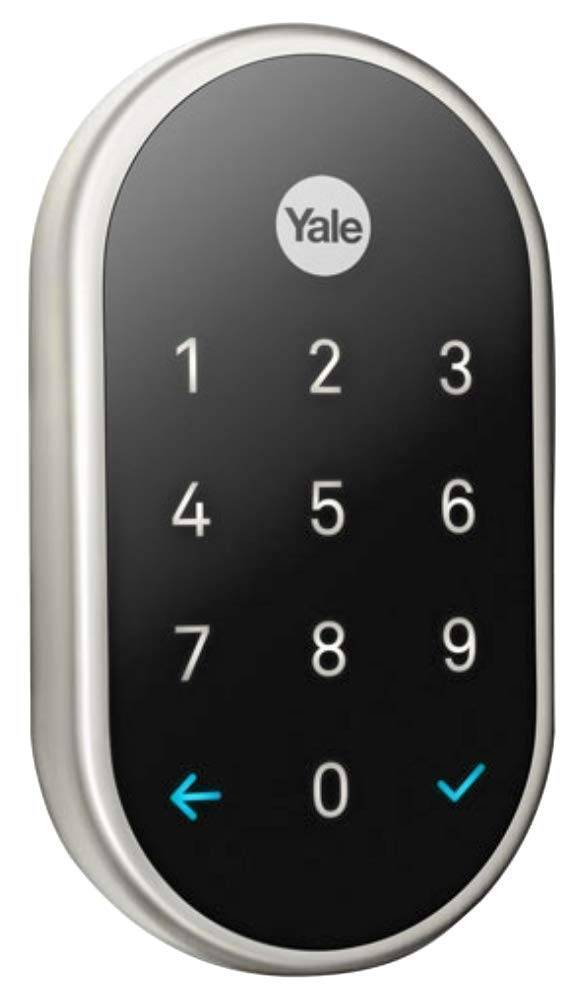
Features and Specifications
Product: Google Nest x Yale Lock
Type: Keypad deadbolt smart lock
Intended use: Front door keyless entry
Finish: Oil Rubbed Bronze
Security feature: Tamper-proof design
Ecosystem: Google Nest
The name tells most of the story. This is a deadbolt replacement, not a handle-set add-on, so it takes over the primary locking point on an entry door. The keypad replaces the key cylinder entirely — there is no keyway to pick, bump or copy, which is the core of the tamper-proof claim. The Oil Rubbed Bronze finish is a warm, dark metallic tone that suits wood doors and traditional trim better than the bright satin nickel common on smart locks.
Because it sits inside the Nest ecosystem, the lock is designed to work alongside Nest cameras, doorbells and the Nest app rather than as a standalone gadget. That matters for buyers already invested in Google’s smart home: one app, one account, one activity feed.
Trade-off: The lock leans hard on the Nest app and Google account, so households standardized on Alexa, Apple Home or a different hub get less out of it than they would from a platform-agnostic deadbolt.
Check the current price on Amazon
How the Keypad Deadbolt Is Built
The hardware is a full deadbolt assembly, meaning the exterior keypad and the interior thumb-turn are joined through the door by a bolt mechanism that throws into the frame. Buyers replacing an existing deadbolt should expect a straightforward swap on a standard door preparation, though doors that have never carried a deadbolt — or have unusual backset spacing — may need more work.
The absence of a key cylinder is the design decision that shapes everything else. There is no keyhole to cover, no key to hide under a mat, and no lockout risk from a lost key. Entry happens by code on the keypad, and the interior side turns by hand for a normal exit.
The tamper-proof framing points at the exterior housing: the keypad is built so that forcing it does not expose the bolt mechanism the way prying a keyed cylinder might. That is a meaningful difference for a front door facing a street or a shared hallway.
Power and the Nest App
The lock runs on batteries rather than household wiring, which is normal for this category and means no electrician visit. The practical consequence is that battery life becomes a maintenance item — the lock reports its level through the Nest app, and buyers should treat a low-battery warning as a same-week task rather than a suggestion.
The app is where the lock earns its keep. Codes can be issued, scheduled and revoked remotely, which is the feature that separates a smart deadbolt from a plain keypad lock. A dog walker, a cleaner or a visiting relative can get a code that works for a set window and then stops working, without anyone rekeying anything.
Remote locking is the other headline capability, and it depends on the lock staying connected to the home network through Nest’s bridge hardware. That dependency is worth understanding before purchase: the lock is at its best in a connected Nest home and at its plainest without one.
Entry Codes and Daily Use
For day-to-day life, the keypad is the interface that matters. Household members get their own codes, which removes the shared-code problem and makes it possible to see who came and went. Guests get temporary codes instead of a spare key that never comes back.
The no-key design also changes the small rituals of leaving the house. There is no pocket check, no hidden key, no locksmith call after a lost set. The counterweight is that the code becomes the thing to protect — a code shared too widely is the equivalent of a copied key, and it needs the same discipline.
Buyers who want a physical backup should note that this lock is deliberately keyless. That is the point of the product, but it does mean entry depends on the keypad, the batteries and the app rather than a mechanical fallback.
Who the Lock Suits
The clearest fit is a household already using Nest products and a Google account, where the lock slots into an existing app and activity history without a second ecosystem. Second is the rental or short-term-property scenario, where temporary codes and remote revocation solve a real operational problem.
The lock also suits anyone who has simply had enough of keys — a front door that opens by code removes a whole category of daily friction.
Trade-off: Buyers outside the Google ecosystem, or those who want a keyed backup for peace of mind, will find this lock asks them to change platforms or give up the fallback they prefer.
See the Google Nest x Yale Lock on Amazon
FAQ
-
Is the Google Nest x Yale Lock keyless?
Yes. The lock uses a keypad instead of a key cylinder, so entry is by code rather than a physical key. There is no keyway on the exterior. -
Does the Google Nest x Yale Lock work without the Nest app?
The keypad works on its own, but code management, remote locking and activity history are app features. Without the Nest app and a Google account, most of the smart functionality goes unused. -
Can the lock be used with Alexa or Apple Home instead of Nest?
The product is built around the Google Nest ecosystem. Buyers committed to another platform should check compatibility carefully before buying, because the lock is designed to live in the Nest app. -
What happens when the batteries run out?
The lock reports battery level through the Nest app, so a low battery is visible before it becomes a lockout. Buyers should replace batteries promptly once a warning appears rather than waiting. -
Is the Oil Rubbed Bronze finish durable outdoors?
Oil Rubbed Bronze is a dark, warm metallic finish that suits wood doors and traditional hardware. Like any exterior finish, it benefits from occasional cleaning and should not be scrubbed with abrasive cleaners. -
Can codes be given to guests and then removed?
Yes. The Nest app allows codes to be created for specific people and revoked when access is no longer needed, which is the main advantage over a shared spare key. -
Does the lock replace an existing deadbolt?
Yes. It is a deadbolt replacement, so it takes over the primary locking point on the door. Doors with standard deadbolt preparation are the straightforward case. -
Is a keypad lock harder to break into than a keyed lock?
The tamper-proof design removes the key cylinder, which is one of the common attack points on a traditional deadbolt. No lock is unbeatable, but the design closes off a well-known weakness. -
Who is this lock not for?
Buyers who want a mechanical key backup, or who have standardized their smart home on a platform other than Google Nest, will likely be happier with a different deadbolt. -
Does the lock work on a rental property?
It can, and temporary codes are genuinely useful for short-term rentals. Landlord permission and a check that the door takes a standard deadbolt are the practical prerequisites.
Bottom Line
The Google Nest x Yale Lock is the right deadbolt for a Nest household that wants keyless entry done properly — tamper-proof hardware, per-person codes, remote locking and a warm Oil Rubbed Bronze finish that looks at home on a wood front door. Buyers outside the Google ecosystem, or anyone unwilling to give up a physical key, should look elsewhere; everyone else gets a clean, well-integrated keypad lock that removes keys from the daily routine.