Why there are Amazon links here: Brave Review is paid a commission for qualifying Amazon purchases made through the links below. Your price does not change, and using our links is entirely optional. How this works
GRECELL 999Wh Solar Generator 1000W Portable Power Station: Camping Power Without the Noise
The GRECELL 999Wh solar generator is a mid-size portable power station built for campers, hunters, and travelers who need household-style AC power away from an outlet. It pairs a 1000W continuous AC output (2000W peak) with a 60W USB-C PD port, so it can run small appliances and charge modern laptops from the same box. This review covers what the unit is built to do, where its capacity and power limits land in real use, and which buyers should look elsewhere.
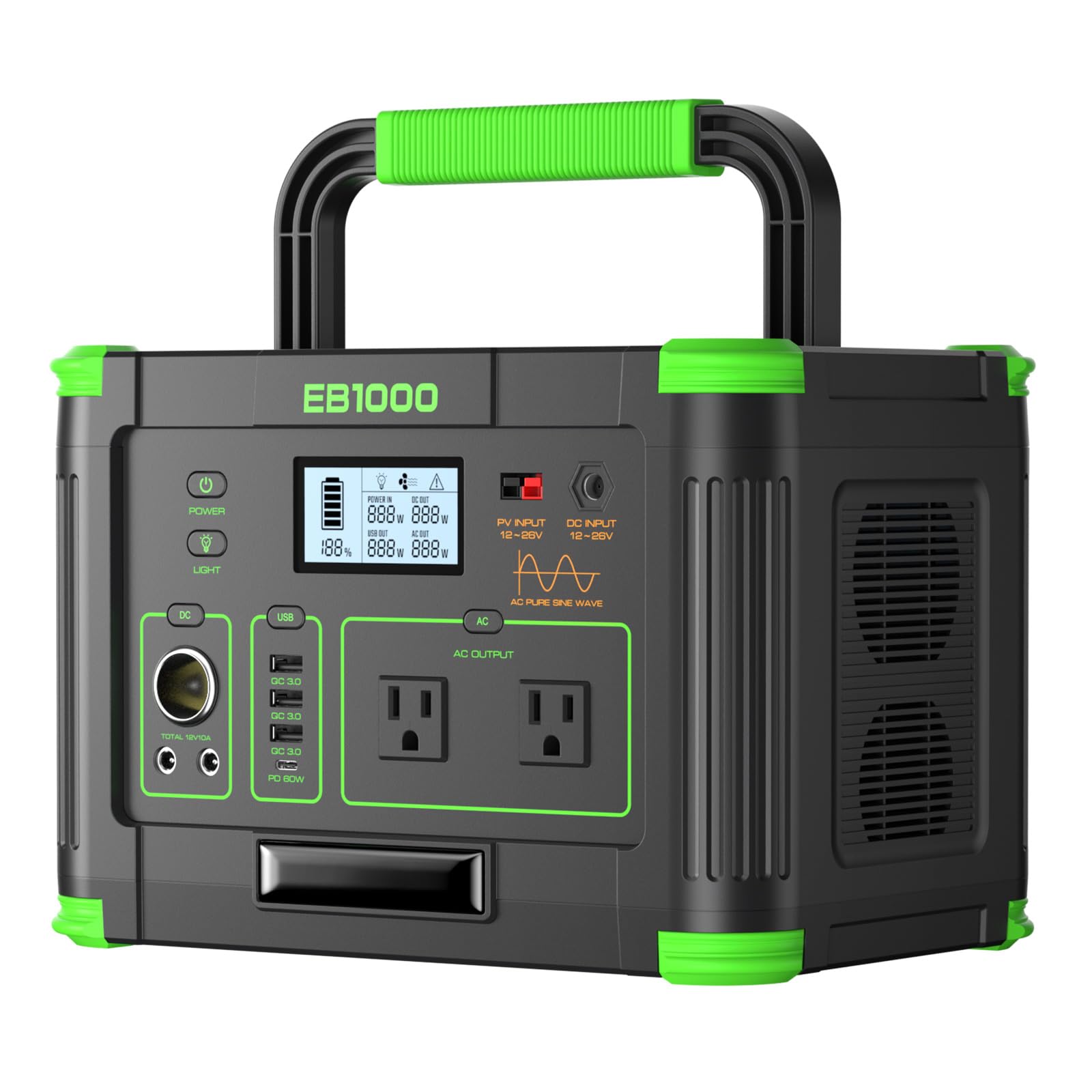
Features and Specifications
Type: Portable power station / solar generator
Battery Capacity: 999Wh lithium battery
AC Output: 120V pure sine wave, 1000W continuous, 2000W peak
USB-C Output: 60W Power Delivery
Intended Use: Home backup, camping, travel, hunting, outdoor use
Recharge Options: Solar panel input (panel sold separately)
The headline figure is the 999Wh battery, which sits in the sweet spot between pocket-sized power banks and heavy whole-home backup units. The 1000W AC inverter is rated for continuous draw, with a 2000W peak that covers the brief surge a motor or compressor pulls at startup. The 60W USB-C PD port is the detail that separates this unit from older power stations, because it can fast-charge a laptop or tablet without an AC adapter.
The pure sine wave AC output matters more than the wattage number for anyone running electronics. Modified sine wave units can cause buzzing, overheating, or refusal to run in sensitive devices like CPAP machines, variable-speed fans, and modern TVs. A pure sine wave inverter produces the same smooth curve as a wall outlet, so those devices behave normally.
Build and Portability
A 999Wh lithium battery is not light, and buyers should expect a carry-handle form factor rather than something that fits in a backpack pocket. The capacity-to-weight ratio is the core compromise of this class: enough stored energy to run a cooler or a laptop for a full day, but a unit that gets carried from the car to the campsite rather than hiked up a trail. The integrated handle and rugged housing are built for that short-haul use.
The trade-off here is straightforward. Buyers who want a station to live permanently in a vehicle or a cabin will not mind the bulk. Buyers who picture carrying it on a multi-mile hike should look at a smaller-capacity unit and accept fewer run hours.
Trade-off: The 999Wh battery delivers useful runtime but makes this a car-to-campsite unit, not a backpacking one.
Capacity and Runtime
Runtime is where the 999Wh figure earns its keep. The math is simple: a device that draws 100W runs for roughly nine to ten hours on paper, and real-world runtime lands a little under that once inverter overhead is counted. Small loads stretch much further, so phones, lights, and a laptop can run for days of typical camping use.
Larger appliances eat capacity fast. A portable fridge, an electric kettle, or a space heater will drain the battery in a matter of hours, and anything with a heating element is a poor match for a station this size. The realistic use case is a mix of small electronics, lighting, and one moderate appliance at a time rather than whole-campsite power.
Buyers planning to run a CPAP machine overnight should do their own watt-hour math from the device label, because heated humidifiers can double the draw. The pure sine wave output means the machine will run correctly once the capacity question is settled.
Power Output and Recharging
The 1000W continuous AC rating covers most of what campers and travelers actually plug in: laptops, cameras, fans, small TVs, and a portable fridge during its compressor cycles. The 2000W peak handles startup surges, which is why a fridge or a pump can kick on without tripping the inverter. Anything that pulls more than 1000W steady, such as a microwave or a hair dryer, is outside this unit’s range.
The 60W USB-C PD port is the most future-proof part of the spec sheet. It charges modern laptops at full speed and handles phones and tablets without an adapter, which cuts the number of bricks a traveler packs. Buyers should note that the USB-C port is a charging output, not an input, so it does not speed up recharging the station itself.
Recharging happens through a solar panel input, and the panel is a separate purchase. Buyers who want off-grid independence need to budget for a compatible panel and check that its output matches the station’s input rating. Wall charging remains the faster option when an outlet is available.
Maintenance and Ownership
Lithium power stations are low-maintenance, but they are not maintenance-free. The battery chemistry prefers partial discharges over being run flat, and long-term storage goes better at around half charge in a cool, dry place. Buyers who park the unit in a hot garage or a freezing truck bed for months at a time will shorten its useful life.
Periodic top-ups matter for a backup unit that sits idle. A station left completely drained for an extended period can lose capacity or refuse to accept a charge, so a quarterly recharge is cheap insurance. The unit should also be kept away from moisture and dust at the ports, since the AC outlets and USB-C port are the parts most likely to fail first.
Trade-off: Solar recharging requires a separate panel purchase, so the off-grid capability is not included in the box.
Who It Suits and Who It Does Not
This station fits campers, hunters, and road-trippers who want silent AC power for small electronics and one moderate appliance, plus homeowners who want a portable backup for short outages. It also suits laptop-heavy travelers who value the 60W USB-C PD port and the pure sine wave output for sensitive gear.
It does not suit backpackers, anyone expecting to run high-wattage heating appliances, or buyers who want a whole-home backup solution. Those shoppers need either a much smaller unit for weight or a much larger one for output, and this model sits deliberately in the middle.
Check the current price and availability on Amazon
FAQ
-
How long does the GRECELL 999Wh solar generator last?
Runtime depends on the load. Small electronics like phones and lights can run for days, while a 100W device runs roughly nine to ten hours on paper before inverter losses. -
Can the GRECELL 999Wh run a refrigerator?
A small portable fridge can run during compressor cycles within the 1000W continuous and 2000W peak ratings, but a full-size kitchen refrigerator is not a realistic match for this capacity. -
Does the GRECELL 999Wh have a pure sine wave inverter?
Yes. The product name specifies a 120V pure sine wave AC outlet, which is the correct output for sensitive electronics like CPAP machines and modern TVs. -
Can the GRECELL 999Wh charge a laptop?
Yes. The 60W USB-C Power Delivery output charges modern laptops directly, and the AC outlet handles older adapters. -
Does the GRECELL 999Wh come with a solar panel?
No. The station has a solar charging input, but the panel is a separate purchase and needs to match the unit’s input rating. -
How much power can the GRECELL 999Wh output at once?
The AC inverter is rated at 1000W continuous with a 2000W peak for startup surges. Devices that draw more than 1000W steadily are outside its range. -
Is the GRECELL 999Wh good for camping?
Yes, for car camping and basecamp use. It is too heavy for backpacking, but it handles lights, phones, a laptop, and a portable fridge at a campsite. -
Can the GRECELL 999Wh be used indoors during a power outage?
Yes. Lithium power stations produce no exhaust fumes, so they can run indoors during an outage, unlike a gas generator. -
How should the GRECELL 999Wh be stored?
Store it at around half charge in a cool, dry place and recharge it every few months to protect the lithium battery. -
What is the difference between the 1000W and 2000W ratings?
The 1000W figure is continuous output for steady loads, while 2000W is the brief peak the inverter can supply when a motor or compressor starts up.
Bottom Line
The GRECELL 999Wh solar generator is the right pick for campers, hunters, and travelers who want silent, pure sine wave AC power and fast USB-C laptop charging in one portable unit. Its 1000W continuous output covers small appliances and electronics, and the 999Wh battery delivers real runtime for a basecamp or a short outage. Buyers who need to run heating appliances or power a whole home should size up, and backpackers should size down — everyone in the middle gets a well-rounded station.
