Why there are Amazon links here: Brave Review is paid a commission for qualifying Amazon purchases made through the links below. Your price does not change, and using our links is entirely optional. How this works
GRECELL Portable Power Station 1200W 672Wh H1200: Whole-Home Backup in One Box
The GRECELL H1200 is a mid-size portable power station aimed at households that want a plug-and-play backup for outages and a power source for camping or RV trips. It combines a 672Wh lithium iron phosphate battery with a 1200W inverter, a 10ms UPS switchover and nine output ports. This review covers what the unit is built to do, where its limits sit, and which buyers should look at it first. Readers ready to compare the current price can jump straight to the Amazon listing.
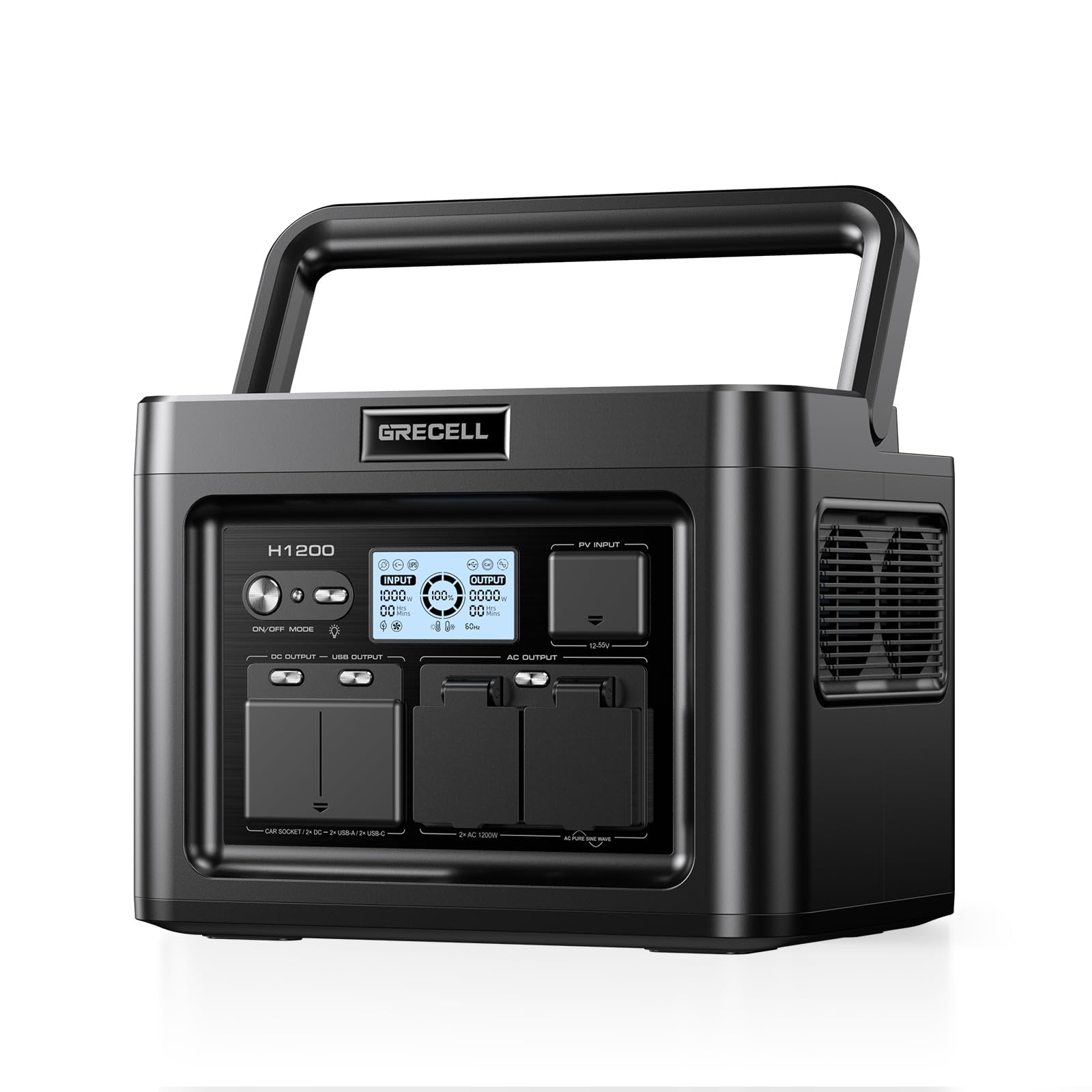
Features and Specifications
Battery Chemistry: LiFePO4 (lithium iron phosphate)
Capacity: 672Wh
Inverter Output: 1200W
UPS Switchover: 10ms
Output Ports: 9
Solar Input: Supported (1200W solar power station class)
Intended Use: Home emergency backup, outdoor camping, RV travel
Typical Loads: Laptops, TVs and similar household electronics
The headline number here is the 672Wh capacity paired with a 1200W inverter. That combination puts the H1200 in the middle of the portable power station market: enough stored energy to run a fridge, a router and a few lights through a short outage, but not enough to carry a whole house for days. The 1200W ceiling also means the unit can handle most household electronics and small appliances, though high-draw devices with heating elements sit outside its comfort zone.
The LiFePO4 battery chemistry is the detail that matters most for long-term buyers. Lithium iron phosphate cells are the durable branch of the lithium family, and they are the reason this unit is marketed for home emergency use rather than weekend-only duty. The 10ms UPS mode is the second differentiator, and it is covered in more depth below.
Trade-off: A 672Wh pack is a backup battery, not an off-grid power plant, and buyers planning multi-day outages will need a second unit or a generator.
Check the current price on Amazon
Build and Battery Chemistry
LiFePO4 is the specification that separates the H1200 from cheaper lithium-ion power stations. The chemistry is known for a longer usable lifespan and better tolerance of being kept at a full charge, which suits a unit that spends most of its life plugged in and waiting for an outage. For a home backup device, that is the right trade to make.
The build itself is a portable power station in the conventional sense: a box with a carry handle, an internal battery pack, an inverter board and a front panel of outlets. GRECELL positions the unit for both indoor home use and outdoor travel, so the enclosure is designed to be moved rather than installed. Buyers should treat it as a portable appliance, not a permanently wired UPS for a server rack.
The practical consequence of the chemistry choice is that the H1200 is heavier and bulkier than a lithium-ion station of the same capacity. That is the cost of the longer service life. Buyers who only need occasional camping power may find the weight harder to justify than someone who wants a unit sitting in a hallway for years.
Capacity and Runtime Expectations
672Wh is the number buyers should anchor every runtime calculation to. A laptop, a router and a few LED lights draw very little, and the H1200 will carry that kind of load for a long stretch. A full-size refrigerator cycles on and off and draws far more, so the same battery covers a much shorter window.
The unit is best understood as a bridge. It keeps the essentials alive, the phones charged and the internet running until power returns or a larger source arrives. Buyers who need to run a space heater, a large microwave or power tools for hours are looking at the wrong class of device entirely.
The 1200W inverter rating sets the ceiling on what can be plugged in at once. Devices that draw near that limit will work, but they leave little headroom for anything else on the same unit. Buyers should add up the wattage of everything they plan to run simultaneously before committing.
Power Output, Ports and UPS Mode
Nine output ports give the H1200 more flexibility than a bare-bones backup unit. The mix covers the usual spread of AC outlets, USB charging and a 12V-style output, which means phones, laptops, a TV and a router can all be connected without juggling adapters. That port count is one of the stronger arguments for this unit over smaller, cheaper stations.
The 10ms UPS switchover is the feature that earns the H1200 its home-emergency positioning. When the unit is plugged into wall power and a device is connected to it, the station passes power through and switches to battery almost instantly when the grid drops. Ten milliseconds is fast enough that most electronics will not notice the gap, which protects desktops and networking gear from the kind of abrupt shutdown that causes data loss.
That said, UPS mode is only as good as the setup. The unit has to be charged and correctly wired into the load before an outage, and the devices that need protection must be plugged into the station rather than the wall. Buyers who want true whole-room protection should map out which devices matter most and dedicate the H1200 to them.
Solar Input and Maintenance
The H1200 accepts solar input, which extends its usefulness beyond grid-tied backup. A compatible panel lets the unit recharge away from an outlet, making it a genuine option for camping and RV travel rather than a device that only works near a wall socket. Solar charging is slower than mains charging, so buyers should plan around daylight hours and panel output rather than expecting a fast top-up.
Maintenance is minimal by design. LiFePO4 cells tolerate being held at full charge better than older lithium chemistries, so leaving the unit plugged in between outages is a reasonable routine. Periodic partial discharge and a check of the ports and vents keep the unit in working order.
The caution here is the same one that applies to every solar-capable station: the panel is a separate purchase, and the recharge rate depends entirely on what is connected. Buyers should budget for a panel if off-grid charging is part of the plan, and should not assume the station arrives ready to harvest sunlight out of the box.
Who the GRECELL H1200 Is For
This unit suits three buyer types well. The first is the household that wants a set-and-forget backup for short outages, with the 10ms UPS mode protecting a router, a desktop or a medical device. The second is the camper or RV owner who wants a single box that covers charging and small appliances without hauling a generator. The third is the buyer who has decided LiFePO4 is worth paying for and wants a mid-capacity station rather than an entry-level unit.
It is not for buyers who need to run high-draw appliances for extended periods, and it is not for anyone expecting a whole-home solution from a single portable box. Buyers on a tight budget who only need phone charging at a campsite will find the H1200 overbuilt for the job. Buyers who need to power a sump pump, a space heater or power tools through a long outage should be looking at larger stations or a fuel generator instead.
FAQ
-
What can the GRECELL H1200 power?
The 1200W inverter and nine ports cover laptops, TVs, routers, lights, phones and similar electronics. Small appliances within the wattage limit will run, but high-draw devices with heating elements are outside its intended load. -
How long does 672Wh last during an outage?
Runtime depends entirely on the load. A router, a few lights and a laptop will run for many hours, while a refrigerator draws enough to shorten that window considerably. Buyers should total the wattage of the devices they plan to run. -
What does the 10ms UPS mode actually do?
It lets the station pass wall power through to connected devices and switch to battery within 10ms when the grid fails. That gap is short enough that most electronics keep running without a restart. -
Is LiFePO4 better than a regular lithium-ion power station?
LiFePO4 is generally regarded as the more durable chemistry for units kept charged and used over many years. The trade is weight and size for the same capacity, which matters for buyers who plan to carry the unit often. -
Can the H1200 be charged with solar panels?
Yes, solar input is supported. The panels are sold separately, and charging speed depends on the panel output and conditions, so buyers planning off-grid use should budget for a compatible panel. -
Is the GRECELL H1200 suitable for RV travel?
The unit is marketed for RV travel and camping, and its port selection covers typical travel loads. Buyers should confirm the unit’s weight and footprint fit their storage space before committing. -
Can it run a refrigerator?
A refrigerator is within reach for short periods, but it is one of the heavier loads a station of this size will face. Buyers planning to protect a fridge should expect a limited runtime and prioritize it over other devices. -
Does the unit need to stay plugged in?
For UPS protection, yes — the station must be connected to wall power and to the devices it protects. LiFePO4 chemistry tolerates being held at full charge, which makes a always-plugged-in routine practical. -
Who should not buy the GRECELL H1200?
Buyers who need to run power tools, heaters or a whole home for extended outages should look at larger stations or a generator. Buyers who only need occasional phone charging will find it more capacity than they need. -
Where can buyers check the current price?
The Amazon listing linked throughout this review carries the live price and availability. Prices on portable power stations move with promotions, so checking before purchase is worthwhile.
Bottom Line
The GRECELL H1200 makes sense for buyers who want a durable LiFePO4 backup with a genuine UPS mode and enough ports to keep a household’s essentials running through short outages. Its 672Wh capacity and 1200W inverter set clear limits, and buyers who respect those limits will get a capable, low-maintenance unit. Those needing to power high-draw appliances for long stretches should size up instead.