Why there are Amazon links here: Brave Review is paid a commission for qualifying Amazon purchases made through the links below. Your price does not change, and using our links is entirely optional. How this works
Best Heat Interface Unit Controls for Zoned Heating and Cooling
Heat interface unit controls range from inexpensive plug-in thermostat outlets to dedicated Wi-Fi interface modules for mini-split systems. This roundup covers five picks that suit homebrewers and greenhouse growers, reptile and incubation keepers, and homeowners running ductless heating and cooling. Each entry states what the control does, who it fits, and where it falls short. The overview table below sorts all five by key spec and best use, so a reader can shortlist a pick before reading the full reviews.
Overview of the Picks
| Product | Key Spec | Best Use | Price Tier |
|---|---|---|---|
| Inkbird ITC-308 Digital Temperature Controller | 110V, 10A, 1100W, 2-stage | Homebrew fermentation and terrarium control | Budget |
| DEWENWILS Temperature Controller Outlet | 15A, 1800W, cyclic timing/countdown | Heat lamps and incubation timing | Lowest |
| Mitsubishi Electric PAC-USWHS002-WF-2 | Wi-Fi interface control | Ductless mini-split system control | Premium |
| Programmable Temperature Controlled Outlet | 1200W, 110–230V, compressor delay | Fridges, brewing, greenhouse | Mid-range |
| DIGITEN Wireless Thermostat Outlet | 1800W, remote control, power cord | Space heaters, fans, AC | Mid-range |
1. Inkbird ITC-308 Digital Temperature Controller

Voltage: 110V
Current: 10A
Power Rating: 1100W
Stages: 2-stage outlet
Modes: Heating and cooling
Intended Use: Carboy homebrew fermenter, greenhouse, terrarium
The Inkbird ITC-308 is a dual-stage controller, which means it can run a heating device and a cooling device from a single unit and switch between them as the temperature moves. The 110V, 10A rating covers 1100W of load, enough for a fermentation wrap, a small space heater, or a terrarium heat mat. The outlet design suits anyone who ferments in a carboy, keeps a greenhouse warm overnight, or maintains a reptile enclosure. Its two-stage logic is the reason it sits at the top of this list for brewing and terrarium work, where overshooting the target is the main risk. The controller is a plug-in type, so installation means plugging the unit into a wall socket and the appliance into the controller.
This pick earns its place because it handles both directions of temperature control, not just heating. A homebrewer can hold a carboy steady through a cold garage night and a warm afternoon without swapping hardware. The 10A ceiling means buyers should check the appliance’s wattage before pairing it, since a large heater will exceed the rating. Buyers who only need a single heat source may find the second stage unnecessary and the setup more involved than a basic thermostat outlet. It suits careful hobbyists more than casual users.
Trade-off: The 10A limit caps the appliance size, so high-wattage heaters and large greenhouse fans are out of range.
2. DEWENWILS Temperature Controller Outlet

Type: Plug-in thermostat outlet
Current: 15A
Power Rating: 1800W
Temperature Range: -40 to 210°F
Features: Cyclic timing and countdown
Intended Use: Greenhouse, incubation, reptiles, heat lamps
The DEWENWILS outlet combines a thermostat function with cyclic timing and a countdown mode, which makes it more flexible than a plain temperature switch. The 15A, 1800W rating is the highest among the plug-in units here, and the -40 to 210°F range covers both cold storage and heat lamp duty. The display shows the current reading, and the VA display panel keeps the numbers legible in a dim room. It suits reptile keepers who need a heat lamp on a schedule, incubators that need steady warmth, and greenhouse benches that need timed ventilation or heating. The outlet format keeps installation to a single wall socket.
The reason this pick sits near the top of the budget end is the combination of a wide temperature range and timed switching at a low price. Buyers who want a heat lamp to run on a cycle, not just on temperature, get that without a separate timer. The trade-off is that the timing and temperature features are basic compared with a two-stage controller, and the unit offers no cooling stage. It fits hobbyists who need one reliable heat channel rather than a full climate system.
Trade-off: Single-channel control means no cooling stage, so it cannot manage a setup that needs both heating and chilling.
3. Mitsubishi Electric PAC-USWHS002-WF-2 Wireless Interface Control

Type: Wireless Wi-Fi interface control
Connection: Wi-Fi
Intended Use: Mitsubishi Electric ductless system control
Form Factor: Interface module
Compatibility: Mitsubishi Electric equipment
The PAC-USWHS002-WF-2 is a Wi-Fi interface module rather than a plug-in outlet, and its job is to connect a Mitsubishi Electric ductless system to a home network for app and remote control. The module installs at the indoor unit and adds wireless control to a system that otherwise relies on a wall remote. It suits homeowners with a Mitsubishi mini-split who want scheduling and remote adjustment from a phone. The price tier is premium because this is manufacturer-specific hardware, not a universal accessory. Buyers should confirm the module matches their indoor unit before ordering, since it is built for one brand’s equipment.
This pick earns its place as the only true heat interface unit control on the list for ductless HVAC. It does not switch a heater on and off; it gives an existing system a network connection and a control layer. The narrow compatibility is the main caution: it will not work with other brands, and it adds nothing to a system that already has a smart thermostat. Buyers without Mitsubishi equipment should look at the plug-in options instead.
Trade-off: Brand-locked compatibility makes this an expensive dead end for any system that is not Mitsubishi Electric.
4. Programmable Temperature Controlled Outlet
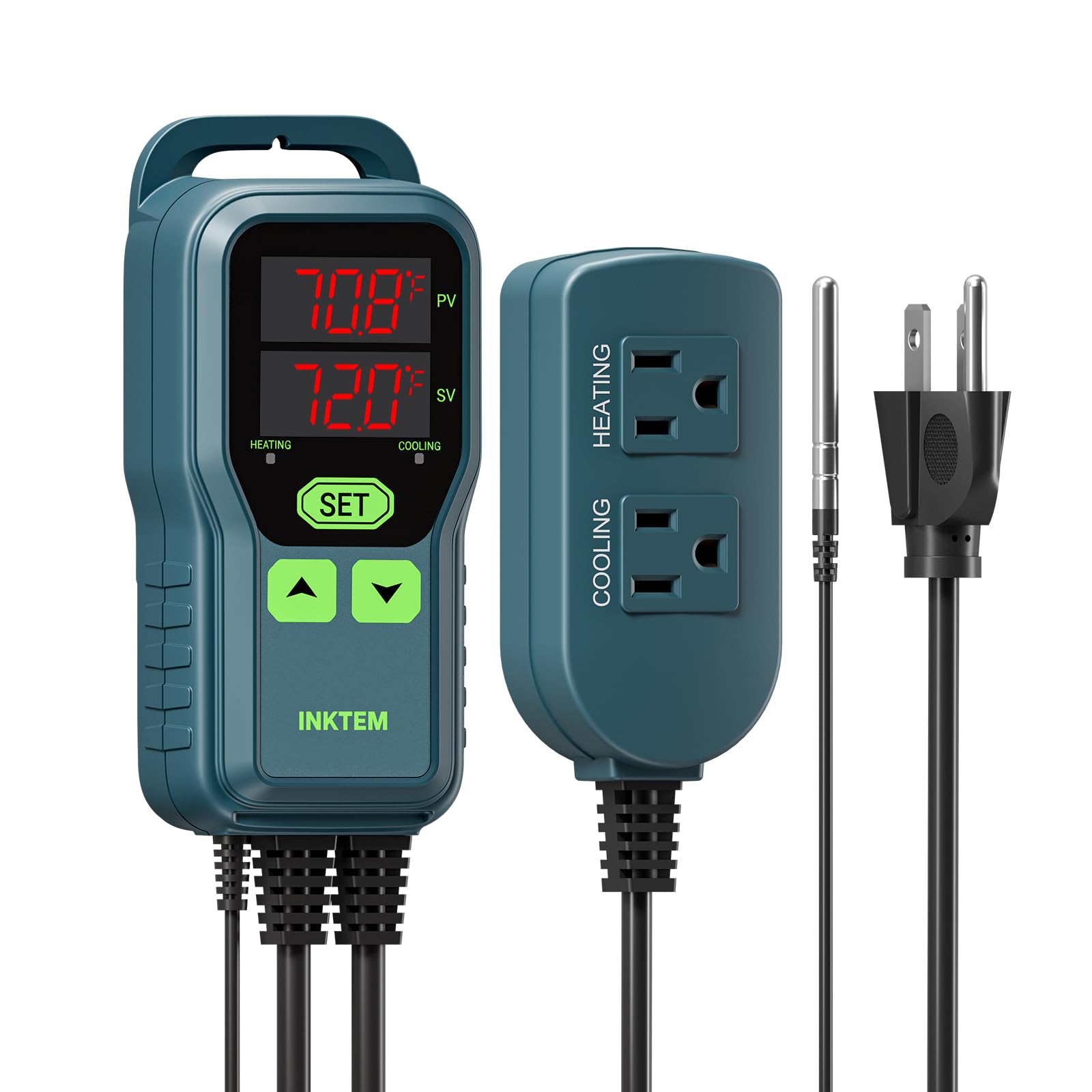
Type: Programmable thermostat outlet
Power Rating: 1200W
Voltage: 110–230V
Modes: Heating and cooling
Feature: Fridge compressor delay
Intended Use: Reptile, brewing, incubation, greenhouse
This programmable outlet handles both heating and cooling and adds a compressor delay, which protects fridge and freezer compressors from short cycling after a power interruption. The 110–230V range makes it usable in more than one electrical setup, and the 1200W rating covers most hobby-scale heaters and small cooling appliances. It suits brewers who ferment in a fridge, reptile keepers with a heat mat and a fan, and greenhouse growers who need a fan to kick in above a set point. Programming is done on the unit, and the delay feature is the standout for anyone running a compressor-based cooler.
The pick earns its place because the compressor delay solves a specific problem that cheaper outlets ignore. A fridge used as a fermentation chamber will not restart instantly after a brief outage, which protects the compressor and the contents. The caution is that the 1200W ceiling is lower than the 1800W units here, so large space heaters are a poor fit. Buyers who need only heating may find the cooling stage and delay feature more than they need.
Trade-off: The 1200W rating rules out high-draw heaters, and the programming steps take patience on first setup.
5. DIGITEN Wireless Thermostat Outlet
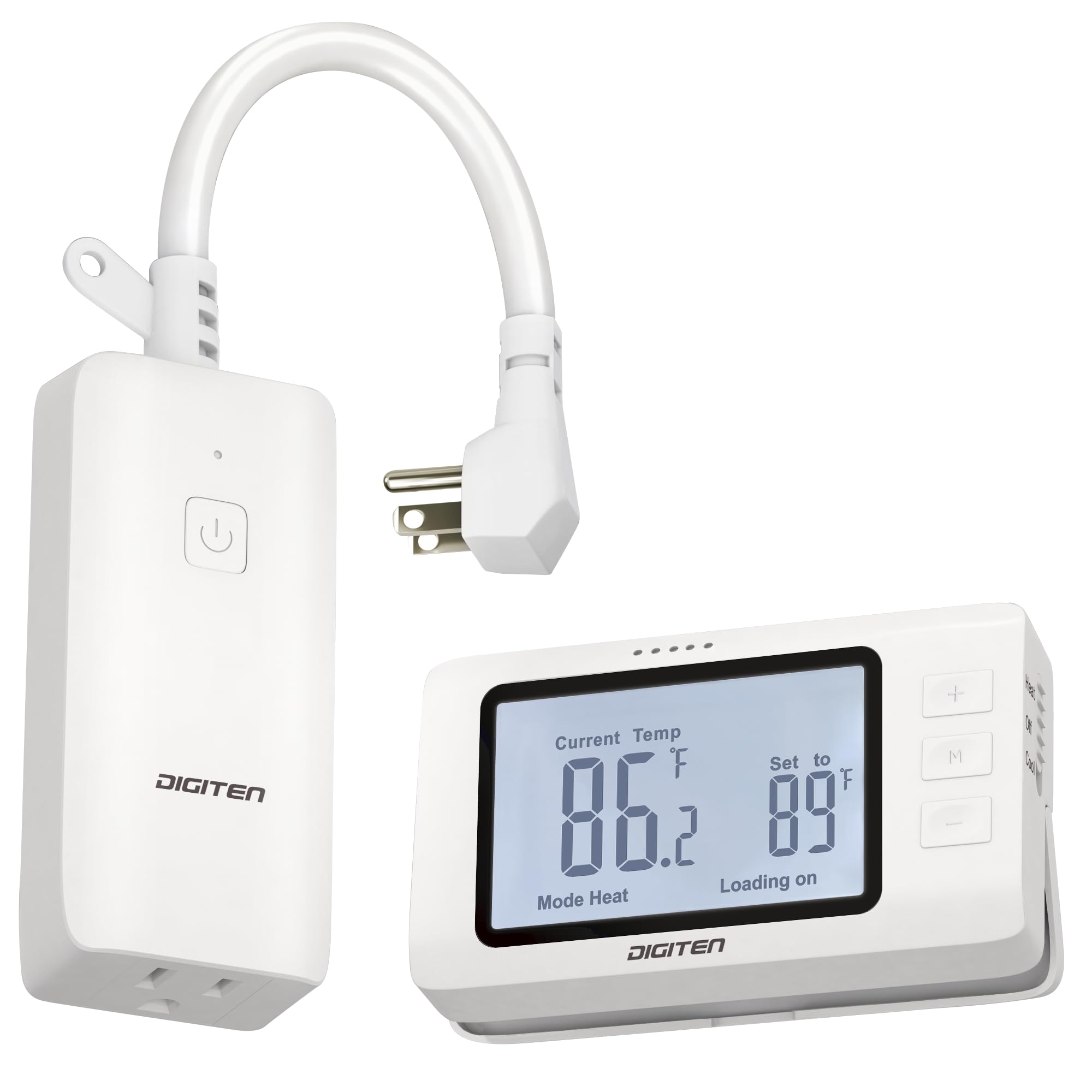
Type: Plug-in thermostat outlet with power cord
Power Rating: 1800W
Control: Remote control
Modes: Heating and cooling
Intended Use: Space heater, fan, AC, home use
The DIGITEN outlet pairs a plug-in thermostat with a remote control, so the set point can be adjusted without reaching behind furniture or into a grow tent. The 1800W rating matches the highest in this roundup and covers space heaters, fans, and window AC units. The power cord adds reach from the wall socket to the appliance. It suits homeowners who want to add thermostat control to a space heater in a bedroom or a fan in a workshop without wiring anything permanent. The remote makes it the easiest pick to live with day to day.
This pick earns its place on convenience: the remote control is the feature that separates it from the other plug-in units. The caution is that a remote is easy to misplace, and a lost remote leaves the outlet dependent on whatever controls sit on the unit itself. The 1800W rating is generous, but buyers should still check the appliance label. It fits renters and casual users more than serious breeders who need logging and dual-stage logic.
Trade-off: The remote is a single point of failure, and losing it reduces the outlet to basic on-unit control.
Before You Buy
- Power rating: Match the controller’s wattage to the appliance; a heater that draws more than the rating will trip the unit or the circuit.
- Stages: A single-stage outlet runs heat or cooling; a two-stage unit runs both and is the better fit for fermentation chambers and terrariums.
- Compatibility: The Mitsubishi module works only with that brand’s ductless equipment, while plug-in outlets work with any appliance that fits the rating.
- Temperature range: Check the low and high limits against the job; cold storage and heat lamps pull the range in opposite directions.
- Compressor protection: A delay feature matters for fridges and freezers used as fermentation chambers, where short cycling shortens compressor life.
- Mounting and cord: A power cord gives reach, but the outlet still needs a socket near the appliance and clearance for the plug.
- Setup complexity: Programmable units take more steps to configure than a dial outlet, which matters for buyers who want set-and-forget control.
Frequently Asked Questions
-
What is a heat interface unit control?
It is a device that manages when a heating or cooling appliance runs, either by switching a plug-in outlet on temperature or by adding a network control layer to an HVAC system. -
Can these controls run a space heater and an AC unit?
The heating-and-cooling models can switch either appliance, but only one at a time, and the appliance wattage must stay under the controller’s rating. -
Do plug-in thermostat outlets need wiring?
No. They plug into a wall socket and the appliance plugs into the outlet, so installation is limited to placing the sensor and setting the target temperature. -
Why does a fridge need a compressor delay?
The delay prevents the compressor from restarting immediately after power returns, which protects it from short cycling and extends its service life. -
Will the Mitsubishi module work with another brand’s mini-split?
No. It is built for Mitsubishi Electric equipment and will not control other manufacturers’ systems. -
Which pick suits a homebrew fermentation chamber?
The Inkbird two-stage controller is the closest fit for holding a carboy steady, while the programmable outlet with compressor delay suits brewers fermenting in a fridge.
Bottom Line
For most buyers, the Inkbird ITC-308 is the top pick because its two-stage heating and cooling control covers fermentation, terrariums, and greenhouses in one unit at a budget price. The DEWENWILS outlet is the value alternative for single-channel heat lamp and incubation duty, and the Mitsubishi module is the only choice for ductless system owners. Check the appliance wattage against the rating before ordering, then confirm the current price at the link above.
