Why there are Amazon links here: Brave Review is paid a commission for qualifying Amazon purchases made through the links below. Your price does not change, and using our links is entirely optional. How this works
HEIMAN C1 S Carbon Monoxide Detector: Two Alarms, One Simple Job
The HEIMAN C1 S carbon monoxide detector is a battery-powered, two-pack CO alarm built around a Figaro sensor and a loud 85 dB horn. It suits landlords, rental-property owners and households that need coverage on more than one floor without paying for smart features. This review covers how the alarm is built, what the specifications mean in practice, where it falls short, and who should look elsewhere.
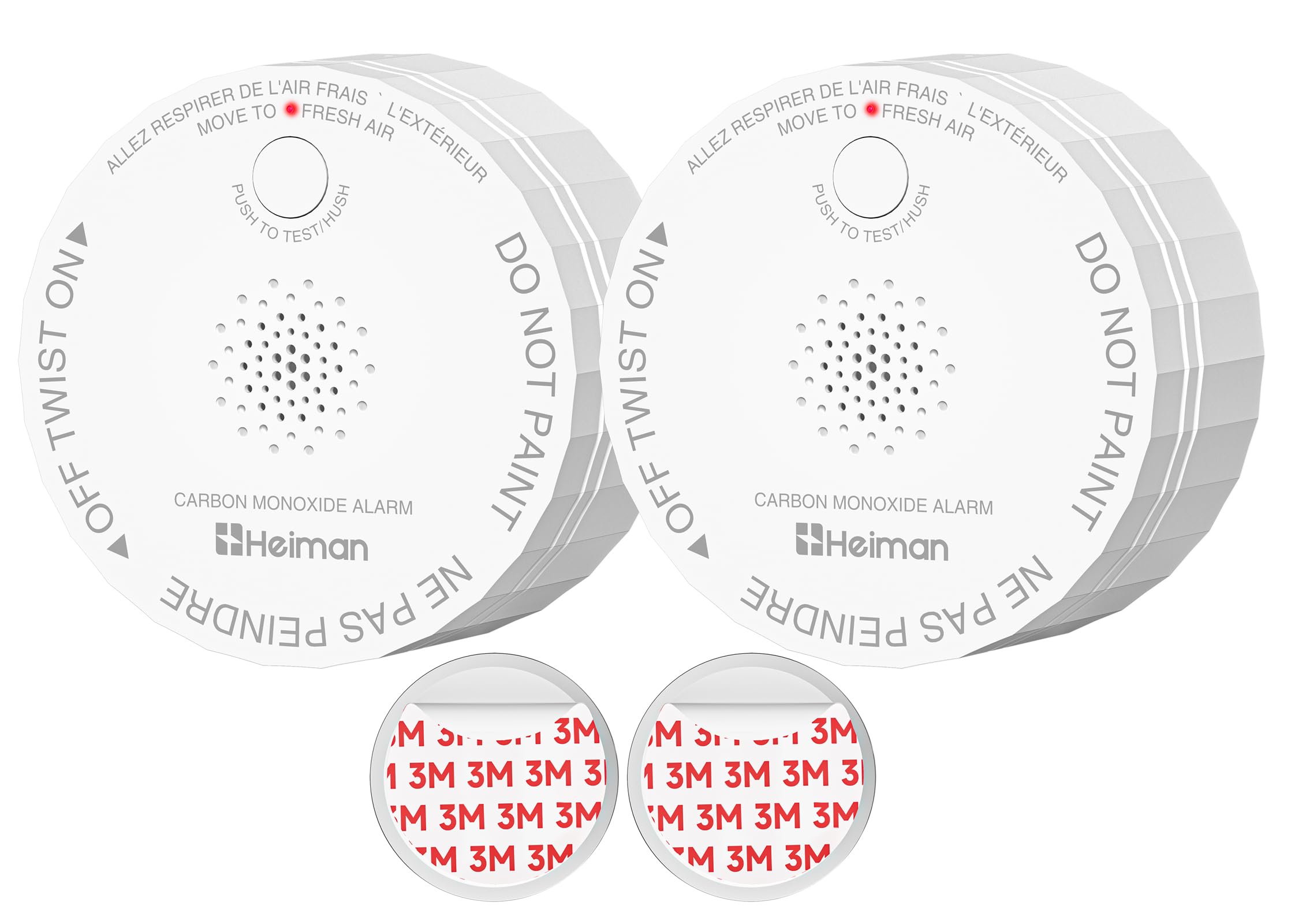
Features and Specifications
Product Type: Battery-powered carbon monoxide alarm
Sensor: Figaro sensor
Standard: HEIMANUL 2034 5th Ed
Alarm Volume: 85 dB
Controls: Test and silence button
Product Life: 10 years
Power Source: Battery
Pack Size: 2-pack
Intended Use: Home, office, hotel, rental apartments
The headline here is the sensor. Figaro is a known name in gas-sensing elements, and a CO alarm lives or dies on that one component, so a branded sensor is a meaningful detail at this price tier rather than marketing filler.
The 85 dB rating is the other number worth pausing on. That is roughly the volume of a heavy truck passing close by, and it is the level most safety bodies expect from a residential alarm — loud enough to cut through a television, a shower or a closed bedroom door.
Build and Sensor
The unit is a compact, wall- or ceiling-mounted alarm in the familiar round-housing style. There is nothing decorative about it, which is the point: CO alarms are supposed to disappear into a hallway, not become a design feature.
The Figaro sensor inside is the part that does the actual work. It reacts to carbon monoxide in the air and triggers the horn once concentrations cross the thresholds set by the HEIMANUL 2034 5th Ed standard. Buyers do not need to understand the chemistry — they need to know the sensing element is a recognized type rather than an unbranded part, and that the alarm is built to a named edition of the UL 2034 standard rather than a vague "meets safety requirements" claim.
Where this design shows its limits is in what it does not do. There is no digital ppm readout, no history log, no app, and no voice announcement. A buyer who wants to see current CO levels on a screen, or check a log after a low-level alert, will find this alarm silent on all of it.
Trade-off: The absence of a display or app means the alarm only speaks up when it matters — there is no way to glance at current CO levels or review past readings.
Power and Battery Life
Battery power is the practical choice for most homes, and it is the right one here. A cordless alarm can go anywhere a screw will hold it — above a furnace, in a hallway, in a rental unit where the tenant controls the outlets — without an electrician or an outlet nearby.
The 10-year product life figure is the number to plan around. The unit is designed to serve for a decade, and the end of that window is when the whole alarm gets replaced, not just the battery. That is a useful benchmark for landlords tracking replacement schedules across multiple units.
The caution with any battery-powered alarm is upkeep. Batteries need periodic checking, and a dead battery means a silent alarm. Buyers who know they will not stay on top of a battery check should weigh a sealed or hardwired unit instead.
Trade-off: Battery operation demands regular checks, and a unit that runs flat without anyone noticing provides no protection at all.
Test and Silence Controls
The single button handles both testing and silencing. Pressing it runs a test cycle to confirm the horn and sensor are working; during a false or nuisance alarm, the same button quiets the horn while the air clears.
That combination is the minimum a buyer should expect, and it is done here without menus, modes or a manual that needs a bookmark. For a rental unit, that simplicity matters — a tenant should not need a walkthrough to test the alarm or silence a chirp.
The limitation is that a single shared button means the test and silence functions live on the same control. A buyer who wants separate, clearly labeled buttons, or a unit that announces its own status in words, will find this one more stripped down than those options.
Trade-off: One shared button keeps operation simple but gives less feedback than alarms with separate controls or spoken status announcements.
Alarm Volume and Coverage
At 85 dB, the horn is loud enough for the job. The practical question for most buyers is not whether one alarm is loud enough but whether one alarm is in the right place — and that is where the two-pack earns its keep.
Two units let a household cover the sleeping area and the area around a fuel-burning appliance, which is the pairing most safety guidance recommends. For a landlord with a rental apartment, a two-pack covers a single unit in one purchase; for a small hotel or office, it covers two rooms or two zones.
The catch is that two alarms only cover two locations. A larger home with multiple floors, a finished basement and an attached garage will need more units than this pack provides, and buyers should count their rooms before ordering.
Trade-off: A two-pack covers two locations well but leaves multi-floor homes short, so buyers with larger properties need to order more than one pack.
Who It Suits and Who It Does Not
This alarm suits landlords, rental-property managers, small hotel and motel operators, and homeowners who want straightforward CO coverage without connected features. It also suits buyers replacing an aging alarm on a schedule and anyone who prefers a recognized sensor brand at a modest price.
It does not suit buyers who want a digital display showing current CO levels, app notifications, voice alerts or smart-home integration. It also is not the right pick for a large property that needs more than two alarm locations, or for anyone who would rather not manage batteries at all.
Trade-off: The 2-pack format and feature-light design are ideal for simple coverage but a poor fit for buyers who want monitoring, readouts or whole-house scale in one box.
Check the current price on Amazon
FAQ
-
What kind of sensor does the HEIMAN C1 S carbon monoxide detector use?
It uses a Figaro sensor, a recognized brand of gas-sensing element, paired with an 85 dB alarm horn. -
Does this CO detector need to be hardwired?
No. It is battery powered, so it can be mounted wherever a screw holds it without an outlet or an electrician. -
How long does the HEIMAN C1 S last?
The product is rated for a 10-year life. At the end of that window the whole alarm is replaced rather than repaired. -
How loud is the alarm?
The horn is rated at 85 dB, which is loud enough to be heard through a closed bedroom door or over a running television. -
Can the alarm be silenced during a false alert?
Yes. The test and silence button quiets the horn during a nuisance alarm and also runs the test cycle. -
How many alarms come in the box?
Two. The 2-pack is intended for covering two locations, such as a sleeping area and an appliance area. -
Is this alarm suitable for a rental apartment?
Yes. The product name lists rental apartments, home offices and hotel rooms among its intended uses, and the simple single-button operation suits tenants. -
Does it show carbon monoxide levels on a screen?
No. There is no digital display, so the alarm only alerts when CO is detected rather than showing current readings. -
Does it connect to a phone or smart home system?
No. It is a standalone alarm with no app, Wi-Fi or smart-home integration. -
What standard is the HEIMAN C1 S built to?
The product is listed to the HEIMANUL 2034 5th Ed standard for carbon monoxide alarms.
Bottom Line
The HEIMAN C1 S carbon monoxide detector is the right buy for anyone who wants plain, loud, battery-powered CO protection in two locations without paying for screens or apps. The Figaro sensor, 85 dB horn and 10-year life cover the essentials, and the two-pack format fits rentals and small properties well. Buyers who want a display, phone alerts or coverage for a whole multi-floor house should look at a different class of alarm.