Why there are Amazon links here: Brave Review is paid a commission for qualifying Amazon purchases made through the links below. Your price does not change, and using our links is entirely optional. How this works
Honeywell 115369 Air Pre-Filter: A Reusable Two-Pack for F50F and F300 Cleaners
The Honeywell 115369 air pre-filter is the washable first-stage filter that sits ahead of the main media filter in a long list of Honeywell F50 and F300 air cleaners. This review covers what the two-pack actually is, which cleaner models it is sized and named for, how the reusable design changes the cost of owning one of these machines, and where the part falls short. It is written for the householder who has a Honeywell console or ducted cleaner and needs to know whether this is the right replacement to order.
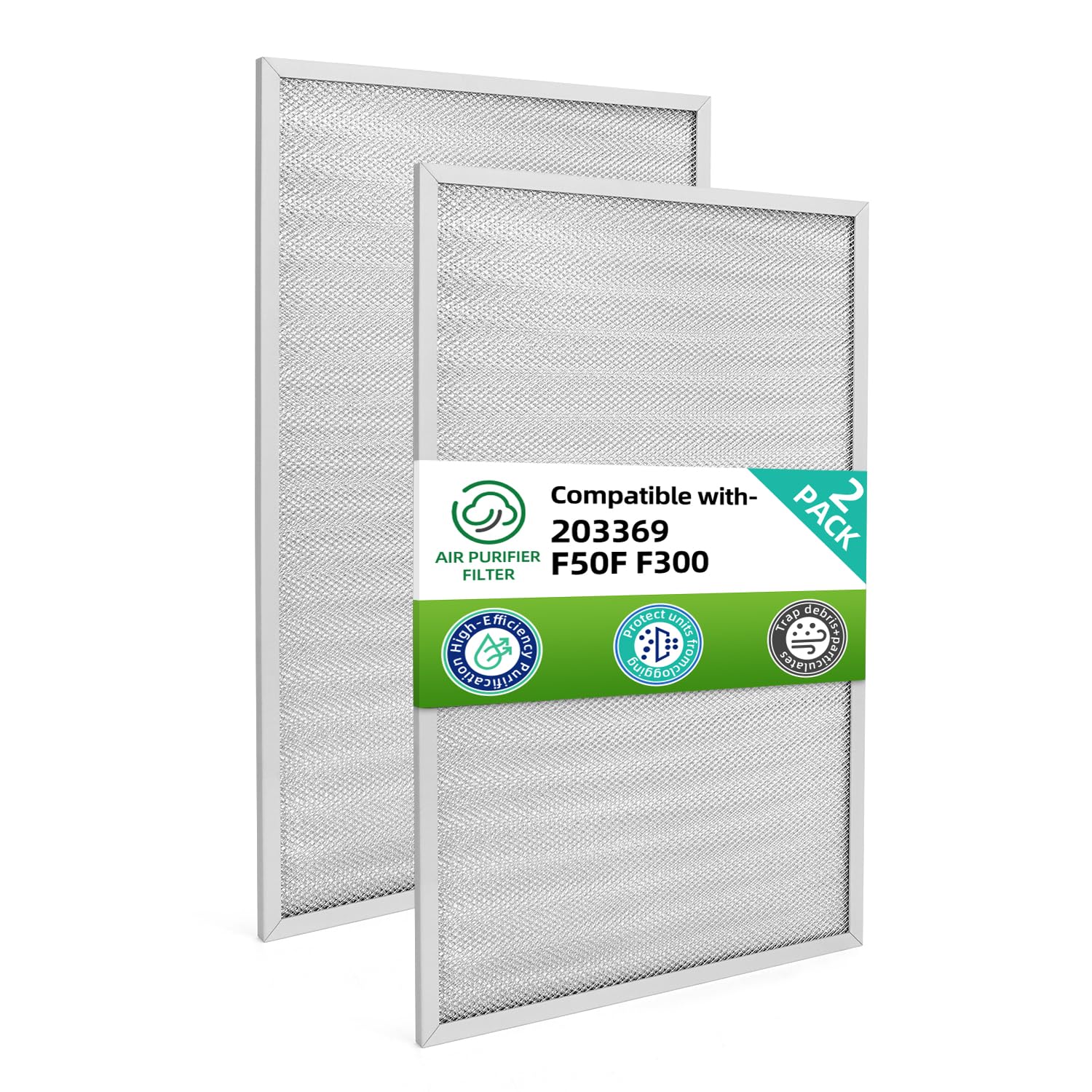
Features and Specifications
Type: Reusable air pre-filter (first-stage filter)
Pack Size: 2-pack
Nominal Size: 12.5 x 20 in
Compatible Cleaners: Honeywell 203369, F50E1349, F50E1331, F50E1067, F50F1057, F50A1116, F50F1040, F50F and F300 series
Construction: Washable, reusable media
Function: Captures large airborne particles ahead of the main filter
Price Tier: Budget — the two-pack costs less than a single disposable media filter in most cases
Best Use: Routine maintenance on an existing Honeywell F50F or F300 air cleaner
What This Pre-Filter Actually Does
A pre-filter is the least glamorous part of an air cleaning system and the one that does the most quiet work. It sits upstream of the main HEPA-style or media filter and catches the coarse material — lint, pet hair, dust bunnies, the visible debris that drifts through a house — before that material can load up the expensive filter behind it. In a Honeywell F50F or F300 cabinet, the pre-filter is the part that gets dirty fastest and the part that protects everything else.
The 12.5 x 20 in sizing is the key specification here. It matches the pre-filter opening on the F50 family and the F300 series, which is why the compatibility list in the product name is as long as it is. The naming in that list follows Honeywell’s own part conventions, so a buyer who has the old filter in hand can compare the number printed on its frame against the numbers in the listing before ordering.
The reusable construction is the other half of the story. Instead of buying a fresh disposable pad every month or two, the owner rinses this one, lets it dry, and puts it back. That changes the running cost of an F50F or F300 cleaner considerably over a few years, and it means a single two-pack can cover a household for a long stretch. The second unit in the pack is a spare, which matters more than it sounds — a filter that is drying on a rack is a filter that is not in the machine.
Build, Fit and Compatibility
The build is straightforward: a framed panel of washable media sized to drop into the pre-filter slot. There is no electronics, no adhesive, nothing to break. The frame is what holds the shape, and the shape is what keeps the panel seated in the cabinet so air passes through the media rather than around it.
Fit is the entire purchase decision with a part like this. The listing names the 203369, F50E1349, F50E1331, F50E1067, F50F1057, F50A1116, F50F1040, F50F and F300 designations, which covers the common configurations of Honeywell’s F50 console and ducted cleaners and the F300 series. A buyer with one of those units is in the right place. A buyer with a different Honeywell line, or with a competitor’s cleaner, is not, and no amount of trimming will make a 12.5 x 20 in panel behave like the correct part.
The compatibility list is also where the main caution lives. Honeywell has used a lot of model numbers across these cleaner families, and a listing that names nine of them still cannot name all of them. The reliable check is the old filter: pull it out, read the number on the frame, and match it against the listing before ordering. That takes two minutes and avoids a return.
Trade-off: The reusable media is built to be washed rather than discarded, so it will not capture fine particles the way the main filter does — it is a coarse-debris part, and buyers expecting HEPA-level filtration from it will be disappointed.
Check the current price on Amazon
Capacity, Maintenance and Running Cost
The two-pack is the capacity story. One filter goes in the cleaner, one sits on the shelf as a spare, and the household never has a gap where the machine runs without a pre-filter because the only one is drying. For a cleaner that runs continuously — which is how these units are usually set up — that spare is genuinely useful rather than padding.
Maintenance is a rinse-and-dry routine. The panel comes out, the loose debris goes in the bin, the media gets washed, and the panel goes back once it is dry. How often depends entirely on the house: a home with shedding pets or a lot of foot traffic will need it more frequently than a quiet apartment. The visible signal is simple — when the panel looks loaded, it is loaded — and the cost of cleaning is a few minutes rather than a purchase.
The running-cost argument is where this part earns its place. Disposable pre-filters are cheap individually and expensive annually, because they are consumed on a schedule whether or not the household is paying attention. A reusable panel converts that recurring line item into an occasional wash. Over the life of an F50F or F300 cleaner, the difference is real money, and it is the strongest reason to choose a washable part over a disposable one.
The counterweight is that reusable media does not last forever. Washing eventually dulls the media, the frame can lose its shape, and a panel that no longer seats properly lets air bypass it. Buyers should expect to replace the set eventually rather than never, which is precisely why a two-pack is a sensible unit to buy.
Who It Suits and Who It Does Not
This pre-filter suits the owner of a Honeywell F50F or F300 air cleaner who is tired of buying disposable pads and wants a washable part with a spare in the box. It also suits the household that has just acquired one of these cleaners secondhand and needs to establish a maintenance baseline without spending much.
It does not suit anyone with a different air cleaner model, anyone hoping a pre-filter alone will address allergies or fine particulate, or anyone who wants a fit-and-forget part with no cleaning routine attached. Buyers in that last group are better served by a disposable pad and a calendar reminder.
Trade-off: The low price tier means the frame and media are functional rather than premium, so the part should be treated as a consumable that lasts a few years, not a permanent fixture.
FAQ
-
What is the Honeywell 115369 air pre-filter?
It is a washable first-stage filter for Honeywell F50F and F300 air cleaners, sold here as a two-pack in a 12.5 x 20 in size. -
Which Honeywell air cleaners does this pre-filter fit?
The listing names the 203369, F50E1349, F50E1331, F50E1067, F50F1057, F50A1116, F50F1040, F50F and F300 designations. Matching the number on the old filter’s frame is the safest confirmation. -
Is this a genuine Honeywell part?
The listing describes it as compatible with Honeywell cleaners rather than as a Honeywell-branded part. Buyers who require an OEM filter should check the branding carefully before ordering. -
How often does the pre-filter need cleaning?
It depends on the household. Pet hair, foot traffic and open windows all speed up loading. The practical rule is to wash it when the panel looks visibly soiled, and to keep the spare in the machine while the dirty one dries. -
Can the pre-filter be washed in a dishwasher?
Hand washing is the safer routine for washable filter media. A rinse and a mild soap treatment, followed by thorough air drying, preserves the media better than a hot machine cycle. -
Does this replace the main filter in a Honeywell air cleaner?
No. It is the first-stage pre-filter only. The main media filter behind it is a separate part and still needs its own replacement schedule. -
Why buy a two-pack instead of a single filter?
The spare keeps the cleaner running while the first panel dries, and it spreads the cost of replacement over a longer period. -
Will a pre-filter help with allergies?
It helps by keeping coarse debris off the main filter, which keeps that filter working closer to its design. Fine-particle and allergen capture is the main filter’s job, not the pre-filter’s. -
How long does a reusable pre-filter last?
Several years with reasonable care is a fair expectation. Media dulls and frames loosen with repeated washing, so eventual replacement is normal. -
What should a buyer check before ordering?
The model number on the existing filter and the model number on the air cleaner itself. Both should appear in the compatibility list before the order is placed.
Bottom Line
For owners of a Honeywell F50F or F300 air cleaner, this two-pack is the practical maintenance buy: the right size, the right compatibility list, a washable design that removes a recurring cost, and a spare in the box so the machine never runs uncovered. The caution is fit and expectation — confirm the model number against the old filter, and remember that a pre-filter protects the main filter rather than replacing its job. Buyers who match those two conditions will find it a straightforward, low-cost way to keep an air cleaner running the way it was built to.
