Why there are Amazon links here: Brave Review is paid a commission for qualifying Amazon purchases made through the links below. Your price does not change, and using our links is entirely optional. How this works
Honeywell Home RTH6360D1002 Programmable Thermostat: The Simple 5-2 Schedule Fix
The Honeywell Home RTH6360D1002 is aimed at homeowners who want a dependable programmable thermostat without paying for smart-home features they will never use. This review covers what the unit is built for, how the 5-2 day scheduling works in practice, and where the design asks buyers to make compromises. Readers comparing a basic programmable model against a smart thermostat will find the decision points below.
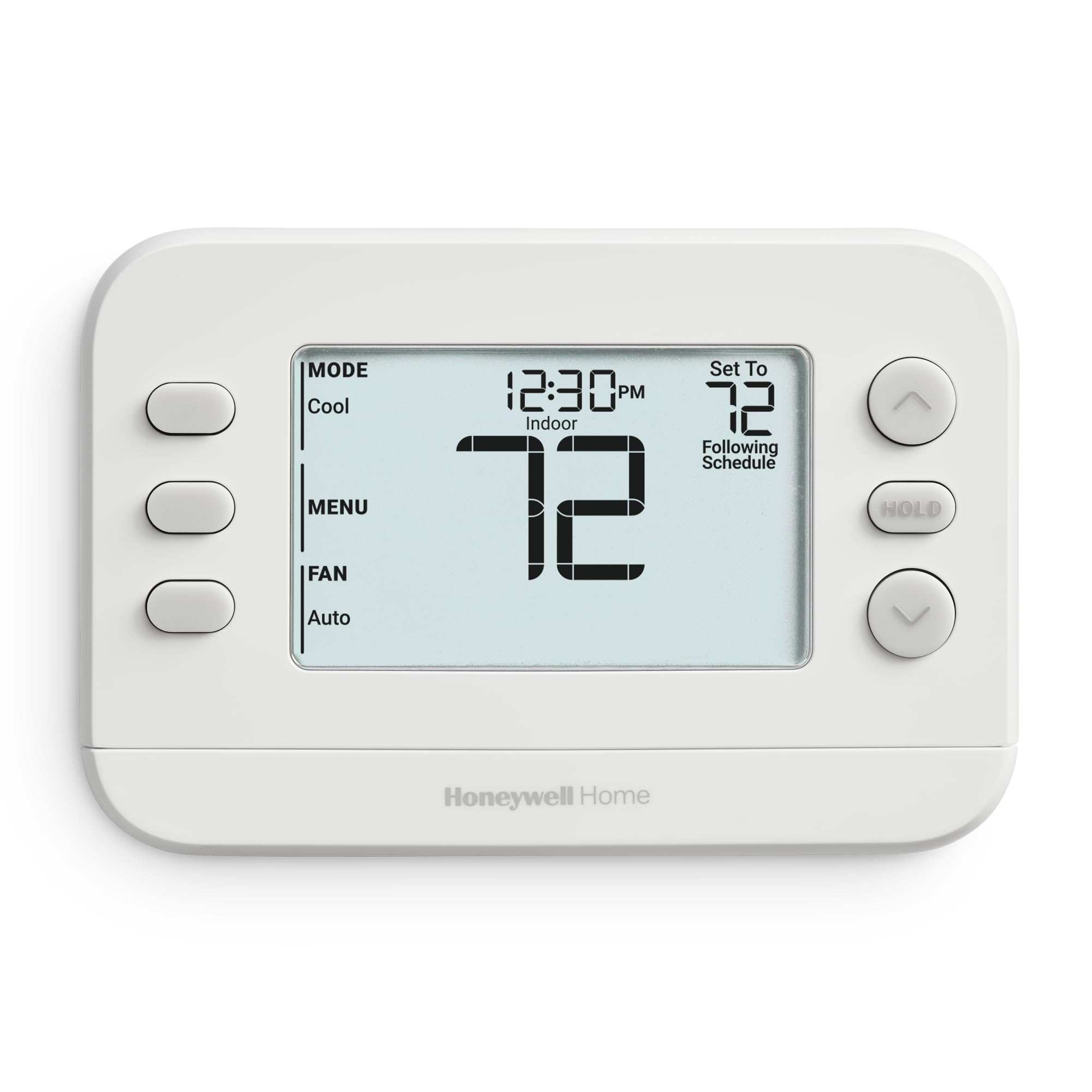
Features and Specifications
Type: Programmable thermostat, single-stage
Compatibility: 1 heat / 1 cool systems
Schedule: 5-2 day programming (X2P)
Color: White
ASIN: B0DSGGDCR8
The specifications place this unit in the entry tier of programmable thermostats. The single-stage, 1 heat/1 cool rating is the key line in that list, and it is the one that decides whether the product fits a given home at all.
The 5-2 day schedule is the other defining feature. It splits the week into a five-day block and a two-day block, which matches the routine of most households that work or attend school on weekdays and keep a different pattern on weekends.
Build and Design
The RTH20B is a wall-mounted thermostat in a white housing, and the design language is deliberately plain. Buyers shopping at this price tier should expect a plastic body, a straightforward display, and physical controls rather than a large touchscreen.
That simplicity is the point of the product. There are no cameras, no occupancy sensors, and no voice assistant hooks to configure, which means installation and setup stay within reach of a homeowner with basic DIY confidence. The trade-off is cosmetic: this unit will not become a design feature on a hallway wall the way a glass-front smart thermostat does.
Trade-off: The plain plastic housing and basic controls keep the price down, but the unit looks utilitarian next to premium smart models.
Single-Stage Compatibility
Single-stage compatibility is the most consequential specification in the whole review. A single-stage system runs heating or cooling at one output level, and this thermostat is built to switch exactly that kind of equipment.
Homes with a conventional furnace and a standard air conditioner are the core audience. The 1 heat/1 cool rating means one heating circuit and one cooling circuit, which is the common configuration in older and mid-range housing stock.
Buyers with multi-stage equipment, heat pumps with auxiliary stages, or dual-fuel setups should look elsewhere. Those systems need a thermostat rated for more stages, and pairing them with this unit would waste capability the equipment already has.
The 5-2 Day Schedule
The X2P programming gives four schedule periods per day, split across a five-day weekday block and a two-day weekend block. That structure lets a household set a wake-up temperature, an away temperature, a return-home temperature, and a sleep temperature, then repeat it automatically.
For a household with a predictable Monday-to-Friday routine, this is enough automation to cut noticeable runtime on the HVAC equipment. The energy savings come from not heating or cooling an empty house, and the schedule enforces that without anyone remembering to adjust a dial.
The limitation is equally clear. Households with irregular shift patterns, frequent travel, or family members home at different hours will find a fixed weekly schedule fights their actual routine. Those buyers are better served by a smart thermostat that learns patterns or responds to presence.
Trade-off: The fixed 5-2 schedule rewards routine households but offers no flexibility for irregular work hours.
Installation and Maintenance
Installation follows the standard thermostat procedure: kill power at the breaker, photograph the existing wiring, label the conductors, and move them to the matching terminals on the new base plate. The single-stage rating keeps the terminal count modest, which makes the job easier than swapping in a multi-stage unit.
Maintenance is minimal. There are no filters to change and no subscription service to manage, and the schedule lives on the device rather than in a cloud account. That last point matters to buyers who dislike app-dependent hardware.
Battery or hardwired power depends on the existing wiring setup, so buyers should confirm what their current thermostat uses before ordering. A unit that loses power without a common wire will need that wire run or a battery backup arrangement.
Who Should Buy It
The clear buyer is a homeowner with a conventional single-stage furnace and air conditioner who wants set-and-forget scheduling and nothing more. Renters replacing a broken thermostat, landlords outfitting a unit, and anyone upgrading from a manual dial will find the feature set proportionate to the price.
It also suits buyers who actively do not want a connected device. No account, no app, no firmware updates, and no data leaving the house is a genuine selling point for a segment of the market.
It is not for owners of multi-stage or heat pump systems, and it is not for anyone who wants remote control from a phone. Buyers in those groups should budget for a higher tier.
Pros and Cons
The strengths sit in the essentials: a recognized thermostat brand, single-stage compatibility that covers the most common residential setup, and a scheduling system that needs no internet connection to work.
The weaknesses follow from the price tier and the feature list. There is no remote access, no learning behavior, and no way to adjust the schedule from anywhere but the wall unit itself. The 5-2 structure is rigid by design.
Trade-off: Buyers gain reliability and simplicity but give up remote control, learning features, and scheduling flexibility.
Check the current price on Amazon
FAQ
-
What does 5-2 day programmable mean on a thermostat?
It means the schedule is split into a five-day block and a two-day block. Weekday settings repeat Monday through Friday, and weekend settings repeat Saturday and Sunday, with each day allowing multiple temperature periods. -
Will the Honeywell Home RTH6360D1002 work with a heat pump?
The unit is rated for 1 heat and 1 cool, single-stage. Standard heat pump systems with auxiliary or emergency heat stages generally need a thermostat rated for more stages, so compatibility should be confirmed before purchase. -
Does this thermostat need Wi-Fi or an app?
No. The scheduling runs on the device itself, so no internet connection or account is required for the programmed schedule to function. -
Can it control both heating and air conditioning?
Yes. The 1 heat/1 cool compatibility covers one heating circuit and one cooling circuit, which is the typical furnace-plus-air-conditioner arrangement. -
Is a common wire required for installation?
That depends on the existing wiring at the wall. Buyers should check what their current thermostat uses and confirm the power arrangement before ordering. -
How hard is it to install?
The single-stage terminal layout keeps the wiring job modest. A homeowner comfortable with turning off a breaker and labeling low-voltage wires can typically handle the swap. -
Does it work with multi-stage furnaces or air conditioners?
No. Multi-stage equipment needs a thermostat rated for additional stages, and this unit is built for single-stage systems only. -
Can the schedule be changed remotely?
No. Adjustments happen at the unit itself, which is the main functional gap compared with a connected smart thermostat. -
Is this a good choice for a rental property?
It can be. The lack of an app account means no credentials to hand over, and the fixed schedule is simple for tenants to understand. -
How does it compare with a smart thermostat?
It trades remote access, learning behavior, and presence detection for lower cost and no network dependency. Buyers who want automation without connectivity will prefer this approach.
Bottom Line
The Honeywell Home RTH6360D1002 is the right thermostat for a conventional single-stage home where the goal is a working weekly schedule and nothing more. It covers the most common residential HVAC configuration, needs no app or account, and keeps the installation straightforward. Buyers with multi-stage equipment or a desire for phone control should step up to a different tier, but for everyone else this unit does the job without extra complexity.
