Why there are Amazon links here: Brave Review is paid a commission for qualifying Amazon purchases made through the links below. Your price does not change, and using our links is entirely optional. How this works
Honeywell RTH9580WF1005 vs Honeywell TH6320ZW2003: Wi-Fi or Z-Wave Control
The choice between the Honeywell RTH9580WF1005 and the Honeywell TH6320ZW2003 Lyric T6 Pro comes down to how a home is already connected. The RTH9580WF1005 is a Wi-Fi touchscreen thermostat that talks to Alexa and needs nothing more than a home network. The TH6320ZW2003 is a Z-Wave thermostat that joins a smart hub and skips the built-in voice control.
That single difference decides most of the purchase. Buyers with no hub who want a color screen and voice commands should read the first section closely. Buyers already running a Z-Wave network should go straight to the second.
Honeywell RTH9580WF1005/W1 Smart Wi-Fi 7 Day Programmable Color Touch Thermostat
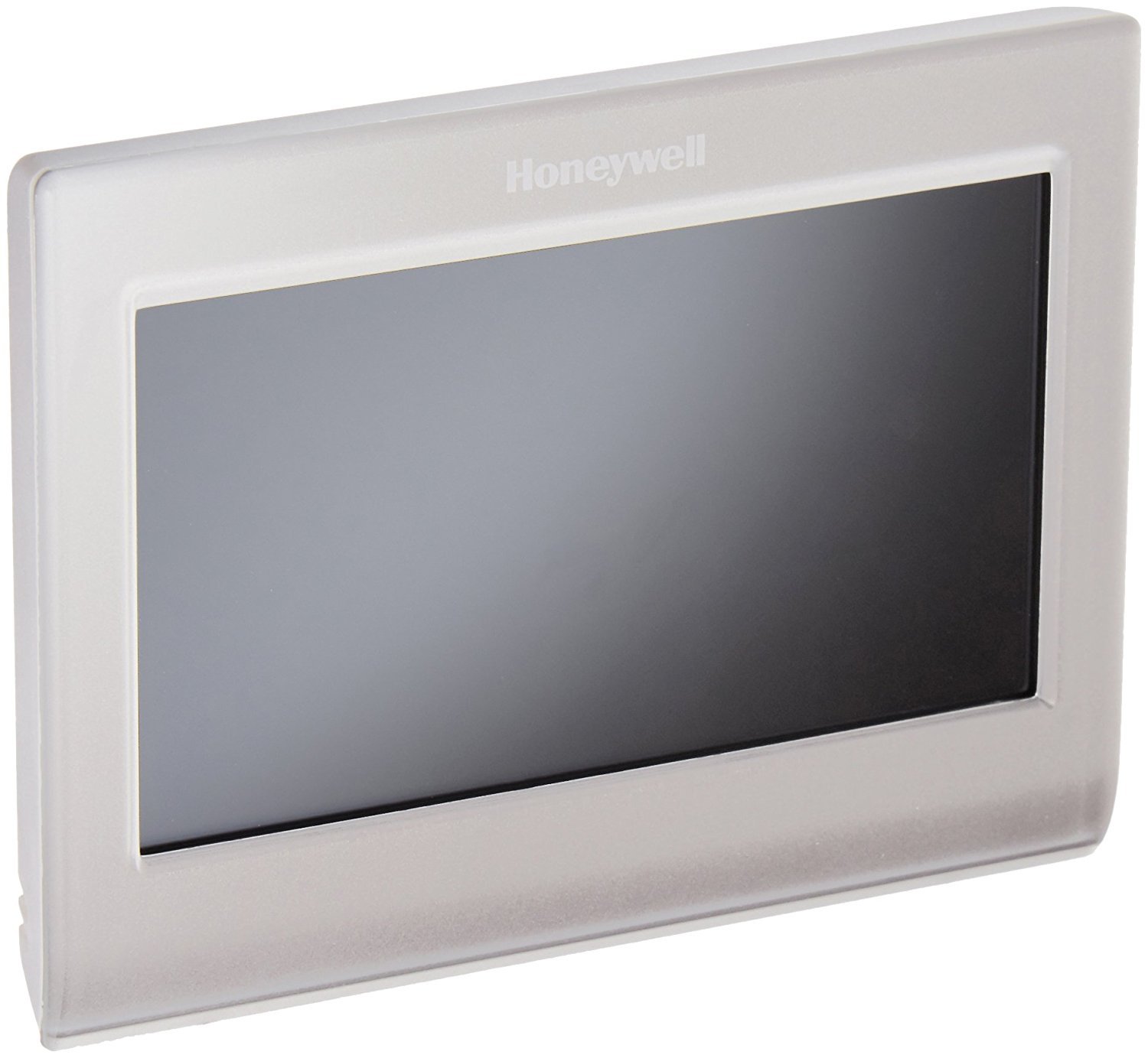
Type: Smart Wi-Fi programmable thermostat
Connectivity: Wi-Fi
Voice Control: Works with Amazon Alexa
Programming: 7 day programmable
Display: Color touchscreen
Price Tier: Premium
The RTH9580WF1005 is built around its screen. A color touchscreen is unusual at this end of the thermostat market, and it changes how the unit gets used day to day: scheduling, setpoints and mode changes happen by tapping through on-screen menus rather than cycling through a small monochrome readout. The 7 day programming gives each day of the week its own schedule, which suits households with irregular routines.
Wi-Fi is the whole point of this model. It joins the home network directly, so there is no hub to buy, configure or keep online. Alexa support means setpoint changes can be spoken rather than tapped, and the thermostat can sit inside a broader voice-controlled routine. Buyers who want a single self-contained smart thermostat and nothing else will find this the shorter path.
Trade-off: A premium price buys the color touchscreen and built-in Wi-Fi, but the unit is only as capable as its own firmware — there is no Z-Wave radio for integrating with a wider hub-based automation system.
Honeywell TH6320ZW2003 LYRIC T6 PRO Z-Wave Thermostat

Type: Z-Wave programmable thermostat
Connectivity: Z-Wave
Voice Control: Through a compatible Z-Wave hub
Programming: Programmable schedule
Display: Lyric T6 Pro interface
Price Tier: Mid-range
The TH6320ZW2003 takes the opposite approach. It carries a Z-Wave radio instead of Wi-Fi, which means it does not join the home network on its own — it joins a Z-Wave hub, and that hub becomes the control layer. Scheduling, remote access and voice commands all route through the hub rather than through the thermostat itself.
For a home that already runs Z-Wave lighting, locks or sensors, that is an advantage rather than a limitation. The thermostat becomes one more node in a single app and a single automation engine, so a "leave home" scene can drop the setpoint alongside the lights and the door lock. The Lyric T6 Pro interface keeps the on-wall controls straightforward for anyone who does not want to open an app.
Trade-off: The Z-Wave design saves money on the thermostat itself but only pays off inside a hub-based system — a buyer without a compatible hub will find it cannot be controlled remotely at all.
Side-by-Side Comparison
| Feature | Honeywell RTH9580WF1005 | Honeywell TH6320ZW2003 Lyric T6 Pro |
|---|---|---|
| Type | Smart Wi-Fi programmable thermostat | Z-Wave programmable thermostat |
| Connectivity | Wi-Fi, direct to the home network | Z-Wave, through a compatible hub |
| Voice Control | Works with Amazon Alexa | Via the Z-Wave hub |
| Programming | 7 day programmable | Programmable schedule |
| Display | Color touchscreen | Lyric T6 Pro interface |
| Hub Required | No | Yes, for remote and smart features |
| Price Tier | Premium | Mid-range |
| Best Use | Standalone smart control with voice | Homes already running Z-Wave |
How the Two Thermostats Differ
Connectivity and Setup
The RTH9580WF1005 connects to Wi-Fi on its own. Setup is a matter of joining the home network and pairing with Alexa, and after that the thermostat is a complete smart device with no additional hardware in the chain. That simplicity is worth real money to buyers who do not want to maintain a hub.
The TH6320ZW2003 needs a Z-Wave hub before any smart feature works. Setup therefore runs through the hub’s pairing process, and the thermostat’s remote capabilities are capped by whatever that hub supports. In a home with no hub, this is extra cost and extra configuration; in a home that already has one, it is a five-minute addition.
Verdict: The RTH9580WF1005 wins on standalone simplicity. The TH6320ZW2003 wins only where a hub already exists.
Display and On-Wall Control
The color touchscreen is the RTH9580WF1005’s most visible feature and the main reason it sits in a higher price tier. Menus, schedules and setpoints are legible and direct, and the unit looks like a modern piece of consumer electronics on the wall.
The Lyric T6 Pro interface on the TH6320ZW2003 is a more restrained design aimed at straightforward on-wall operation rather than a showcase screen. It does the job for anyone adjusting temperature by hand, but it does not carry the same visual weight.
Verdict: The RTH9580WF1005 wins clearly on display quality.
Scheduling and Automation
Both thermostats are programmable, and the RTH9580WF1005 spreads that over a full 7 day schedule, so weekends and weekdays can be set independently and irregular routines accommodated.
The TH6320ZW2003’s real strength is not its onboard schedule but its place in a hub’s automation engine. Once paired, the thermostat can be triggered by other devices and scenes rather than by its own clock alone — a level of coordination a standalone Wi-Fi unit cannot match without the same ecosystem behind it.
Verdict: The RTH9580WF1005 wins on built-in scheduling. The TH6320ZW2003 wins on system-wide automation.
Voice Control
Alexa support is built into the RTH9580WF1005 and certified by Amazon, so voice setpoint changes work with an Echo or similar device without any intermediary.
The TH6320ZW2003 has no direct voice integration of its own. Voice control arrives through the Z-Wave hub, which means it depends entirely on the hub’s compatibility and on the voice assistant that hub supports.
Verdict: The RTH9580WF1005 wins, and it is not close.
Cost and Value
The RTH9580WF1005 carries a premium price that reflects the touchscreen and the integrated Wi-Fi radio. For a buyer with no existing smart home hardware, that is the full cost of entry — there is nothing else to buy.
The TH6320ZW2003 sits in a mid-range tier, but the true cost includes the hub. Buyers who already own a compatible hub get the better value by a wide margin; buyers who do not will spend more overall than the RTH9580WF1005 asks.
Verdict: Value depends entirely on what is already in the house.
Which Should You Buy?
Choose the Honeywell RTH9580WF1005 if the home has no smart hub and none is planned, a color touchscreen matters on the wall, and Alexa voice control should work out of the box. It is the self-contained option and the faster install.
Choose the Honeywell TH6320ZW2003 Lyric T6 Pro if a Z-Wave hub is already running the lights, locks or sensors, and the thermostat should join that system rather than sit outside it. The lower unit price only makes sense with the hub already in place.
Buyers who are unsure should check which hubs the home already uses before ordering. That single answer settles the decision faster than any other specification.
FAQ
-
Does the Honeywell RTH9580WF1005 need a hub?
No. It connects directly over Wi-Fi and works with Amazon Alexa without any additional hub hardware. -
Does the Honeywell TH6320ZW2003 work without a Z-Wave hub?
It will operate as a programmable thermostat on the wall, but remote access, app control and voice commands all require a compatible Z-Wave hub. -
Which thermostat works with Alexa out of the box?
The RTH9580WF1005, which is certified by Amazon to work with Alexa. The TH6320ZW2003 reaches voice control only through its hub. -
Which one is better for a home with existing smart devices?
The TH6320ZW2003, provided those devices run on Z-Wave and share a hub. It integrates into existing scenes and automations. -
Is the color touchscreen worth the higher price?
For buyers who want a self-contained smart thermostat with no hub, yes — the screen and the built-in Wi-Fi are what the premium buys. -
Can both thermostats be programmed on a weekly schedule?
Yes. The RTH9580WF1005 offers 7 day programming, and the TH6320ZW2003 is programmable as well, with the option of hub-based scheduling on top. -
Which is easier to install?
The RTH9580WF1005, because it needs only a Wi-Fi connection. The TH6320ZW2003 adds a hub pairing step before its smart features work.
Bottom Line
The Honeywell RTH9580WF1005 is the better buy for most households: it is a complete smart thermostat on its own, with a color touchscreen and working Alexa control, and it asks nothing of the buyer beyond a Wi-Fi network. The TH6320ZW2003 Lyric T6 Pro is the sharper pick only inside an existing Z-Wave system, where its hub-based automation is worth more than a standalone screen.
