Why there are Amazon links here: Brave Review is paid a commission for qualifying Amazon purchases made through the links below. Your price does not change, and using our links is entirely optional. How this works
Honeywell TH8321WF1001 VisionPro 8000: The Wi-Fi Thermostat Built for Multi-Stage Systems
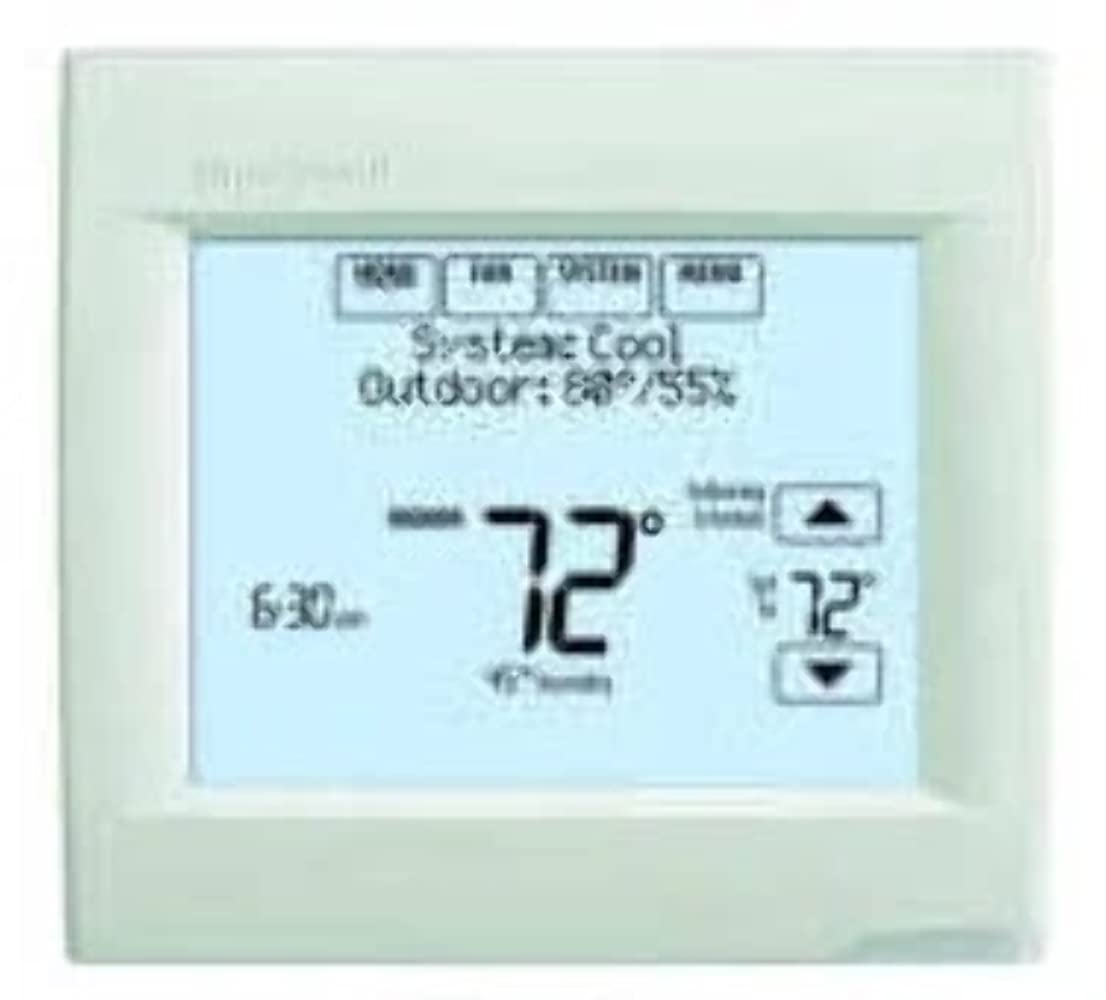
The Honeywell TH8321WF1001 Touchscreen Thermostat Wifi Vision Pro 8000 is a wall-mounted, app-connected thermostat aimed at homes with more than a single-speed furnace and air conditioner. Its defining feature is staging support for up to three heat stages and two cool stages, which puts it in a different class from the simple one-heat, one-cool units sold at most hardware stores. This review covers what the unit controls, how it is built and installed, what it demands of the buyer’s wiring and phone, and the trade-offs that come with buying a contractor-grade thermostat online. Readers who already know their system has extra stages can jump straight to the check-price link.
Features and Specifications
Type: Touchscreen Wi-Fi thermostat
Model: TH8321WF1001 (Vision Pro 8000 series)
Heating stages supported: Up to 3
Cooling stages supported: Up to 2
Control: On-device touchscreen plus Wi-Fi app and remote access
Mounting: Wall-mounted, replaces a standard thermostat
Intended use: Residential heating and cooling with multi-stage equipment
The specification sheet tells the story in one line: three heat stages and two cool stages. That is more capacity than the average home needs, and it is the reason this model exists. A single-stage furnace and a single-stage air conditioner will run on it, but they will not use a fraction of what the thermostat can do.
The Vision Pro 8000 name is not decorative. Honeywell’s Vision Pro line has long been the box contractors pull off the truck for zoned and staged systems, and the 8000 sits in the middle of that range. The touchscreen interface is the visible part; the stage logic underneath it is what buyers are actually paying for.
Build and Interface
The unit is a wall plate and a display body that snaps onto it, the standard two-piece arrangement for modern thermostats. The touchscreen is a full-color panel rather than a segmented LCD with buttons, which makes menu navigation and schedule editing far less cryptic than on older programmable models. The housing is molded plastic, as with essentially every thermostat in this price band — nothing about the enclosure is premium, and nothing about it needs to be.
The two-piece design matters at installation time. The wall plate carries the terminal block and the wiring, and the display body can be removed while the connections are made. That is a meaningful convenience for anyone installing the unit themselves, because it keeps the screen out of the way while a screwdriver is in hand.
The interface is also the main friction point for first-time users. A color touchscreen with nested menus asks more of the person setting it up than a dial or a pair of arrow buttons. Buyers who want to change the temperature and nothing else will find the depth unnecessary; buyers who want schedules, staging behavior and system settings in one place will find it appropriate.
Staging and System Control
Staging is the feature that separates this thermostat from budget Wi-Fi models. A two-stage furnace runs at a lower output for most of the heating season and only fires the second stage on cold mornings; a two-stage air conditioner does the same for cooling. The thermostat decides when to call for that extra stage, and a unit that only supports one stage cannot make that call at all.
With three heat stages and two cool stages available, the TH8321WF1001 covers furnaces, heat pumps and dual-fuel arrangements that would overwhelm a basic thermostat. Buyers should confirm what their equipment actually supports before ordering, because the thermostat’s ceiling is not the system’s ceiling. The installer or the equipment label is the source of truth here, not the product listing.
This is also where the trade-off hides. A thermostat with more staging capability than the connected system needs is not harmful, but it is money spent on unused function. The buyer paying for a three-stage-capable unit to run a single-stage furnace is overbuying, and a cheaper Honeywell model would do the same job.
Power, Wiring and Connectivity
Wi-Fi thermostats generally need a C-wire — a common wire that supplies continuous low-voltage power — and this model is no exception in practice. Homes without a spare conductor at the thermostat location will need one run, or an add-a-wire solution, before the unit will operate reliably. That is a real installation cost that buyers routinely discover after the box arrives.
The wiring itself is low-voltage and terminates on a labeled block on the wall plate. The number of terminals is larger than on a basic thermostat because of the staging support, and each conductor has to land in the right place. Buyers comfortable with a screwdriver and a wiring diagram can handle it; buyers who are not should budget for an installer.
Wi-Fi connectivity is what turns the unit into a remote-controlled thermostat. Once joined to the home network, temperature changes, schedules and system status are available from a phone, which is the entire point of paying the Wi-Fi premium. Remote access depends on the home network staying up and on Honeywell’s app and cloud service continuing to work — a dependency that no thermostat in this class escapes.
Maintenance and Longevity
Thermostats are close to maintenance-free, and this one is no different. The touchscreen wants an occasional wipe with a dry or slightly damp cloth, and the wall plate wants dust kept out of the terminal block during installation. There are no filters, no batteries to replace in normal operation and no moving parts to wear out.
The realistic longevity question is software, not hardware. App support, firmware updates and cloud services are the parts of a connected thermostat that age, and buyers are trusting the manufacturer to keep them running for the life of the unit. That is a fair concern at this price, and it applies to every Wi-Fi thermostat on the market rather than to Honeywell alone.
Trade-off: The unit’s staging capability and C-wire requirement make it a poor fit for simple single-stage homes and for anyone unwilling to open the wall or hire an installer.
Check the current price on Amazon
Who It Suits and Who It Does Not
The buyer this thermostat fits is specific: someone with a multi-stage furnace, a two-stage air conditioner, a heat pump or a dual-fuel setup, who wants app control and is prepared to deal with the wiring. That buyer gets a unit with headroom to spare and a control interface that can actually express what the equipment is capable of.
The buyer it does not fit is equally specific. A single-stage furnace and air conditioner in a small home, a renter who cannot modify wiring, or anyone who wants a thermostat they can set once and forget without opening an app — none of those buyers gain anything from the extra stages. A basic programmable or budget Wi-Fi thermostat serves them at lower cost and with less installation friction.
There is also a middle group: buyers with the right equipment but no C-wire. They can still use this thermostat, but the purchase price is not the whole cost. The wire run or adapter has to be counted before the value comparison makes sense.
FAQ
-
What is the Honeywell TH8321WF1001 VisionPro 8000?
It is a wall-mounted, Wi-Fi-connected touchscreen thermostat from Honeywell’s Vision Pro 8000 line, built to control heating and cooling systems with up to three heat stages and two cool stages. -
Does the Honeywell TH8321WF1001 need a C-wire?
In practice, yes. Wi-Fi thermostats need continuous low-voltage power, and homes without a spare common wire at the thermostat location will need one run or an add-a-wire adapter before the unit operates reliably. -
How many heating and cooling stages does it support?
Up to three heating stages and up to two cooling stages, which is the headline difference between this model and basic single-stage thermostats. -
Will it work with a single-stage furnace and air conditioner?
It will run the system, but the staging capability goes unused. Buyers with single-stage equipment are usually better served by a cheaper thermostat that matches what the equipment can do. -
Can it be controlled from a phone?
Yes. Wi-Fi connectivity allows temperature changes, scheduling and system status to be handled remotely through Honeywell’s app, in addition to the on-device touchscreen. -
Is it compatible with heat pumps?
The staging support extends to multi-stage heat pump and dual-fuel arrangements, which is one of the reasons contractors favor the Vision Pro line. Buyers should confirm their specific equipment against the installation documentation before ordering. -
Can a homeowner install it without a contractor?
It is a low-voltage, two-piece installation that a confident DIYer can complete with a wiring diagram. The larger terminal block and staging wires make it less forgiving than a basic thermostat, so anyone unsure about the wiring should use an installer. -
Does it work without Wi-Fi?
The thermostat controls the system from the wall panel regardless of network status. App control and remote access depend on the Wi-Fi connection and on Honeywell’s cloud service. -
Is a touchscreen thermostat harder to use than a button model?
It offers more settings, which means more menus. Buyers who only want to nudge the temperature up or down will find the interface deeper than necessary; buyers who want schedules and staging control will find it useful. -
Is the VisionPro 8000 worth it over a cheaper Wi-Fi thermostat?
For homes with staged equipment, the extra control is the reason to buy it. For single-stage homes, a cheaper Wi-Fi model delivers the same app control without paying for stages that will never fire.
Bottom Line
The Honeywell TH8321WF1001 VisionPro 8000 is the right thermostat for a narrow, well-defined buyer: the owner of a multi-stage or dual-fuel system who wants app control and is ready to deal with a C-wire. For that buyer it is a capable, contractor-grade unit with more staging headroom than most homes will use. For everyone else — single-stage homes, renters, and anyone hoping to avoid wiring work — the extra capability is cost without benefit, and a simpler thermostat is the smarter purchase.
