Why there are Amazon links here: Brave Review is paid a commission for qualifying Amazon purchases made through the links below. Your price does not change, and using our links is entirely optional. How this works
Best Internal Wiring Plan for a New Connection: 5 Books That Make the Job Safe
An internal wiring plan for a new connection starts with paper, not copper. The five books below are the reference shelf for that work: load calculations, circuit layouts, breaker sizing, and the step-by-step install sequence that keeps a new service or a new circuit legal and safe. The picks suit three kinds of buyers — the first-time homeowner tackling a single new circuit, the experienced DIYer wiring a whole addition, and the trade apprentice who needs a code reference on the truck. The overview table below sorts all five by what each does best, so a decision is possible in under a minute.
The Picks at a Glance
| Product | Key Spec | Best Use | Price Tier |
|---|---|---|---|
| The Essential Home Wiring Bible | Step-by-step planning and troubleshooting guide | Budget first book for a new connection | Budget |
| The DIY Wiring Handbook | Prevent-and-fix projects, cost-saving focus | Repair-minded DIYer avoiding electrician bills | Mid |
| Wiring a House 5th Edition | Residential systems, For Pros by Pros series | Whole-house planning and code depth | Mid |
| Ultimate Guide Wiring, 10th Edition | Meets current National Electrical Code | Code-current reference with diagrams | Mid |
| Wiring Simplified | Based on the 2020 National Electrical Code | Fast, plain-language code answers | Budget |
1. The Essential Home Wiring Bible
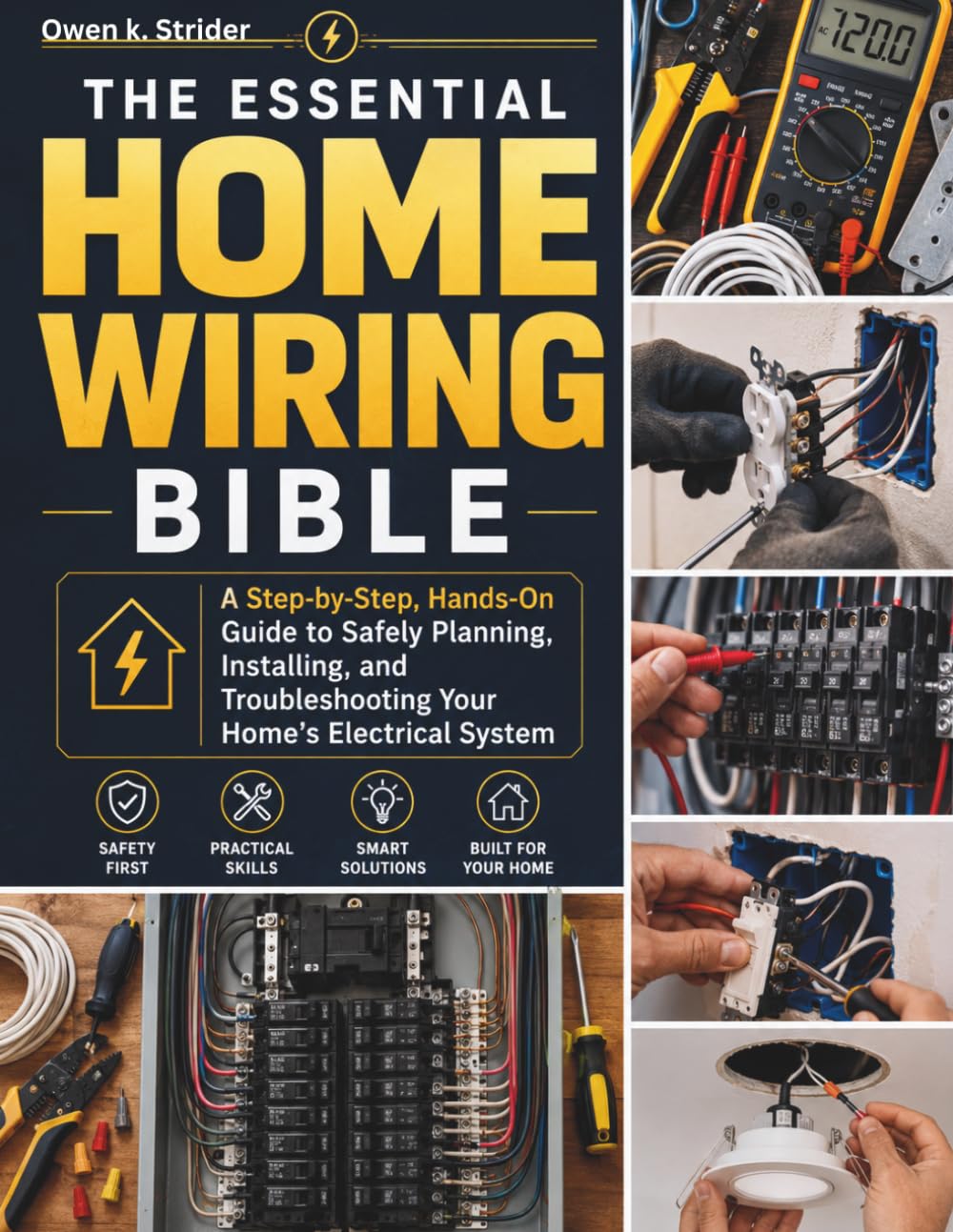
Format: Hands-on step-by-step guide
Focus: Planning, installing, troubleshooting
Scope: Whole-home electrical system
Approach: Task-based walkthroughs
Best For: First-time planners
Price Tier: Budget
The Essential Home Wiring Bible is built around the sequence a new connection actually follows: plan the layout, install the runs, then troubleshoot what goes wrong. The hands-on framing means each chapter reads as a task rather than a theory lesson, which suits a reader who wants to start at the panel and work outward. It covers the home’s electrical system as a whole, so the planning chapters are the ones that matter most for a new connection.
This is the entry point on the list, and it earns its place on price and accessibility. A reader with no prior wiring vocabulary can follow the planning section and come away with a workable circuit layout. The trade-off is depth: at this price tier, the code coverage is introductory, so a buyer pulling permits for a full service change will still need a code-specific reference alongside it.
Trade-off: The budget price buys an approachable overview, not the exhaustive code citation a permitted service upgrade demands.
2. The DIY Wiring Handbook
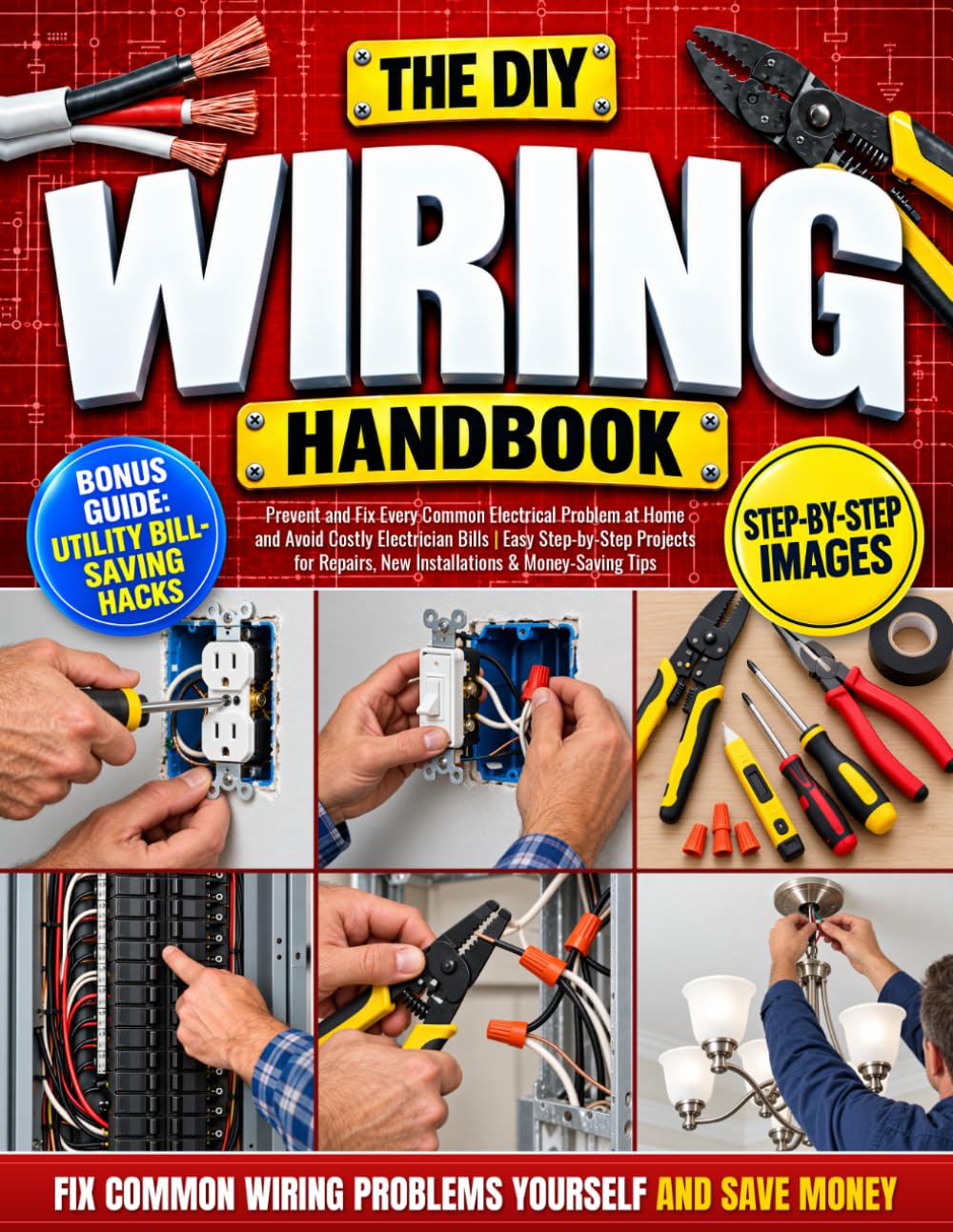
Format: Project-based handbook
Focus: Prevent and fix common problems
Scope: Repairs, new installations, upgrades
Approach: Easy step-by-step projects
Best For: Cost-conscious DIYers
Price Tier: Mid
The DIY Wiring Handbook frames wiring as a cost-avoidance exercise, which is exactly the mindset of a homeowner planning a new connection to dodge electrician bills. It splits into prevention and repair, then adds new installations and upgrades, so the same book serves the planning phase and the years after it. The project format keeps each topic self-contained.
The strength here is breadth of scenarios: a reader can look up a specific problem rather than read cover to cover. That makes it a good second book for someone who has already sketched a plan and wants to pressure-test the details. The trade-off is that a project-based handbook spreads itself across many topics, so no single subject — load calculation, for instance — gets the deep treatment a full system design needs.
Trade-off: Broad project coverage comes at the cost of depth on any one subject, so it works best as a companion rather than a sole reference.
3. Wiring a House 5th Edition
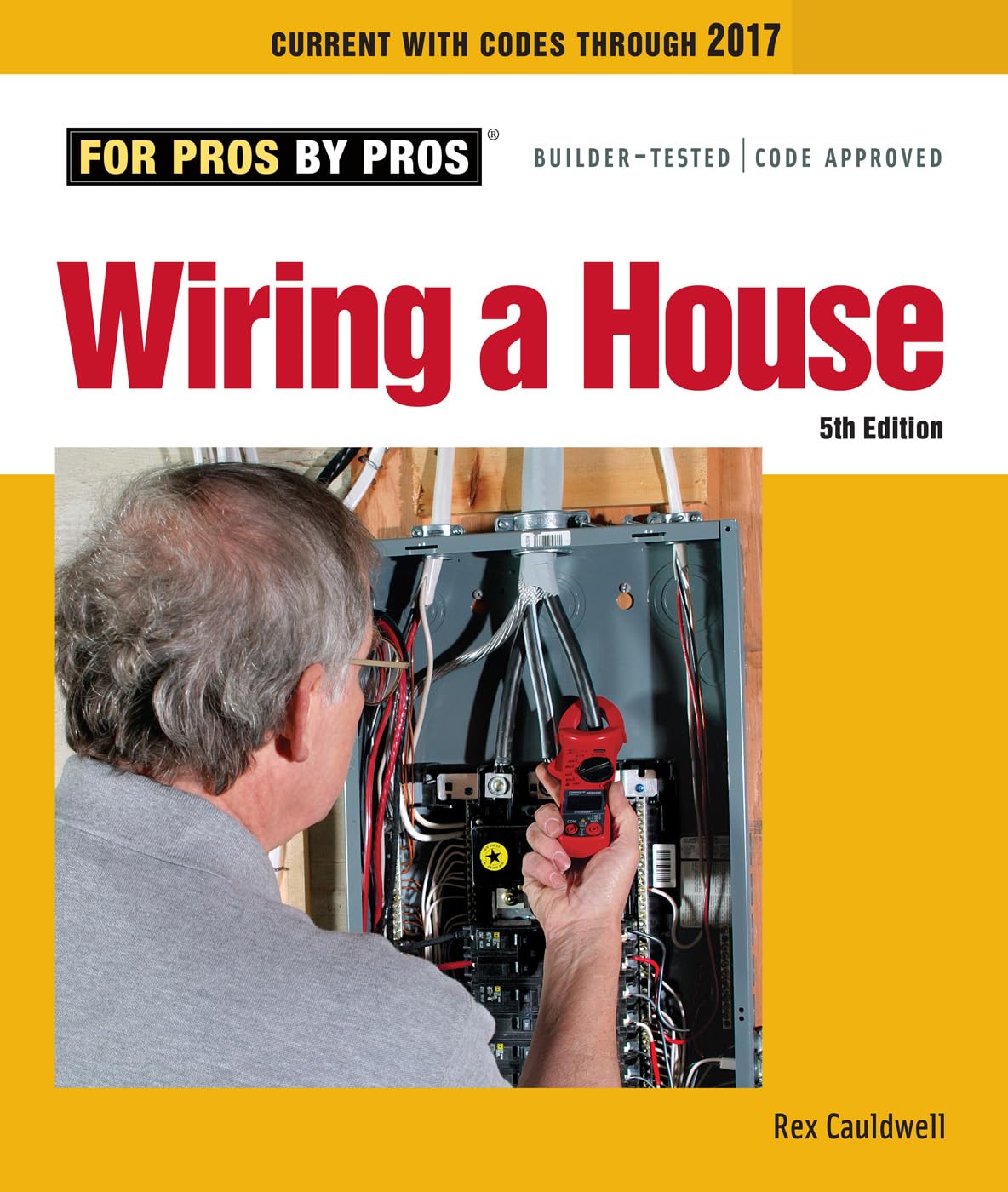
Format: Comprehensive reference
Series: For Pros by Pros
Focus: Residential electrical systems
Scope: Whole-house design and installation
Approach: Professional-level detail
Best For: Serious DIYers and apprentices
Price Tier: Mid
Wiring a House 5th Edition is the professional-leaning pick, written for readers who want to understand why a residential system is laid out the way it is. The For Pros by Pros series carries a reputation for trade-level detail, and the whole-house scope means the planning chapters address service size, panel layout and circuit distribution rather than isolated projects. For a new connection, that big-picture view is the most valuable thing on the shelf.
It suits the buyer who is comfortable with tools and wants a reference that will not need replacing after the first job. The writing assumes some familiarity with electrical terms, so a complete beginner may find the early chapters steep. The trade-off is that the professional framing can feel like more book than a single-circuit project requires.
Trade-off: The trade-level depth assumes prior familiarity, which makes it a poor first book for a reader starting from zero.
4. Ultimate Guide Wiring, Updated 10th Edition

Format: Illustrated DIY guide
Edition: Updated 10th
Code Basis: Current National Electrical Code Standards
Publisher Series: Creative Homeowner
Focus: Installations and repairs
Best For: Diagram-led learners
Price Tier: Mid
Ultimate Guide Wiring, Updated 10th Edition leads with visuals. The Creative Homeowner series is built around diagrams and step-by-step photography, and this edition states that it meets current National Electrical Code standards — the single most useful claim for anyone planning a connection that has to pass inspection. Installations and repairs share the page count, so the planning material sits alongside the execution detail.
This is the pick for a reader who learns by seeing the run rather than reading about it. The diagram-heavy layout makes circuit routing and panel connections easier to visualize before any cable is pulled. The trade-off is that illustrated guides tend to summarize code requirements rather than reproduce them, so a permitted job still needs the local authority’s checklist.
Trade-off: Diagram-led coverage summarizes code requirements rather than quoting them, so it complements an official code reference instead of replacing it.
5. Wiring Simplified
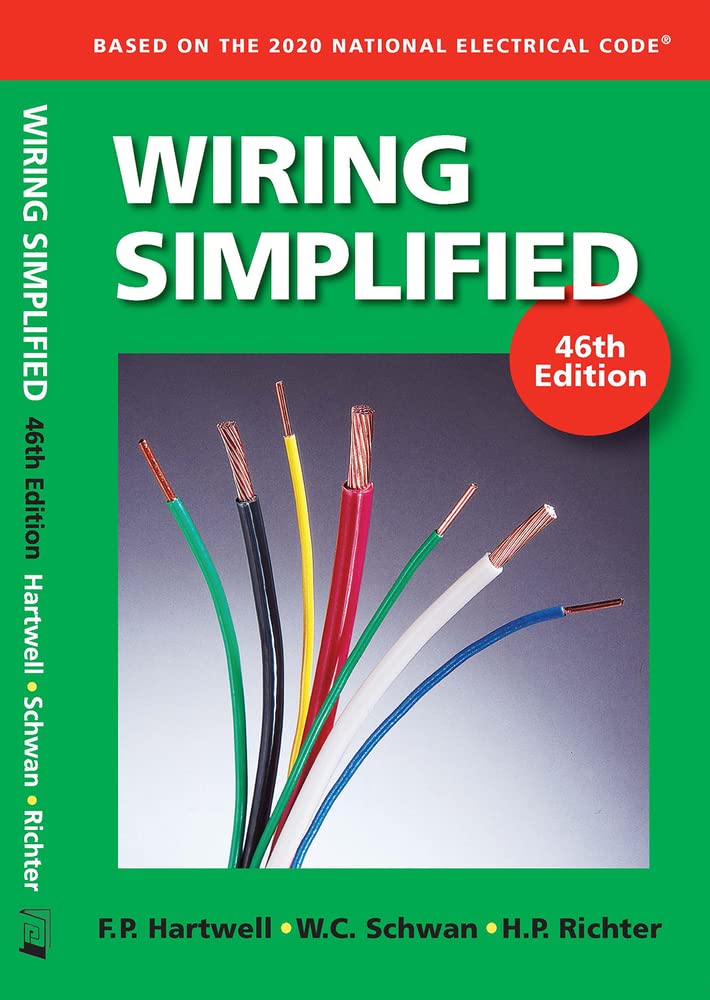
Format: Plain-language reference
Code Basis: 2020 National Electrical Code
Focus: Simplified explanations
Scope: Residential wiring fundamentals
Approach: Condensed, readable text
Best For: Quick code answers
Price Tier: Budget
Wiring Simplified does one thing well: it takes code language and rewrites it in plain terms. The 2020 National Electrical Code basis gives the explanations a fixed reference point, which matters when a plan has to match an adopted code cycle. The condensed format makes it the fastest book on this list to consult mid-project.
It suits the buyer who already has a plan and needs a quick confirmation on a wire size, a box fill or a grounding question. The budget price makes it an easy add-on to a more detailed guide. The trade-off is that simplification strips out the edge cases — a reader planning an unusual installation will find the condensed answers stop short of the nuance.
Trade-off: The simplified format omits edge cases and unusual configurations, so it answers common questions but not complex ones.
Before You Buy
- Code edition: Match the book’s code basis to the cycle the local authority has adopted; an older edition can lag current requirements.
- Depth vs. breadth: A project handbook covers many tasks shallowly, while a systems reference covers fewer topics deeply — a new connection usually needs the second.
- Diagram density: Readers who learn visually should weight illustrated guides over text-heavy references.
- Planning coverage: Confirm the book has a dedicated planning or load-calculation section, not just installation steps.
- Local amendments: No book substitutes for the local inspection checklist, which often adds requirements beyond the national code.
- Format: Print references stay open on a work surface; digital copies search faster but are harder to consult with both hands busy.
Frequently Asked Questions
-
Which book is best for planning a brand-new service connection?
Wiring a House 5th Edition covers whole-house system design in the most depth, which is what a new service connection requires. A budget reader can start with The Essential Home Wiring Bible and add a code reference later. -
Is one book enough to wire a new connection safely?
One thorough reference plus the local inspection checklist covers most residential work. Pairing a planning guide with a code-based book like Wiring Simplified closes the gap between layout and compliance. -
Do these books follow the current National Electrical Code?
Ultimate Guide Wiring, 10th Edition states that it meets current code standards, and Wiring Simplified is based on the 2020 edition. Buyers should confirm which code cycle their local authority enforces before relying on any edition. -
Are these books suitable for a complete beginner?
The Essential Home Wiring Bible and Wiring Simplified are the most accessible entry points. Wiring a House assumes some prior familiarity and suits readers who have already done basic electrical work. -
Can a homeowner legally do this work?
Permitting rules vary by jurisdiction, and some areas restrict homeowner electrical work entirely. The local building department is the authority on what a homeowner may legally install. -
Should the book or the tools come first?
The plan comes first. A book that covers load calculation and circuit layout lets the buyer size the cable, breakers and boxes before purchasing anything.
Bottom Line
For an internal wiring plan for a new connection, The Essential Home Wiring Bible is the top pick: it walks through planning, installation and troubleshooting in the order the job happens, at the lowest price on the list. Buyers who need trade-level system design should step up to Wiring a House 5th Edition, and anyone who wants diagram-led, code-current guidance should choose Ultimate Guide Wiring, 10th Edition.
