Why there are Amazon links here: Brave Review is paid a commission for qualifying Amazon purchases made through the links below. Your price does not change, and using our links is entirely optional. How this works
iRobot Roomba 104 2in1 Vacuum & Mop Robot: The Self-Emptying Starter Robot
The iRobot Roomba 104 is a two-in-one vacuum and mop robot that empties its own bin for up to 75 days, maps a home with LiDAR, and sells at the entry price tier. It is aimed at households that want hands-off floor care across mixed flooring — hard floors plus carpet — without paying flagship money. This review covers how the machine is built, what the self-empty base and mapping actually buy a buyer, where the budget tier shows through, and who should skip it.
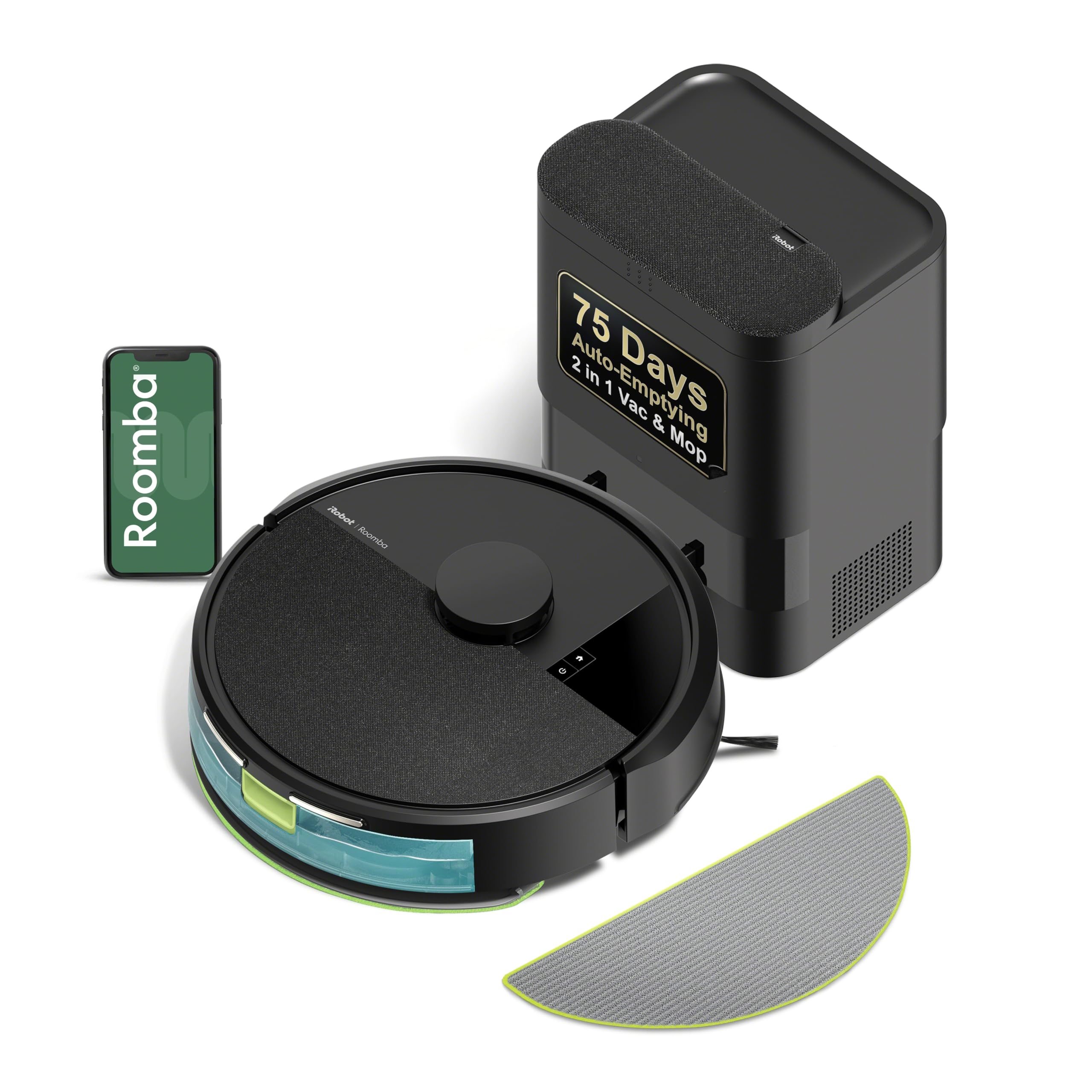
Features and Specifications
Type: 2-in-1 robot vacuum and mop
Self-Empty Base: Holds debris for up to 75 days
Suction: Intense power-lifting design
Floor Types: Vacuums all floors; mops hard floors
Navigation: LiDAR smart navigation with mapping
Best For: Pet hair pickup
ASIN: B0DPNKS3KQ
Price Tier: Budget ($199.99 at the time of this snapshot)
The headline here is the self-empty base. A robot that docks and dumps its own bin turns a daily chore into a roughly quarterly one — the 75-day figure is the manufacturer’s claim, and it assumes typical debris loads rather than a house full of shedding dogs. For most buyers that is the single feature that separates this from cheaper robots that need the bin pulled after every run.
The second headline is LiDAR. Camera-based robots need light to navigate; a LiDAR unit builds a map from laser distance readings, so it works in a dark room and tends to produce a cleaner, more repeatable path. In practice that means fewer bumped walls and a map the robot can reuse run after run, which is what makes scheduled cleaning trustworthy.
Build and Footprint
This is a mainstream-sized robot with a docking base that needs a permanent home against a wall, near an outlet, with clearance on both sides. The base is the bulky part of the package — it holds weeks of debris, so it is not a small tower, and buyers in tight apartments should measure the spot before committing.
The robot itself is the familiar low disc shape, built to slide under sofa edges and bed frames. The mop function is integrated into the same chassis rather than a separate module, which keeps the setup simple but means the robot is always carrying its mopping hardware.
Capacity and the 75-Day Claim
The 75-day figure applies to the base, not the robot’s internal bin. The robot still fills its own small bin during a run and transfers it to the base when it docks — that is the mechanism that makes the long interval possible. Buyers with heavy pet hair should read 75 days as an upper bound, not a promise; the base fills faster in a home with multiple shedding animals.
Mopping capacity is the more modest side of the machine. This is a maintenance mop for hard floors — it handles dust, light spills and everyday film — not a scrubber for stuck-on kitchen grease. Buyers who want deep hard-floor cleaning still need a dedicated mop or a scrubber.
Power and Cleaning Performance
The suction is described as power-lifting, which is the language manufacturers use for the ability to pull debris up out of carpet pile rather than just skimming the surface. On hard floors that translates to reliable pickup of crumbs, dust and hair along edges and in corners the robot can reach.
Pet hair is the stated use case, and the design supports it: strong airflow plus a self-emptying base means hair does not pile up in the bin between runs. The caveat is tangle-prone long hair and pet hair on the brush — that is a maintenance task on every robot in this class, and this one is no exception.
Navigation, Mapping and Maintenance
LiDAR mapping lets the robot build and store a floor plan, which is what enables room-by-room scheduling and efficient routes instead of random bouncing. Buyers who have used older random-navigation robots notice the difference in both run time and coverage consistency.
Maintenance is the honest cost of ownership. The filter needs periodic rinsing or replacement, the brush and edge sweeper need hair removed, and the mop pad needs washing after mopping runs. The base reduces bin duty but does not eliminate hands-on upkeep.
Trade-off: At the entry price tier, the mopping is a light maintenance function rather than a deep clean, and the 75-day self-empty interval shrinks in homes with heavy shedding — buyers who want serious hard-floor scrubbing should budget for a second machine.
Check the current price on Amazon
Who the Roomba 104 Suits — and Who It Does Not
The Roomba 104 fits households with a mix of hard floors and carpet that want daily vacuuming handled automatically and mopping handled lightly. It is a strong match for pet owners, for people who work long hours, and for anyone upgrading from a random-navigation robot who wants a real map and a base that does the emptying.
It is a poor match for buyers who expect a robot mop to replace scrubbing, for very large homes where one base location leaves distant rooms underserved, and for anyone unwilling to do periodic filter and brush maintenance. Buyers in a studio apartment may also find the base takes up more floor space than the convenience is worth.
FAQ
-
Does the iRobot Roomba 104 really empty itself for 75 days?
The base is rated to hold debris for up to 75 days under typical use. Homes with heavy pet hair or large floor areas will need to empty it sooner, so treat the figure as a best case rather than a guarantee. -
Can the Roomba 104 vacuum and mop in the same run?
It is a 2-in-1 machine, so it vacuums all floor types and mops hard floors. The mop function is best treated as everyday maintenance rather than deep cleaning. -
Is LiDAR navigation better than camera navigation?
LiDAR builds a map from laser distance readings, so it works in the dark and tends to produce consistent routes. Camera systems can work well too, but they generally need light and can be less repeatable. -
Is the Roomba 104 good for pet hair?
Pet hair is the stated use case. Strong suction plus a self-emptying base keeps hair from accumulating in the bin, though the brush still needs periodic hair removal. -
Does it work on carpet and rugs?
Yes — the vacuum is designed for all floor types, and the power-lifting suction is aimed at pulling debris out of carpet pile. Mopping should be limited to hard floors. -
How much maintenance does it need?
Expect to rinse or replace the filter, clear hair from the brush and edge sweeper, and wash the mop pad. The base cuts down bin duty but not the rest of the upkeep. -
Where should the self-empty base be placed?
Against a wall, near an outlet, with clearance on both sides so the robot can dock cleanly. The base is bulky, so measure the spot before buying. -
Is the Roomba 104 a good first robot vacuum?
It is a sensible entry point because it combines mapping, self-emptying and mopping at the budget tier. Buyers who only need vacuuming can spend less; buyers who want deep mopping should spend more. -
Will it clean under furniture?
The low-profile disc shape is built to slide under sofa and bed edges. Very low clearance furniture may still block it, as with any robot in this class. -
Does it need Wi-Fi?
Mapping and scheduling features rely on the companion app, so a stable home network is part of the setup. Buyers should confirm app compatibility before purchase.
Bottom Line
The iRobot Roomba 104 2in1 Vacuum & Mop Robot is the pick for buyers who want mapping, self-emptying and light mopping in one budget-tier machine, and who accept that the mop is a maintenance tool rather than a scrubber. Pet owners and busy households get the most from it; buyers chasing deep hard-floor cleaning should look higher up the range.
