Why there are Amazon links here: Brave Review is paid a commission for qualifying Amazon purchases made through the links below. Your price does not change, and using our links is entirely optional. How this works
iRobot Roomba 205 DustCompactor Vac Robot Vacuum: The Vacuum That Packs Its Own Dirt
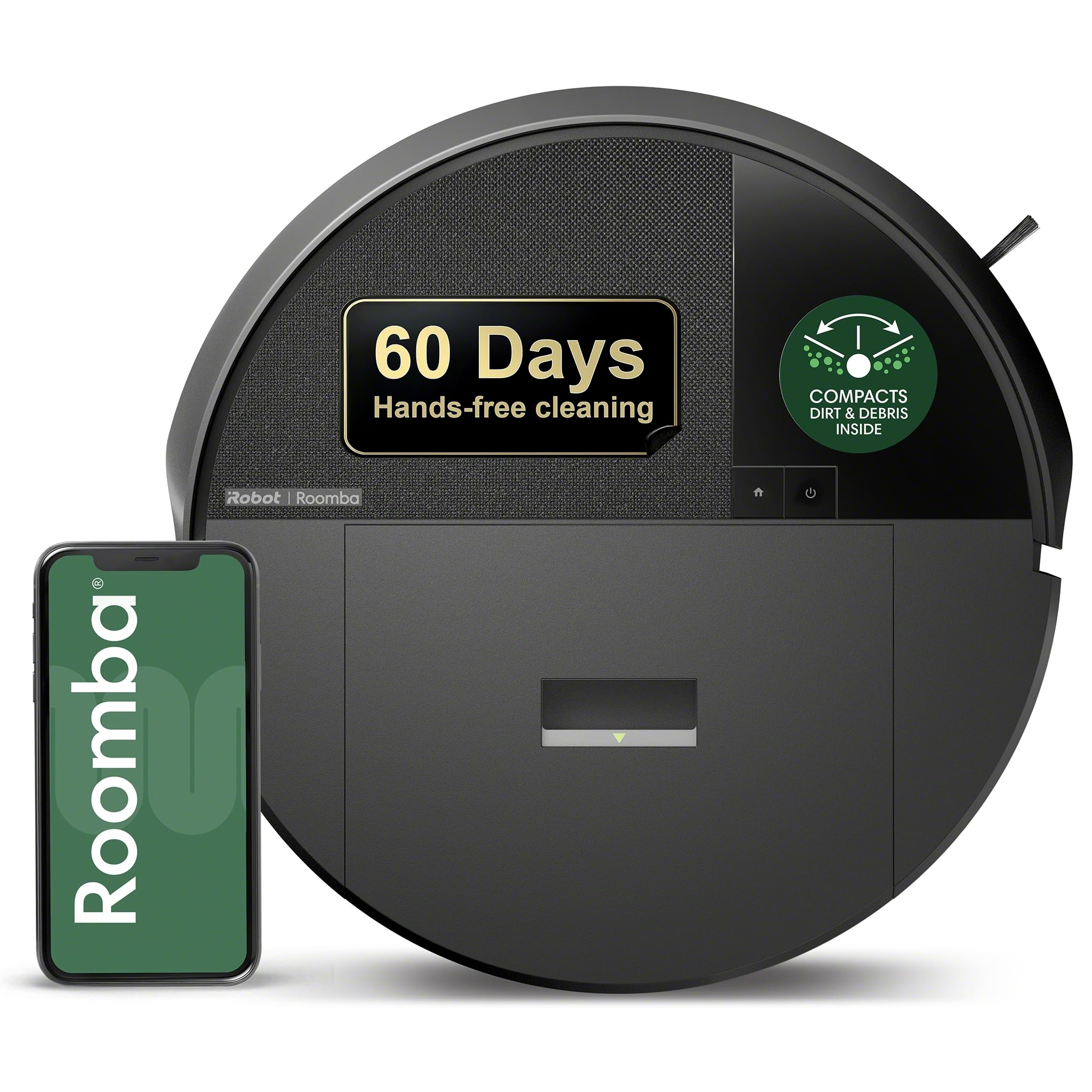
The iRobot Roomba 205 DustCompactor is a robot vacuum built around one unusual idea: instead of parking itself on a bulky auto-empty dock, it squeezes the dirt it collects into a compacted block inside its own body. That means no dock to find floor space for and no bag to buy, with emptying pushed out to roughly two months. This review covers what the machine is built to do, where that design choice pays off, and where it costs the buyer something. It is aimed at people in smaller homes, apartments, or cluttered rooms who want automation without a tower in the corner.
Features and Specifications
Type: Robot vacuum with built-in dust compaction
Dirt handling: Compacts dirt inside the robot; no emptying for up to 60 days
Dock: None required
Filtration: Bagless
Suction: Intense Power-Lifting
Navigation: LiDAR
Surfaces: Multi-surface
Price Tier: Mid-range
The headline feature is the compactor. Rather than relying on a separate auto-empty base that sucks the bin clean after every run, this Roomba presses collected debris into a dense puck inside the robot itself. That single decision removes the dock from the equation entirely, which is the part that matters most for anyone short on floor space.
Everything else in the specification list supports that core idea. LiDAR navigation maps rooms so the robot can run methodically instead of bouncing around at random, and multi-surface capability means it is intended to move between hard floors and carpet in the same home. The Power-Lifting suction label points to the brand’s stronger airflow tier rather than a bare-bones entry model.
Build and Design
The absence of a dock is the design story here. Most premium robot vacuums now ship with a self-emptying tower that needs a power outlet, a patch of wall, and roughly the footprint of a small wastebasket. This model deliberately does without one, which keeps the setup to a single charging base and leaves the robot as the only object in the room.
That makes it a genuinely different proposition for apartment dwellers, people in studio flats, or anyone whose charging spot is a hallway corner rather than a utility room. The trade is that all the dirt storage lives inside the robot, so the machine carries a slightly bulkier body than a bare-bones vacuum of the same class. It still needs to fit under sofa edges and between chair legs, and buyers with very low-clearance furniture should check heights before committing.
The bagless design also means no consumable bags to reorder. When the bin does need attention, the compacted contents come out as a solid block rather than a loose cloud of dust, which is a tidier emptying job than a standard bin dump.
Capacity and the 60-Day Claim
Sixty days without emptying is the number the product leads with, and it deserves context. That figure assumes the compaction is doing its job, which means ordinary household debris — dust, hair, crumbs, light grit — being pressed down rather than fluffed up. A dense block of compacted dirt takes far less room than the same weight of loose material, and that is where the extended interval comes from.
Real-world results will track the home. A single occupant in a small flat with hard floors will likely get close to the stated interval. A household with shedding pets, several carpeted rooms, and tracked-in outdoor grit will fill the internal store faster, simply because there is more solid matter going in. The honest way to read the claim is as a ceiling for light-duty homes, not a guarantee for every household.
The upside is that even when the interval shortens, the routine stays the same: no bag to buy, no dock to service, no dust cloud on emptying. Buyers who have owned a bagged auto-empty system will notice the difference in running costs and in the cupboard space freed up.
Power, Navigation, and Surfaces
LiDAR navigation is the quiet workhorse of this machine. By mapping rooms with a spinning sensor rather than relying on camera vision or random bounce, the robot can plan coverage and return to its base reliably. In practice that means fewer missed patches, less time spent re-covering the same strip of floor, and a robot that behaves predictably in a multi-room layout.
Power-Lifting suction is aimed at the debris that actually causes trouble: hair, fine dust, and grit embedded in carpet pile. On hard floors the demand is lower, and multi-surface capability means the robot is designed to transition between the two without manual intervention. Buyers with a mix of tile, laminate, and low-pile carpet are the natural audience.
The caveat is depth. A robot in this class handles surface debris and daily maintenance well, but it is not a substitute for a full-size vacuum on deep-pile carpet or on heavily soiled floors. It is a keep-on-top-of-it machine, not a deep-clean machine.
Maintenance and Running Costs
Running costs are unusually simple here. There are no bags, no dock filters to swap, and no auto-empty consumables. The routine comes down to emptying the internal bin when it fills, keeping the brushes and filters clear, and wiping the sensors. That is a shorter list than most self-emptying systems demand.
The compactor mechanism is the one component worth thinking about over the long term. It is an extra moving part doing mechanical work on every run, and it is the feature most likely to need attention years down the line. Buyers should treat it as the part of the machine that justifies a care routine rather than something to ignore.
Trade-off: The dock-free design trades a large external dirt store for a smaller internal one, so heavy-shedding or multi-pet homes will empty it more often than the 60-day figure suggests.
Who It Suits and Who It Does Not
This Roomba fits buyers who want automation without giving up floor space. A one-bedroom apartment, a home office, a studio, or any layout where a self-emptying tower would be an eyesore is exactly the target. It also suits anyone tired of buying bags and servicing a dock, and anyone who wants LiDAR mapping without paying for a full auto-empty system.
It does not suit large homes with multiple shedding pets, where the internal bin will fill quickly and the 60-day headline becomes irrelevant. Nor is it the right pick for anyone expecting deep carpet extraction — a corded upright or a high-end deep-clean robot is the better tool there.
Check the current price on Amazon
FAQ
-
What is a dust compactor on a robot vacuum?
It is a mechanism inside the robot that presses collected dirt into a dense block instead of letting it sit loose. Compacting lets the same bin hold far more debris, which is why this model can go much longer between empties. -
Does the iRobot Roomba 205 need a dock?
No. It charges on a base but does not require a self-emptying tower, which is the main reason it saves floor space compared with dock-based systems. -
How long can it really go without emptying?
The product states up to 60 days. That figure assumes light household debris; homes with pets or heavy foot traffic will need to empty it more often. -
Does it use bags?
No. The system is bagless, so there are no bags to buy and no bag compartment to service. -
How does LiDAR navigation help?
LiDAR maps rooms so the robot can plan a route, cover floors methodically, and find its way back to the base. It is generally more reliable than random-bounce navigation. -
Is it good for pet hair?
It is designed for hair and everyday debris on multi-surface floors. Heavy-shedding households should expect to empty the bin more frequently than the stated interval. -
Will it work on carpet and hard floors?
Yes. The multi-surface design is intended to move between hard flooring and carpet in the same home without manual changes. -
Is it a replacement for a full-size vacuum?
No. It is a maintenance robot for daily surface debris. Deep-pile carpet and heavily soiled floors still call for a full-size vacuum. -
What maintenance does it need?
Emptying the internal bin, clearing hair from the brushes, and keeping the filter and sensors clean. There are no bags or dock consumables to replace. -
Who should skip it?
Large homes with several pets, or buyers who want a deep-clean machine for thick carpet. The internal capacity and surface-level cleaning are the limits.
Bottom Line
The iRobot Roomba 205 DustCompactor is the right robot vacuum for buyers whose main objection to automation is the dock — the tower, the bags, the floor space, the upkeep. Compacting dirt inside the robot removes all of that in one move, and LiDAR navigation plus multi-surface suction make it a capable daily cleaner rather than a novelty. The cost is capacity: heavy-shedding homes will empty it far more often than the 60-day figure promises, and deep carpet still needs a full-size machine. For apartments and smaller homes, though, it solves the problem most robot vacuums create.
