Why there are Amazon links here: Brave Review is paid a commission for qualifying Amazon purchases made through the links below. Your price does not change, and using our links is entirely optional. How this works
Jackery Explorer 500 v2: The 14-Pound Power Station for Camp and Blackouts
The Jackery Explorer 500 v2 is a compact portable power station built around a 512Wh LiFePO4 battery, a 500W inverter with a 1000W surge rating, and a 14-pound body. It suits campers, car travelers and apartment dwellers who want a grab-and-go backup for phones, lights, laptops, fans and a small fridge. This review covers its build, capacity, power output and upkeep, plus the trade-offs that come with its size and price tier.
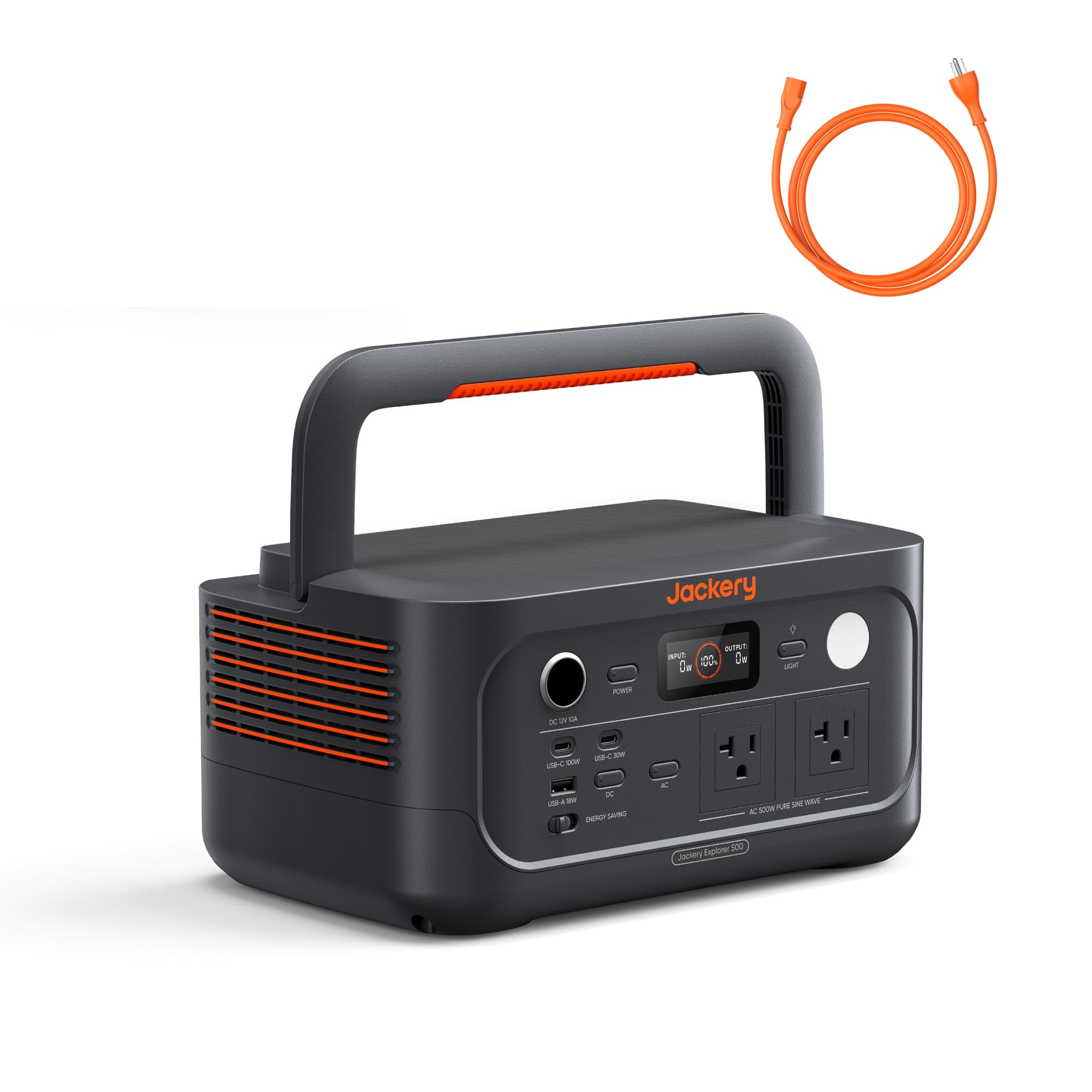
Features and Specifications
Type: Portable power station with built-in AC inverter
Battery Chemistry: LiFePO4 (lithium iron phosphate)
Capacity: 512Wh
Continuous AC Output: 500W
Surge Output: 1000W
Weight: 14 lbs
Charging Accessory: AC cable included
Intended Use: Camping, emergency backup, solar generator pairing
The headline number here is the battery chemistry. LiFePO4 is the more stable, longer-lived branch of lithium, and it is what separates this unit from the older generation of power stations that used other lithium formulations. In practical terms, that chemistry is why the v2 badge matters: buyers get a pack that tolerates being topped up regularly and held at partial charge without the rapid degradation that older packs were known for.
The 512Wh capacity and 500W continuous output define the job. This is not a whole-home backup box. It is a device-sized station meant to run a laptop through a workday, keep a CPAP or a fan running overnight, or carry a small cooler through a weekend. The 1000W surge figure is the one that lets it start a motor-driven appliance rather than only run one that is already spinning.
Build and Portability
At 14 pounds, this is a one-hand carry for most adults, which is the whole point of the Explorer line. The weight sits in the battery, and a 512Wh LiFePO4 pack at this mass is a genuine compromise between capacity and portability rather than a marketing claim. A molded handle and a squared-off body make it easy to slide behind a car seat or onto a shelf.
The trade-off in the build is physical protection. A light plastic-shell station at this weight is designed to be carried, not dropped onto rock or left in a truck bed that takes a beating. Buyers who plan to leave a station outdoors for long stretches should look at a heavier, more rugged enclosure instead.
Capacity: What 512Wh Actually Runs
Capacity translates into runtime, and runtime depends entirely on the load. A phone or a laptop draws very little and will last for days of normal use. A small fan or a set of LED lights runs for many hours. A mini fridge or a small cooler is a heavier draw and will cut that runtime sharply, which is why the station is usually paired with a solar panel for multi-day trips rather than relied on alone.
The honest framing is that 512Wh is a weekend number, not a week number. Buyers who need to run a fridge for several days, or who want to keep a workspace powered through a long outage, will find this capacity tight and should be looking at a larger class of station.
Power Output and Surge Behavior
The 500W continuous rating covers the everyday load list: laptops, phones, lights, fans, a small TV, a router, a camera battery charger. The 1000W surge is what allows a brief startup spike from a motor or compressor, so a small fridge or a pump can kick on without tripping the inverter.
The limit is the word "small." Appliances with a heavy continuous draw, anything with a heating element, and most full-size kitchen gear will exceed the 500W ceiling and shut the unit down. Buyers who want to run a microwave, a space heater or a coffee maker need a station in a much higher output class.
Charging and Maintenance
The included AC cable lets the station recharge from a wall outlet, which is the fastest routine option for most owners. The unit is also built to pair with solar panels for off-grid top-ups, which is the reason the solar generator label appears in the product name. Buyers who camp for multiple days typically add a folding panel so the station can recover during daylight.
LiFePO4 packs reward good habits. Keeping the station at a partial charge during long storage, rather than pinned at full, is the standard recommendation for this chemistry. The unit is also not a fast-charge device in the way a phone is; a full wall recharge takes a meaningful block of time, so planning around an overnight top-up is the realistic approach.
Trade-off: The 512Wh capacity and 500W ceiling are modest for the money, so buyers who need to run heavy appliances or multi-day fridge loads will outgrow this station quickly.
Check the current price of the Jackery Explorer 500 v2 on Amazon
Who It Suits and Who It Does Not
The Explorer 500 v2 fits three buyer profiles well. The first is the car camper who wants lights, phone charging and a fan without draining the vehicle battery. The second is the apartment or small-home resident who wants a grab-and-go box for short outages. The third is the solar-curious buyer who wants a small station to pair with a folding panel before committing to a larger system.
It is a poor fit for buyers with heavier ambitions. A household that wants to run a fridge for days, a workspace with desktop gear, or any appliance with a heating element needs a station with substantially more capacity and output. Buyers in that group should treat this as a starter unit, not a solution.
FAQ
-
What can the Jackery Explorer 500 v2 power?
It runs small and mid-size electronics: phones, laptops, lights, fans, a router, a small TV and a camera charger. The 1000W surge lets it start a small fridge or pump, but continuous loads above 500W will shut it down. -
How long does a 512Wh power station last?
Runtime depends on the load. Light electronics last for days, a fan or set of lights lasts many hours, and a small cooler draws the pack down much faster. Buyers planning multi-day trips usually pair it with a solar panel. -
Is LiFePO4 better than other lithium batteries in a power station?
LiFePO4 is the more stable and longer-lived lithium chemistry, and it tolerates regular partial charging better than older formulations. That is the main reason the v2 badge matters to repeat users. -
Can the Explorer 500 v2 run a CPAP machine overnight?
A CPAP is a light, steady draw and is one of the more common overnight uses for a station in this capacity class. Buyers should check their machine’s draw and heated-humidifier settings before relying on it for a full night. -
Does it come with a solar panel?
No. The product ships with an AC charging cable. Solar panels are a separate purchase, and buyers who want off-grid recharging need to add one. -
How much does the Jackery Explorer 500 v2 weigh?
It weighs 14 pounds, which makes it a one-hand carry for most adults and easy to move between a car, a tent and a closet. -
Can it be used indoors during a power outage?
Yes. A battery power station produces no exhaust, so it can run indoors, unlike a gas generator. Buyers should still follow the manufacturer’s ventilation and storage guidance. -
Is 500W enough for a microwave or space heater?
No. Heating appliances draw far more than 500W continuous and will trip the inverter. Buyers who need those loads should look at a higher-output station. -
How should the battery be stored between trips?
LiFePO4 packs prefer partial charge during long storage rather than sitting at full. A routine top-up before a trip and a partial charge in the closet is the standard approach. -
Who should not buy the Explorer 500 v2?
Buyers who need to run a full fridge for days, power desktop workstations, or run any heating appliance should skip this class entirely and shop a larger, higher-output station.
Bottom Line
The Jackery Explorer 500 v2 is the right pick for buyers who want a light, LiFePO4-based station for weekend camping, car travel and short outages, and who accept that 512Wh and 500W are modest limits. It is a starter and grab-and-go unit, not a whole-home backup, and buyers with heavier loads should size up. For everyone else, it is a sensible, portable first power station — check the current price on Amazon.
