Why there are Amazon links here: Brave Review is paid a commission for qualifying Amazon purchases made through the links below. Your price does not change, and using our links is entirely optional. How this works
Jackery HomePower 3000 Portable Power Station: Whole-Home Backup Without the Generator
The Jackery HomePower 3000 is a large-capacity lithium iron phosphate power station built for one job above all others: keeping a house running when the grid goes down. Its 3072Wh battery and 3600W AC output put it in the class of units that can carry a fridge, a furnace blower, lights and a few small appliances at the same time, while the 7200W surge rating lets it start motor-driven loads that would trip a smaller station. This review covers what the specifications mean in practice, where the unit earns its price, and who should look elsewhere. Readers who already know they want serious home backup can jump straight to the Amazon listing through the link below.
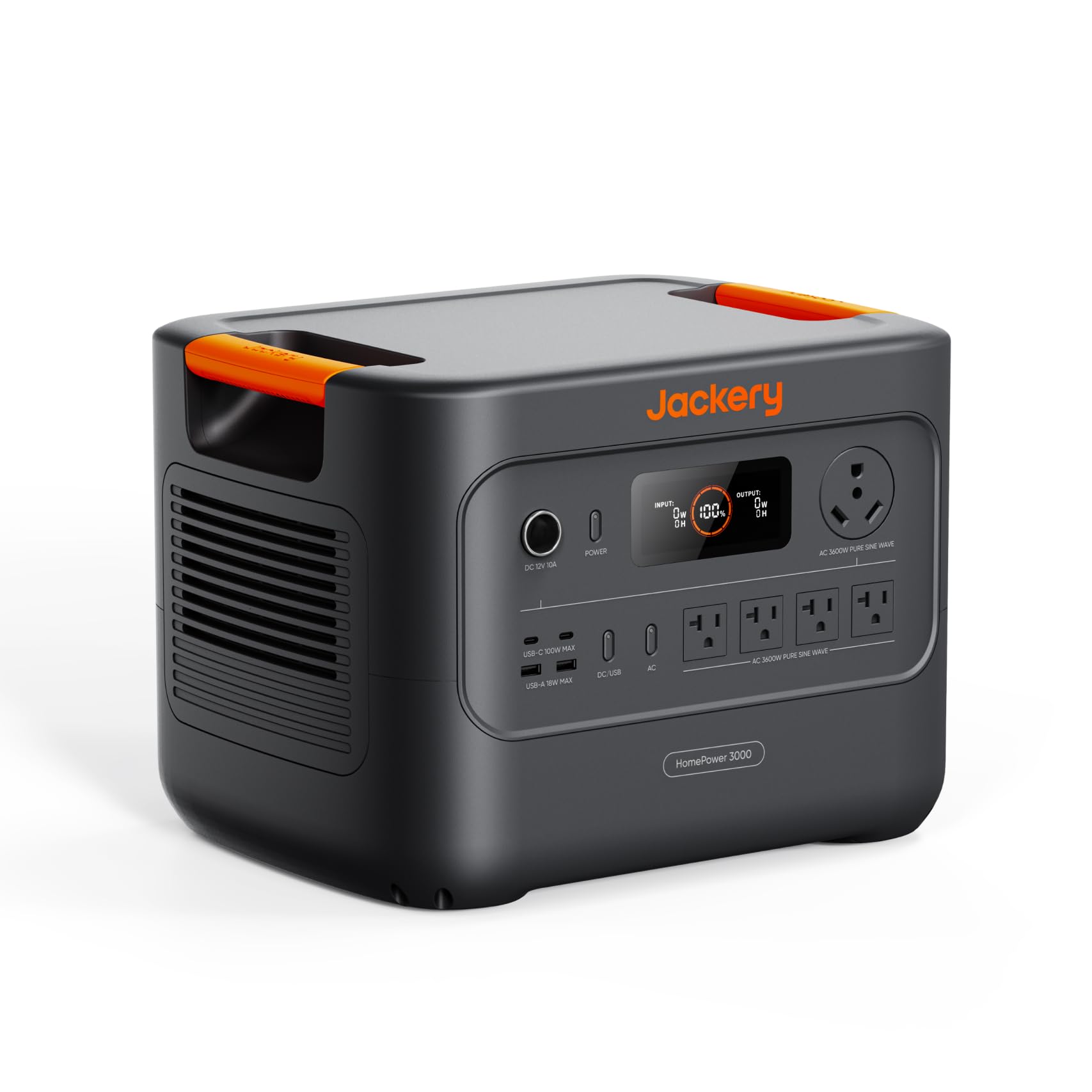
Check the current price on Amazon
Features and Specifications
Battery Chemistry: Lithium iron phosphate (LFP)
Capacity: 3072Wh
AC Output: 3600W continuous
Surge Rating: 7200W
Intended Use: Essential home backup during power outages
Solar Charging: Solar panel optional, sold separately
Form Factor: Portable power station
The headline number here is the 3072Wh capacity, and it is the figure that decides whether this unit belongs in a house or in a camping kit. Capacity at this level means days rather than hours of runtime for critical loads, which is the whole point of a home backup machine. The LFP chemistry matters just as much: it is the battery type that has become the default for stationary backup because it tolerates being held at a full charge and cycled regularly without the degradation that shortens the life of older lithium formulations.
The 3600W AC output and 7200W surge rating describe what the unit can power at once and what it can start. Continuous output covers the steady draw of a refrigerator, lights, a router, a phone charger bank and a space heater within limits. The surge figure is the reserve that lets a motor-driven appliance — a furnace blower, a well pump, a garage door opener — pull several times its running wattage for the second or two it takes to spin up. A station without that headroom will shut down on startup even when its continuous rating looks adequate on paper.
Solar input is where the value proposition gets a caveat. The unit is sold with the solar panel optional, so a buyer who wants indefinite runtime during a long outage needs to budget for panels on top of the station itself. That is normal for this category, but it is the single most common oversight among first-time buyers, and it changes the real cost of ownership considerably.
Build and Battery
The LFP battery is the defining engineering choice, and it shapes how the unit should be treated. Lithium iron phosphate tolerates deep discharges and partial recharges better than the lithium-ion chemistry used in smaller consumer electronics, and it is less prone to the thermal runaway that makes cheap batteries a worry in a garage or utility room. For a device that may sit unused for months and then be called on for a multi-day outage, that resilience is worth more than a lighter pack would be.
Portability is relative at this size. A 3072Wh LFP pack is heavy, and the unit is designed to be wheeled or carried by two people rather than lifted one-handed onto a shelf. Buyers who picture moving it between floors weekly should think hard about that weight before ordering; buyers who will park it in a utility room and forget it until the lights go out are the natural audience.
The build quality expected at this price tier is a rigid enclosure with recessed handles, protected outlets and a display that reports charge state and output. These are the details that separate a station designed for household duty from a repurposed camping battery, and they are the reason the unit is priced as a piece of home equipment rather than an accessory.
Trade-off: The LFP pack and the 3072Wh capacity make this a heavy, bulky unit that is awkward to move alone, so it suits a fixed backup position better than a grab-and-go lifestyle.
Capacity and Runtime
Runtime is a function of load, and the 3072Wh figure translates into very different numbers depending on what is plugged in. A refrigerator cycling on and off, a few LED lights, a router and a phone charger draw a modest average load and can be carried for an extended stretch. Add a space heater or an electric kettle and the same battery drains in a fraction of the time, because resistive heating is the most power-hungry thing a household does.
The practical lesson is that this station is sized for essential circuits, not for whole-house comfort. Buyers who want to run a central air conditioner, an electric range and a dryer during an outage are looking at a permanently installed home battery or a fuel generator, not a portable station. The HomePower 3000 is the right tool for keeping the refrigerator cold, the heat on and the internet up — the loads that make a house livable rather than the ones that make it luxurious.
The 3600W continuous output defines how many of those loads can run simultaneously. It is enough for a realistic mix of appliances at once, provided the big resistive loads are sequenced rather than started together. Buyers should plan which circuits matter most and rotate them, rather than assuming everything can run at the same time.
Power Output and Surge
The 7200W surge rating is the specification that separates this unit from cheaper stations with similar capacity. Motor-driven appliances draw a startup current far above their running wattage, and a station that cannot supply that burst will trip its protection the moment a furnace or pump kicks on. The doubled surge headroom here is what makes the unit credible as home backup rather than a large phone charger.
AC output at 3600W continuous also means the unit can run a space heater, a microwave or a coffee maker individually without strain. What it cannot do is run several of those at once alongside the refrigerator, which is why load management remains part of the owner’s job. The unit will protect itself by shutting down rather than failing, but an outage is a bad time to discover that too much was plugged in.
Solar and Recharging
The solar panel being optional is a structural feature of the purchase, not an afterthought. A buyer who wants the station to recharge from the sun during a prolonged outage must add panels, and the panel wattage determines how quickly the battery refills. That is a real cost on top of the station, and it should be part of the budget from the start rather than a surprise after the first storm.
Wall charging remains the default for most owners, and it is how the unit will be topped up between outages. The case for solar is resilience: a multi-day outage that also takes out the local grid means wall charging is unavailable, and only solar keeps the battery refilling. Buyers in storm-prone regions should treat panels as part of the system rather than an optional extra.
Who It Suits and Who It Does Not
The HomePower 3000 suits homeowners who want a self-contained backup for essential circuits, who live somewhere outages are a real risk, and who value a battery that can sit ready for years without the maintenance a fuel generator demands. It also suits buyers who want solar capability without committing to a permanently installed system.
It does not suit campers and overlanders who need something light enough to carry to a tent, buyers on a tight budget who only need to charge phones and a laptop, or anyone expecting to run whole-house air conditioning and electric heating from a portable unit. Those buyers are better served by a smaller station or a different category of equipment entirely.
FAQ
-
How long will the Jackery HomePower 3000 run a refrigerator?
Runtime depends on the refrigerator’s draw and how often the compressor cycles, but the 3072Wh capacity is sized to carry a fridge alongside lights and a router for an extended outage rather than for a few hours. -
Can the HomePower 3000 run a furnace blower?
The 7200W surge rating exists precisely for motor-driven loads like a furnace blower, which draw a startup burst well above their running wattage. The continuous 3600W output then covers the steady draw. -
Does the Jackery HomePower 3000 come with solar panels?
No. The solar panel is optional and sold separately, so buyers who want solar recharging need to budget for panels in addition to the station. -
What kind of battery does the HomePower 3000 use?
It uses a lithium iron phosphate (LFP) battery, the chemistry favored for stationary backup because it handles regular cycling and long idle periods well. -
Can it power a whole house during an outage?
It powers essential circuits — refrigerator, lights, heat, internet — rather than an entire house. Central air conditioning, electric ranges and dryers are beyond what a portable station at this capacity can carry. -
Is the HomePower 3000 heavy?
Yes. A 3072Wh LFP battery is heavy by design, and the unit is meant to be wheeled or moved by two people rather than carried one-handed. -
Can it be charged from a wall outlet?
Yes, wall charging is the standard way to keep the unit topped up between outages, with solar as the backup option when the grid itself is down. -
Is the HomePower 3000 a generator?
It is a battery-based power station, not a fuel generator. It stores energy and releases it silently, with no fuel, exhaust or engine maintenance. -
Who should not buy the HomePower 3000?
Campers who need a light, portable unit, budget buyers with only small electronics to charge, and anyone expecting to run whole-house air conditioning should look at other options. -
What should buyers add to the order?
Solar panels are the main addition for anyone who wants recharging during a prolonged outage, and they are the item most often left out of the initial budget.
Bottom Line
The Jackery HomePower 3000 is the right pick for a homeowner who wants a silent, maintenance-free backup for essential circuits and is prepared to add solar panels for true multi-day resilience. Its 3072Wh LFP battery, 3600W continuous output and 7200W surge rating are the specifications that make it credible as home equipment rather than a camping accessory, and the trade-off — weight and bulk — is the price of that capability. Buyers who need light and portable, or who expect to run the whole house, should look elsewhere.
