Why there are Amazon links here: Brave Review is paid a commission for qualifying Amazon purchases made through the links below. Your price does not change, and using our links is entirely optional. How this works
Kidde 10SDR 4-Inch Smoke Alarm: Small Detector, Big Coverage Question
The Kidde 10SDR is a compact, battery-powered smoke alarm built for tight spaces where a full-size detector looks oversized or crowds a hallway. It suits renters, small apartments, dorm rooms, RV owners and anyone adding a second alarm to a bedroom or utility closet. This review covers what the 4-inch format actually does well, where its size and price tier work against it, and the questions buyers tend to ask before ordering. The short version: it is a straightforward, low-cost alarm, not a smart one — and that is the point.
Features and Specifications
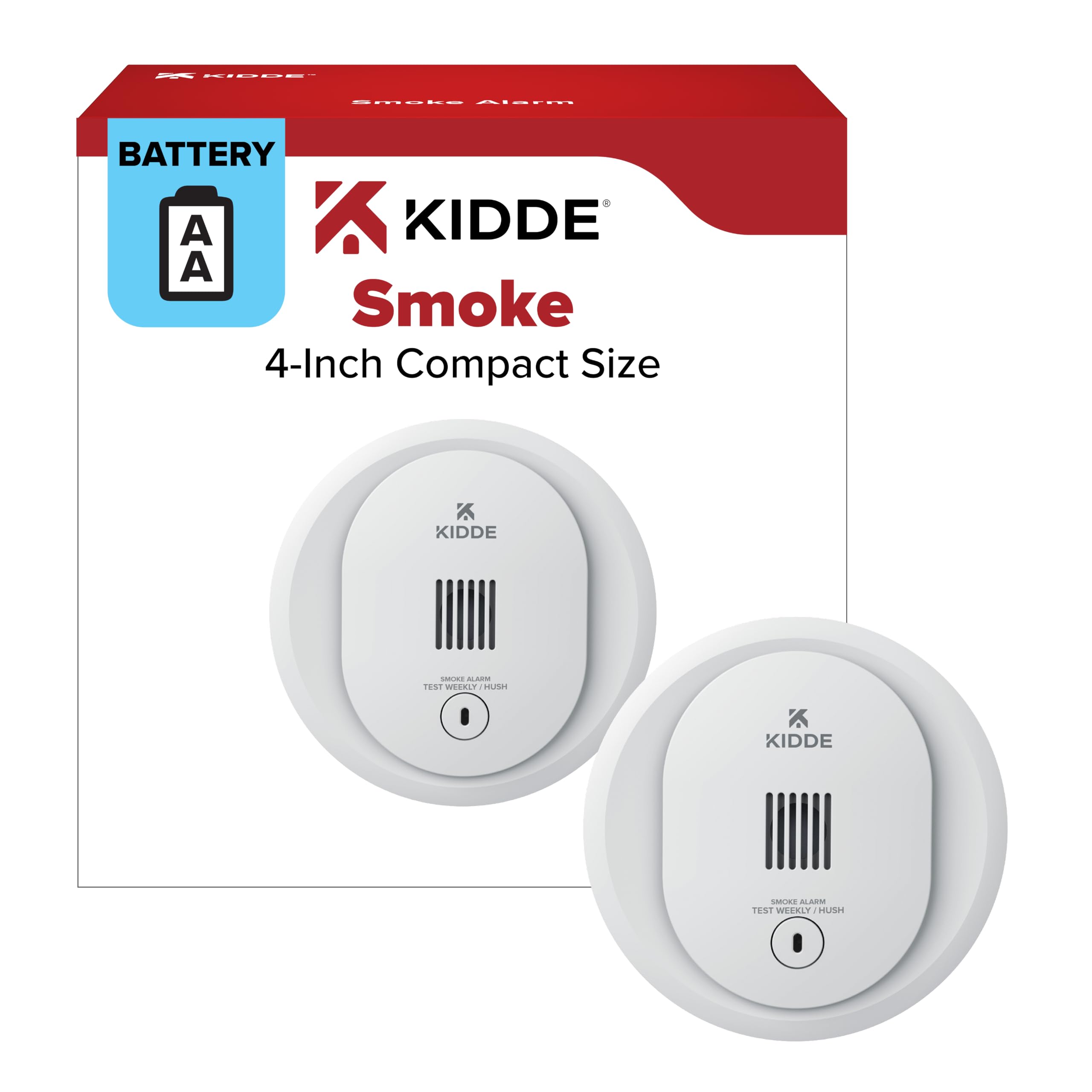
Product: Kidde 4-Inch Smoke Alarm with LED Status Lights, Loud 85 dB Alarm, Ideal for Homes and Small Spaces Compact Smoke Detector, AA Battery-Powered, 10SDR
Type: Battery-powered smoke detector
Form Factor: Compact 4-inch housing
Alarm: 85 dB horn
Status Indicators: LED status lights
Power Source: AA batteries
Intended Use: Homes and small spaces
Price Tier: Budget
The headline specification here is the size. A 4-inch footprint is noticeably smaller than the standard round detector most people picture on a ceiling, and that changes where the unit can realistically go: narrow hallways, above a door frame, inside a small closet, or on a wall in an RV where a wider disc would be in the way.
The second specification that matters is the 85 dB alarm. That is a genuinely loud horn — the kind that wakes a household — and it is the same output class buyers expect from full-size alarms. The compact body does not appear to come at the cost of volume, which is the main worry people have about small detectors.
Power comes from AA batteries rather than a sealed internal cell or household wiring. That means no electrician, no hardwiring, and no dependence on a breaker — but it also means battery changes are a recurring chore the owner has to own.
Trade-off: The compact housing and low price point mean this is a basic standalone alarm, so buyers who want interconnected alarms, app alerts or voice announcements need to look at a different tier.
Check the current price on Amazon
Build and Design: What a 4-Inch Alarm Buys
The 4-inch format is the entire reason to consider this model over the dozens of near-identical full-size alarms on the shelf. A smaller housing is easier to place discreetly, easier to mount where ceiling space is contested, and less visually intrusive in a small room. In a studio apartment or a converted attic, that difference is practical rather than cosmetic.
Small also means light. A detector this size is easy to hold one-handed while positioning it on a bracket or adhesive mount, which matters for renters who cannot drill and for anyone installing an alarm on a ladder in a tight stairwell.
The LED status lights are a quiet but useful design choice. Instead of a single blinking dot, the unit signals its state visually, so a glance from floor level tells the owner whether the alarm is powered and operating. That is a small convenience that becomes more valuable in a hallway where the alarm is mounted high and hard to inspect closely.
The caution is that a small housing has less room for extras. There is no display, no large test button array, and no room for the sensor redundancy found in premium multi-sensor units. Buyers get a clean, simple detector — and should expect exactly that.
Power and Battery Life: AA Batteries, No Wiring
AA battery power is the defining convenience of this alarm. There is no wiring to run, no junction box to open, and no electrician to schedule. A buyer can order it, mount it, and have a working alarm the same afternoon, which is why battery-powered detectors dominate renter and small-space purchases.
The trade-off is ongoing maintenance. AA cells need replacing on a schedule, and the alarm is only as good as the batteries inside it. Buyers who are already comfortable with an annual battery ritual will find this familiar; buyers who want a decade of forget-it operation should be looking at sealed-battery models instead.
There is also a chirp to live with. Low-battery warnings are a feature, not a fault, but in a small apartment a chirping alarm at 3 a.m. is memorable. Keeping spare AA cells on hand removes most of that annoyance.
One more practical point: because the unit is not hardwired, it will not tie into a home’s interconnected alarm network. In a larger house, that means a fire in one room may not trigger alarms elsewhere. This is a standalone device by design.
Alarm Performance and Coverage: How Loud, How Far
The 85 dB rating is the number to focus on. That is loud enough to be heard through a closed interior door and to wake most sleepers, and it puts this compact unit in the same volume class as much larger detectors. For a bedroom, a hallway outside a bedroom, or a small apartment, that is the right amount of alarm.
Coverage is where size and price tier deserve honest scrutiny. A compact detector is generally intended for a single room or a small zone rather than an open-plan living area. Buyers should think of it as one alarm for one space, and plan to add more units for a full home rather than expecting one small device to cover a floor.
Placement matters more than the spec sheet suggests. Mounting near a kitchen can cause nuisance alarms from cooking; mounting in a dead-air corner can delay response. The standard guidance — ceiling, central to the room, away from vents and cooking appliances — applies here as much as to any detector.
The unit is not a multi-sensor alarm, so it will not distinguish between fast-flaming and smoldering fires the way premium detectors claim to. It is a conventional smoke alarm doing a conventional job, and at this price that is a fair expectation.
Maintenance and Everyday Use
Day-to-day, this is about as low-effort as a smoke alarm gets. The test button is the main interaction, and a monthly press is the standard habit. The LED status lights make it easy to confirm at a glance that the unit is live between tests.
Battery swaps are the main maintenance event. Buyers should note which AA cells the unit takes and keep a small stock, because the alarm will announce its low-battery state audibly rather than quietly. Replacing cells promptly keeps the unit reliable and prevents middle-of-the-night chirping.
Cleaning is minimal — a light vacuum or a soft brush around the openings keeps dust from clogging the sensing chamber. Dust is the most common cause of false alarms in any detector, and a compact unit with a small intake is no exception.
The lack of smart features is a maintenance advantage as much as a limitation. There is no app to configure, no Wi-Fi to reconnect, and no account to manage. It works or it does not, which is a reasonable trade for buyers who want an alarm rather than another connected device.
Who It Suits and Who It Does Not
This alarm fits renters who cannot hardwire, owners of small apartments and studios, RV and camper owners, dorm residents, and anyone adding a supplementary alarm to a bedroom, closet or utility room. It also fits budget-conscious buyers who need several alarms and would rather buy four small units than one premium one.
It does not fit large homes that need interconnected alarms, buyers who want app notifications or voice alerts, or anyone looking for a sealed ten-year battery that never needs changing. Those buyers are shopping in a different category and a different price tier.
The size is the deciding factor. Buyers who need an alarm to disappear into a small space will find the 4-inch format genuinely useful; buyers who need maximum coverage per device should size up.
Trade-off: The low price and compact body mean a single-room, standalone alarm without smart features or interconnection — great value for small spaces, limited for whole-home coverage.
FAQ
-
What is the Kidde 10SDR?
It is a compact 4-inch battery-powered smoke alarm with an 85 dB horn and LED status lights, intended for homes and small spaces. -
Is the Kidde 10SDR hardwired?
No. It runs on AA batteries, so no wiring or electrician is needed and it can be mounted almost anywhere. -
How loud is the Kidde 10SDR alarm?
The alarm is rated at 85 dB, which is loud enough to be heard through interior doors and to wake most sleepers. -
What kind of batteries does the Kidde 10SDR use?
It is powered by AA batteries, which the owner replaces as needed rather than a sealed internal cell. -
Is a 4-inch smoke alarm big enough for a bedroom?
A compact detector is generally intended for a single room or small zone. For a bedroom or small hallway it is a sensible fit; for an open-plan floor, multiple units are the better plan. -
Does the Kidde 10SDR connect to other alarms?
No. It is a standalone unit, so it does not interconnect with other alarms in the home. -
Does the Kidde 10SDR work in an RV or camper?
Yes. Battery power and the small housing make it a practical choice for RVs, campers and other spaces without easy wiring. -
Where should the Kidde 10SDR be mounted?
On the ceiling, central to the room, away from cooking appliances, vents and dead-air corners — the same placement guidance that applies to any smoke alarm. -
Does the Kidde 10SDR have smart features?
No. There is no app, no Wi-Fi and no voice alert. It is a conventional standalone smoke alarm. -
Who should not buy the Kidde 10SDR?
Buyers who need interconnected alarms across a large home, app notifications, or a sealed long-life battery should look at a different model.
Bottom Line
The Kidde 10SDR is a sensible buy for anyone who needs a small, loud, battery-powered alarm in a space where a full-size detector is awkward — a studio, a bedroom, an RV, a rental. It is not a whole-home solution and it is not smart, but at the budget end of the market it does the core job without fuss. Buyers who need interconnection or long-life sealed batteries should size up; everyone else can check the current price and decide.