Why there are Amazon links here: Brave Review is paid a commission for qualifying Amazon purchases made through the links below. Your price does not change, and using our links is entirely optional. How this works
Kidde 30CUD10: One Detector, Two Alarms, Ten Years of Quiet
The Kidde 30CUD10 is a single unit that watches for both smoke and carbon monoxide, and it runs on a sealed battery designed to last the life of the device. It suits homeowners and renters who want one ceiling fixture instead of two, and who would rather never hear a low-battery chirp at 3 a.m. This review covers how the unit is built, what each specification means in practice, and where the design asks for a compromise.
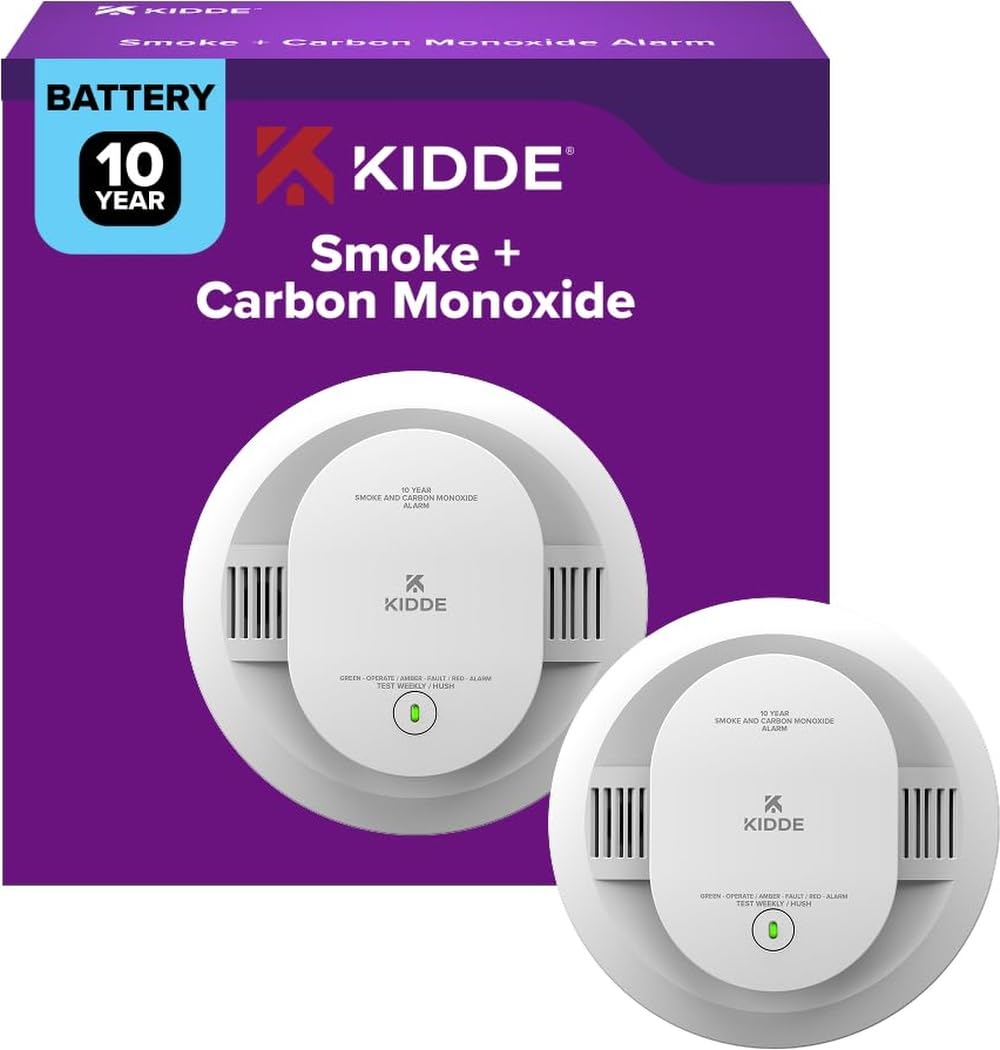
Features and Specifications
Detection Type: 2-in-1 smoke and carbon monoxide
Power Source: Sealed 10-year battery
Battery Service: No replacements, no low-battery chirps
Status Indicators: LED status lights
Intended Use: Homes and apartments
Pack Size: 1 pack
The headline figure here is the decade. A sealed battery rated for ten years means the power source and the sensor package are matched to the same service window, so the unit is effectively a fit-and-forget device until it reaches end of life. That removes the single most common maintenance failure in household safety gear: the detector that gets its battery pulled to silence a chirp and never gets one put back.
The 2-in-1 design is the second thing that matters. Smoke and carbon monoxide are different hazards that behave differently in a home — smoke rises and collects at the ceiling, while CO mixes with the air people breathe. Combining them in one housing means one installation point, one set of screws, and one device to remember on a maintenance checklist.
Build and Detection
The unit is a ceiling- or wall-mounted detector in the familiar round housing, with the sensor intake and the test/silence button on the face. The dual-sensor arrangement inside covers two sensing jobs: an ionization or photoelectric smoke chamber to catch combustion particles, and an electrochemical cell to catch carbon monoxide. The two systems share a power supply and a sounder, which is what keeps the package compact enough to replace a plain smoke alarm without rethinking the room.
Detection coverage is the dimension buyers should think hardest about. A single 2-in-1 unit protects the room it hangs in and, in a small apartment, can reasonably cover a hallway that serves the bedrooms. In a larger house, one unit is a starting point rather than a complete plan — most codes and safety guidance call for a detector on every level and in or near each sleeping area, and this pack size of one reflects that.
Power and the Ten-Year Battery
The sealed battery is the defining feature and the one that shapes ownership. Because the cell is not user-replaceable, the detector does not need the annual battery swap that conventional alarms demand, and it will not produce the intermittent low-battery chirp that sends people hunting through the house at midnight. The trade-off is that when the battery reaches the end of its service life, the whole unit retires with it.
That retirement is not a surprise event. The device carries LED status lights that report its condition, and end-of-life signaling is part of how these sealed units work — the unit tells the owner when its service window is closing rather than simply going silent. Buyers should treat the ten-year figure as a replacement calendar date, not just a battery claim, and note it when the unit goes up.
LED Status and Everyday Use
The LED status lights are the day-to-day interface. They give a visual read on whether the unit is powered and operating, which matters in a household where an alarm on a high ceiling is easy to forget. A glance upward replaces the old routine of pressing a test button and hoping the beep sounds healthy.
The test and silence functions round out the controls. Testing verifies the sounder and circuitry, and the silence feature is there for the nuisance case — cooking smoke that trips the alarm before the pan is done. Buyers who cook with high heat or without a vent hood will use that silence function more than they expect, and it is worth locating the button before the first false alarm rather than during one.
Where the Kidde 30CUD10 Falls Short
The most significant limitation is coverage per dollar. A single 2-in-1 unit is the right answer for a small apartment or a targeted placement, but a multi-bedroom home needs several devices, and buying them one at a time costs more than a multi-pack would. Buyers protecting a whole house should plan the full set before ordering the first one.
The sealed battery also removes a choice. There is no option to drop in a fresh battery and extend the unit’s life, and no way to keep the detector running past its rated term. That is the point of the design, but it does mean the purchase is a decade-long commitment rather than a one-time fixture.
Trade-off: The sealed power source and single-pack format make this a fit-and-forget unit for one room, not an economical way to outfit an entire house at once.
Check the current price on Amazon
FAQ
-
What is the Kidde 30CUD10?
It is a 2-in-1 smoke and carbon monoxide detector with a sealed 10-year battery, sold as a single unit and intended for homes and apartments. -
Does the Kidde 30CUD10 need battery replacements?
No. The battery is sealed for a ten-year service life, so there are no annual replacements and no low-battery chirps during that window. -
What happens when the 10-year battery runs out?
The unit reaches the end of its service life and is replaced as a whole. The LED status lights report the device’s condition, and end-of-life signaling is part of how sealed detectors operate. -
Does one Kidde 30CUD10 cover a whole house?
No. One unit protects the room or hallway it is mounted in. A house needs coverage on every level and near each sleeping area, which means multiple units. -
Can the Kidde 30CUD10 detect both smoke and carbon monoxide at once?
Yes. It uses separate sensing elements for each hazard inside one housing, with a shared sounder, so a single unit responds to either. -
Where should the Kidde 30CUD10 be installed?
On the ceiling or high on a wall in a room or hallway, following the placement guidance for smoke and CO detection. It is designed for indoor residential use in homes and apartments. -
Is the Kidde 30CUD10 good for an apartment?
It is well suited to apartments, where one 2-in-1 unit in a central hallway covers a compact floor plan and the sealed battery avoids landlord-tenant battery disputes. -
Does the Kidde 30CUD10 have a silence button for false alarms?
Yes. The unit has a test and silence control on the face, which is used to quiet a nuisance alarm from cooking smoke. -
Why buy a 2-in-1 detector instead of two separate units?
One housing means one mounting point, one power source and one item on the maintenance list, which suits small homes and anyone who wants fewer devices overhead. -
How many units come in the Kidde 30CUD10 pack?
The listing is a 1 pack, so a single detector ships per order.
Bottom Line
The Kidde 30CUD10 is the right pick for a buyer who wants smoke and carbon monoxide protection in one fixture and never wants to think about a battery again. Its sealed ten-year power source and LED status lights remove the two biggest reasons household detectors fail — dead batteries and forgotten maintenance. Buyers outfitting a full house should price out several units up front, but for an apartment, a hallway, or a single high-priority room, this is a clean, low-effort choice.