Why there are Amazon links here: Brave Review is paid a commission for qualifying Amazon purchases made through the links below. Your price does not change, and using our links is entirely optional. How this works
Kidde Smoke Detector, 20SA10 3 Pack: Hardwired Protection Without the Chirps
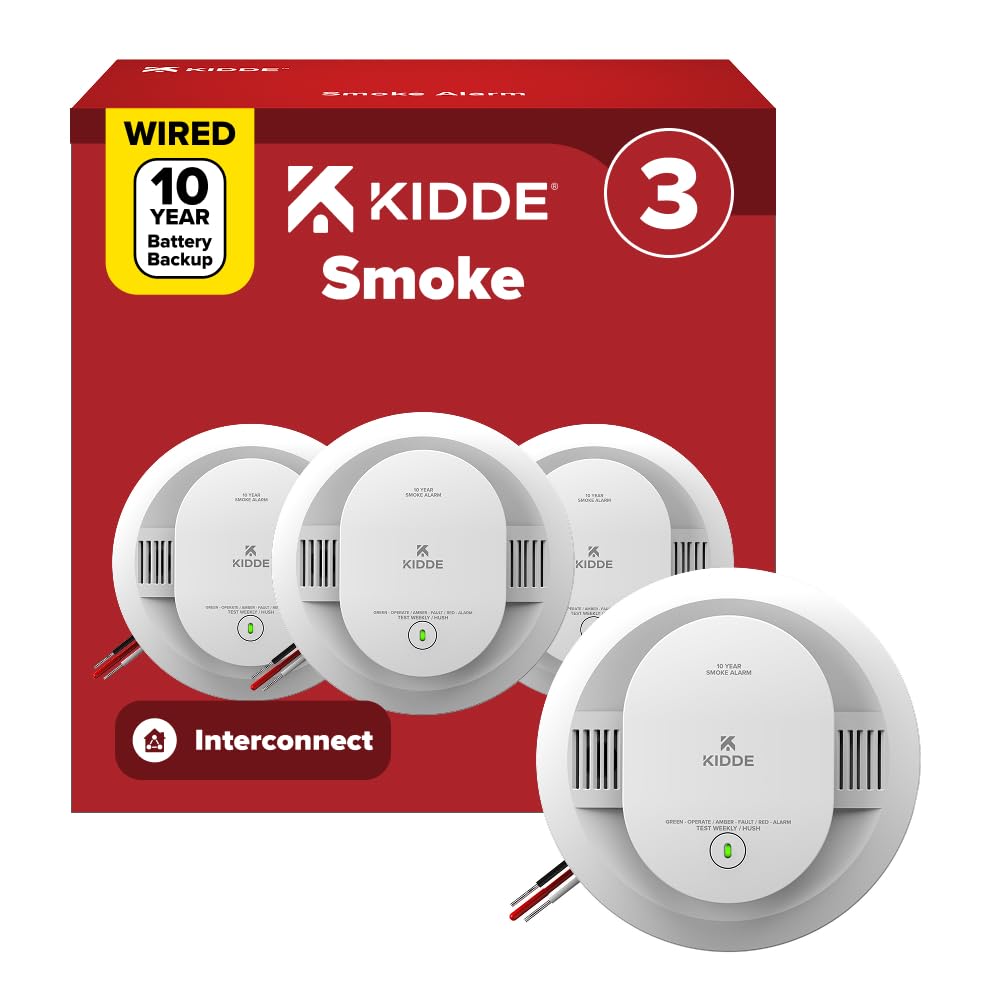
This Kidde smoke detector three-pack is built for homeowners who already have wired alarm positions and want to replace or expand coverage without touching a battery every year. The 20SA10 pairs hardwired power with a sealed 10-year backup, interconnects with the rest of the home’s alarms, and reports its status through LED lights. The review below covers what the unit does, where it fits in a house or apartment, and the points that decide whether it is the right box to carry home.
Features and Specifications
Type: Hardwired smoke detector with battery backup
Model: 20SA10
Pack size: 3 pack
Power source: Hardwired, with 10-year battery backup
Interconnect: Yes — alarms link together
Battery maintenance: No battery replacement, no low battery chirps
Status indicators: LED status lights
Intended use: Homes and apartments
The headline here is the combination of hardwiring and a sealed backup. A hardwired alarm draws its everyday power from the home’s wiring, so the backup cell only has to carry the unit through an outage — which is why Kidde can stretch it to a ten-year service life and remove the annual battery swap from the homeowner’s to-do list.
The interconnect capability is the second piece that matters. When one alarm in a linked group senses smoke, the others sound too, so a fire in a basement or back bedroom does not depend on someone being close enough to hear a single unit. That is the feature that turns three separate detectors into one system.
Build and Placement
The 20SA10 is a ceiling-or-wall unit designed to sit on an existing hardwired base, which is the practical detail for anyone replacing old alarms. Buyers who already have wired positions can swap the units without running new cable, and a three-pack covers the usual spread of a home — one per level, or bedrooms plus a hallway.
The casing is the standard consumer smoke alarm format: a low-profile disc with a test button and the LED indicators on the face. It is not a decorative device, and it is not meant to be. The value is in the electronics and the wiring compatibility, not the finish.
The flip side of a hardwired unit is that it only works where the wiring already exists. A buyer in an older home without alarm circuits, or a renter who cannot modify the property, gets nothing from this box — a battery-only or sealed-battery alarm is the correct purchase there.
Power and the 10-Year Backup
The sealed backup is the feature that changes ownership. With no user-replaceable battery, there is no annual ladder work, no chirping at 2 a.m. because a cell is fading, and no chance of a unit sitting silently with a dead battery pulled out by a previous occupant. The alarm either has power from the mains or it runs on the backup.
That convenience carries a limit worth stating plainly. When the backup reaches the end of its service life, the unit itself is at the end of its useful life, and the whole alarm is replaced rather than serviced. The purchase price is therefore covering the full lifespan of the device, not just the hardware on day one.
Hardwiring also means installation is a small electrical job rather than a peel-and-stick one. Buyers comfortable with a breaker and a mounting plate will manage it; everyone else should budget for an electrician or handyman to fit the three units.
Interconnect and LED Status
Interconnect is the reason to buy a three-pack rather than three singles. Linked alarms sound together, which matters most in multi-level homes and in any layout where a closed door sits between the smoke and the sleeping occupant. The three units should be treated as one installation, not as three independent purchases.
The LED status lights give a quick visual read on each unit without climbing up to press a test button. That is a small thing that pays off in a household with several alarms, where checking each one by hand is the chore that gets skipped.
The caution with any interconnected group is consistency. All the alarms on the circuit need to be compatible models for the link to work as intended, so a buyer mixing this pack with older or different alarms on the same wiring should confirm compatibility before installation rather than after.
Trade-off: The sealed backup and hardwired design remove battery maintenance but commit the buyer to replacing the entire alarm at end of life, and the unit is only viable in a home that already has alarm wiring.
Check the current price on Amazon
Who This Kidde Smoke Detector Suits
The clearest fit is a homeowner with existing hardwired alarm positions who is replacing aging units or adding coverage. Three alarms in one box covers a typical single-family layout, and the interconnect means the whole group works as one system from the day it is installed.
It also suits anyone who has had enough of battery chirps. Households with high ceilings, older residents, or anyone who has simply forgotten to swap a cell will find the sealed backup removes the most commonly skipped maintenance task in home safety.
It is a poor fit for renters, for homes without alarm wiring, and for buyers who want a single alarm rather than a set. Those shoppers are better served by a battery-powered or sealed-battery standalone unit that needs no electrical work.
FAQ
-
Does this Kidde smoke detector need a battery replacement?
No. The 20SA10 uses a sealed 10-year backup battery, so there is no annual cell to swap and no low battery chirp to chase. When the backup reaches the end of its life, the alarm is replaced as a unit. -
What does interconnect capability mean on a smoke detector?
Interconnect means linked alarms sound together. When one unit detects smoke, the others in the group alarm as well, so occupants are alerted throughout the home rather than only near the source. -
Can this alarm be installed without existing wiring?
No. It is a hardwired unit and needs an existing alarm circuit to run. Homes without wired alarm positions need a battery-only or sealed-battery model instead. -
Is a three-pack enough for a house?
For many single-family homes, three units cover the main levels and the bedroom hallway. Larger homes, finished basements and additional bedrooms may need a second pack to meet coverage goals. -
Do all the alarms in the house need to be the same model?
For interconnect to work reliably, the linked alarms should be compatible. Buyers adding this pack to an existing system should confirm the older units are supported before installing. -
How are the alarms checked day to day?
The LED status lights give a visual indication at each unit, and the test button allows a manual check. A regular press of the test button across the group confirms the interconnect is working. -
Where should the units be mounted?
Standard practice is ceiling or high wall positions on each level, inside or just outside bedrooms, and in the path between sleeping areas and exits. Local code and the manufacturer’s instructions decide the exact placement. -
Is this suitable for an apartment?
The product is marketed for homes and apartments, but apartment buyers should check with the building first. Hardwired installation in a rental typically requires landlord approval and access to the property’s wiring. -
What happens at the end of the 10-year backup life?
The alarm is retired and replaced rather than repaired or refilled. Planning for that replacement cost is part of owning a sealed-backup unit. -
Does it work during a power outage?
Yes. The hardwired connection handles everyday power, and the 10-year backup keeps the alarm running when mains power is lost.
Bottom Line
The Kidde 20SA10 three-pack is the straightforward choice for a homeowner with existing alarm wiring who wants linked protection and no battery maintenance for a decade. The Kidde smoke detector earns its place on the interconnect feature and the sealed backup, provided the house already has the wiring to support it.
