Why there are Amazon links here: Brave Review is paid a commission for qualifying Amazon purchases made through the links below. Your price does not change, and using our links is entirely optional. How this works
Leviton SureSlide Dimmer Switch: One Switch, Every Bulb Type
The Leviton SureSlide LED Advanced Dimmer Switch is a single-pole wall dimmer built to drive dimmable LED, halogen and incandescent fixtures from one device. It suits anyone replacing an old toggle-style dimmer, finishing a remodel, or trying to stop LED bulbs from flickering at low levels. This review covers what the switch is built to do, how it handles each bulb type, and where a buyer should expect friction. The short answer: it is a flexible, budget-tier dimmer for a standard wall box, not a smart-home device.
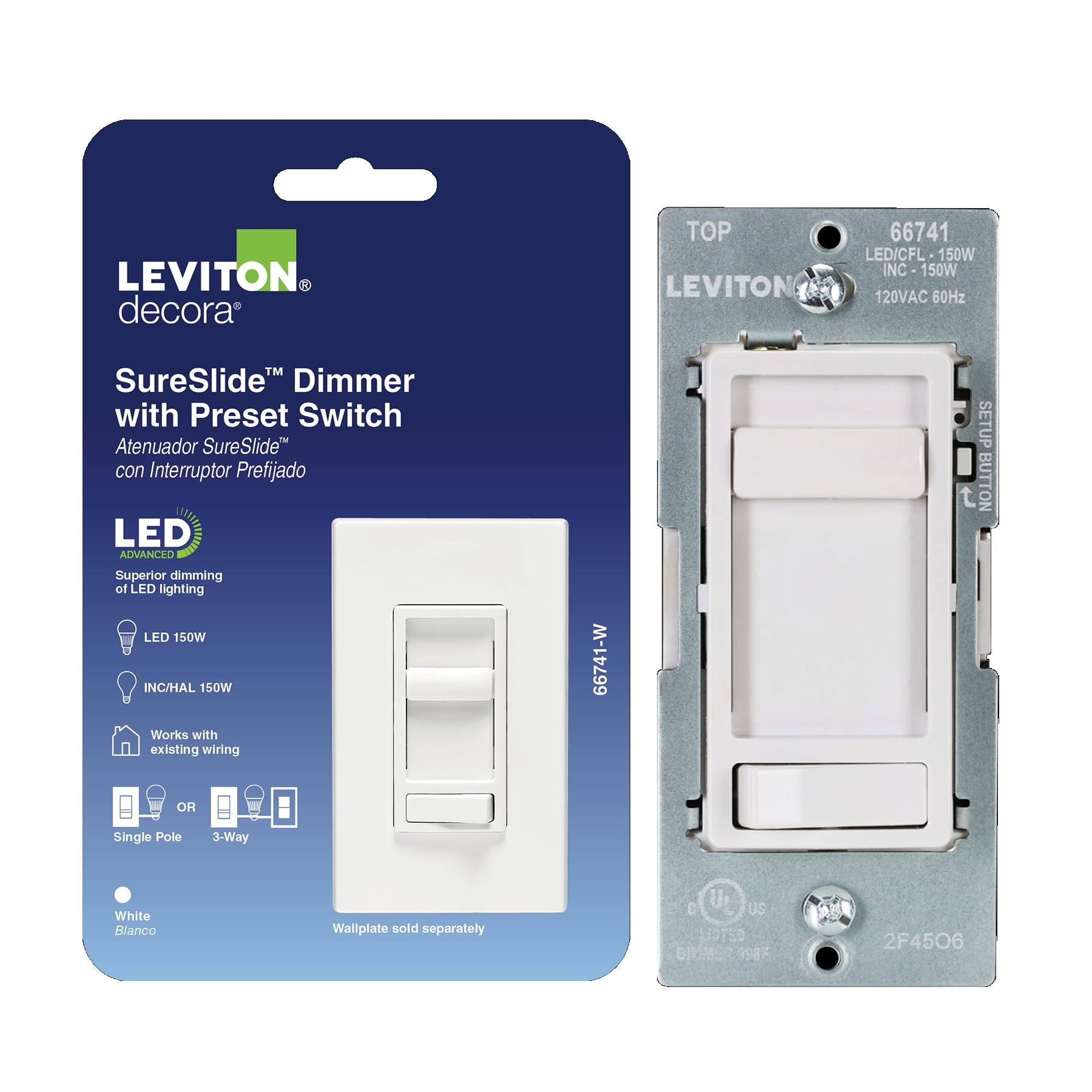
Features and Specifications
Type: Single-pole wall dimmer switch
Load Types: Dimmable LED, halogen and incandescent bulbs and fixtures
LED Capacity: 150W dimmable LED
Model: 66741-W
Color: White
Control Style: SureSlide slider
Best Use: Replacing a standard wall dimmer in a single-switch circuit
The headline number here is the 150W LED rating. LED bulbs draw a fraction of what their incandescent equivalents use, so 150W of LED capacity covers a lot of fixtures — a room full of recessed LEDs or a multi-bulb chandelier fits comfortably inside that ceiling. The same switch also accepts halogen and incandescent loads, which matters for older homes where fixtures have not been converted yet.
The 66741-W model designation and white finish place it in Leviton’s mainstream residential line, the same family of devices sold in hardware stores and big-box electrical aisles. The SureSlide name refers to the slider mechanism: a vertical control that sets brightness level, rather than a rotary knob or a tap-style paddle. Buyers who want a specific light level dialed in rather than cycled through presets will find that layout familiar.
How the SureSlide Control Works in Practice
The slider is the defining feature, and it changes how a room feels to operate. A slider holds its position, so the dimmer returns to the same brightness the next time the switch is flipped on — a small thing that matters in a bedroom or a dining room where the lighting level is set once and left alone. Rotary dimmers drift; sliders generally do not.
The trade-off with a slider is tactile feedback. There is no click or detent at a preset level, so setting an exact percentage means eyeballing the position of the tab. Buyers who like a positive stop at full brightness or at a favorite level may prefer a different control style. For general residential lighting, the slider is a reasonable compromise between precision and simplicity.
Bulb Compatibility and the LED Flicker Question
Dimmable LED bulbs are the reason most buyers end up replacing an old dimmer in the first place. Older dimmers were designed around resistive incandescent loads and often produce flicker, buzz or a narrow usable dimming range when paired with LED bulbs. A dimmer rated specifically for dimmable LED — as this one is — is built to deliver a smoother low end and to avoid the dropout where LEDs cut out before reaching true dim.
Compatibility is not universal, though. The switch needs dimmable LED bulbs; standard non-dimmable LEDs will misbehave no matter what dimmer sits behind them. Mixed loads on the same circuit — some LED, some incandescent — can also produce uneven behavior, because the two bulb types dim on different curves. Buyers replacing a fixture should confirm every bulb on that circuit is rated dimmable before blaming the switch.
Installation and Wall Box Fit
This is a single-pole dimmer, meaning it controls one light or one group of lights from one location. It is not a three-way switch, so a hallway or staircase light controlled from two ends of the run needs a different device. That is the single biggest compatibility check before buying, and it is easy to get wrong: a three-way circuit has an extra traveler wire at the switch box, and a single-pole dimmer will not work in that position.
Physically, the device is a standard wall-box dimmer with a white faceplate-compatible body, so it drops into the same opening as the switch it replaces. Buyers should expect to work with the existing wiring and to match the circuit’s neutral requirements to the device — as with any dimmer, the instructions that ship with the unit govern the specific wiring. Anyone not comfortable working inside a live electrical box should hire an electrician; the switch itself is inexpensive, and the labor is the real cost of the job.
Trade-off: The 150W LED ceiling and single-pole-only design mean this dimmer suits a standard room circuit, not a whole-house LED retrofit or a multi-switch hallway.
Check the current price on Amazon
Where the Leviton SureSlide Dimmer Fits Best
The clearest use case is a straightforward swap: one switch, one room, a mix of bulb types, and a buyer who wants the dimming to just work without adding a hub, an app or a neutral wire run. Living rooms, dining rooms, bedrooms and finished basements with a single lighting circuit are the natural fit. At a budget-tier price, it is also a low-risk way to test whether a dimmer solves a flicker complaint before committing to a more expensive smart dimmer.
The switch is a poor fit for buyers who want remote control, scheduling or voice assistant integration — it has no smart features and no wireless radio. It is also the wrong device for a three-way circuit or for a load that exceeds its LED rating, such as a large array of high-output fixtures on one switch. Buyers in those situations need a different product, not a workaround.
FAQ
-
Will the Leviton SureSlide dimmer work with LED bulbs?
Yes, provided the bulbs are dimmable. The switch is rated for 150W of dimmable LED and is designed to reduce the flicker and drop-out that older incandescent-only dimmers cause with LED loads. -
Can this dimmer be used in a three-way switch setup?
No. The 66741-W is a single-pole dimmer, so it controls one light from one location. A light controlled from two switches needs a three-way dimmer instead. -
Does it work with incandescent and halogen bulbs too?
Yes. The switch is rated for dimmable LED, halogen and incandescent bulbs and fixtures, which makes it useful in homes where some fixtures have been converted to LED and others have not. -
What does the SureSlide name refer to?
It refers to the vertical slider control that sets the brightness level. The slider holds its position, so the light returns to the same level when the switch is turned back on. -
Is a neutral wire required?
Wiring requirements are set by the instructions that ship with the device. Buyers should read them before opening the wall box, and should use a licensed electrician if unsure. -
Can it control a ceiling fan?
No. This is a lighting dimmer, not a fan speed control. Ceiling fans need a fan-rated control to avoid motor hum and premature failure. -
What is the maximum LED wattage?
150W of dimmable LED, per the product rating. Buyers adding up several fixtures on one switch should total the wattage before installing. -
Will it fit a standard wall box?
Yes. It is a standard-size wall dimmer designed to replace an existing switch in a conventional electrical box, and it comes in white to match common faceplates. -
Does it need a smart home hub or app?
No. It is a standalone dimmer with no wireless features, so it works without a hub, app or internet connection. -
Is it a good choice for a whole-room LED retrofit?
For a single circuit within the 150W LED limit, yes. For a large retrofit spanning multiple circuits or exceeding that rating, a different dimmer is needed.
Bottom Line
The Leviton SureSlide LED Advanced Dimmer Switch is the right buy for a buyer with a single-pole lighting circuit, dimmable bulbs and a straightforward goal: smooth dimming across LED, halogen or incandescent loads without paying for smart features. Its 150W LED rating and slider control cover most residential rooms, and the budget-tier price makes it an easy first step for anyone chasing flicker out of an old dimmer. Buyers with three-way circuits or smart-home ambitions should look elsewhere.
