Why there are Amazon links here: Brave Review is paid a commission for qualifying Amazon purchases made through the links below. Your price does not change, and using our links is entirely optional. How this works
Best Lithium vs Lead Acid for Home Storage for Backup and Off-Grid Power
Lithium versus lead acid for home storage comes down to a simple trade: lithium costs more up front but lasts far longer and delivers more usable capacity, while lead acid is cheaper to buy but heavier and shorter-lived. This roundup covers five LiFePO4 batteries that represent the strongest lithium options for home backup, solar, and off-grid setups. Budget-minded DIYers, full home-backup planners, and RV or marine owners will each find a fit below. The overview table points to the right pick in seconds.
Overview of the Picks
| Product | Key Spec | Best Use | Price Tier |
|---|---|---|---|
| NERMAK 12V 50Ah LiFePO4 | 50Ah, 100A BMS, 4000+ cycles | Small solar and off-grid builds | Budget |
| Build in 200A BMS 48V 314Ah LiFePO4 | 48V 314Ah, 16.08kWh, 200A BMS | Whole-home backup | Premium |
| Rechargeable 12V 600Ah LiFePO4 | 600Ah, 300A BMS, APP monitoring | Large RV and boat banks | Premium |
| 12V 100Ah LiFePO4 (5000+ cycles) | 100Ah, 100A BMS, 5000+ cycles | Trolling motors and solar | Mid-range |
| 12V 100Ah Group 31 LiFePO4 | 100Ah, 100A smart BMS, 15000+ cycles | Versatile RV and home use | Mid-range |
1. NERMAK 12V 50Ah LiFePO4 Deep Cycle Battery
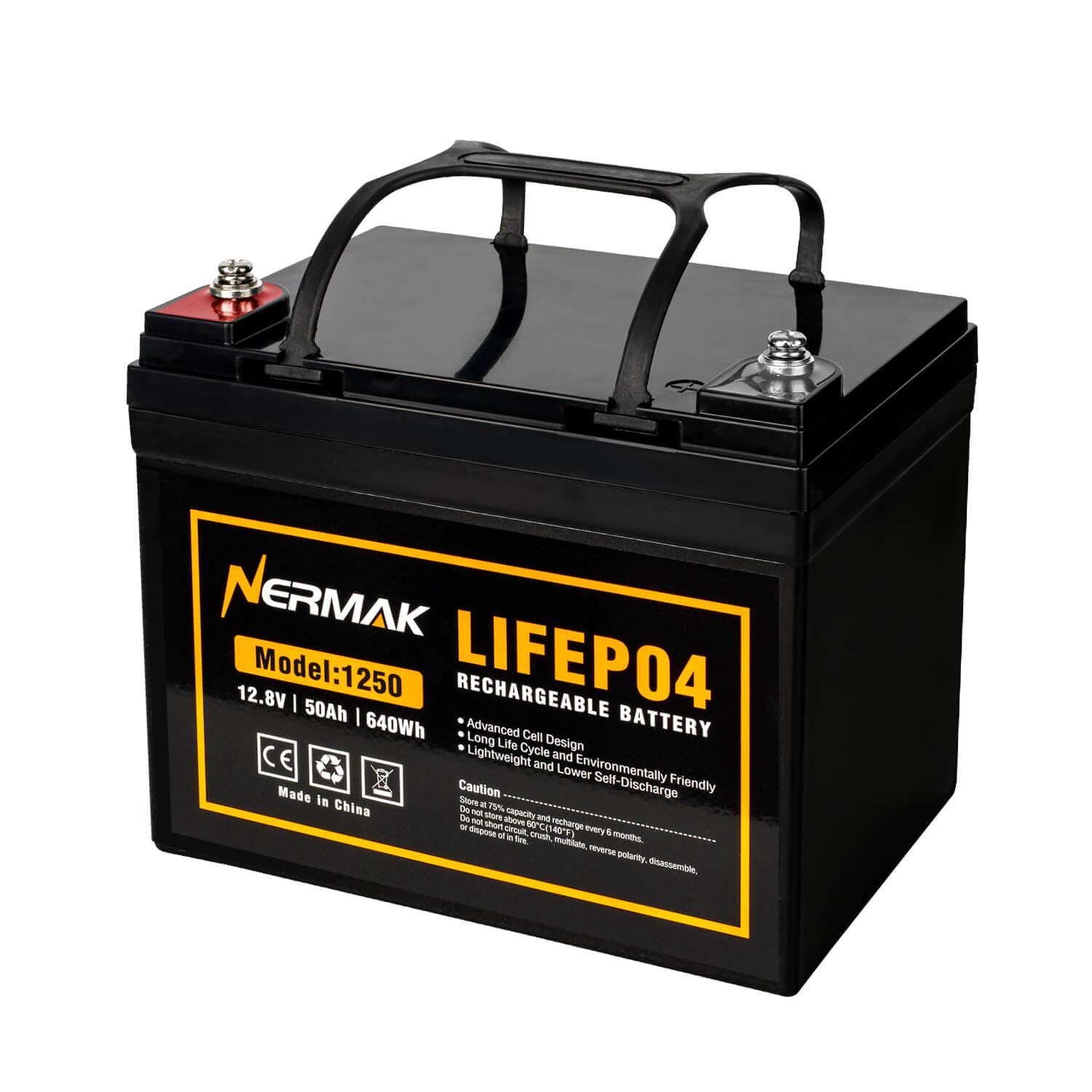
Chemistry: LiFePO4
Capacity: 50Ah
BMS: Built-in 100A
Cycle Life: 4000+
Intended Use: Solar, marine, home storage, off-grid
The NERMAK is the smallest battery in this roundup, built for buyers who want to test lithium without committing to a large bank. Its 50Ah capacity suits a single solar panel setup, a small backup circuit, or a trolling motor on a light boat. The built-in 100A BMS handles overcharge and discharge protection internally, so no separate management hardware is needed. The 4000+ cycle rating is where lithium versus lead acid for home storage shows its biggest advantage — a comparable lead acid battery would need replacing several times over that lifespan.
This pick earned its place as the entry point for anyone curious about lithium. It suits campers, small-cabin owners, and DIYers building a first solar kit. It is not for buyers running a whole-home backup or a large inverter load, where one 50Ah unit falls well short.
Trade-off: The modest 50Ah capacity means most home-backup buyers will need several units wired together, which adds cost and wiring complexity.
2. Build in 200A BMS 48V 314Ah LiFePO4 Battery
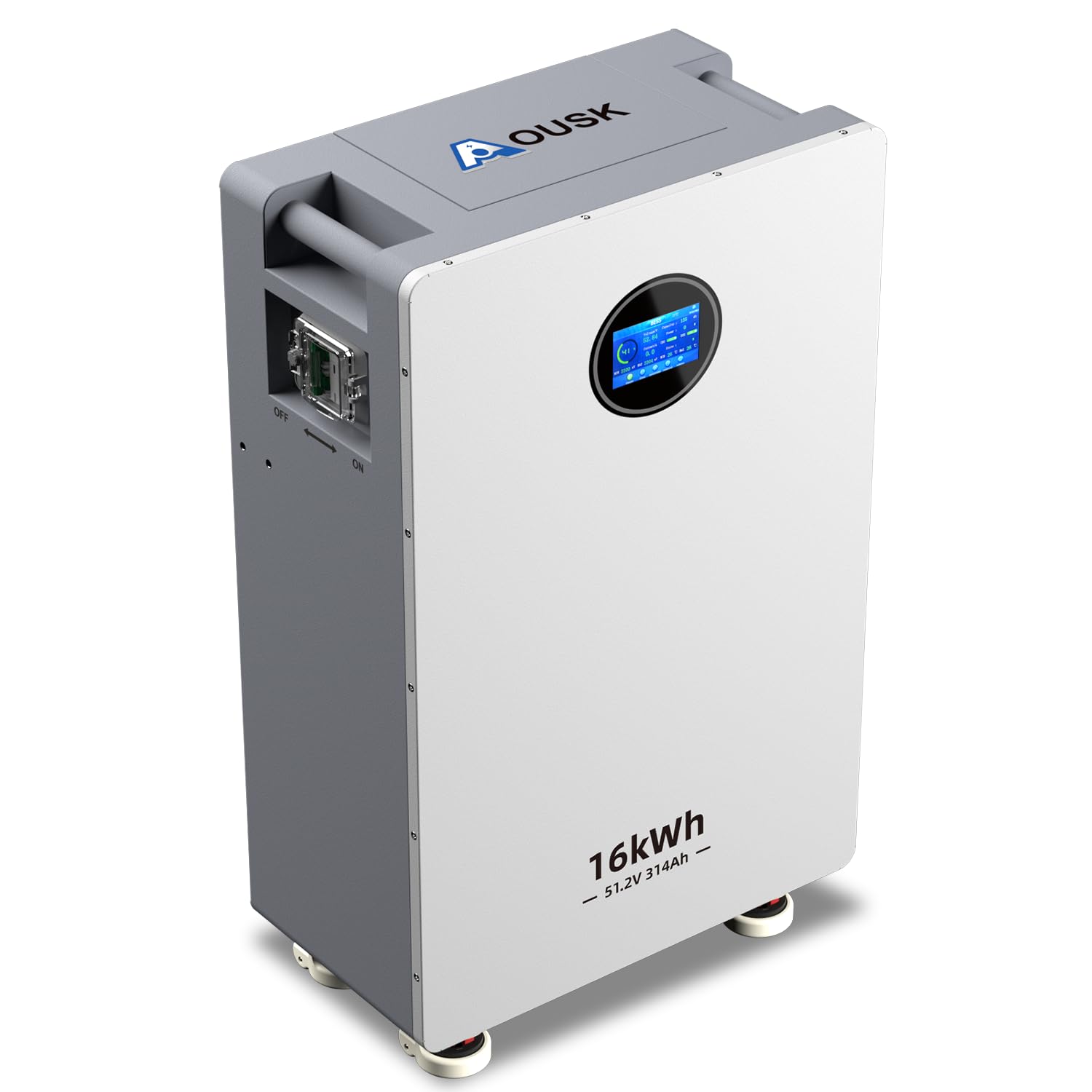
Chemistry: LiFePO4
Voltage: 48V
Capacity: 314Ah / 16.08kWh
BMS: Built-in 200A
Communication: RS485/CAN/RS232
Intended Use: Home backup, off-grid, solar
The Build in unit is the heavy hitter of the group — a 48V, 16.08kWh battery aimed at whole-home energy storage. The 200A BMS supports serious inverter loads, and the RS485/CAN/RS232 ports let the battery talk to hybrid inverters and monitoring systems. Integrated breakers add a layer of circuit protection that smaller batteries leave to external hardware.
This is the pick for buyers planning a full home backup or a large off-grid solar array. It suits homeowners who already run a 48V inverter and want a single high-capacity block instead of a wall of 12V units. It is not for casual users, small RVs, or anyone without the electrical knowledge to handle a 48V system safely.
Trade-off: A 48V battery of this size demands proper inverter compatibility and professional installation, and the upfront cost dwarfs every other pick here.
3. Rechargeable 12V 600Ah LiFePO4 Battery with APP Monitoring
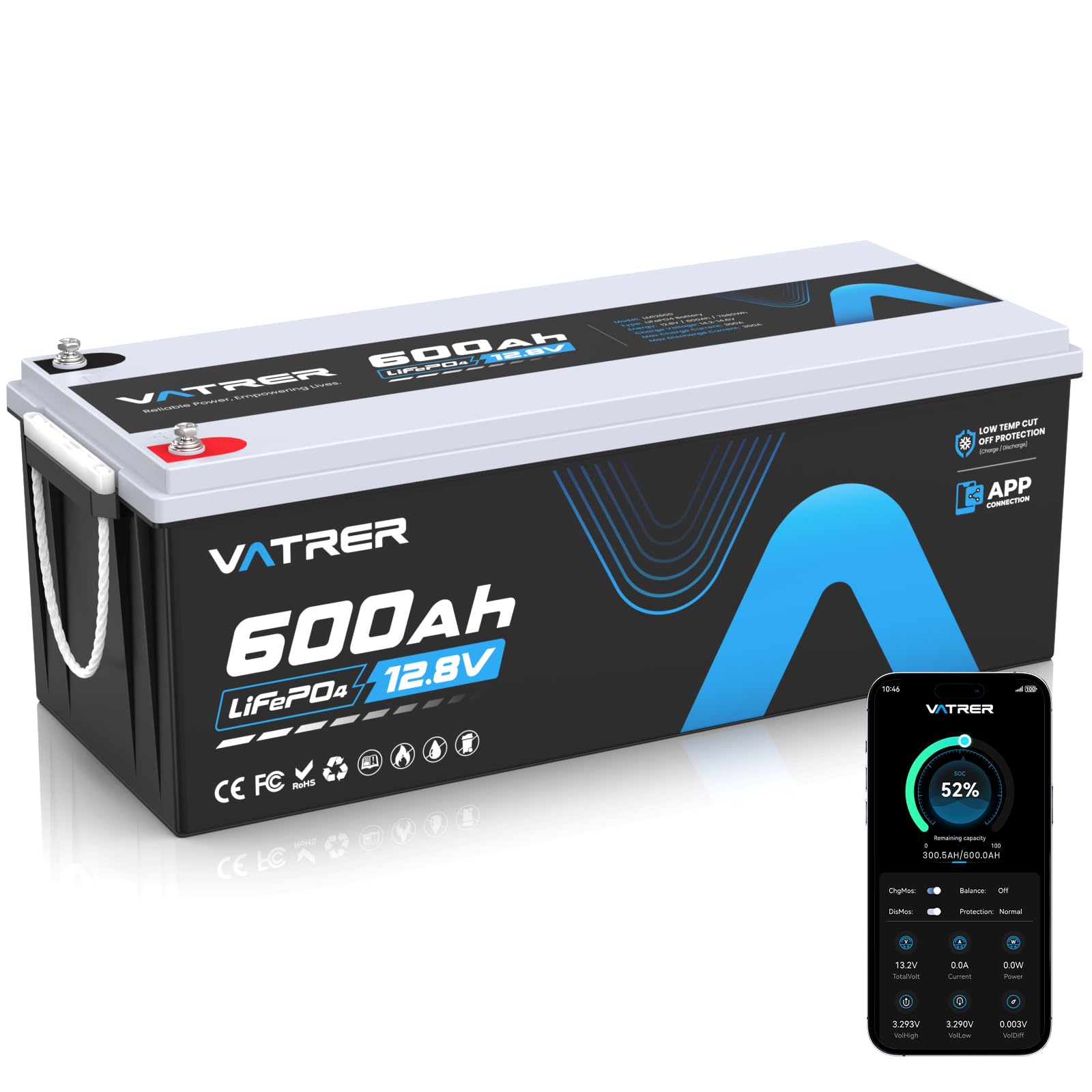
Chemistry: LiFePO4
Capacity: 600Ah
Max Load Power: 3840W
BMS: 300A
Protection: High/low temperature
Monitoring: APP
The 600Ah unit packs a large 12V bank into one case, with a 300A BMS and a stated 3840W max load. High and low temperature protection guards against charging or discharging outside safe conditions, which matters for installations in garages or unheated spaces. APP monitoring lets owners check state of charge and battery health from a phone, a feature the simpler picks lack.
This battery suits large RVs, boats with big house loads, and off-grid cabins that need serious 12V capacity. It earned its place for buyers who want one big 12V block with smart monitoring rather than several smaller batteries. It is not for small solar kits or buyers on a tight budget.
Trade-off: The APP monitoring and large capacity push this into premium territory, and a 600Ah block is heavy enough that installation and placement need planning.
4. 12V 100Ah LiFePO4 Battery with 5000+ Cycles

Chemistry: LiFePO4
Capacity: 100Ah
BMS: Built-in 100A
Cycle Life: 5000+
Intended Use: Home storage, trolling motor, RV, off-grid, solar, marine
The 100Ah unit hits the sweet spot most buyers land on — enough capacity for a trolling motor, a mid-size RV, or a small solar bank. The built-in 100A BMS covers the standard protection duties, and the 5000+ cycle rating makes the lithium versus lead acid for home storage argument concrete: this battery should outlast several lead acid replacements.
This pick suits anglers, RV owners, and solar beginners who want proven capacity at a reasonable tier. It earned its place as the workhorse option for buyers who need one reliable 100Ah block. It is not for whole-home backup or high-draw inverter loads that exceed the 100A BMS.
Trade-off: The 100A BMS caps how much inverter load the battery can feed, so heavy simultaneous draws will trip protection.
5. 12V 100Ah Group 31 LiFePO4 Battery with Smart BMS
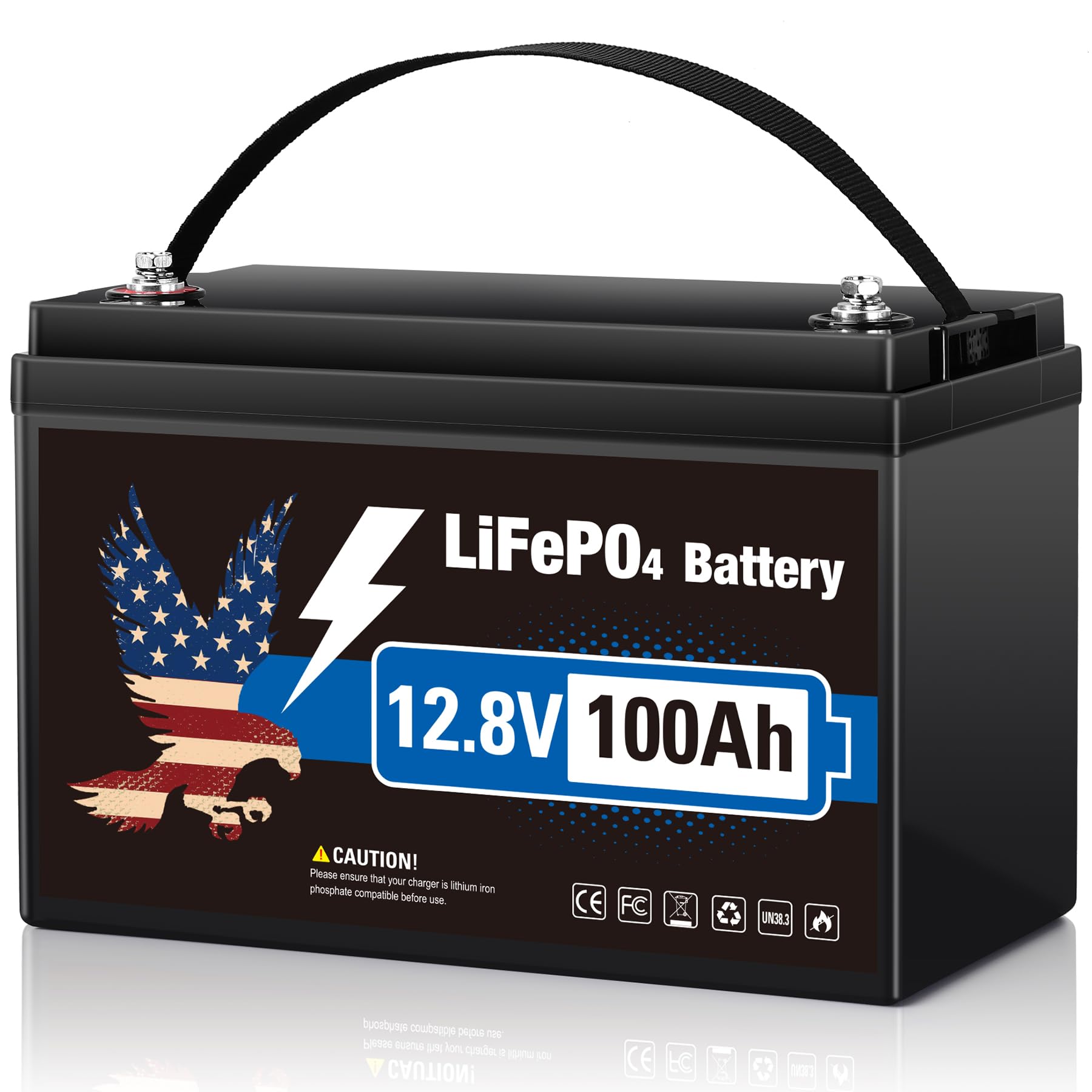
Chemistry: LiFePO4
Capacity: 100Ah / 1280Wh
Group Size: 31
BMS: Built-in 100A smart BMS
Cycle Life: 15000+
Protection: Low temperature
Intended Use: RV, marine trolling motor, solar, home, off-grid
The Group 31 battery is the most popular pick here, and its 15000+ cycle claim is the highest in the roundup. The Group 31 footprint is a standard size that drops into many existing battery trays, which simplifies upgrades from lead acid. Low-temperature protection blocks charging in the cold, and the smart BMS adds a layer of monitoring over the basic 100A units.
This suits RV owners, boaters, and home solar users who want maximum cycle life in a standard-size case. It earned its place as the best all-rounder for buyers who want longevity without stepping up to premium pricing. It is not for buyers who need more than 100Ah per unit or who run loads beyond the 100A BMS.
Trade-off: The 100A smart BMS still limits peak inverter draw, and the high cycle claim only pays off if the battery is kept within its temperature range.
Before You Buy
- Chemistry: LiFePO4 is the lithium type to look for — it is safer and longer-lived than older lithium chemistries and far outlasts lead acid.
- Capacity and voltage: Match amp-hours and voltage to the load; 12V suits RVs and small solar, while 48V is the standard for whole-home backup.
- BMS rating: The built-in BMS amp rating caps inverter draw — pick a battery whose BMS exceeds the planned load.
- Compatibility: Check that the battery’s voltage and communication ports match the inverter or charge controller in use.
- Temperature protection: Low-temperature cutoff matters for garages and unheated spaces; confirm the model includes it.
- Space and weight: Lithium is lighter than lead acid for the same usable capacity, but large banks still need secure mounting.
- Cycle life vs price: Higher cycle ratings cost more up front but lower the long-run cost per cycle — the core of the lithium versus lead acid for home storage decision.
Frequently Asked Questions
-
Is lithium better than lead acid for home storage?
Yes for most buyers — lithium delivers more usable capacity, lasts far longer, and needs less maintenance, though it costs more up front. -
How long do LiFePO4 batteries last?
The picks here rate from 4000+ to 15000+ cycles, which typically translates to many years of daily use versus a few years for lead acid. -
Can a 12V lithium battery run a home backup?
A single 12V unit suits small backup circuits; whole-home backup generally needs a 48V bank like the Build in 16.08kWh model. -
Do these batteries need a special charger?
Yes — LiFePO4 batteries require a lithium-compatible charger or charge controller with the correct voltage profile. -
Is low-temperature protection necessary?
It is strongly advised for any installation in a cold garage, shed, or unheated space, since charging below freezing can damage lithium cells. -
How many batteries are needed for a solar setup?
It depends on daily load and sun hours; buyers should size the bank to their inverter and expected backup duration.
Bottom Line
For most buyers weighing lithium versus lead acid for home storage, the 12V 100Ah Group 31 LiFePO4 battery is the safest all-round pick — standard sizing, low-temperature protection, and the longest cycle life in the group. Homeowners planning a full backup should step up to the 48V Build in unit, while budget buyers can start small with the NERMAK 50Ah.