Why there are Amazon links here: Brave Review is paid a commission for qualifying Amazon purchases made through the links below. Your price does not change, and using our links is entirely optional. How this works
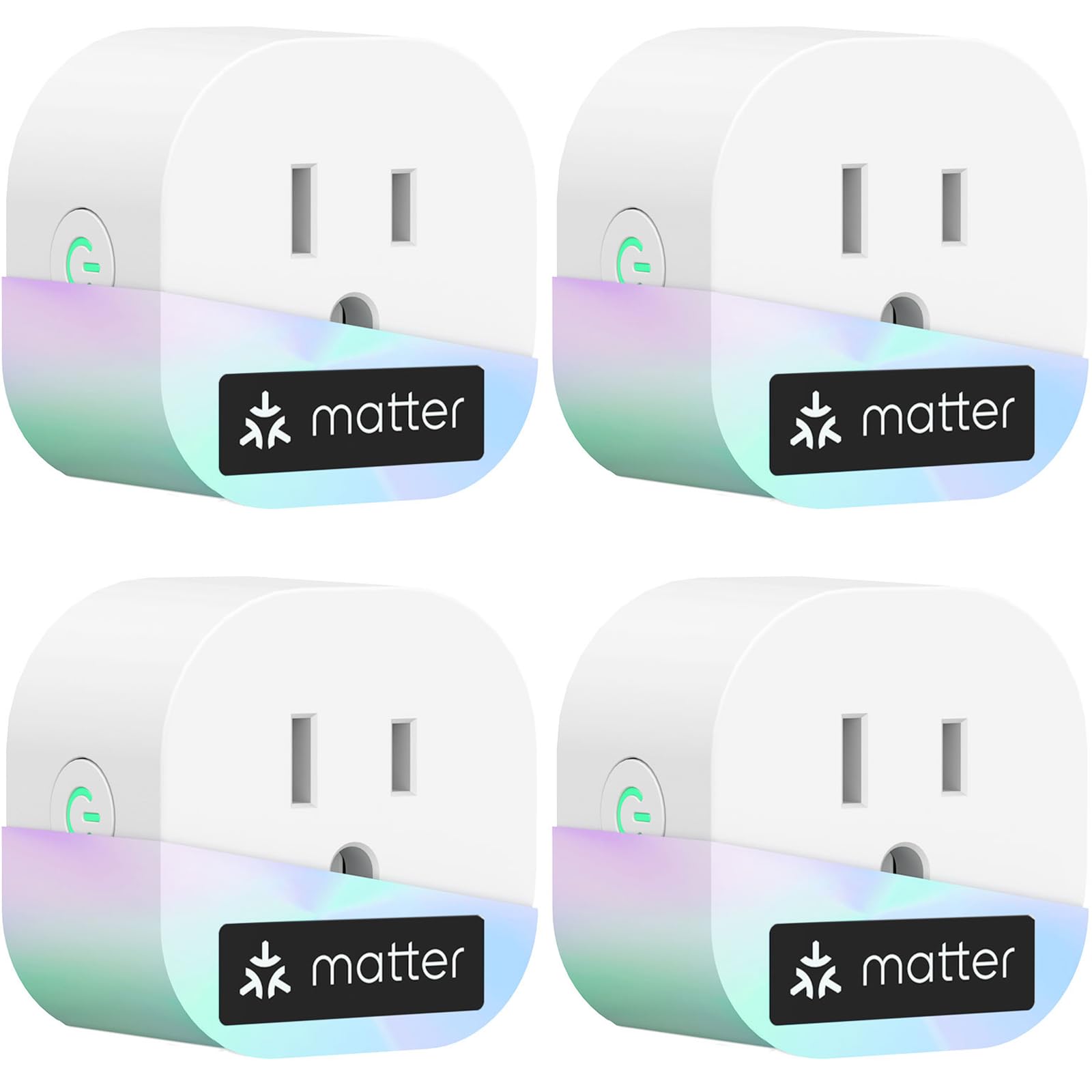
Meross Smart Plug Mini (4 Pack): Matter Control for Apple, Alexa and Google Homes
The Meross smart plug 4-pack is a budget-friendly way to put lamps, fans and small appliances on a phone, a voice assistant or an automation routine. It supports Apple Home, Alexa and Google Home through Matter, works over 2.4 GHz Wi-Fi, and ships as a four-pack so a buyer can cover several rooms in one purchase. This review covers the build, the setup path, the scheduling tools and the limits that matter before checkout.
One detail shapes everything below: this is a mini plug sold in a multi-pack. The value is in spreading control across a house cheaply, not in powering heavy equipment or adding energy monitoring. Buyers who want a simple on/off switch with broad ecosystem support will find the fit strong; buyers chasing consumption data or a single premium outlet should look elsewhere.
Check the current price on Amazon →
Features and Specifications
Type: Smart plug (mini, indoor)
Pack Size: 4 plugs
Connectivity: 2.4 GHz Wi-Fi only
Ecosystem Support: Apple Home, Alexa, Google Home
Protocol: Matter
Control: App, voice, schedule and timer
Form Factor: Compact
Privacy Positioning: Local-first control, marketed as 100% privacy
These specifications describe a straightforward device. Matter is the interoperability standard that lets one plug answer to Siri, Alexa and Google Assistant without separate pairing rituals for each, and Meross leans on it here. The 2.4 GHz limitation is normal for smart home hardware — it travels farther through walls than 5 GHz and costs less to build — but it does mean the plug cannot join a 5 GHz-only network.
The four-pack structure is the real headline. A single smart plug solves one lamp; four plugs solve a living room, a bedroom, a desk and a hallway for roughly the price of one premium competitor. Meross positions this as an entry point, and the hardware reflects that: functional, compact and built to sit in a wall outlet without blocking its neighbor.
Build and Design
The mini form factor is the most useful physical trait. Compact smart plugs are shaped to leave the second socket of a duplex outlet usable, which matters in older homes and apartments where outlets are scarce. The housing is molded plastic in the usual white finish, and the plug occupies a single receptacle.
Because the body is small, the internal relay and Wi-Fi radio are also small. That is fine for the loads this class of plug is designed for — lamps, chargers, fans, coffee makers, holiday lights — but it is not a shop tool or a space heater controller. Buyers should treat the plug as a light-duty switch, not a high-current cutoff.
Trade-off: The compact housing and budget price point mean this is a light-duty indoor switch, so it should stay away from high-draw appliances and outdoor use.
Power and Connectivity
The plug’s job is binary: on or off, commanded from the app, a voice assistant or a schedule. It does that over 2.4 GHz Wi-Fi, which is the band most smart home gear uses because it penetrates walls better and puts less strain on the router than 5 GHz. Phones and routers that broadcast a single merged network usually handle the pairing fine; networks split into separate 2.4 and 5 GHz names need the phone parked on the 2.4 GHz SSID during setup.
Matter changes the setup experience more than the daily one. Instead of installing the Meross app first and pairing through it, buyers can scan a Matter code in Apple Home, Alexa or Google Home and let the ecosystem do the work. The Meross app is still available for firmware updates and the schedule and timer tools, and it remains the fallback when an ecosystem integration misbehaves.
The connectivity limit is worth stating plainly: no 5 GHz, no Bluetooth fallback mentioned in the product name, and no Ethernet. A buyer with a mesh network that hides the 2.4 GHz band behind a single SSID may need to adjust router settings before the plug will join.
Schedules, Timers and Voice Control
Scheduling is where a cheap smart plug earns its keep. The Meross app supports schedules and timers, which covers the two most common use cases: turning a lamp on at dusk and off at bedtime, and running a fan or a holiday light string for a set number of hours. Voice control through Siri, Alexa or Google Assistant handles the ad hoc commands — "turn off the living room lamp" — without opening an app.
Apple Home buyers get the most out of the Matter support, because the plug appears as a native Home accessory and can join Home automations alongside other Matter devices. Alexa and Google users get the same on/off and scheduling behavior through their own routines. The practical difference is which app holds the automation logic, not what the plug can physically do.
A caution here: schedule and timer features live in software, and software is where budget smart home gear most often frustrates. Expect to update firmware after setup, expect the occasional re-pairing after a router change, and expect the app to be the weakest link rather than the plug itself.
Privacy and Local Control
Meross markets this plug as a privacy-focused Wi-Fi outlet, and the Matter standard supports that pitch: Matter devices are designed to be controlled locally on the home network rather than routed through a manufacturer cloud for every command. In practice, that means a command from the app or a voice assistant can stay inside the house.
That said, cloud accounts still exist for firmware and remote access, and no smart plug should be described as fully offline. Buyers who want maximum privacy should pair through Apple Home or another Matter controller and treat the vendor app as a setup and update tool rather than a daily driver.
Who It Suits and Who It Does Not
This four-pack suits renters and first-time smart home buyers who want broad ecosystem support without paying per-plug premium prices. It also suits Apple Home households that have been waiting for affordable Matter accessories, and anyone who wants to automate lamps, fans or seasonal lighting across several rooms at once.
It does not suit buyers who need energy monitoring to track appliance consumption, since the product name makes no such claim. It does not suit anyone planning to control a space heater, air conditioner or other high-draw load. And it does not suit a household with a 5 GHz-only Wi-Fi setup or one that wants a single plug rather than a four-pack.
Trade-off: The low per-plug price buys capability and ecosystem reach, not instrumentation or heavy-duty switching, so buyers needing power data or high-current control should budget for a different class of device.
FAQ
-
Does the Meross smart plug work with Apple Home?
Yes. The plug supports Matter, and Apple Home is listed among the supported ecosystems alongside Alexa and Google Home. Pairing through the Home app with the Matter code is the intended path. -
Does the Meross smart plug need a hub?
No separate Meross hub is required. The plug connects directly to 2.4 GHz Wi-Fi, and a Matter controller — an Apple Home hub, an Echo speaker or a Google speaker — handles ecosystem integration. -
Why is the Meross smart plug 2.4 GHz only?
The 2.4 GHz band reaches farther through walls and is cheaper to build into small devices, which is why most budget smart plugs use it. The plug will not join a 5 GHz network, so the phone must be on the 2.4 GHz band during setup. -
Can the Meross smart plug be scheduled?
Yes. The Meross app includes schedule and timer controls, and the plug can also be automated through Apple Home, Alexa or Google Home routines once paired. -
Is the Meross smart plug good for lamps and small appliances?
It is designed for exactly that: lamps, fans, chargers, coffee makers and holiday lights. It is a light-duty indoor switch and should not be used with high-draw appliances such as space heaters. -
Does the Meross smart plug monitor energy use?
The product name makes no energy-monitoring claim, so buyers should not expect consumption tracking. It is an on/off switch with scheduling, not a power meter. -
Can the Meross smart plug be used outdoors?
No. It is an indoor mini plug. Outdoor use, garages with extreme temperatures and damp locations are outside what this form factor is built for. -
How many plugs come in the pack?
Four. The listing is a 4-pack, which is the main reason the per-plug cost lands in budget territory. -
Does the Meross smart plug work with Google Home and Alexa?
Yes. Both ecosystems are listed as supported, and Matter pairing lets the plug appear natively in either app. -
What happens if the Wi-Fi goes down?
Local Matter control can keep some commands working through a home hub, but app and voice control depend on the network. A buyer who needs a plug to keep a schedule through an outage should look at devices with onboard memory and physical buttons.
Bottom Line
The Meross Matter smart plug 4-pack is the practical answer for a household that wants lamps, fans and small appliances under voice and app control without paying premium prices per outlet. Matter support across Apple Home, Alexa and Google Home is the feature that matters most, and the four-plug pack turns a single purchase into whole-home coverage. Buyers who need energy monitoring or high-current switching should keep looking; everyone else can start with this pack and expand later.
