Why there are Amazon links here: Brave Review is paid a commission for qualifying Amazon purchases made through the links below. Your price does not change, and using our links is entirely optional. How this works
meross Smart Thermostat: The Budget-Friendly Way to Automate Electric Baseboard Heat
The meross smart thermostat is the straightforward answer for anyone stuck with electric baseboard heaters and tired of walking over to turn a dial. It adds app scheduling, voice control, and remote access to a heating type that most smart thermostats simply refuse to support. This review covers what the unit does, how it fits into a home, and where it falls short so a buyer can decide quickly. The short version: if the house runs on line-voltage baseboard heat and the goal is automation on a budget, this is the model worth checking.
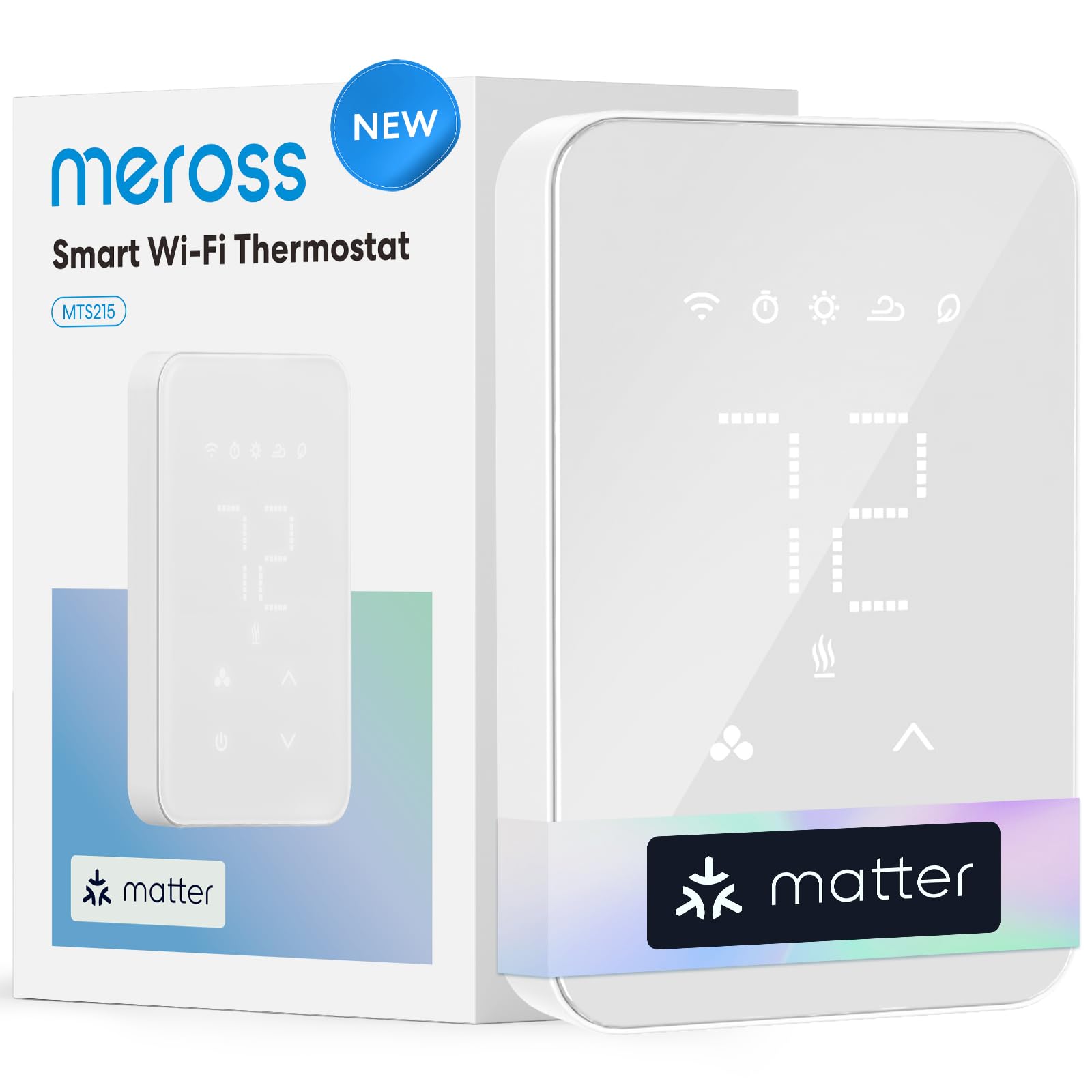
Features and Specifications
Type: Programmable WiFi smart thermostat for electric baseboard heaters
Voltage: 120-240V line voltage
Platforms: HomeKit, Alexa, Google Home, SmartThings
Protocol: Matter
Function: Remote control and energy-saving scheduling
Compatibility: Electric baseboard heating systems
The headline here is compatibility. Most mainstream smart thermostats run on low-voltage wiring, which is what gas furnaces and central air systems use. Electric baseboard heaters run on line voltage instead, and that mismatch is why so many homeowners give up on smart heating. This meross model is built for that wiring, so it slots into the existing setup rather than forcing a rewire.
The second headline is Matter. That’s the cross-platform standard that lets one device talk to Apple, Amazon, Google, and Samsung ecosystems at the same time. In practice, a buyer isn’t locked into one smart home app, and the thermostat keeps working if the household switches phones or adds a different brand of hub later. Combined with the four named platforms, that’s unusually broad support for the price bracket.
Build and Installation
This is a line-voltage device, which means installation involves household mains wiring rather than the thin signal wires a low-voltage thermostat uses. Buyers comfortable with a breaker panel and a screwdriver can usually handle the swap, but anyone unsure should budget for an electrician. That’s not a flaw in the product — it’s the nature of baseboard heat — but it’s the single biggest practical consideration before ordering.
The form factor is a wall-mounted unit designed to replace an existing baseboard dial or programmable thermostat in the same box. Because it works across 120V and 240V, the same model covers the common residential baseboard configurations, which simplifies things for a house with more than one heater.
Capacity and Coverage
Baseboard heaters are typically zoned room by room, and this thermostat is built for that reality: one unit per heater, one zone per room. A whole-house setup means buying several. That’s worth planning for up front, because the cost multiplies quickly and the value depends on how many zones actually get used.
The flip side is that per-room control is exactly what makes baseboard heat expensive to run. Heating only the rooms in use, on a schedule, is where the energy savings come from. A single unit in a single room still delivers that benefit for that room.
Power and Smart Features
Scheduling is the core function. The thermostat can be programmed to drop the temperature during work hours and bring it back before anyone gets home, which is the classic use case for this category. Remote control through the app means a schedule can be adjusted from anywhere — useful when plans change and the house will be empty longer than expected.
Voice control through Alexa, Google Home, and HomeKit adds hands-free adjustment, and SmartThings support pulls it into a broader automation routine. A buyer already running a smart home will find it fits without a separate app ecosystem.
Maintenance and Daily Use
There’s very little to maintain. A line-voltage thermostat is a solid-state device with no filters or moving parts, so daily ownership is mostly about the app: setting schedules, adjusting for seasons, and keeping firmware current. The Matter standard is designed to keep the device useful as hubs and platforms update.
One ongoing consideration is WiFi reliability. A thermostat that depends on the network for its smart features still heats on its own, but scheduling and remote access need a stable connection. Homes with weak signal at the heater’s wall location may want to check coverage before committing.
Trade-off: The low price reflects a focused feature set — this is a scheduling and remote-control thermostat, not a learning thermostat that builds its own schedule from occupancy patterns, so buyers wanting adaptive automation should look at a pricier tier.
Check the current price on Amazon
Who It Suits and Who It Doesn’t
The meross smart thermostat suits renters-by-property, owners of older homes, and anyone with electric baseboard heat who wants app scheduling and voice control without paying premium thermostat prices. It also suits multi-platform households, where one person uses an iPhone and another uses an Android and a mix of speakers. The Matter support means the device doesn’t force a single ecosystem on the whole house.
It does not suit homes with central forced-air heating, gas furnaces, or heat pumps — those use low-voltage wiring, and this unit is not built for them. It also isn’t the right pick for buyers who want a thermostat that learns a household’s habits automatically; this one follows the schedule it’s given. And anyone unwilling to deal with line-voltage wiring, or unwilling to hire someone who will, should factor that cost in before deciding the price is a bargain.
FAQ
-
Will the meross smart thermostat work with electric baseboard heaters?
Yes. It’s specifically built for electric baseboard heating and supports the 120-240V line-voltage wiring those systems use. -
Does it work with Apple HomeKit, Alexa, and Google Home?
It lists support for HomeKit, Alexa, Google Home, and SmartThings, and it uses Matter, so it can be added across those platforms rather than being tied to one. -
Can it be controlled remotely when away from home?
Remote control through the app is one of its main functions, so schedules and temperature can be adjusted from anywhere with an internet connection. -
Does it help lower heating bills?
The energy-saving case rests on scheduling: heating rooms only when they’re in use. Results depend on how the home is used and how the baseboard system is zoned. -
Is installation a DIY job?
It’s a line-voltage install, so it involves mains wiring. A confident DIYer can usually manage it, but hiring an electrician is the safer route for anyone unsure. -
Can one thermostat control multiple baseboard heaters?
Baseboard systems are typically zoned per room, so the usual approach is one thermostat per heater zone. A whole-home setup means multiple units. -
Does it need a hub to work?
Matter devices are designed to connect directly to compatible platforms and hubs without a proprietary bridge, and the listed platform support covers the major ecosystems. -
What happens if the WiFi goes down?
The thermostat still operates as a heater control; the smart features — app scheduling and remote access — are what depend on the connection. -
Is it suitable for gas furnaces or heat pumps?
No. Those systems use low-voltage wiring, and this is a line-voltage thermostat for electric baseboard heat. -
Does it work with 240V as well as 120V?
Yes. The 120-240V rating covers both common residential baseboard configurations.
Bottom Line
For a household with electric baseboard heat, the meross smart thermostat solves a problem most smart thermostats ignore: it brings scheduling, remote control, and voice assistant support to line-voltage heating without a premium price. The Matter support and four-platform compatibility make it a safe long-term pick, and the trade-off — no adaptive learning — is a fair one at this tier. Buyers with central heating should look elsewhere, but for baseboard homes, this is the model to check first.