Why there are Amazon links here: Brave Review is paid a commission for qualifying Amazon purchases made through the links below. Your price does not change, and using our links is entirely optional. How this works
Nest T3016US Learning Thermostat Review: Set It and Forget It
The Nest T3016US Learning Thermostat is a third-generation smart thermostat built for homeowners who want heating and cooling to run itself. It suits people replacing an old dial or programmable unit, especially those who already live with a phone in hand and want remote temperature control. This review covers what the unit is, how it is built, who it fits, and where it falls short, so a buyer can decide quickly. The short answer: it is a polished, feature-rich thermostat at a mid-to-premium price, and it rewards households that will actually use its learning and app features.
Features and Specifications
Type: Learning thermostat
Finish: Stainless steel
Generation: Third generation
Brand: Nest
Intended use: Whole-house temperature control
Control: Automatic schedule learning with manual override
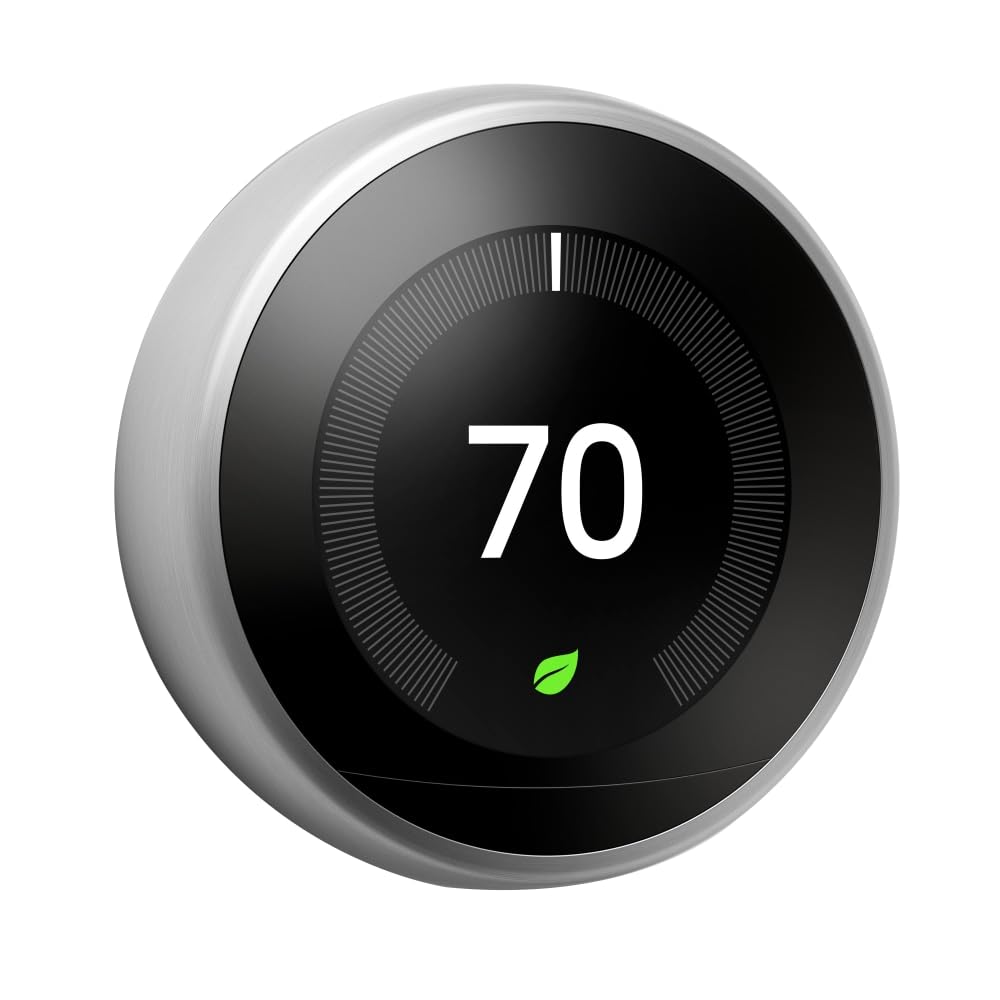
The stainless steel ring is the signature of the third-generation Nest, and it is the part a buyer sees every day. It reads as a premium object rather than a plastic box on the wall, which matters in a visible hallway or living room. The learning behaviour is the headline feature: the thermostat watches adjustments over the first days and builds a schedule from them, so the household does not have to program anything by hand.
The unit is designed to sit in the mainstream of smart-home ecosystems, matching the way most buyers already control lights, locks, and cameras. It is a wall-mounted device, so installation is a small project rather than a plug-in job. The third-generation model is the mature version of the line, which is why it remains the one most shoppers land on.
Build and Finish
The stainless steel ring is not decoration alone; it is the interface. The outer ring turns to adjust temperature and the center display shows the current setting and mode. That physical control is a real advantage over touch-only panels, because a person can nudge the temperature without waking a screen or hunting for an app.
The finish holds up well against fingerprints compared with glossy plastic, and it suits both modern and traditional interiors. Buyers who want the thermostat to disappear into the wall should note that this is a statement piece, not a hidden sensor. It is meant to be seen, and it is designed to look good while doing its job.
The display is the other half of the build story. It lights up when approached and dims when idle, which keeps a hallway dark at night while still being readable up close. That behaviour is part of why the unit feels considered rather than assembled from off-the-shelf parts.
Capacity and Coverage
This is a whole-house thermostat, which means it is built to run a central heating and cooling system rather than a single room. That is the correct scope for most suburban homes with ducted HVAC, and it is where the learning schedule pays off: one device manages the comfort of the entire house.
Buyers in apartments with a single zone will find the capacity more than enough, and the scheduling still helps. Buyers with a multi-zone system, where separate thermostats already control different floors, should think of this as one zone’s controller rather than a whole-home brain. It manages the system it is wired to, and that is the right expectation to set before purchase.
The third-generation design is also the version most compatible with common residential HVAC setups, including standard forced-air systems. Buyers with unusual or older wiring should confirm compatibility before ordering, because a thermostat is only as useful as the system it can talk to.
Power and Smart Control
The thermostat draws its power from the HVAC wiring in a typical installation, which means no battery swaps and no charging routine. That is a quiet quality-of-life win: the device is simply always on, and the household never thinks about it.
The smart side is where the unit earns its price. Remote control from a phone means the temperature can be adjusted before arriving home, and the learning schedule means the house is already comfortable without anyone touching a setting. For a household with a predictable routine, that combination removes a small but constant chore.
The trade-off is dependence on the app and the account behind it. Buyers who want a thermostat that works entirely offline, with no cloud account and no phone, will find this model more connected than they want. It is a smart device first and a manual thermostat second, and that is a deliberate design choice rather than a flaw.
Installation and Maintenance
Installation is a wiring job, not a plug-in one. Most buyers will either follow the guided in-app instructions themselves or hire a handyperson, and either path is reasonable. The unit is designed to be installed by a confident DIYer, but anyone uncomfortable with low-voltage wiring should budget for professional help.
Maintenance is minimal by design. There are no filters to change inside the thermostat and no batteries to replace in normal use. The occasional firmware update arrives through the app, and the stainless ring wipes clean with a dry cloth. That low-touch upkeep is part of the appeal for buyers who do not want another device to manage.
The one maintenance consideration is the account itself. The thermostat’s smart features live behind a login, so the household needs to keep that account active and secure. That is a small ongoing responsibility, but it is real, and it should factor into the decision.
Strengths and Weaknesses
The strengths are clear: a premium stainless finish, a physical ring that is easy to use, automatic schedule learning that removes manual programming, and remote control from a phone. For a household with a regular routine and a standard HVAC system, it does most of the thinking so the people do not have to.
The weaknesses are equally clear. It is a connected device that expects an account and an app, which is more than some buyers want. It is also a visible, premium-looking object rather than a discreet sensor, and it is priced accordingly. Buyers who want a simple programmable thermostat at a lower cost will find this more device than they need.
Trade-off: The polished smart features and stainless finish come at a premium price and a cloud-account dependency, so buyers who want offline simplicity should look elsewhere.
Check the current price on Amazon
Who It Is For and Who It Is Not
This thermostat suits homeowners with a standard central HVAC system who want comfort handled automatically and who are comfortable using a phone app. It fits households with a predictable weekly routine, because that is exactly what the learning schedule is built to capture. It also suits buyers who care about how a thermostat looks on the wall.
It is not for buyers who want a fully offline device with no account, nor for renters whose landlord controls the HVAC equipment. It is also a poor fit for anyone with unusual or legacy wiring who has not confirmed compatibility first. Those buyers should look at simpler programmable models or confirm the installation requirements before ordering.
FAQ
-
What is the Nest T3016US Learning Thermostat?
It is a third-generation smart thermostat in a stainless steel finish that learns a household’s schedule and controls a central heating and cooling system. -
Does the Nest T3016US learn a schedule automatically?
Yes. The thermostat observes manual adjustments over the first days and builds a schedule from them, so the household does not have to program setpoints by hand. -
Can the temperature be controlled from a phone?
Yes. The thermostat is designed for remote control through its companion app, so the temperature can be adjusted before arriving home. -
Does the Nest T3016US need batteries?
In a typical installation it draws power from the HVAC wiring, so there is no routine battery swap. Buyers with unusual wiring should confirm power requirements first. -
Is the Nest T3016US hard to install?
It is a low-voltage wiring job. A confident DIYer can follow the guided instructions, and anyone uncomfortable with wiring should hire a professional. -
Does the Nest T3016US work with a multi-zone system?
It controls the zone it is wired to. Homes with separate thermostats for different floors should treat it as one zone’s controller rather than a whole-home system. -
What finish does the Nest T3016US have?
It has a stainless steel ring, which is both the visual signature and the physical control for adjusting temperature. -
Is the Nest T3016US a good fit for renters?
Usually not. Renters whose landlord controls the HVAC equipment should confirm permission before replacing a thermostat. -
Does the Nest T3016US require an account?
Yes. The smart features live behind the companion app and account, so the household needs to keep that login active. -
Who should skip the Nest T3016US?
Buyers who want a fully offline thermostat, a lower-cost programmable unit, or a device that stays out of sight should consider simpler alternatives.
Bottom Line
The Nest T3016US Learning Thermostat is the right buy for a homeowner with standard central HVAC who wants comfort handled automatically and does not mind a connected device. The stainless finish, the physical ring control, and the learning schedule make it a polished, low-effort upgrade over an old dial or basic programmable unit. Buyers who want offline simplicity or a lower price should look at simpler models instead. For everyone else, it is a strong, well-considered pick.
