Why there are Amazon links here: Brave Review is paid a commission for qualifying Amazon purchases made through the links below. Your price does not change, and using our links is entirely optional. How this works
NETGEAR Orbi RBK13: Mesh WiFi for the Whole House
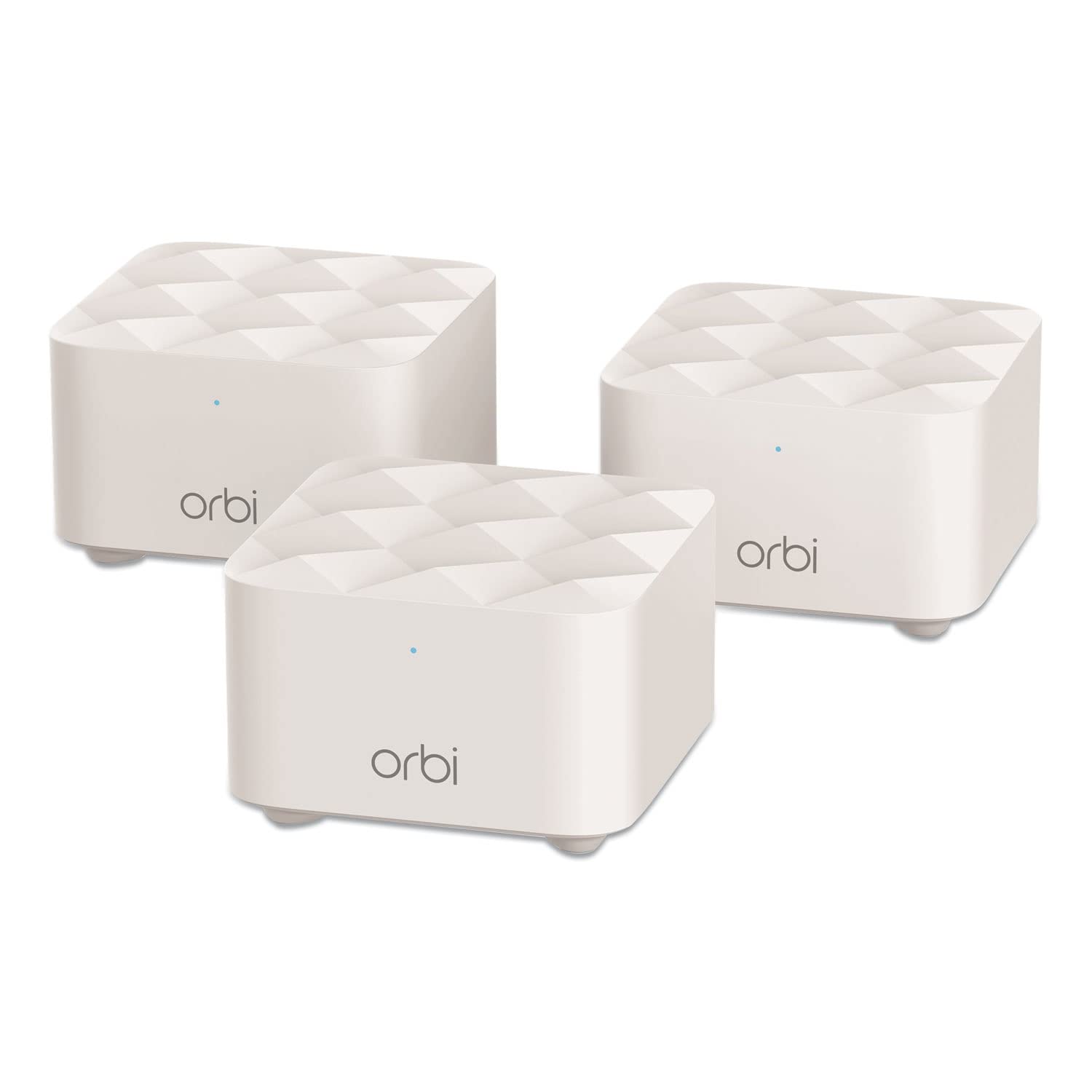
The NETGEAR Orbi RBK13 is a mesh WiFi system built for one job: covering a large home with a single network name instead of a patchwork of extenders. It ships as a router plus two satellites, and the manufacturer rates the kit for homes up to 4,500 square feet. This review covers what the hardware is, how the mesh behaves in practice, and which households should buy it — and which should look elsewhere. Buyers who want a straightforward answer can jump to the bottom line or check the current price.
Features and Specifications
Type: Whole home mesh WiFi system
Configuration: 1 router and 2 satellites
Rated coverage: Up to 4,500 sq. ft.
Brand and series: NETGEAR Orbi
Intended use: Router replacement for whole-home coverage
Network name: Single shared network across all units
The kit is a three-piece mesh: one unit connects to the modem and acts as the router, while the two satellites are placed elsewhere in the home to extend coverage. All three broadcast the same network name, so devices move between them without the user manually switching networks.
The coverage figure is the headline number, and it is the one buyers should weigh most carefully. A 4,500-square-foot rating assumes open placement and typical construction; thick walls, multiple floors, and dense materials reduce real-world reach. The kit is designed as a router replacement, not an add-on, so it takes over the job of the existing router rather than sitting behind it.
Build and Placement
The Orbi units are desktop-style nodes, not wall plugs or ceiling mounts. Each one needs a power outlet and a spot with reasonable air circulation, which matters because mesh nodes run continuously and warm up slightly in normal use. Placement is the single biggest lever on performance: the router goes near the modem, and the satellites go roughly midway between the router and the dead zones they are meant to fix.
Buyers in apartments or small homes will find two satellites excessive. The extra node does no harm, but it adds a device to power and place for coverage that a smaller setup already delivers. The kit rewards larger floor plans and multi-level homes where a single router leaves corners and upper floors weak.
Capacity and Connected Devices
The RBK13 is aimed at households with many connected devices — phones, laptops, streaming boxes, smart speakers, and cameras all sharing one network. A mesh spreads that load across three nodes rather than concentrating it on a single router, which is the main reason buyers move to this category in the first place.
The trade-off is that this is a mainstream mesh kit, not a high-performance model built for heavy simultaneous traffic such as multiple 4K streams plus large file transfers. Households with dozens of active devices and demanding bandwidth habits sit at the upper edge of what this tier is designed to handle.
Power and Daily Operation
Each of the three units draws power continuously, so the kit needs three free outlets in the spots where coverage is wanted. That is a practical constraint in older homes with few receptacles, and it is worth mapping outlet locations before buying.
Day-to-day, the appeal is that the network behaves as one system. There is no separate extender network to join, no dropping and rejoining as a device moves through the house, and no per-room configuration. Setup and management happen through the manufacturer’s app, which is the standard approach for this product class.
Maintenance and Longevity
Mesh systems need little routine maintenance beyond occasional firmware updates, which the app handles. The nodes should be kept clear of enclosed cabinets and stacked electronics, since heat is the main long-term enemy of always-on networking gear.
Buyers should also plan for the satellites to stay in fixed positions. Moving them around to chase coverage defeats the purpose of a mesh, and the system performs best when each node is placed once and left alone.
Trade-off: The three-piece kit is more hardware than a small home needs, and the rated coverage assumes favorable placement that thick walls and multiple floors will undercut.
Check the current price on Amazon
Who the Orbi RBK13 Suits
The clearest fit is a larger single-family home — roughly the footprint the coverage rating describes — where a single router leaves far rooms, upstairs bedrooms, or a back patio with weak signal. Buyers in that situation get a genuine upgrade: one network name, three nodes, and coverage that reaches the places the old router did not.
It also suits households that are tired of managing extenders. Extender setups often create a second network name and force devices to reconnect as the user moves around; a mesh avoids that entirely. Buyers who value simplicity over tinkering will appreciate the app-driven setup and the single-network design.
It does not suit everyone. A studio, a one-bedroom apartment, or a small house with a router already covering it well will see little benefit from two extra satellites. Buyers who want maximum throughput for heavy gaming or large-file work should also look at higher-tier mesh systems, since this kit prioritizes coverage and simplicity over raw performance.
FAQ
-
What is the NETGEAR Orbi RBK13?
It is a whole home mesh WiFi system made up of one router and two satellites, sold together as a router replacement kit rated to cover up to 4,500 square feet. -
How many square feet does the Orbi RBK13 cover?
The manufacturer rates the kit for up to 4,500 square feet. Real-world coverage depends on wall materials, floor count, and where the nodes are placed, so homes with dense construction should expect less. -
Does the RBK13 replace an existing router?
Yes. It is designed as a router replacement: the main unit connects to the modem and takes over routing duties, and the satellites extend that network through the home. -
Do all three units use the same WiFi name?
Yes. The router and both satellites broadcast one shared network name, so devices move between them without the user switching networks manually. -
Is the Orbi RBK13 good for a large house?
It is aimed at exactly that use case. Larger and multi-level homes are where a three-node mesh earns its keep, because the satellites fill in the rooms a single router cannot reach. -
Is the RBK13 a good choice for a small apartment?
Usually not. A small home is typically well covered by one router, and the two extra satellites add hardware, outlets, and placement decisions without a meaningful coverage gain. -
How many devices can connect to the Orbi RBK13?
The kit is built for households with many connected devices spread across the home, which is the core reason to choose a mesh over a single router. Buyers with unusually heavy simultaneous demand should consider a higher-performance tier. -
Does the Orbi RBK13 need a modem?
Yes. The system replaces the router, not the modem, so an existing modem or modem-router in bridge mode is still required for the internet connection. -
Where should the satellites be placed?
Satellites work best placed roughly between the router and the weak-signal areas, with open air around them. Enclosed cabinets and spots next to other electronics should be avoided. -
Is the Orbi RBK13 worth it?
For a larger home with dead zones and a preference for one simple network, it is a sensible fit. For small homes or buyers chasing maximum speed, the money is better spent elsewhere.
Bottom Line
The NETGEAR Orbi RBK13 is a coverage-first mesh kit: one router and two satellites, one network name, and a rated reach of up to 4,500 square feet. It makes the most sense for larger and multi-level homes where a single router leaves rooms stranded, and it delivers the simplicity that extender setups rarely match. Small-home buyers and performance chasers should look at other options, but for the buyer whose problem is reach rather than speed, this is the pick — check the current price on Amazon.
