Why there are Amazon links here: Brave Review is paid a commission for qualifying Amazon purchases made through the links below. Your price does not change, and using our links is entirely optional. How this works
Best Optical vs Heat Alarm Placement for Fast, Reliable Fire Detection
Optical smoke alarms catch smoldering fires early but false-alarm on cooking steam, dust, and humidity; heat alarms ignore smoke entirely and trigger only when temperature climbs fast or hits a fixed threshold. That makes placement the deciding factor: optical units belong in bedrooms, hallways, and living areas, while heat alarms belong in kitchens, garages, attics, and utility rooms where smoke detectors would nuisance-trip. This guide covers five heat alarms for the spaces where optical detection is a poor fit, so a homeowner, landlord, or small-property manager can match device to room, then check the price on the linked listing. The overview table below puts the key differences side by side before the individual reviews.
Overview of the Picks
| Product | Key Spec | Best Use | Price Tier |
|---|---|---|---|
| First Alert BRK HD6135FB | Hardwired, 9V battery backup | Kitchen and utility rooms on existing wiring | Budget |
| System Sensor 5602 | 194°F rate-of-rise and fixed temperature | Commercial and system-integrated spaces | Budget |
| AI Flame & Thermal Heat Detector | Sound monitor, USA-made | Energy storage, EV chargers, electrical boxes | Premium |
| Kidde HD135F | Hardwire, interconnectable, 135-degree | Whole-home interconnected heat coverage | Mid-range |
| Notifier FST-951 | Intelligent addressable heat sensor | Addressable fire panels in larger buildings | Mid-range |
First Alert BRK HD6135FB Hardwired Heat Alarm

Type: Hardwired heat alarm
Power Source: AC hardwired with 9V battery backup
Model: HD6135FB
Brand: First Alert BRK
Installation: Replaces or joins existing hardwired alarm circuits
Check the current price on Amazon
The HD6135FB is built for households that already have hardwired alarm wiring and want heat-only protection in a room where an optical head would keep tripping. The 9V battery backup keeps it live through a power cut, which matters in a kitchen or utility space where the circuit may be shared. As a First Alert BRK unit it follows the familiar mounting footprint of that line, so replacing an existing hardwired alarm is a practical swap rather than a new install.
This pick earns its place for anyone retrofitting heat coverage onto a wired circuit without adding a panel. The trade-off is that a hardwired unit is no help in a shed or outbuilding with no AC feed, and the backup battery needs periodic replacement to stay useful.
System Sensor 5602 Rate of Rise Heat Detector
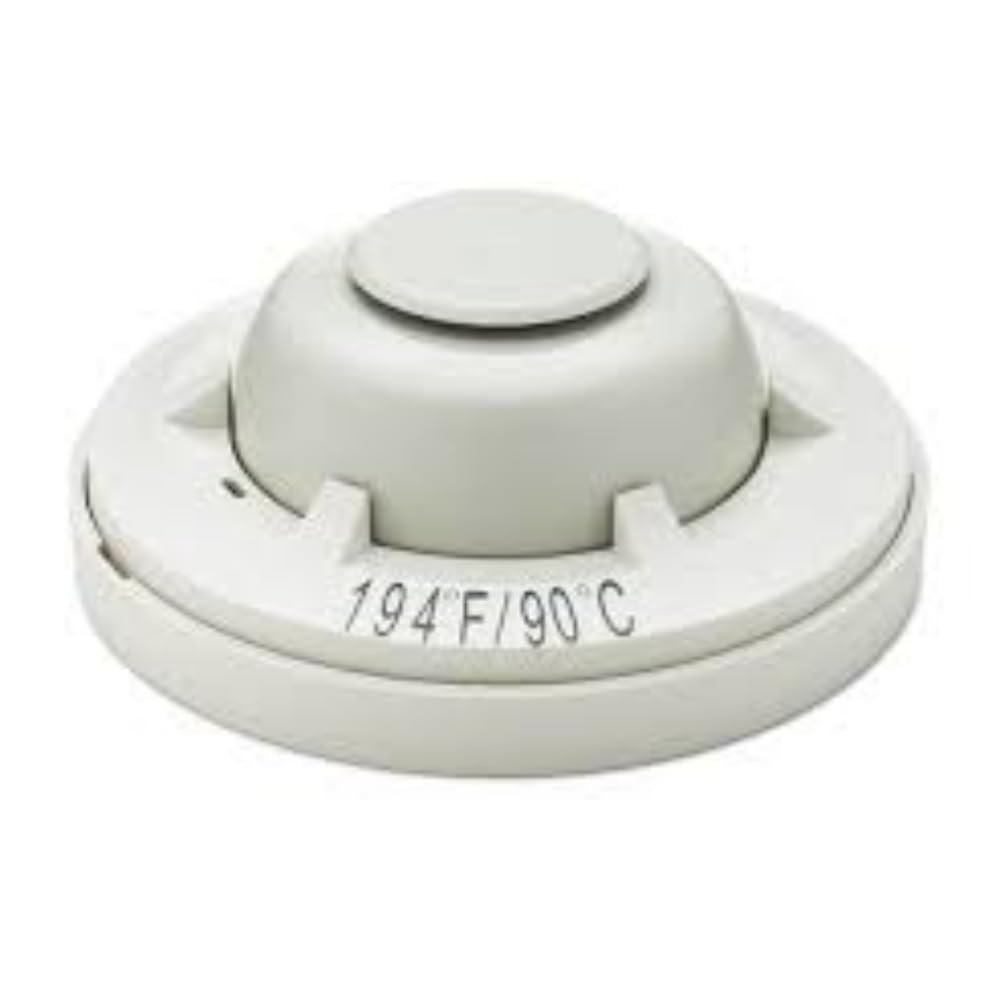
Type: Rate-of-rise and fixed-temperature heat detector
Threshold: 194°F fixed temperature
Circuit: Single circuit
Brand: System Sensor
Mounting: System device, typically ceiling-mounted
Check the current price on Amazon
The 5602 combines two trigger methods: it responds when temperature rises abnormally fast and also when the air reaches a fixed 194°F ceiling. That dual logic suits boiler rooms, plant areas, and other spaces where a rapid heat spike is the real signal and ambient warmth is normal. The single-circuit design keeps wiring simple, and System Sensor is a name installers recognize in commercial fire work.
This is the pick for a property with an existing detection circuit that needs a heat head rather than a standalone consumer alarm. The caution is that a 194°F threshold is deliberately high, so this device is slow to react to a small smoldering fire and is not a substitute for smoke coverage in living quarters.
AI Flame & Thermal Heat Detector for Energy Storage

Type: Flame and thermal heat detector
Intended Use: Home energy storage, EV chargers, solar batteries, electrical boxes
Alert: Sound monitor safety system
Origin: Made in USA
Brand: Small business brand
Check the current price on Amazon
This unit targets the modern risk spots a traditional alarm misses: battery walls, solar inverters, EV charging equipment, and electrical enclosures. It watches for both flame and thermal rise and raises an audible alert, which suits a garage or utility corner where a battery fire could start quietly. Being made in the USA and sold by a small business brand sets it apart from the legacy alarm names.
This is the pick for a homeowner who has added solar, storage, or an EV charger and wants dedicated monitoring at that equipment rather than at the ceiling of a hallway. The trade-off is the price: it costs several times a standard heat alarm, so the spend is only justified where high-value electrical gear actually sits.
Kidde HD135F Hardwire Interconnectable Heat Alarm

Type: Hardwired heat alarm
Threshold: 135-degree
Feature: Interconnectable
Model: HD135F
Brand: Kidde
Check the current price on Amazon
The HD135F is the practical middle of this list: a 135-degree heat alarm that wires into a home circuit and links with compatible alarms so one sounding unit triggers the rest. That interconnect behavior is the reason to choose it, because a heat alarm in the kitchen can then warn bedrooms that an optical head alone might not reach. Kidde is a mainstream consumer brand, so parts and documentation are easy to source.
This pick suits a household building a linked system where heat coverage in the kitchen sits alongside smoke coverage elsewhere. The trade-off is the 135-degree threshold, which is right for a residential kitchen but too low for a boiler room or workshop where normal operating heat runs high.
Notifier FST-951 Intelligent Addressable Heat Sensor

Type: Intelligent addressable heat sensor
Detection: Fixed temperature
Model: FST-951
Brand: Notifier
System: Addressable fire alarm panel
Check the current price on Amazon
The FST-951 is a fixed-temperature heat sensor for an addressable fire panel, meaning the panel identifies the exact device that triggered rather than only the zone. That precision is what makes addressable systems worth their cost in multi-room buildings, and Notifier is a established name in that market. It is a system component, not a self-contained alarm with its own sounder.
This pick fits a building that already runs a Notifier addressable panel and needs heat detection in a specific space. The caution is compatibility: it will not work on its own or on a conventional circuit, so a buyer without the matching panel should look at the standalone picks instead.
Before You Buy
- Room type: Optical alarms suit bedrooms and hallways; heat alarms suit kitchens, garages, attics, and utility rooms where smoke or steam would cause nuisance trips.
- Power source: Hardwired units need an existing AC circuit, while battery-only and plug-in options suit outbuildings and rentals with no wiring.
- Interconnection: Linked alarms sound together, so check that a new unit is compatible with the existing system before buying.
- Threshold temperature: A lower fixed threshold suits a domestic kitchen; a higher rate-of-rise device suits plant rooms and workshops.
- System compatibility: Addressable sensors only work with a matching panel, and single-circuit devices need the right conventional circuit.
- Placement height and spacing: Heat rises, so ceiling mounting near the risk source matters more than raw coverage claims.
- Maintenance: Test each unit on the schedule in its manual and replace backup batteries so the device stays live.
Frequently Asked Questions
-
Should a heat alarm replace an optical alarm in a kitchen?
Yes. Heat alarms ignore cooking smoke and steam, so they avoid the false alarms that make people disable optical units near a stove. -
Where should an optical alarm go instead?
Optical alarms belong in bedrooms, hallways, and living rooms, where early smoke detection buys escape time and there is no cooking steam. -
Can heat and optical alarms be mixed on one system?
Often yes, provided the units are interconnectable and compatible. A linked setup gives heat coverage in the kitchen and smoke coverage elsewhere. -
Does a heat alarm detect smoldering fires?
Poorly. Heat alarms respond to temperature rise, so a slow smoldering fire may produce little heat before it becomes serious, which is why smoke coverage still matters. -
Is a higher temperature threshold always better?
No. A high threshold reduces nuisance trips in hot spaces but delays response, so the right figure depends on what normally happens in that room. -
Can these alarms be used in a garage or shed?
Only if the power source suits the space. Hardwired models need an AC feed, while battery and plug-in units are the practical choice for outbuildings.
Bottom Line
For most homes, the Kidde HD135F is the top pick: a 135-degree heat alarm that hardwires into the existing circuit and interconnects with the rest of the system, giving kitchens and utility rooms coverage without the false alarms an optical head would produce. Pair it with optical alarms in the bedrooms and hallways, and the placement question answers itself room by room.